Review | Hunter’s Moon - One if by Sin, Two if by Sim
What I like about walking simulators is their ability to tell compelling stories with relatively little interaction. These games, like interactive FMVs and visual novels, are light on gameplay, but they can augment that with a combination of quality writing, atmosphere, charm, aesthetic, and plenty more. I remember playing Dear Esther years ago, walking around that desolate island with that narration, where the landmarks blended together in a way that transcended traditional storytelling and transported me into that world. It’s important to accept these games for what they are, what they can do, and keep expectations in check. The problem is, even by these metrics, Hunter’s Moon has a problem. There are aspects to like, but among the peers of its genre, I’m afraid it’s too slight.
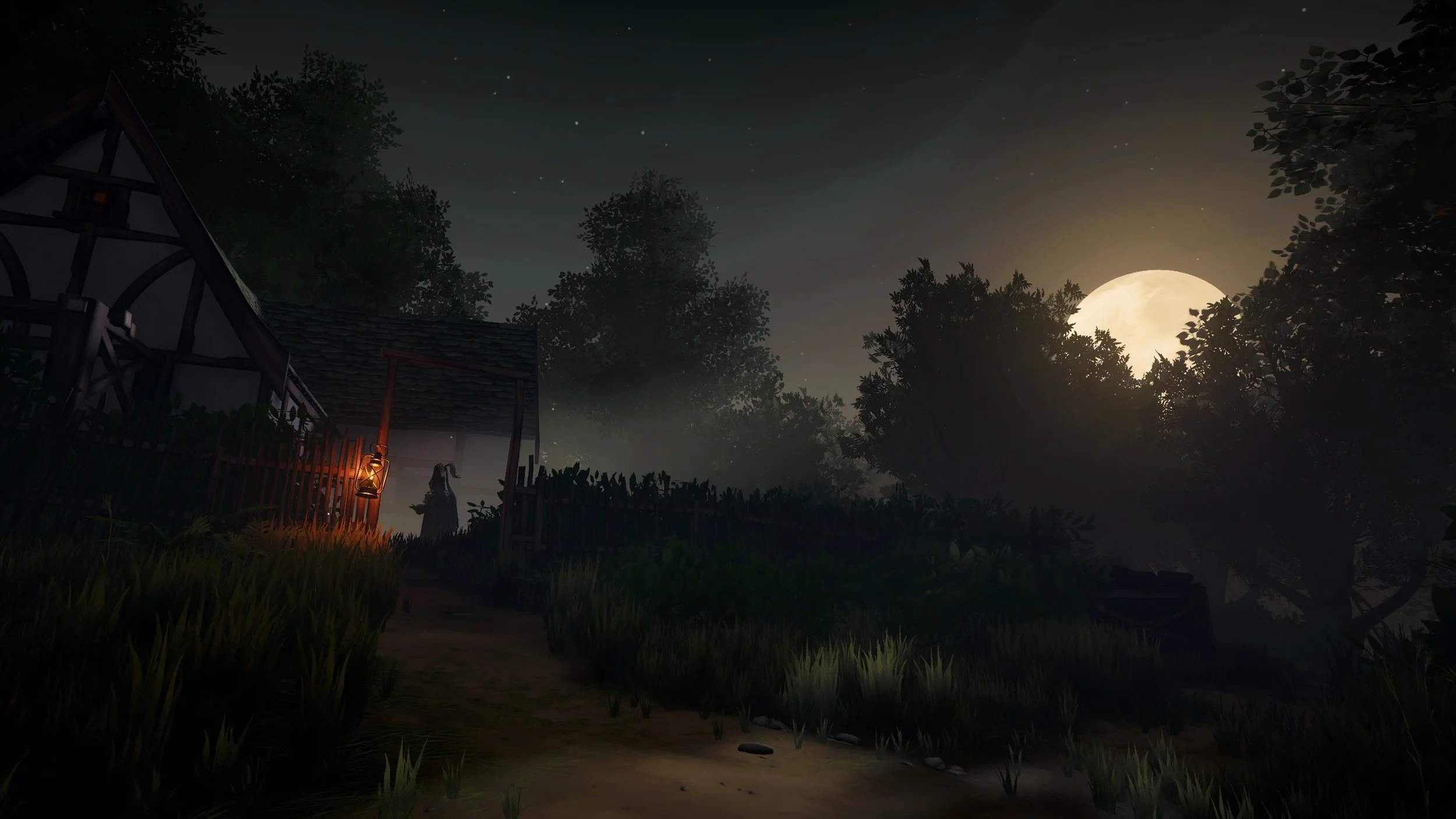
Hunter’s Moon takes place in 17th-century England, in a small village surrounded by forest and moors. Here, you’re dropped into the world with these two lines: “You are searching for safety. You must not be seen.” Progressing through the forest, you hear a hunting party somewhere off in the distance. They’re looking for someone, probably you. Nearby, you come across a house. You can hear a conversation happening inside and can stay to listen if you wish, but the need to get inside and away from the hunters has crystallised this early on. So you knock.
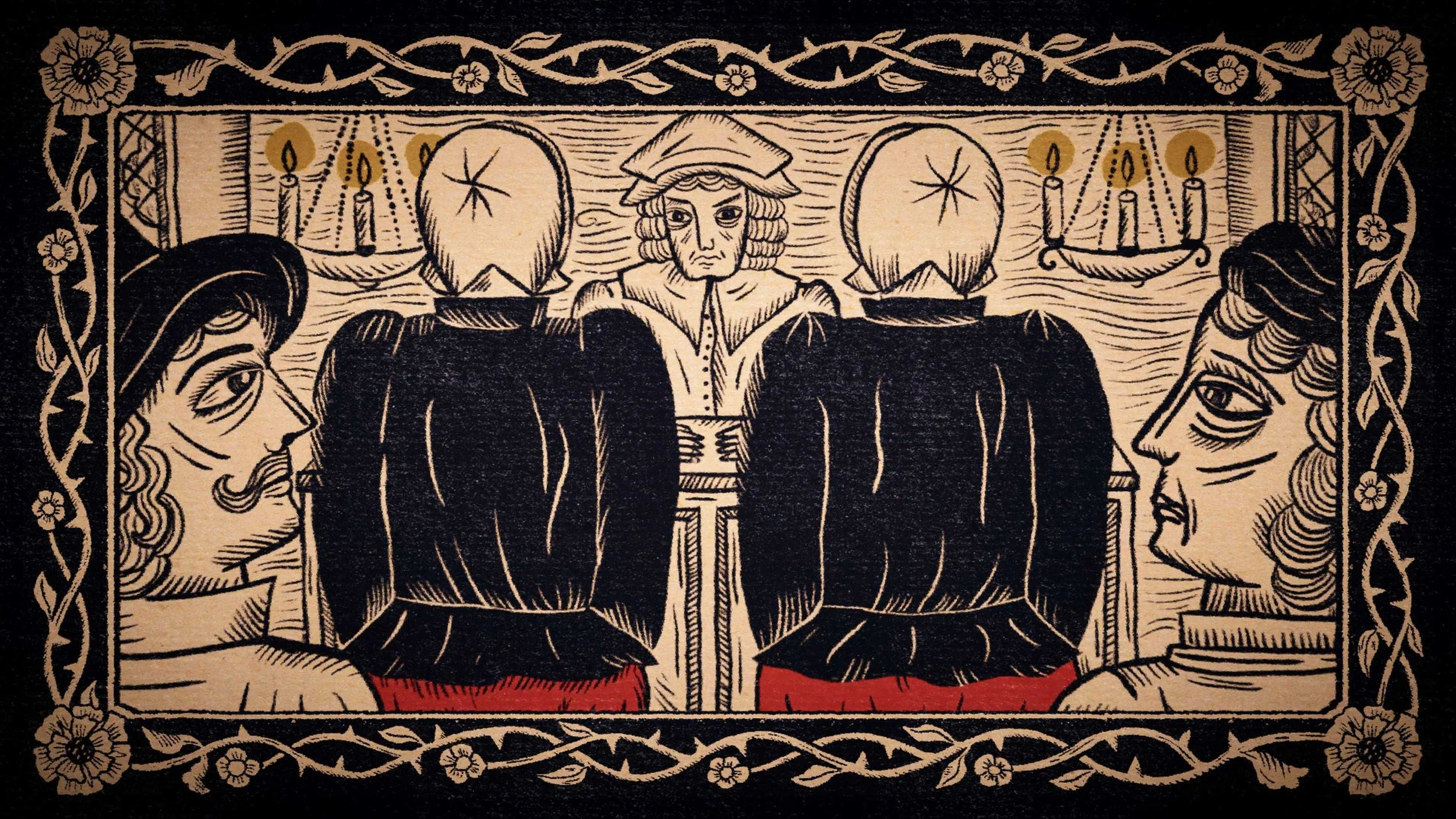
The family sees you, but won’t let you in, so you go to the next house. Then the next, and the next beyond that. Along the way, as you listen into their conversations, you start to pick up on what’s happening here: everyone’s locked their doors because the hunters are out for witches. You are suspected of being a witch, and being caught out of doors has only placed a bigger target on your back. You need to keep pushing forward to survive the night and make it home. The only controls available give you the barest of tools to succeed: crouching, running, and interacting with the occasional item.
It’s a compelling premise, but one that’s left me at odds with what it accomplishes. On the one hand, I felt like I was in an immersive theatre experience, where there were these micro stories happening all around me as I went door to door. On the other hand, though, I felt as if I were being relentlessly pushed forward. Periodically throughout the environment, there are these little rock ledges that exist to block your ability to backtrack, as you cannot jump over them. Even as I write, I’m still frustrated by those things because doubling back to dodge the hunters seems like a perfectly viable strategy. Instead, they put progress on the gentlest set of rails, like I was walking through a museum exhibit on a guideless tour.
The problem I have with this linearity is that it prevents the opportunity for the game to imprint on me. Distinct environments in a walking sim can be useful to help ground the player in the story and provide opportunities for memorable moments to stick out. This can be especially important when time and place are vital to the story, as they are in Hunter’s Moon. However, in a game that is largely made up of nondescript forest paths and houses, you lose all of that. The setting becomes some anonymous little village in old England rather than a specific place where these witch hunts happened. There’s limited cultural context and, speaking as someone who learned about witch hunts in school, very little added to the discussion that hasn’t already been said a million times before.
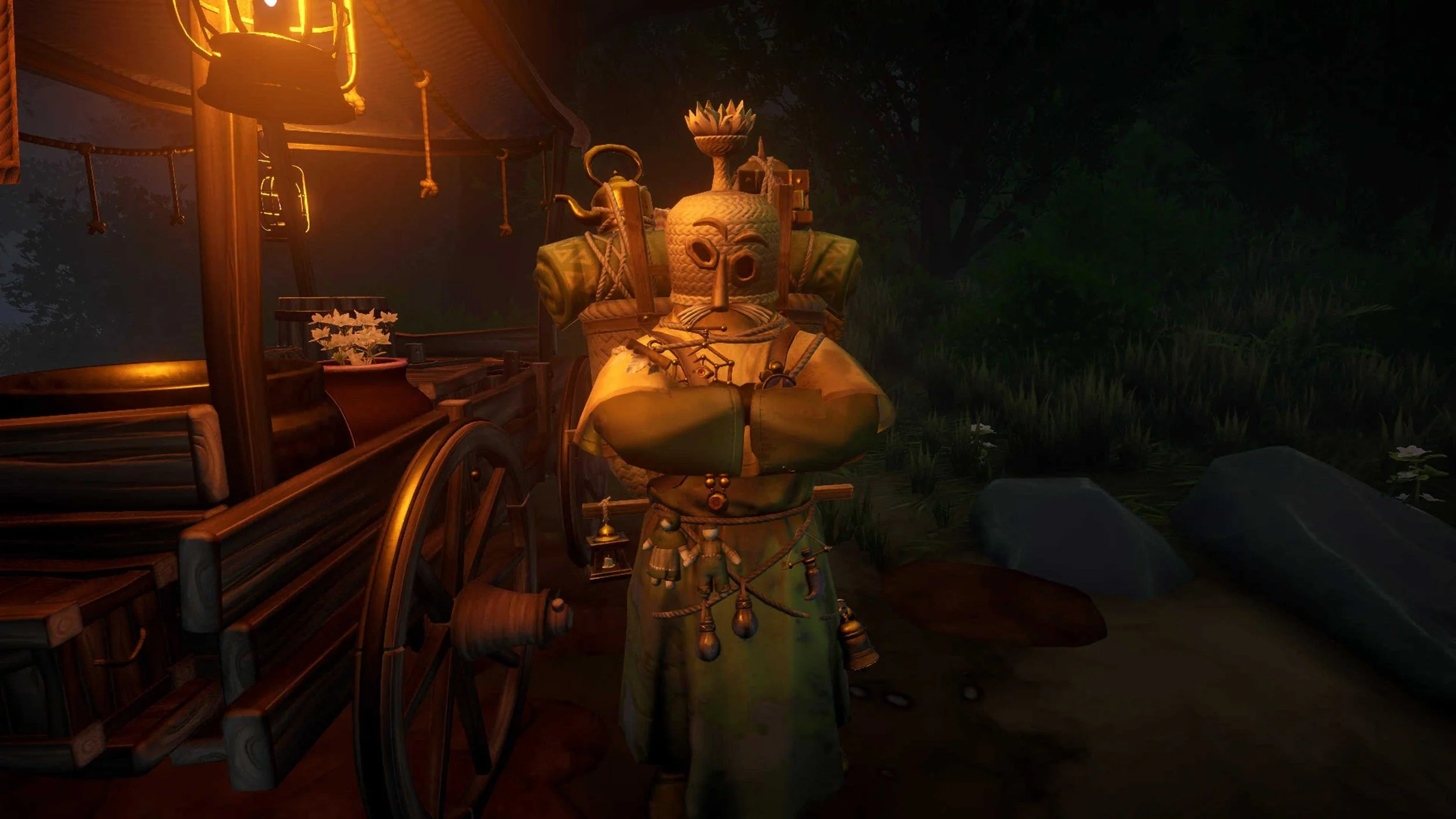
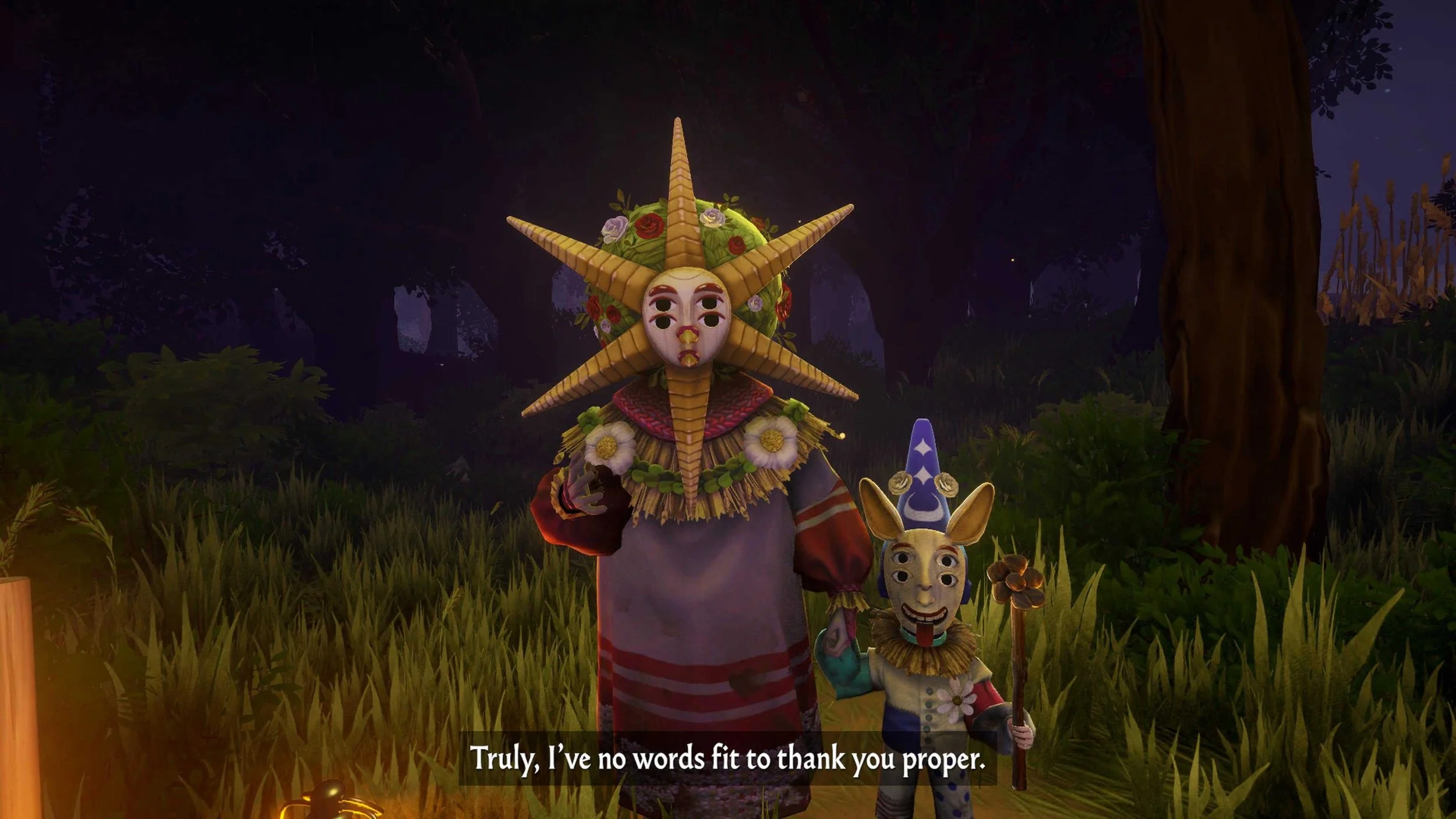
One of the few specific details Hunter’s Moon provides is the description of a village in the midst of some kind of festival. You don’t really see it in the environments, but it’s clearer when you run across the few lonely souls that are out with you during the night. Every villager is decked out in these stunning, fantastical mummer costumes that lend an otherworldly eeriness to your journey. Some of these mummers will ask you for help; some will sing beautiful odes to your woes, but they are – to a person – colourful and ornately designed, with masks and dress that will make you wonder if this isn’t about some non-human race of creatures, but alas. That is part of the folksy charm.
Unfortunately, these are the big highlights I have to share: a compelling premise, gorgeous character designs, great songs, and whimsy. Simple controls can be useful in large and small games alike, but here they felt cloying, as if made to make interaction itself a last resort. Even knocking on doors, though sometimes necessary to open up new paths, often feels optional.
The really interesting thing in all of this is that there’s a rich lineage behind Hunter’s Moon. The staff at developer Twin Swans Limited are like a dream team of walking sim designers, combining the likes of Alicia Contestabile and William Pugh (The Stanley Parable) with former The Chinese Room co-founder Jessica Curry (Dear Esther, Everybody’s Gone to the Rapture). This is a collaboration that some fans of independent games over the last fifteen years would go hog-wild for. Yet, enthusiasm from everything I’ve seen has been a flatline. I know there was some thought put into marketing because it adopted the same strategy as Rapture, releasing exclusively on a Sony console at $19.99 USD and even dropped on the 2026 hunter’s moon. Sadly, somehow, nothing clicked.
Sometimes, not every project comes together as it should. In Hunter’s Moon’s case, several strong elements are there, but there are only the softest swipes of a glue stick holding it all together. There are reasons to replay: different endings and unique environments you can only see under specific conditions (like getting captured at specific story points), but the game takes only a couple of hours per playthrough. You can knock it out in an afternoon. There are some sidequests you need to complete to get the best ending, but the story, even when it throws to a cutscene or interesting visual effects moment, grows little beyond its premise.
While I want to highlight more than the great character designs and cool ideas at play, the truth is that I want to like Hunter’s Moon much more than I do. Much of the time it’s boring. There’s an autumnal atmosphere and some nice songs, but the goodness here doesn’t coalesce into something that’s more than the sum of the parts. In some ways, it feels like the game people that don’t like walking sims think of when they write another screed about how the genre sucks. Again - it’s not that bad, but it also doesn’t feel full or complete. Hunter’s Moon may satiate someone with a hunger for witch stories and tales of society at its worst. Me, I’d rather watch the Suspiria remake again and bask in a story that gives me something new to think about every time I watch it.
Hunter’s Moon was played on PS5 using a code provided by the publisher.