Holly Hughes-Rowlands Posits That The Switch 2 Is A Drop In The Ocean Of Unaffordable Video Games | Winter Spectacular 2025
Gaming is an expensive hobby.
It always has been. Most gamers, I would imagine, can relate to the careful saving and strategic purchasing that- more often than not- dictates the decisions of developers and consumers alike. There is almost always some kind of tension over prices churning away somewhere in the world of video games, which, every now and then, will explode into all-out war between publishers and consumers. Such an explosion occurred earlier this year in April, when Nintendo revealed the launch price of its newest console, the Switch 2. Though the console would eventually launch in June to great success, the arguments over its price cast a shadow over the buildup to release, turning what should have been two months of excitement into weeks of complaints and debates that were never fully resolved. Though it may appear as an isolated incident, I think this controversy warrants more attention. When examined within the wider context of affordability and accessibility in gaming, the backlash over the Switch 2 highlights the practical human impact of widespread and deep-rooted systemic accessibility issues in gaming.
So… What Happened?
April 2025’s Nintendo Direct was always going to be memorable. Thousands of fans tuned in, hungry for information about the Switch 2, the follow-up to Nintendo’s most successful and innovative console: the Switch. Yet, after the livestream had concluded, one rather important piece of information was still missing. The price.
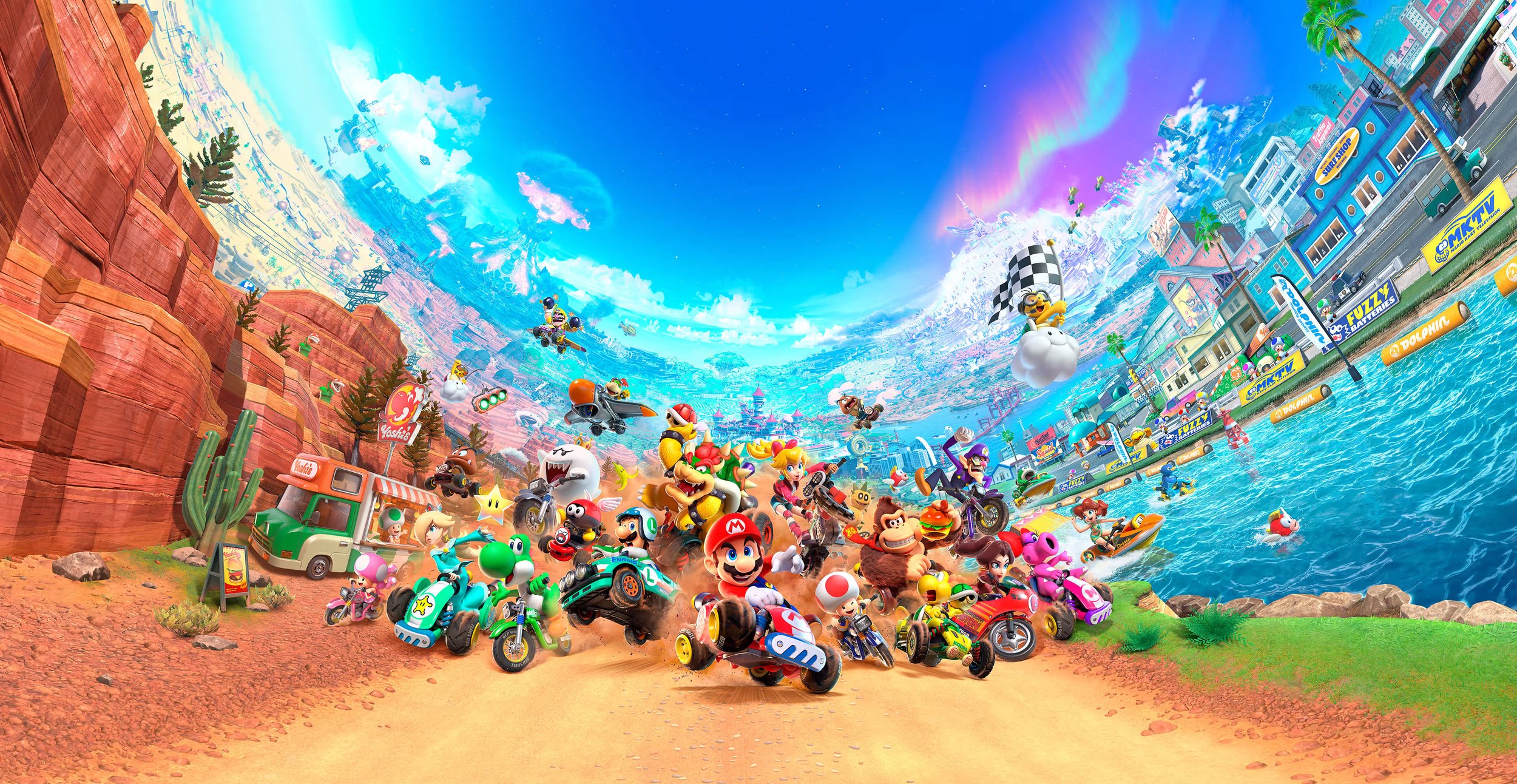
The reason why Nintendo may have omitted this became increasingly clear when, after the live show, information about launch prices started filtering out across the internet. The Switch 2 would be launching at $449.99/£395.99, significantly more than the original Switch’s $299/£279.99 price. This provoked some grumbling among Nintendo fans, but the worst was yet to come. Mario Kart World (the big new first-party game launching alongside the console) would cost $79.99/£74.99. That’s $20 more than the 2018 Switch games, and $10 more than the standard top price for most triple-A games in 2024. Gamers may have begrudgingly accepted the console price without too much of a fight, but $80 for Mario Kart was evidently too much, and in hindsight appears to have been the final spark that set the internet ablaze. The backlash began in earnest, as gamers loudly voiced their issues with the prices.
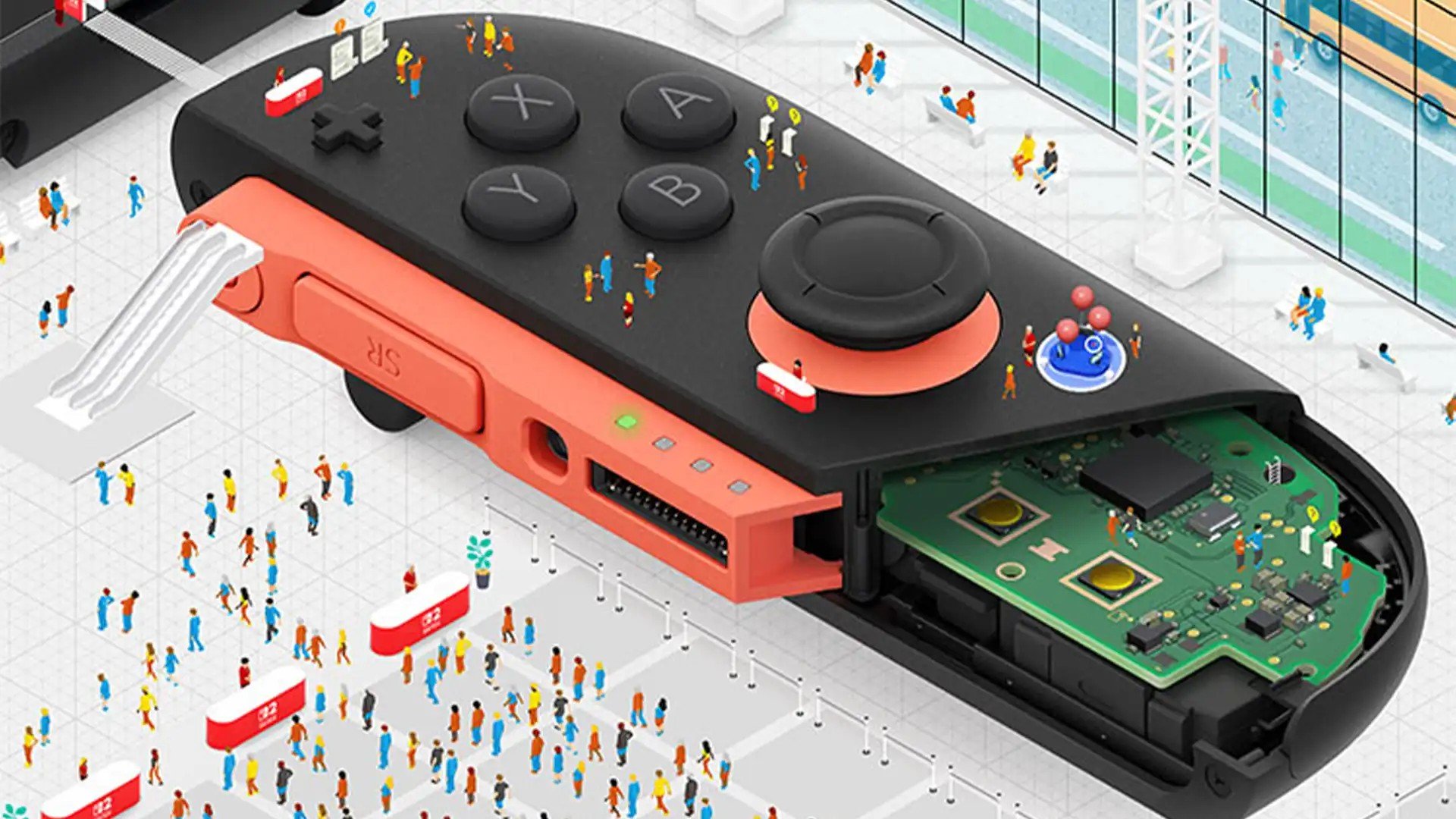
Further criticism was directed at two other features revealed to be launching alongside the console, GameChat and the USB-C Camera attachment. These allowed gamers to chat, share screens, and see each other's faces while playing. Both were marketed as essential to the true Switch 2 experience. GameChat was apparently so essential that, to make it as accessible as possible, a ‘C’ button was added to the controllers so players could open it without having to pause their game. But, despite being ‘essential,’ both were sold separately from the base console. After a free trial period ending in March 2026, GameChat will require players to pay for a Nintendo Online Membership subscription, $19.99/£17.99 every year, and the Camera costs $54.99/£49, both on top of the base console price Even the Welcome Tour tech demo- another prominent part of the Switch 2 marketing, and a feature normally included for free with new consoles (see Astro’s Playroom for the PS5) would run you $10/£7.99. It’s no secret that the companies have sought to quietly increase prices to offset rising development costs, but until this point, Nintendo had felt pretty immune to these pressures, largely thanks to the fact that Nintendo published games maintain their launch price almost perpetually, and rarely go on sale. These extra charges seemed, to many, to be proof that Nintendo was simply trying to monetise as many parts of the new console as possible.
Nintendo did attempt a defence. Then President of Nintendo of America, Doug Bowser, stated, “We recognise there are some people that may not be able to afford the Switch 2’s price point. That’s why we wanted to make the other Switch platforms available, so people have an opportunity to come into our gaming Universe [...] and see value, if you will, in whatever rung of the platform they come in.” Essentially, the official line was that people who couldn’t afford the Switch 2 should stop complaining and buy the original Switch instead. Far from solving anything, Boswer’s statement was mostly met with anger and ridicule by fans, who criticised it for being patronising, out of touch, and distant from any actual concerns gamers had.
Well… Why Did It Happen? And Should It Have?
Was this negative reaction justifiable? Had fans been hasty in their anger, or did Nintendo have valid reasons for pricing things the way they did? High video game prices have commonly been explained away through the argument that games and consoles are expensive to make, and therefore expensive to buy, and in an era of fluctuating tariffs, taking a potential minor loss on sales of hardware (that a console manufacturer would hope to make up for through software sale) quickly becomes more risky.. I certainly saw this argument being thrown around in the discourse about the Switch 2. Nintendo’s own defence even took a similar tone. Doug Bowser stated that the price was justified by the new experience and various technological upgrades offered by the Switch 2, including improved graphics performance, better durability, and hardware integration for GameChat. Another common defence is the fact that developers and publishers need their prices to keep up with inflation. Speaking to the BBC, editor-in-chief of The Game Business Christopher Dring pointed out that gaming prices, overall, have not maintained pace with inflation. Perhaps an industry-wide price increase was not only imminent, but occurring years after it should have. This is somewhat backed up by a study from IGN, which demonstrated that when adjusted for inflation, the Switch 2’s price is roughly in line with- if not slightly less than- the average price of new consoles for the last twenty-five years
Yet, with some questioning, holes begin to appear that suggest the price of the Switch 2 was not so inevitable. Though –when adjusting for inflation – its price matched the industry average since 2000, it did not match Nintendo’s average since 2000. The Wii, released in 2006 at $249, would cost only $321.19 today, while the 2012 Wii U was $299, or $337.57 today. The original Switch, released in 2017, was a mere $299, or $318.77. The Switch 2’s $449 price tag may not be groundbreaking when compared to Xbox or PlayStation, but it was a massive increase for Nintendo, whose consoles were generally of lesser technological capabilities and aimed at families, children, and younger consumers. A Nintendo console drawing even with Xbox and PlayStation prices is very unusual, and can not be explained by inflation alone. Whether the increase was justified by the technological advancements of the console is harder to prove or disprove, but evidently, none of the additions were notable enough to justify the price to the protesters. Especially when the features at the forefront of the marketing- GameChat and the Camera- were not included in the base price to begin with.
Additionally, this is without taking into account that consumer purchasing power has been on an exponential decline over the decades. Necessities like food and rent continue to increase in price while wages have not gone up at a commensurate rate. On top of this trend, the world in which Nintendo was trying to market this console had experienced a global pandemic and multiple recessions that set thousands back financially. So, while it might make sense that the price of games (and consoles) has increased with inflation over the years, general consumer wages have been so far off the pace of inflation that many people have a much smaller percentage of their paycheck to spend on hobbies (like gaming) than, let’s say, someone in the 90s or 2000s. This is especially true of young adults, who were a key consumer base for the original Switch, and who don’t have masses of cash to throw at video games at the best of times. According to CNET, whether the Switch 2 had an affordable price was one of the biggest factors on the minds of young adults interested in buying the console, a significant number of whom were planning to wait for it to go on sale. That the demographic most interested in purchasing the console was also the one least likely to be able to afford it certainly explains some of the backlash and suggests that price was something consumers were already concerned about before launch. Considering all of this, the outburst of frustration towards Nintendo from its fans- who clearly feared being priced out of their hobby- is fairly understandable, especially considering the company’s apathetic response to the protests.
How Is This Connected To The Rest Of The Gaming Industry Again?
The controversy over the increased launch price of the Switch 2 is nothing new for the industry, which has witnessed numerous similar controversies over accessibility and affordability in the past. Nintendo itself is no stranger to it; one only must look at the 2011 Nintendo 3DS, whose launch price of $250/£219 drove sales so low and caused so much criticism that the company cut the price to about $169/£126 six months after launch. In the last few months alone, Sony has also attracted criticism after raising the price of the PS5, which it claimed was necessary due to market difficulties and inflation. A move that some argue was made easier for it by Nintendo biting the bullet first.
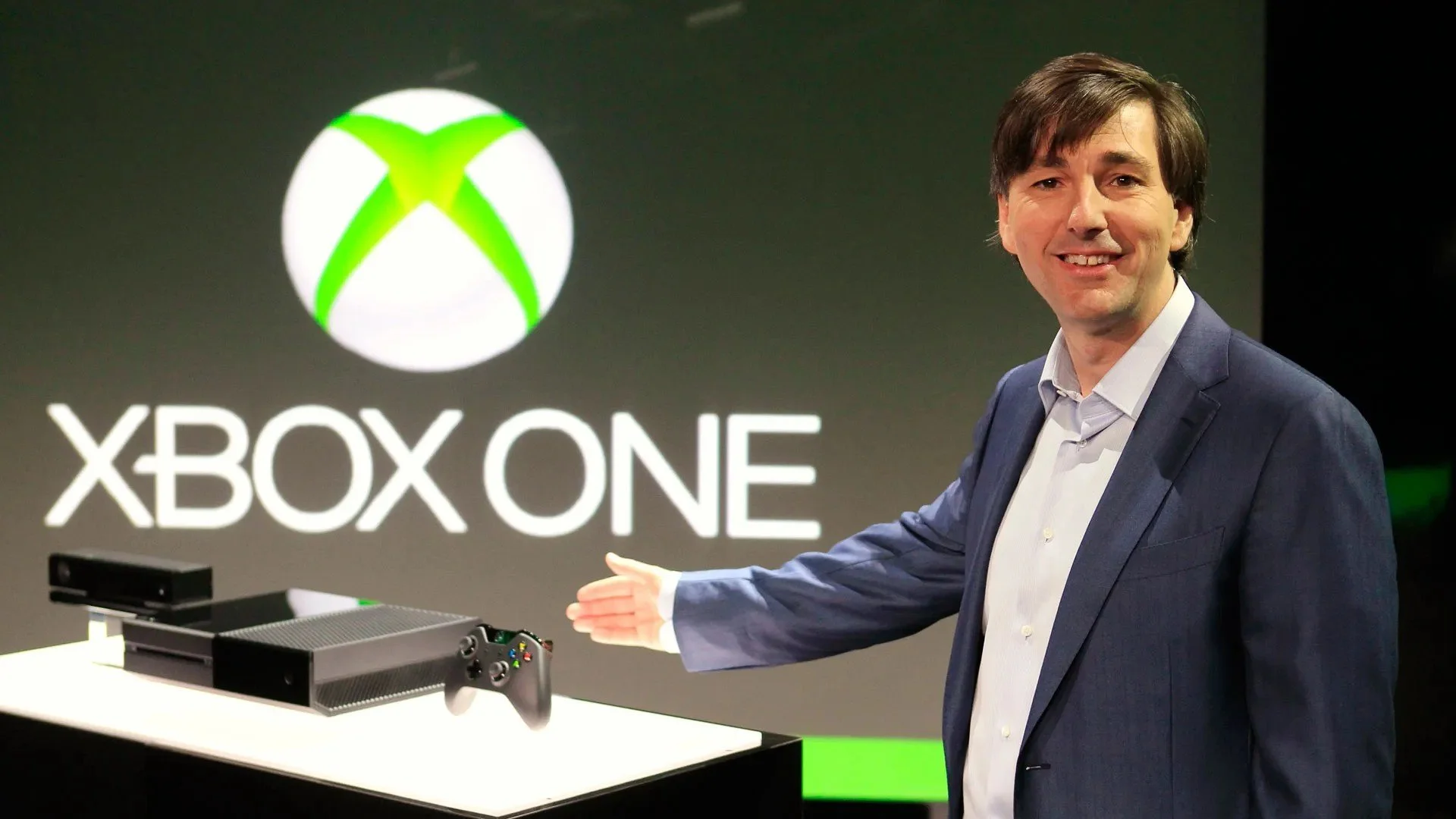
Nintendo’s apathetic response to the criticism surrounding the Switch 2 is also no novelty. Launching in 2013, the Xbox One came under fire after it was announced that it would have to be connected to the internet to work, which, for anyone with an unstable internet connection, would mean they had paid for a useless product. In a similar vein to Nintendo, the then Head of Xbox, Don Mattrick, responded to critics stating, “…we have a product for people who aren’t able to get some form of connectivity, it’s called the Xbox 360.” This statement was not received well either, and Mattrick left the company a few weeks later.
Additionally, the way that Switch 2 was priced did not appear from a vacuum. In the last two decades, primary revenue models in gaming have shifted away from premium triple-A games towards live service free-to-play multiplayer titles, which make money from in-game micro-transactions over sustained periods of time. Games and consoles are increasingly cut up into ever more sellable parts, and what would once be sold as a single product is now accessible through multiple purchases and repeated in-game microtransactions over the course several years. DLCs and expansion packs are much more common, charging yet more money for levels, characters, abilities, or even story endings that would once have been included in the main game. Single-player titles like Assassin’s Creed Odyssey and Valhalla have attracted notable frustration for playing into this. Both launched with gameplay loops that required endless grinding for XP to access main quest missions, incentivising players to spend more of their real money on upgrades, outfits, or weapons only available in the games’ online shop.

In this light, the Switch 2 controversy appears as a clear result of the industry’s current approach to monetisation. Everything Nintendo has done- from the price rise itself, to selling the Camera, GameChat, and the tech demo separately to the main console despite being ‘essential’ aspects of the console experience, to its apathetic response- is completely in line with the way the rest of the industry is moving. These ever-increasing prices, constant micro-transactions, and attempts to monetise as much of gaming as possible have real consequences on gamers that cannot be ignored. Gaming already sits on the edge of affordability for many people. If prices continue to increase as they are, people will be pushed out of participating, with some at higher risk than others.
For gamers with physical disabilities, games, controllers, and consoles can be extremely difficult or impossible to use. Though adaptive technology has come a long way, such technology rarely comes for free. According to UK Charity, SCOPE, one of the biggest barriers disabled players face is the affordability of assistive/adaptive technology. The Xbox Adaptive Controller and PS5 Access Controller each cost £75/$100 and £79.99/$89.00 respectively, on top of the cost of the original console itself. On the more extreme end, the QuadStick FPS controller would cost a player $549/£443, plus a $100-$250 mount.
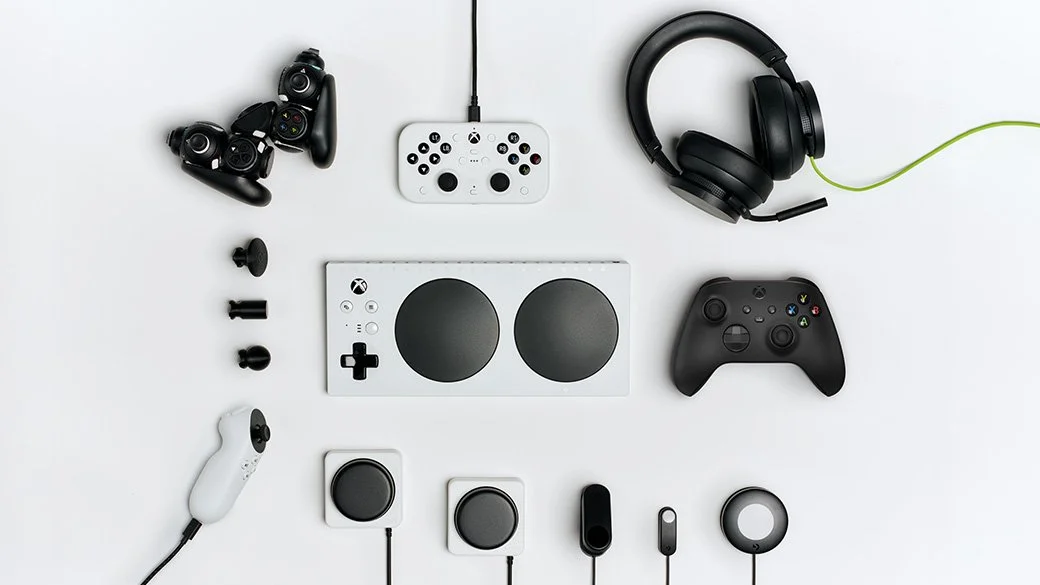
For a more personal example, a friend of mine who has cerebral palsy recently began her journey into gaming. When I asked her about her experience, her answer was not dissimilar to the issues described above, stating that “it was difficult to know which type of adaptive equipment could help me to play games independently. Every possible adaptation seemed to cost hundreds of pounds.” In the end, a charity, SpecialEffect, loaned her the necessary equipment. That disabled people must pay extra to access the same games and consoles as everyone else is a stark reminder of the inaccessibility that still exists within the industry, and of how potentially damaging sky-high prices can be. And yet, when such concerns or frustrations are raised to higher-ups in the industry, they tend to be dismissed without much thought.
In Conclusion
The controversy around the Switch 2 might appear as an isolated incident, but it was the product of longstanding industry-wide issues regarding accessibility and affordability. Gamers weren’t angry at Nintendo because they hated Nintendo; they hated that they were being priced out of their hobby. They wanted to participate and couldn't afford to, and, on voicing their concerns, were met with apathy and disinterest. When the Switch 2 backlash is considered alongside wider industry trends- generally rising prices, a consumer base more economically insecure than it was ten years ago, fan concerns continually met with apathy from execs, and a tendency to cut up games and consoles into ever more sellable parts- one can easily draw a line connecting the two. The Switch 2 backlash is a direct consequence of such trends.
It is worth noting that despite all this anger and outrage, the Switch 2 is still the fastest-selling video game console of all time. What remains to be seen is if that pace will continue. The limiting factor for new hardware sales is usually how many units a manufacturer can get out there in the launch window for the most fervent and least price-sensitive customers. Any console this hyped up will sell out at launch, and Nintendo flooded the market with consoles for the last few months. What may change over the coming months and years is that as the generation wears on, consumers and players who might have picked up a console on sale or as part of a bundle will be pushed away by prices that started out of their budget and now might even be increasing as the years go on.
There is no easy solution to this. Video games are the pinnacle of creative technology. They are expensive. But games are also experiences, art, and places of community. They should be accessible, and affordability is an important part of that. Concerns over pricing shouldn’t be so easily dismissed. Financial barriers affect gamers in so many ways, and it should be talked about more often, more openly, and with more intention of fixing it than it is. Accessibility and affordability should be a priority for the gaming industry. Or we will only end up in the same situation again in another few years, with another generation of players being pushed out of the medium.