Review | I Hate This Place - Nominative Determinism
I have a love-hate relationship with crafting. Whilst most online survival crafting games don’t appeal to me, there is something to be said for the complex contraptions and base-building exploits of games such as Satisfactory. The exponential chain of equations that result in better, more efficient creations as you refine raw materials into useful gadgets tickles a part of my brain. In I Hate This Place, the sophomore effort from Rock Square Thunder, the game’s extensive crafting system is so inconsequential that it made me rethink the very nature of games and why we play them.
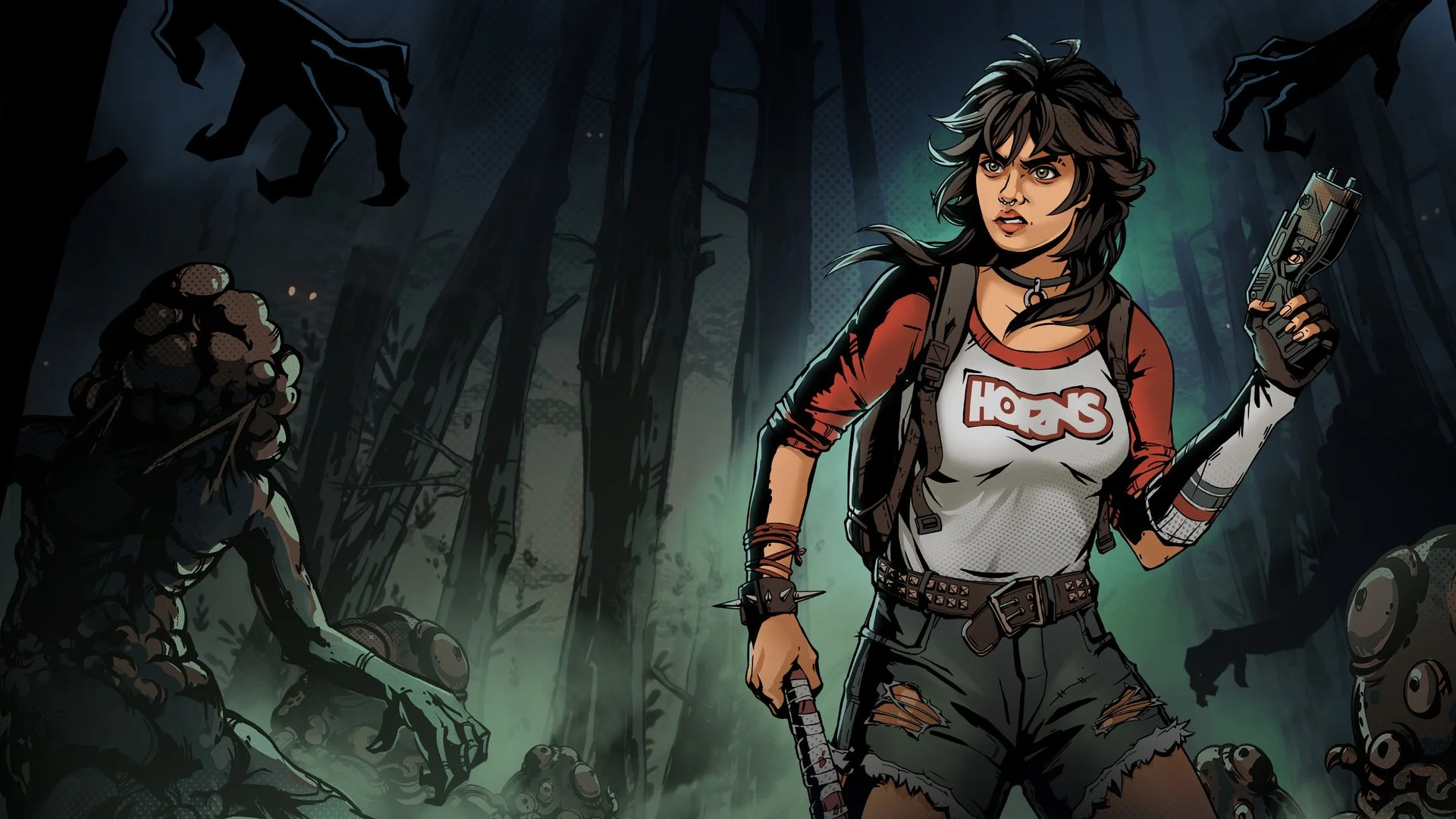
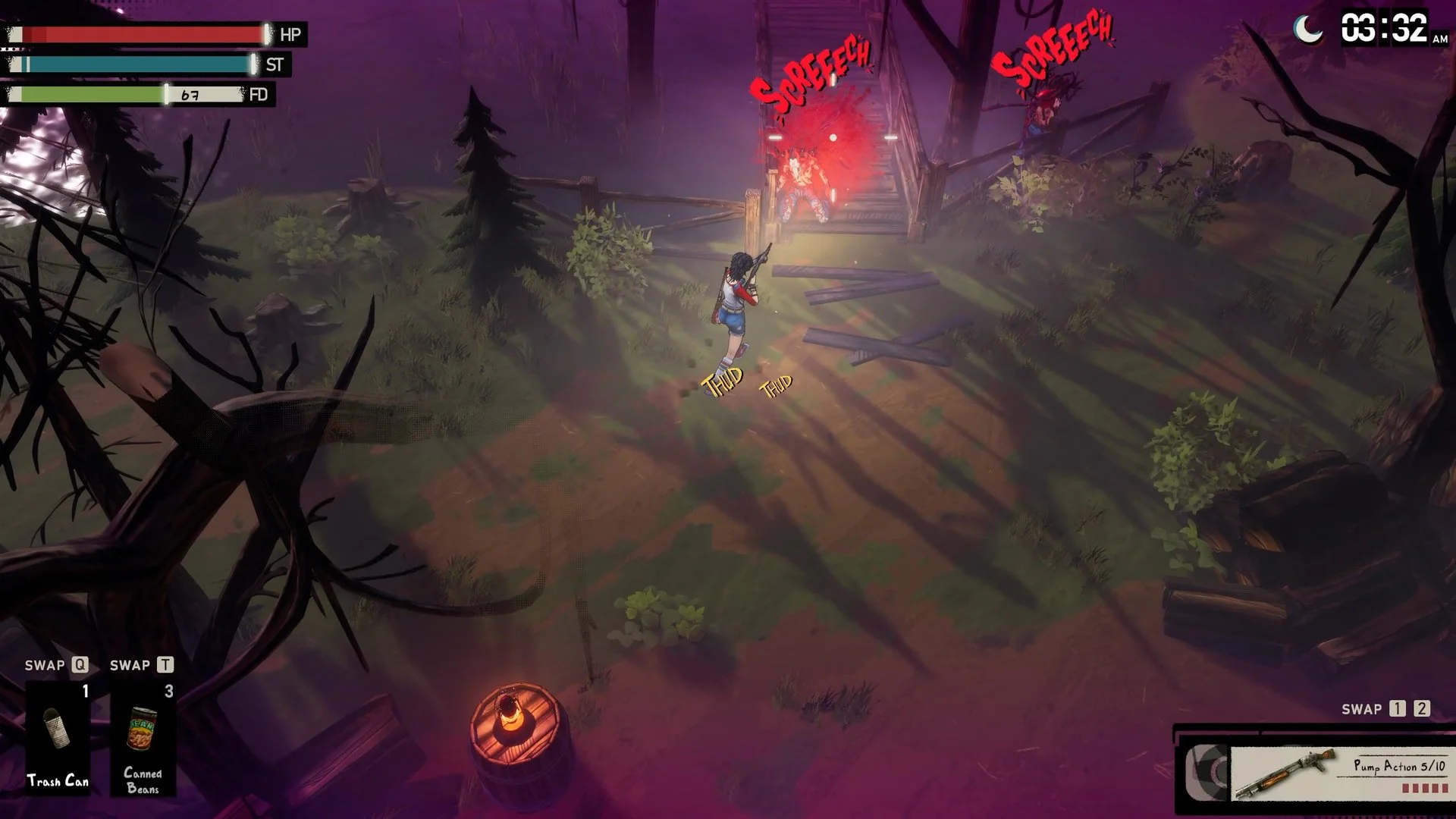
Let’s rewind, like the VHS-inspired graphics dashed across this game. I Hate This Place is a retro-inspired, isometric open-world survival horror with crafting mechanics. You play as Elena, who returns to her hometown with friend Lou in tow. Lou goes missing, and in trying to find her you end up in a bunker filled with strange creatures. You’re also guided by a cult member who wears horns on his head.
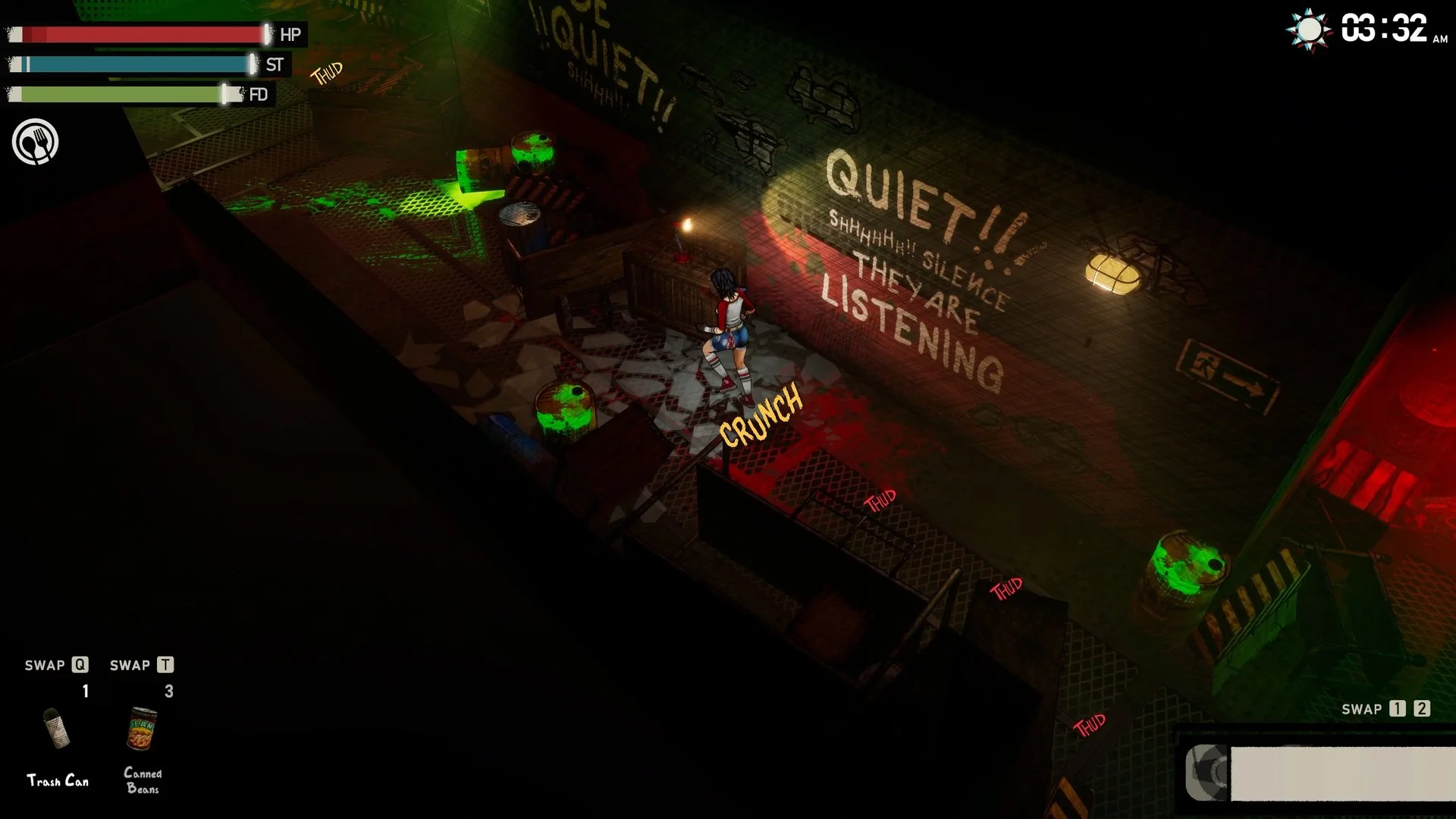
This opening section, which takes place in an underground bunker, is promising but messy. The isometric camera struggles with the claustrophobic environment and it’s often unclear which way to go. Then enemies appear who rely on sound, so you must crouch to sneak around them as your weaponry is limited. But they seem to have pinsharp hearing, or I was doing something wrong, as more often than not they’d charge right at me.
The mechanics of finding keys or codes to get to different parts of the bunker are simple but enjoyable enough — evocative of early survival horror entries such as Resident Evil — but the super-hearing enemies are difficult to kill and the game seems to struggle with any attempt to tackle them in interesting ways.
For example, in one early room I’m confronted with a tank of an enemy who takes so much effort to kill that I thought there must be some other way to deal with it. Then I realise that the doors I’ve been going through can be closed behind me. Great, let’s trap the bastard! I threw an empty tin can into a room I’ve already scavenged to attract his attention, then pressed the A button to close the door behind him. It worked! But then the beast swung his bulbous arms through the closed door and grabbed and killed me. Whether or not the developer intended my solution to be an option is immaterial; the game was so buggy when I played it that it just wasn’t possible. All that being said, Rock Square Thunder recently released a patch that addresses some bugs and has promised further improvements.
As the game progresses we leave the bunker for a somewhat open world. This is where my experience really fell apart. Despite being freed from tight corridors, the isometric view makes it even harder to navigate than before. Is that a path through the trees or not? I couldn’t tell so I just ran around the boundaries until I found a way through. Enemies appear every so often but you can usually just run away. There is little threat or challenge.
The focus on crafting and survival begins here, too. As well as your health bar, you have stamina and hunger meters. Stamina recovers instantly upon standing still for a second or so. Hunger slowly ticks down and you must clunkily select something to eat using the D-pad and press Y to consume it to refill the bar. Your hub, a ranch belonging to your aunt and uncle, allows the construction of all sorts of machinery and workbenches and vegetable patches. But it’s all utterly pointless, because any resource you can craft at home can also be found in abundance throughout the game’s map.
Your hunger bar can be refilled to full by munching on scavenged packets of crisps or tins of food. Your health needs first aid kits or bandages or painkillers which are easily found every time they might be needed. You can also craft large amounts of these items, making dozens of first aid kits or bowls of soup. There are differences between the quality of various foods and healing items, but it is so slight that it’s easier to just mass-produce the easiest thing. While crafting and building takes up time in-game, you can speed up anything in your queue by taking a nap — I Hate This Place has a day and night cycle which, again, has little effect on your gameplay. The only thing preventing you from constantly sleeping to maximise your resource loop at the start of the game is that you need to find blueprints for certain machinery or weaponry. There is no downside to just letting time pass by sleeping or using fast travel.
It feels to me like the developers needed another bullet point with which to advertise the game, because the nature of the crafting and survival is so trivial and without challenge that all it serves to do is sand down the rest of the game’s difficulty. When utilising limited resources in the game’s opening section, the game showed flashes of something interesting. With 20 first aid kits and 60 shotgun shells in my backpack — all of which took ludicrously little effort to create — subsequent bunkers and enclosed areas became a breeze. There is some enjoyment to be had in the simple loop of finding keys and reading melodramatic notes left by dismembered lab workers, but there’s no danger, no excitement, no dangling carrot and no pointy stick.
As I upgraded the Rutherford Ranch, I really thought about putting the game down. Why am I engaging in repetitive mechanics to prepare for meandering journeys through forests and swamps? What am I getting out of this?
Notably, the game’s most interesting sections don’t even give you access to your inventory. There are four ghost stories in which you are transported to another realm to find out what happened to spirits that appear in the world. Like most of the game, this amounts to looking around an area to find items — instead of keys, here it is literature explaining things that had happened — but instead of your usual weaponry, you can shine a light to slowly chip away at ghostly enemies’ health and unearth hidden things in the environment. One thing I particularly liked about these sections is the fact that the game doesn’t hold your hand. It’s up to you to come to a conclusion about the victims.
Even here, however, the camera and level design is frustrating. One story seemed designed to guide you along a certain path, but filled the rest of the level with empty space in which you could get lost. It’s just sloppy. And whilst it’s interesting that you can come to your own conclusions based on the info you discover, there doesn’t seem to be any effect on the game based on how accurate your answers are — except for an achievement, of course.
As mentioned previously, I must stress that I found this to be a very buggy game. I didn’t encounter any game-breaking bugs during my playthrough, but there were constant visual and loading glitches, from cutscenes breaking the illusion of the game by temporarily dumping your characters back to where they were in the game world before a cutscene played out, to enemies and geometry who appeared out of nowhere mid-play. Although some of these bugs have since been addressed — in particular the world pop-in — the game does not offer much to draw me back for what’s now promised to be a smoother experience.
I Hate This Place has some good points — an art style inspired by the Kyle Starks/Artyom Topilin comic of the same name; a somewhat interesting plot involving cults worshipping demons, underground science labs, and familial drama; and a refusal to handhold the player through some of its more esoteric puzzle solutions. But it’s largely just a collection of half-baked mechanics that don’t gel and feel like busywork. I cannot recommend it.
I Hate This Place was played on PC with a code provided by the publisher.