Review | Heroes of Might and Magic: Olden Era (Early Access) - The Start of a Golden Era
My love for Heroes of Might and Magic: Olden Era locked in when I began executing some real finesse with my scumbag underhanded tactics against my long-time friend and long-time strategy rival. I dealt a decisive blow with a combination of casting Berserk on his angel, causing it to tear through his own archers, and hastening my own knights in order to get the jump on his mages. He was livid. While I initially thought a first-turn victory was guaranteed, my opponent leveraged sheer ingenuity to pull through by deploying army tactics, spell combinations, and unique unit abilities I hadn’t at all anticipated. And this was just a quick, casual battle. That is the brilliance of Olden Era. At a glance, it presents straightforward army and unit management, but the depth and volume of content available at this stage is nearly unprecedented for an early access game this early.
Developed by Unfrozen, Olden Era also benefits from Ubisoft, the owners of the franchise, stepping away as publishers and allowing Hooded Horse to do so instead. Its early access release is a welcome move, particularly as it comes without the typical baggage an Ubisoft release entails. For example, Ubisoft’s recent Anno Pax Romana release had technical issues, DLC not covered by the season pass, always-online requirements, and undisclosed generative AI usage. Not having to deal with the uPlay launcher is also a nice benefit.
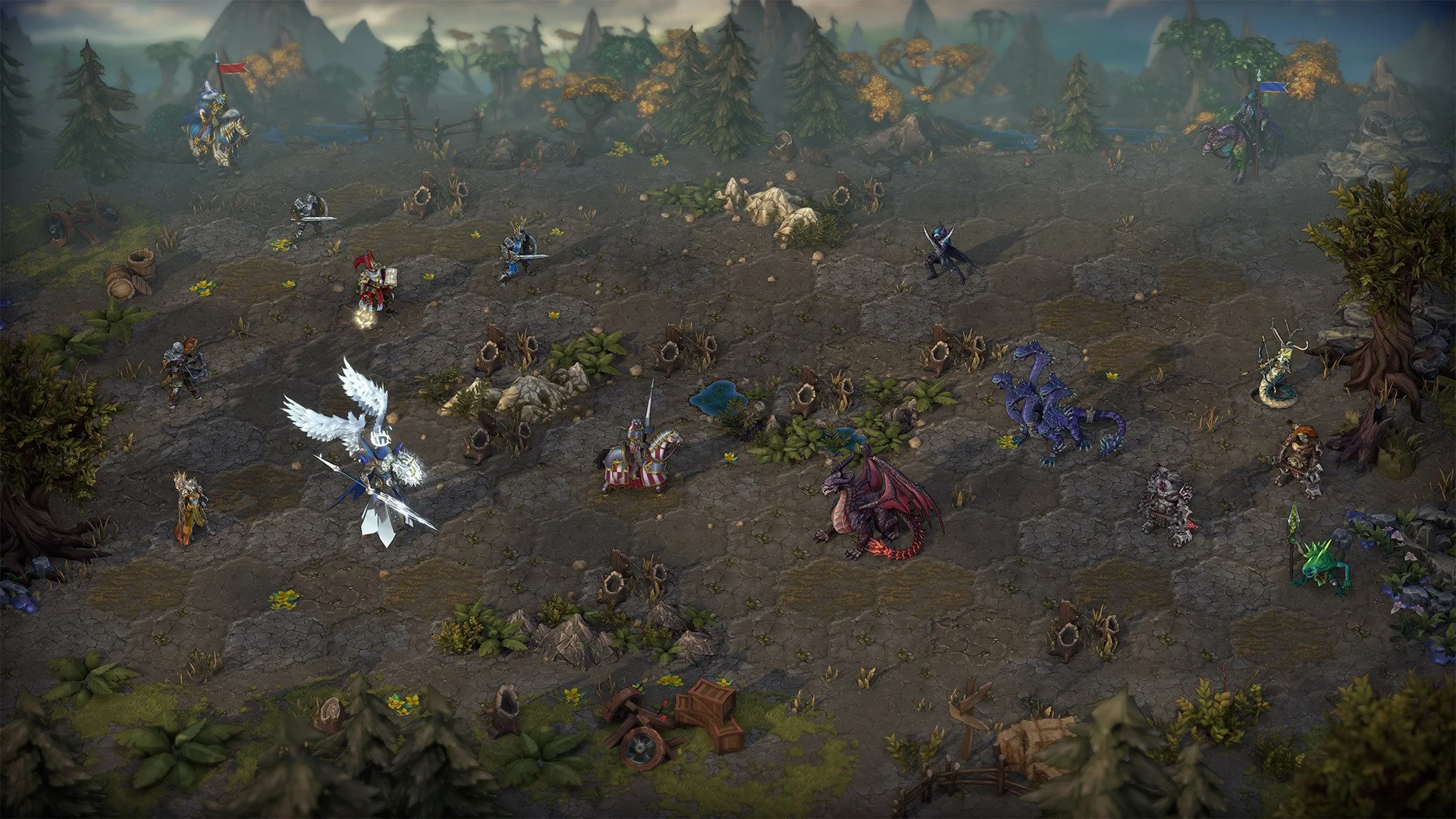
Before Total War, Heroes of Might and Magic was the series with a distinct separation between a strategic world map and its combat. The overworld has players asynchronously manage towns and recruit armies while using the titular heroes to battle neutral monsters, gather resources, and contest key terrain. When battles occur, your hero-led armies go into a tactical, chess-like hex grid that showcases every individual unit type in your heroes’ ranks.
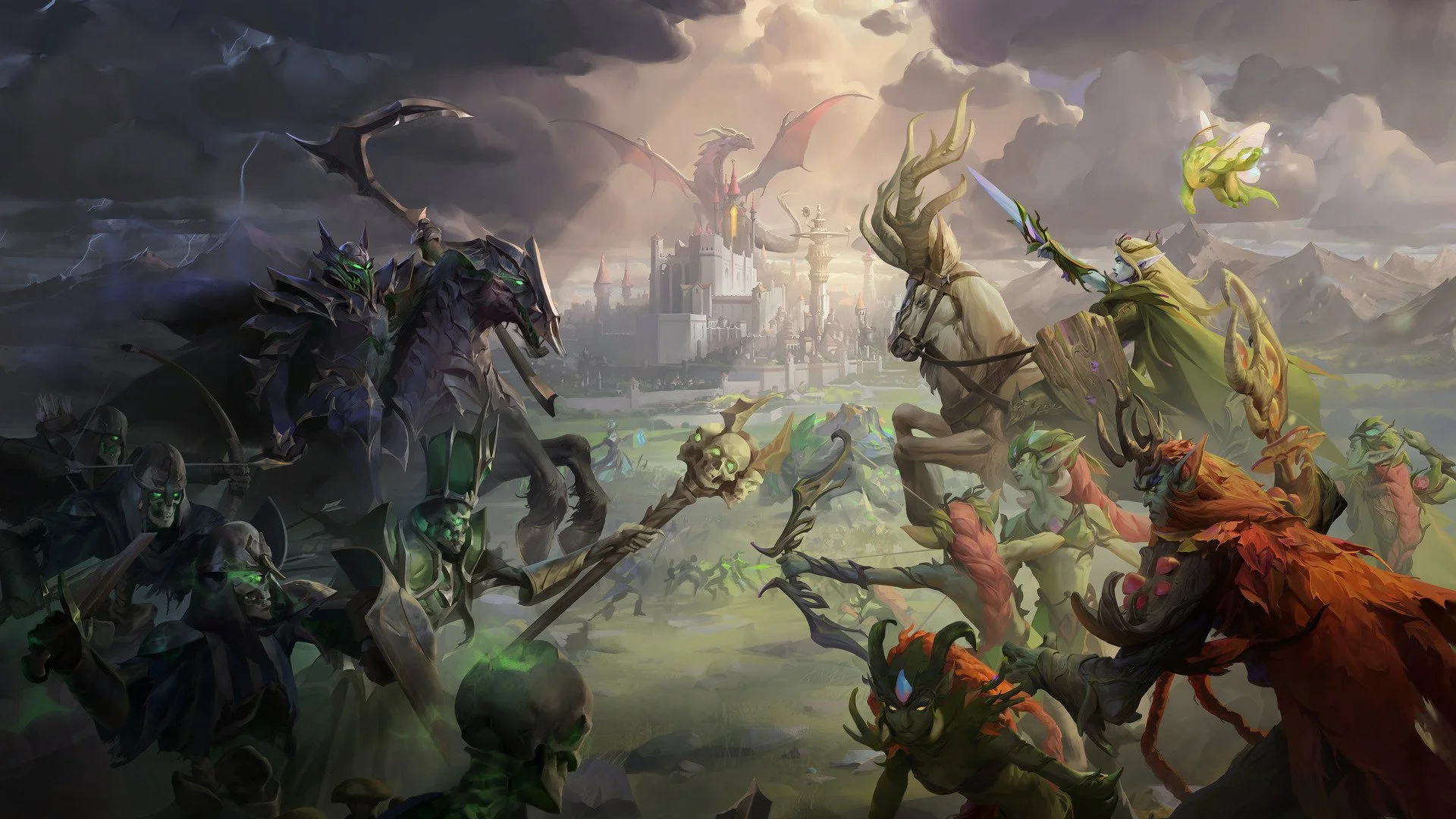
The game shines brightest in the rich and unique strategies that the player can deploy due to its large variety of mechanics, particularly from a huge range of spells, units, and faction-specific mechanics, that grant a lot of player expression. There are six distinct factions that you and your opponents can select from: the pious human paladin Temple, the demonic insectoid Hive, the dark elf Schism, the skeletal Undead, the druidic and fantastical creatures of Grove, and the scrappy cave-dwelling Dungeon creatures, each with their own fun, distinctive gimmicks. For example, Undead can add fallen foes to their undead army and the aquatic dark elf-cum-Lovecraftian Schism becomes more powerful after each victory. Add that the heroes themselves have their own stats and gear that affect how they move on the overworld, as well as in the battles of the armies themselves. The heroes gain three random upgrade choices per level, which can end up making you pivot into wildly different playstyles even if you played the same match again with the same characters and settings. This, coupled with Mage Guilds that unlock random free spells in a large roster, means flexibility is mandatory, especially since your opponent is adapting in tandem. Overall, the game fosters a highly rewarding environment for bizarre and what feels like pioneering experimentation.
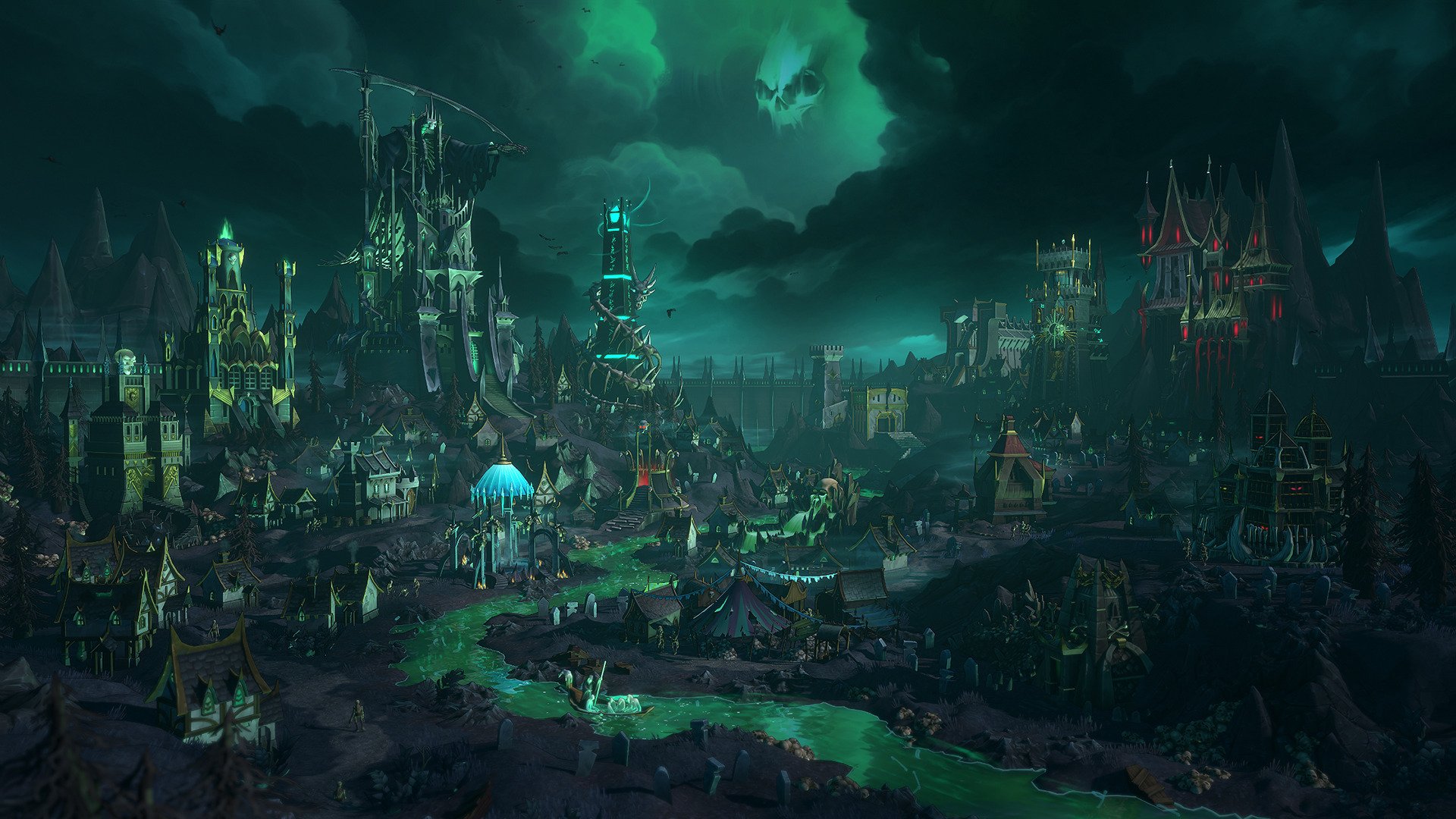
One of the best aspects of the game is how everything works to fit a faction's archetype. Each faction boasts a unique biome, a bespoke orchestral score, and beautifully-realized cities. Most notably, each faction has seven very distinct units, each with two variant upgrades. Add in many neutral monsters and the world of Enroth feels huge, particularly due to the help from the game’s vibrant and clear yet punchy art style. The factions’ unique playstyle gimmicks and the fact that every unit is given a unique active and passive allows for a satisfying gratification just in playing the role. I never tired of my Undead legions building up the towering Necropolis, with screeching violins and heavy brass filling the air, raising an ever-growing army of skeletons..
The game's tutorial challenges deserve praise, as they avoid the common issue of being bare bones or hand-holding. They force players to master core mechanics to survive. If you fail to ferry troops between heroes or neglect to split your unit stacks, you will learn the value of those mechanics the hard way when giant insects tear your army apart in seconds. It acts as a good introductory way to take in the game’s many concepts, units, and abilities, particularly when taken alongside a fairly slow yet robust first act of a campaign mode, with characters that progress over levels.
While the last major game, 2015’s Might and Magic Heroes VII, also attempted an homage to the acclaimed Heroes of Might and Magic 2 and 3, it was met with derision due to being incredibly unstable and not introducing many new elements. Olden Era avoids this by evoking Heroes 2 and 3 more as an homage while also modernising the gameplay well. A standardised user interface and key bindings make it far easier to switch factions easily. Accessibility and interface settings already showcase a high amount of options even compared to a full-release game. Most notable is the addition of a more casual Arena mode that introduces a more relaxed pick-up and play feeling. It offers selections between gear, heroes, and units for a quick battle for opponents that acts as a great, noncommittal way to experiment during short sessions, compared to trying zany nonsense in a full match that may last hours. The additional map-maker already available from launch of early access, let alone having one at all, provides an at times overwhelming sense of content.
While Olden Era has an abundance of modes available from the get-go, it does have its issues. Despite the well-tuned tutorial, it still has a steep amount of onboarding combined with a user interface that becomes somewhat fiddly when making repeated actions. The biggest issue generally comes down to the fact that players must rely on frustrating trial and error to discern various units’ functions. For example, while base units are easily identifiable in combat, their upgraded variants lack visual clarity and don’t feel like they have anywhere as much impact. When added to the stacks of army sizes and all the other variables, the lack of clarity can become overwhelming. Additionally, the vast spell system can also feel deeply overwhelming; navigating multiple magic schools, global map spells, and randomized Mage Guild unlocks creates a chaotic learning curve that dramatically swings the experience from match to match. Sometimes it veers from fun and silly to frustrating. The sheer breadth of availability can also dilute the distinctness of factions. You can easily find spells and hero upgrades you like and use them over and over in every match rather than playing to a faction’s intended playstyle, for example.
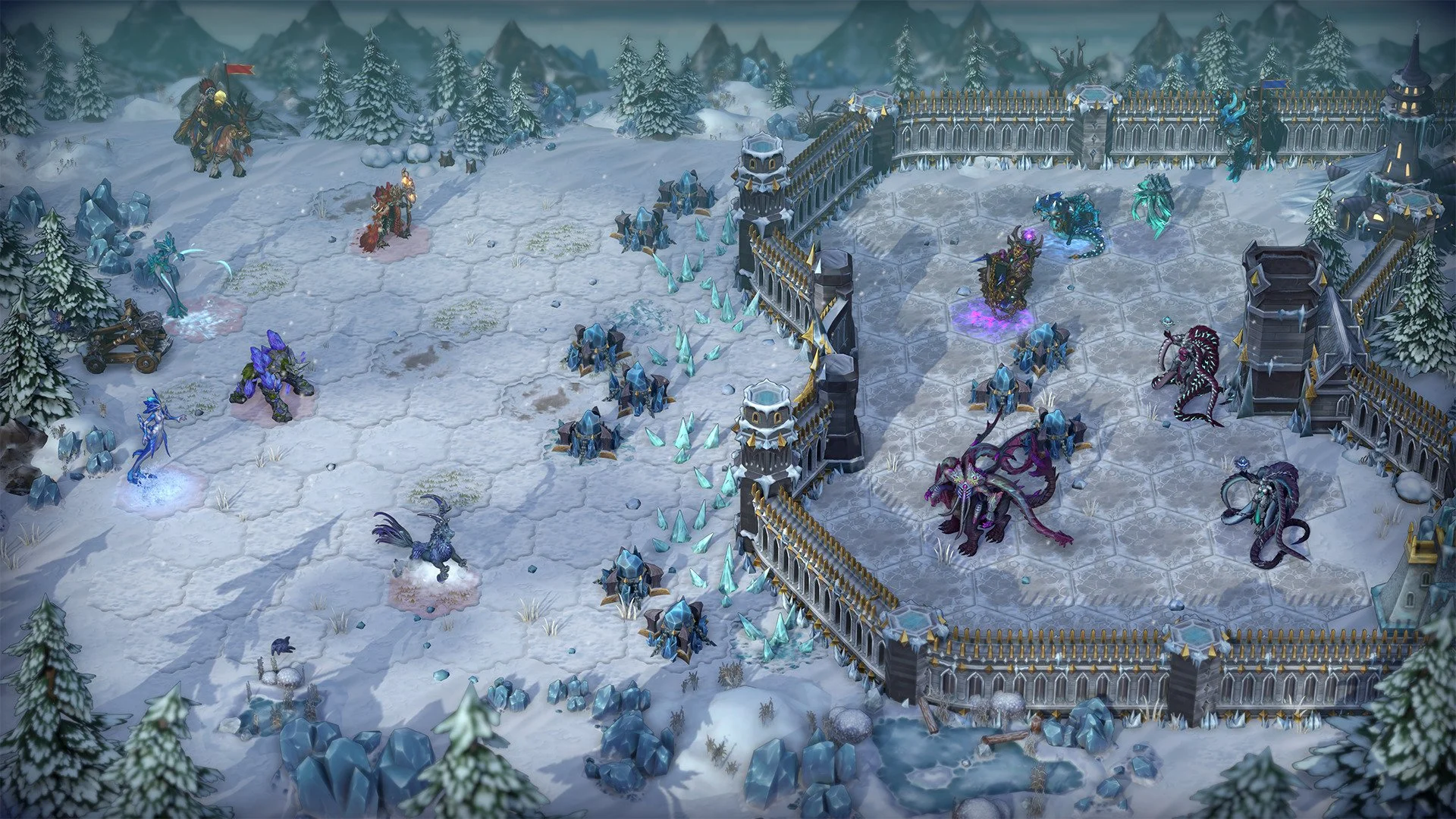
Heroes of Might and Magic: Olden Era is a triumphant revival of a 30-year-old franchise, which successfully captures the nostalgic magic of the series' roots while delivering a deep strategy experience that already feels remarkably robust. Though its menus are at times cluttered and the overwhelming volume of mechanics can occasionally homogenize the broader elements, the sheer joy of its tactical combat outweighs these early shortcomings. It is a thrilling start to early access, and with fiscal pressure reduced due to having a million copies sold, I’m incredibly optimistic for its future roadmap.
Heroes of Might and Magic: Olden Era was played on PC using a code provided by the publisher.