Review | Romeo Is a Dead Man - What’s in a Name?
Romeo, Romeo!
What’s in a name? Would that which we call a DeadMan by any other name be so sick? Perhaps, but Romeo is our dead man all the same.
Developed by Grasshopper Manufacture Inc., the team behind titles such as Killer7, The Silver Case, and No More Heroes, Romeo Is a Dead Man is the latest entry into the “Kill the Past” series. But don’t let that fact deter you — Dead Man can be played on its own just fine. Truthfully, it is only loosely related to those aforementioned titles, containing mostly small nods to characters of yesteryear and few other connections.
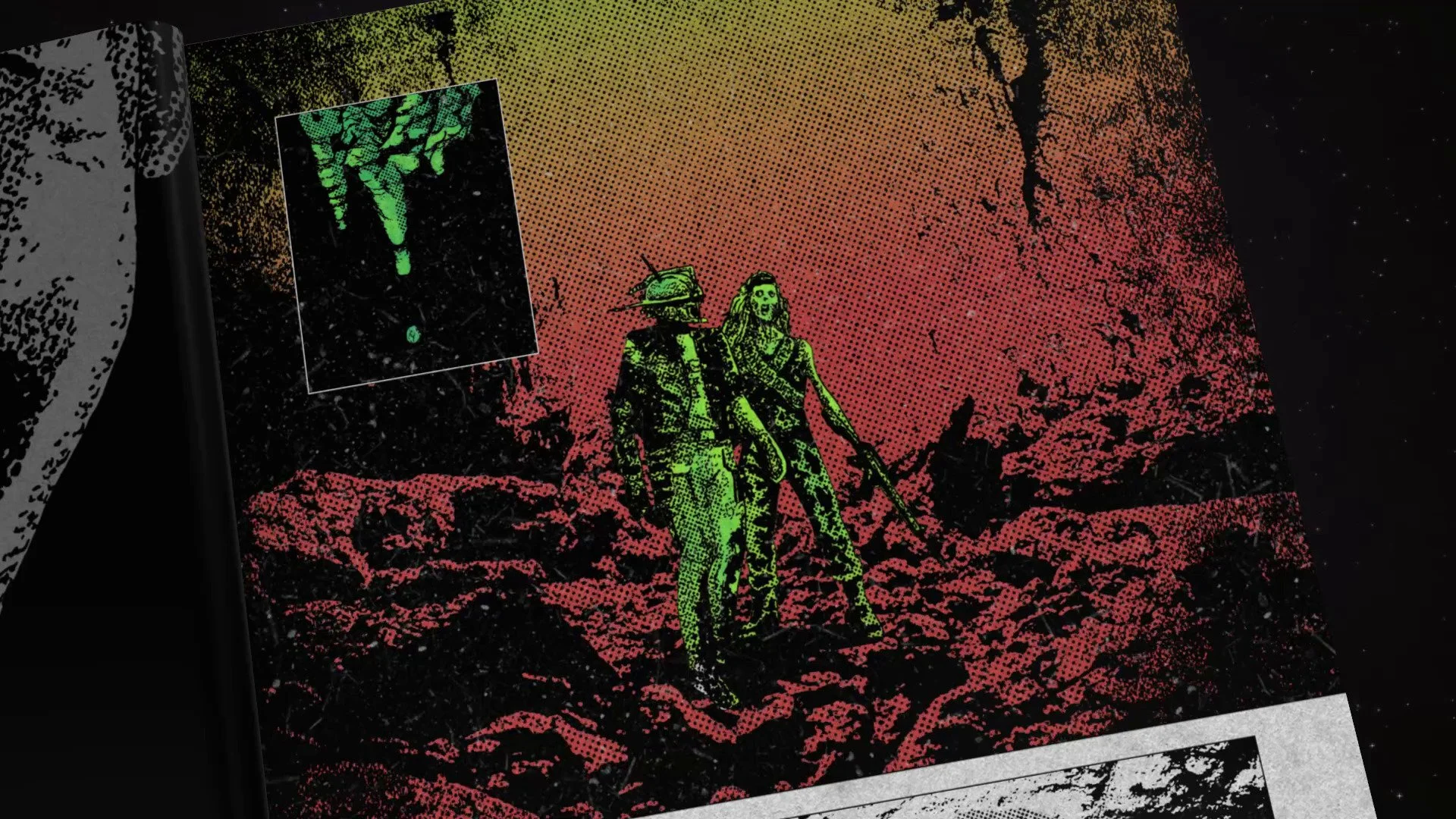
Romeo Is a Dead Man is an exercise in absurdity. I struggle to pin down how best to describe even just the opening moments. Frantic, disjointed, feverish — all apt descriptors, but the inconsistency is the point. We begin by looking out over a diorama of a small Pennsylvania town where our hero Romeo resides, but are then quickly shunted to a more realistic, up-close-and-personal visual style. It is here that Romeo first becomes DeadMan, thanks to the help of his grandfather Benjamin Stargazer, after being attacked by the “White Devil”. Immediately following this short animated cutscene, we are instead treated to a comic book–style retelling of Romeo and his love interest Juliet’s origin stories that differs from the events we just witnessed. In this version, Romeo is attacked by the White Devil while at home with Juliet. This short bit of exposition reads almost like a play within a play — our very own version of Pyramus and Thisbe.
After the comic book, we are brought back into 3D space for a brief combat tutorial against some rotters — which are the zombie-like enemies we fight throughout the game — only to then be shown a second comic book. In this next comic section, we learn of the Space-Time Force, Romeo’s role in it, and, of course, more about Juliet. Romeo travels the stars with the FBI Space-Time Force to bring stability to the timelines. However, he has another goal: to reunite with Juliet.
He races across time and space in search of his lost love, but much like their namesake characters, destiny seems to hold some contempt for their union. Fate has forced Romeo to face Juliet after Juliet in battles throughout the multiverse; these visions serve as little more than a dream within a dream — grains of space dust that slip through Romeo’s fingers no matter how tightly he grasps them. They’re star-crossed lovers in the most literal sense.
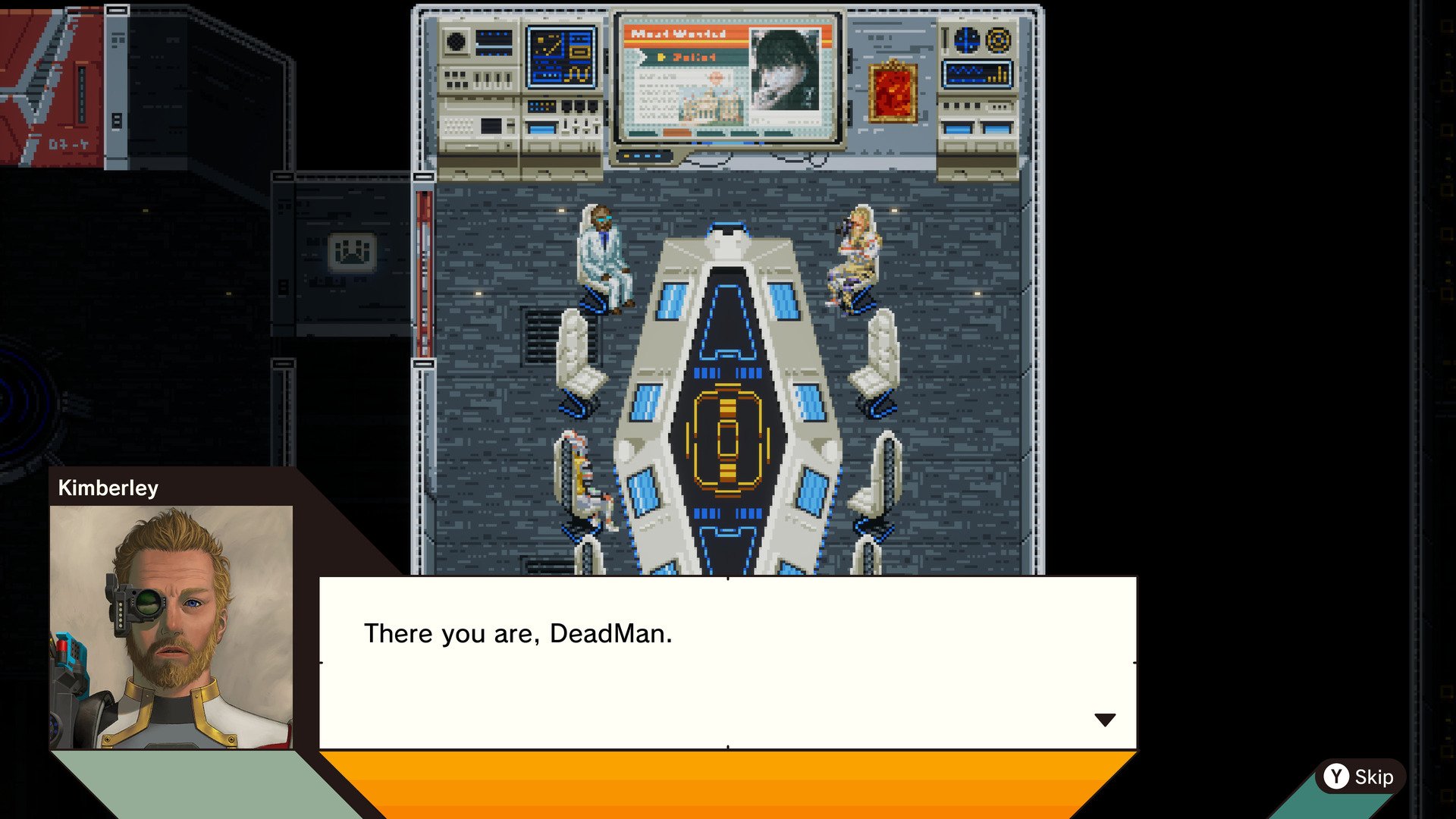
After one more quick tutorial section, there’s an additional change in perspective. Now, Dead Man is a 2D pixel game on a spaceship. Shifting perspectives, art styles, and jumps through time all happen frequently early on, but never fully stop. That’s something I truly appreciate about the game, I suppose. For all its allusions to past Grasshopper Manufacture titles or other works, it never feels too familiar. It always keeps you on your toes and second-guessing what you’re seeing or hearing. One moment you could be in Subspace — the neon-lined pocket universe used to traverse inaccessible areas within a level — and the next you’re in a dark, creepy hospital with roaming ghouls.
Romeo’s ship (The Last Night) is home to a large number of diverse characters and activities. Your crew is an eclectic assortment of agents from different eras and universes, and many have their own in-game mechanical function. WorstPink is a nurse who suddenly appears as an anime girl and quizzes you about your personality, Shiroyabu is the vendor, and SilverSox runs a training arena where you may re-fight bosses to earn Emerald Flowsion (an in-game currency) and new pins (pieces of equipment that offer conditional stat bonuses while also serving as decoration on Romeo’s jacket). There’s also an arcade-style game where you can upgrade your stats, and even a cooking mini-game!
But amid all the abrupt changes we see, there are pockets of consistency as well. The combat and controls don’t evolve much over the course of the game. While you can unlock new melee and ranged weapons, they open up quite early, and none have their movesets locked behind progression trees or supplementary equipment. Once you have a weapon unlocked, its full suite of abilities is available to you. This, I feel, is a mercy. Dead Man already has so many obtuse systems for upgrading gear, increasing stats, and unlocking equipment that any further progression systems may come across as an undue burden for a relatively short title like this.
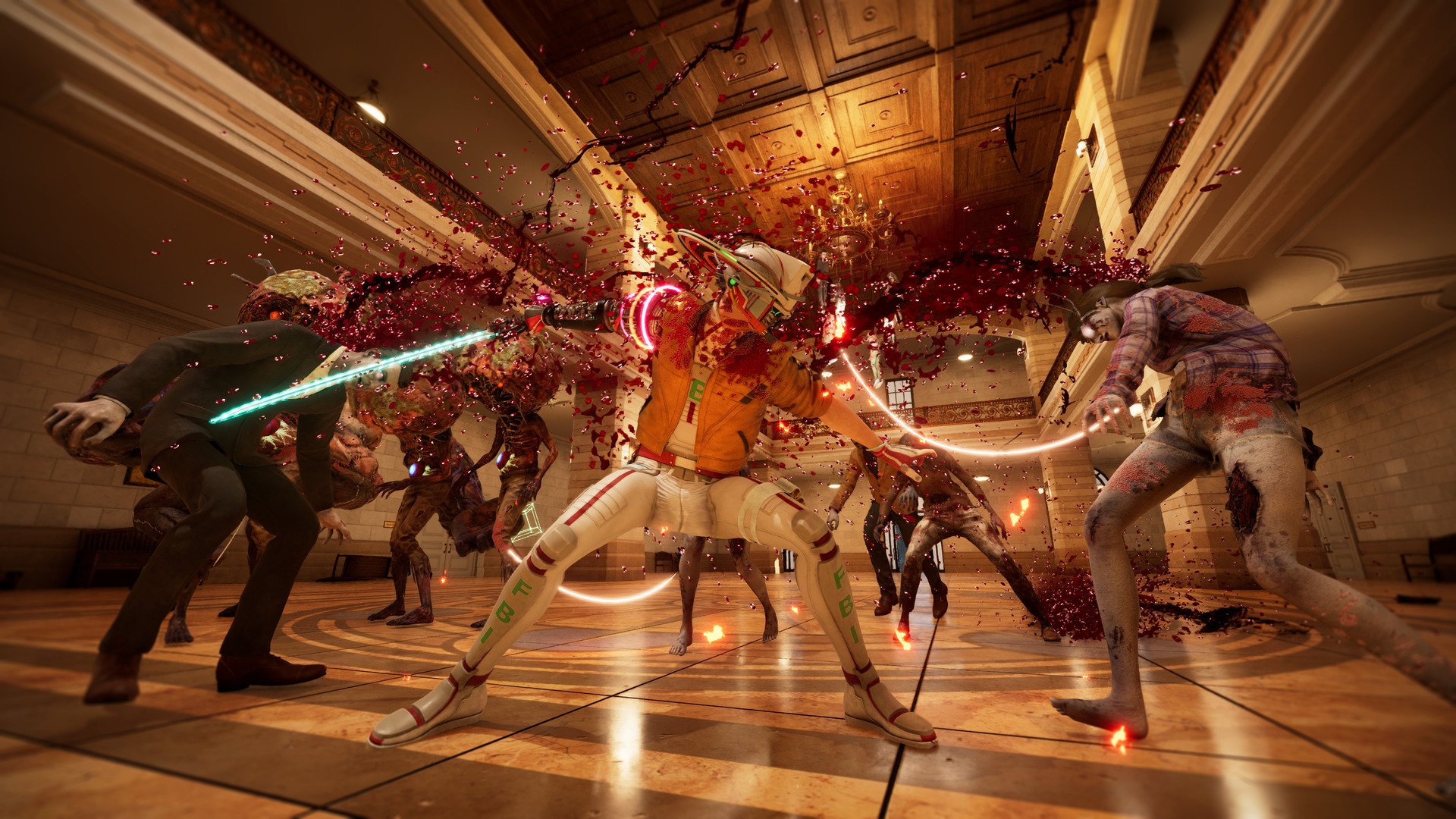
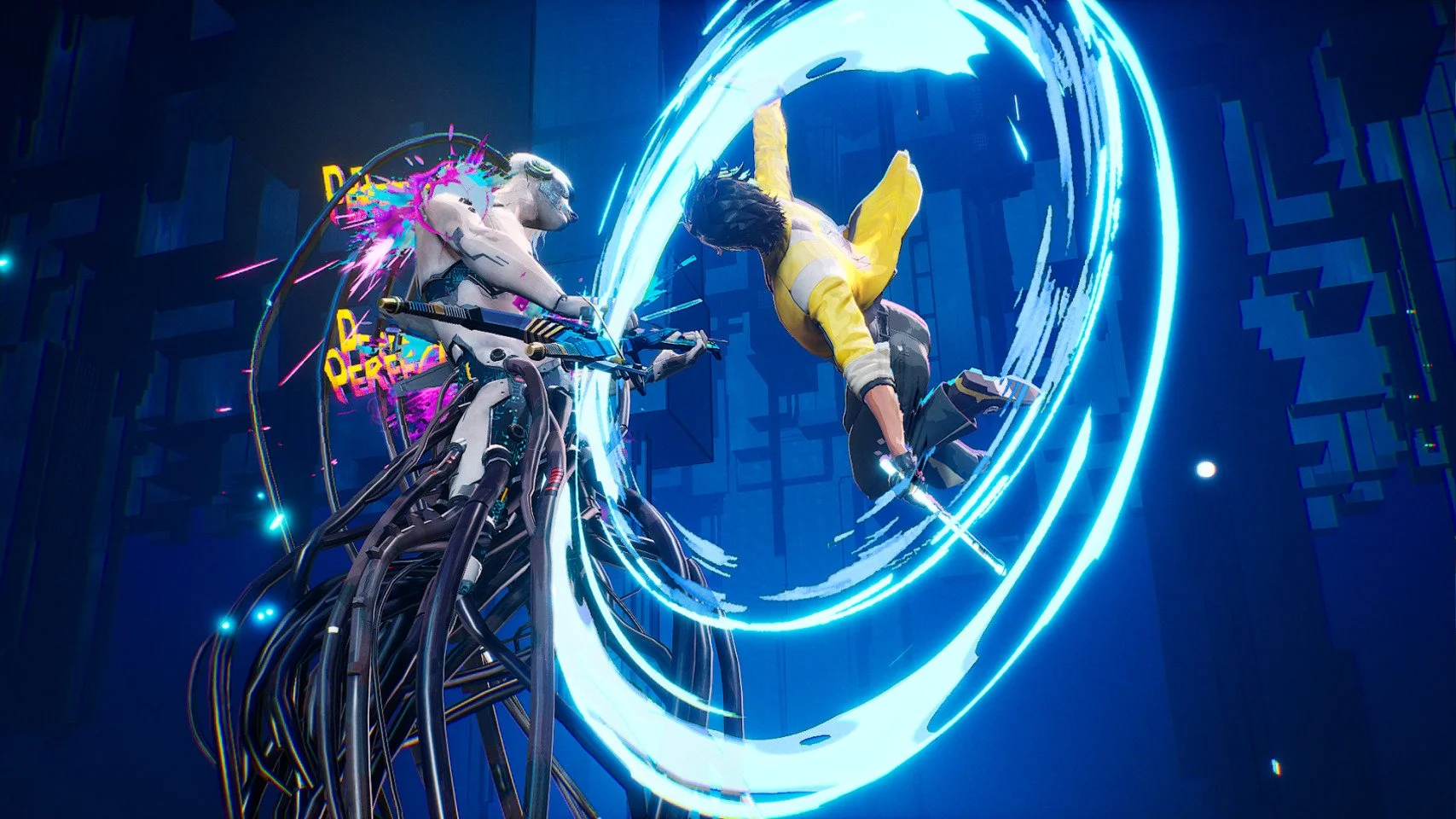
The combat is flashy and frantic, but the basics are simple enough to commit to heart. You have limited options: a light attack, heavy attack, dash, jump, dash attack, jumping attack, and a special move (Bloody Summer). Light attacks can be blended into a heavy attack string, but not the other way around, and there are no true special combos to use. For example, a heavy attack that follows three light attacks is the same as a heavy attack that follows a single light attack. The complexity of the battles rears its head in other ways.
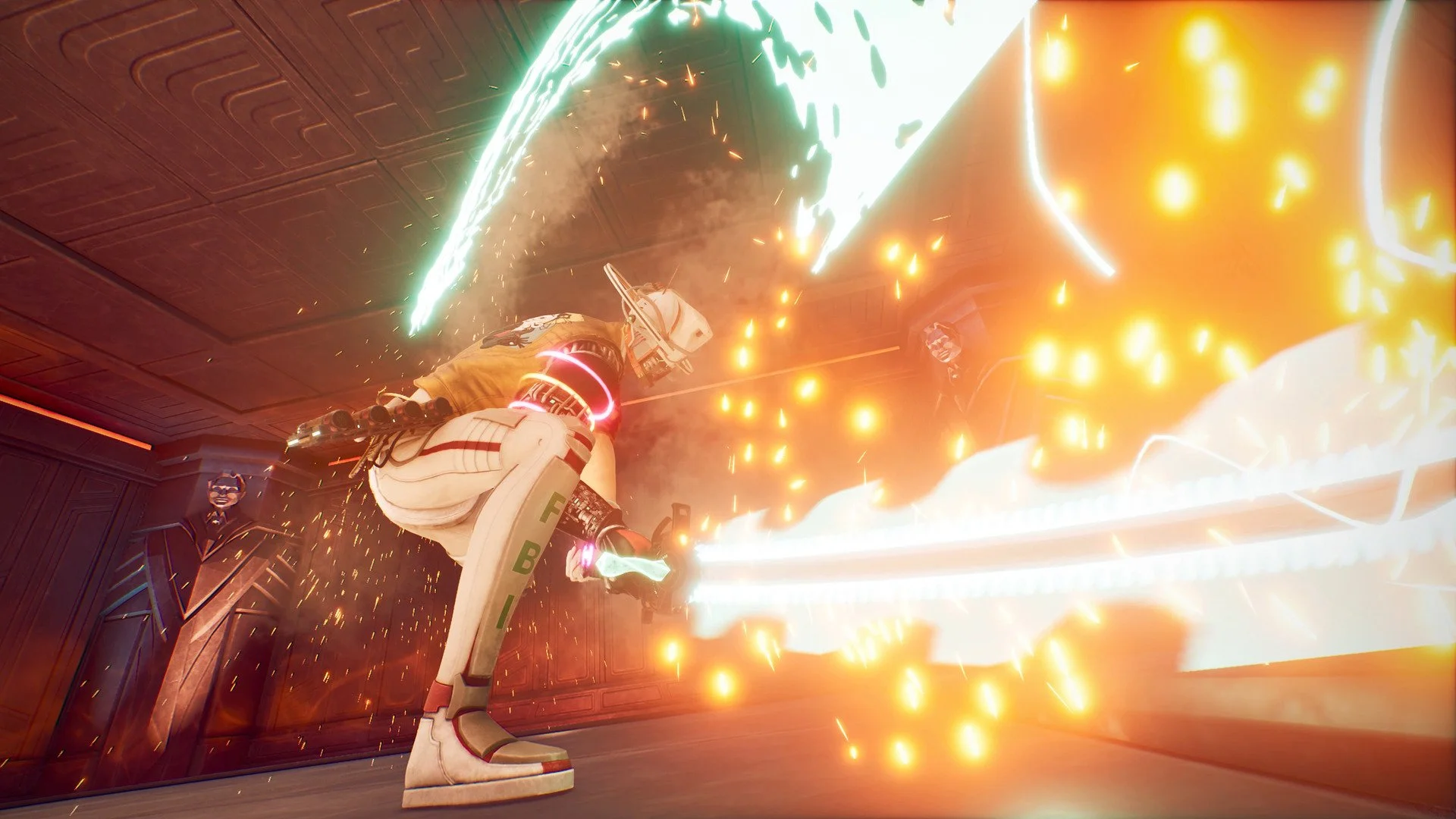
Despite the limited pool of moves, each weapon excels at different things, leaving you space to mix and match as you see fit. Where a greatsword has slow, sweeping attacks, the fists are focused, rapid-fire blows, and so on. Some enemy types may lend themselves to using specific guns or melee weapons, but it is not necessary to change styles if you prefer a particular moveset or combination. I made it through the entire game relying on the greatsword, fists, and shotgun almost exclusively.
You also have access to special creatures called “Bastards”, akin to summons from Final Fantasy titles. These rotters are your special little freaks that pop out, do a single move, and leave. Some are offense-oriented, while others fill more of a supporting role. With 21 different options to choose from, mixing your Bastards to fit a particular playstyle or mood is open to experimentation.
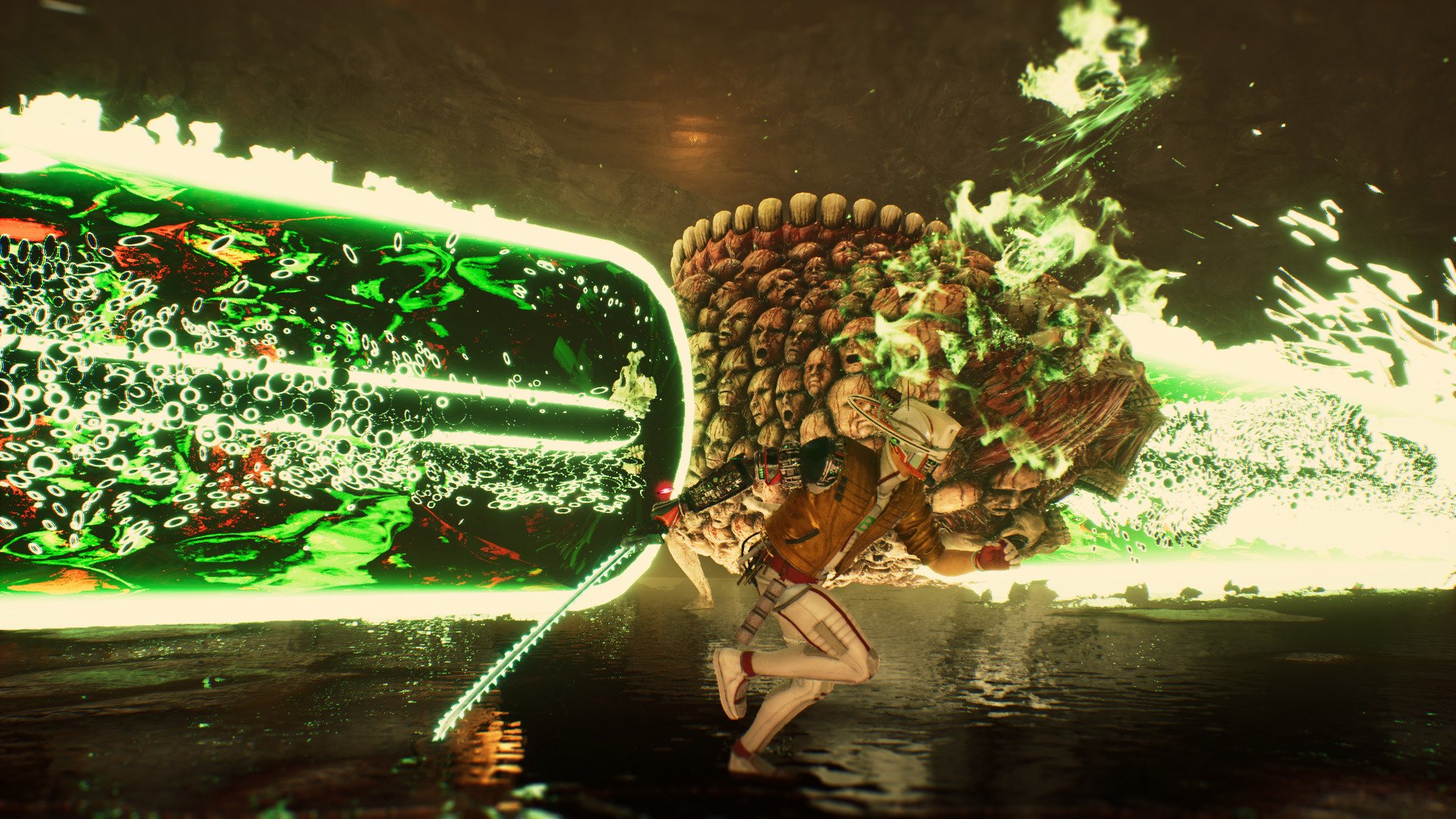
The combat shines the most in the boss fights — where the arenas are open, and enemy moves are the most interesting and varied — but it falls flat in the tighter rooms and corridors you find yourself in for much of the game. This is mostly because of the visual clutter of the move effects, combined with the camera acting erratically in small spaces. When you have enemies launching projectiles, your Bastards lighting up the screen, and the camera rapidly shifting around, things can become visually hard to parse.
I had hoped there would be some options in the settings I could tweak to alleviate this issue, but the available settings are quite limited. The “Graphics Quality” setting offers “Low”, “Medium”, and “High” options, but there is no indication of what each setting changes specifically. Perhaps even more bizarre, there seemed to be no difference in image quality when this setting was adjusted, leaving me unsure as to what it does, exactly. Thankfully, there are a few other graphical options that you can calibrate individually, such as texture resolution and shadow quality. Adjusting these did allow me to see noticeable changes in the visuals and performance of the game, but nothing could fix the visual clutter and camera issues I was experiencing.
As far as controls go, they are responsive, but animations are mostly locked in once they have begun. This means that, in many cases, there’s no way to fully cancel animations with a dodge or jump. This is pretty typical in soulslike games, where you have to commit to every action you take, though in Romeo Is a Dead Man, this delay also extends to actions such as Bastard summoning. The platforming elements in Dead Man may be limited, but the clunkiness of the controls also makes navigation more frustrating than it needs to be. That’s kind of how this whole game feels: nothing is quite perfect, and it always defies your expectations in one way or another.
Thankfully, Dead Man doesn’t only shun your expectations; it plays with them, too. Given the broader consumer obsession with multiverse stories in recent years, it should be no surprise that Dead Man serves as a commentary on them, given the premise. Characters like Shiroyabu from The 25th Ward: The Silver Case, make an appearance, but it’s not really the same guy. Your sister, who runs the Bastard farm where you plant and cultivate your rotters like vegetables, wears clothes that are eerily similar to Ash Ketchum of Pokémon fame. This can't simply be a coincidence, given the Bastards’ mechanical role in the gameplay.
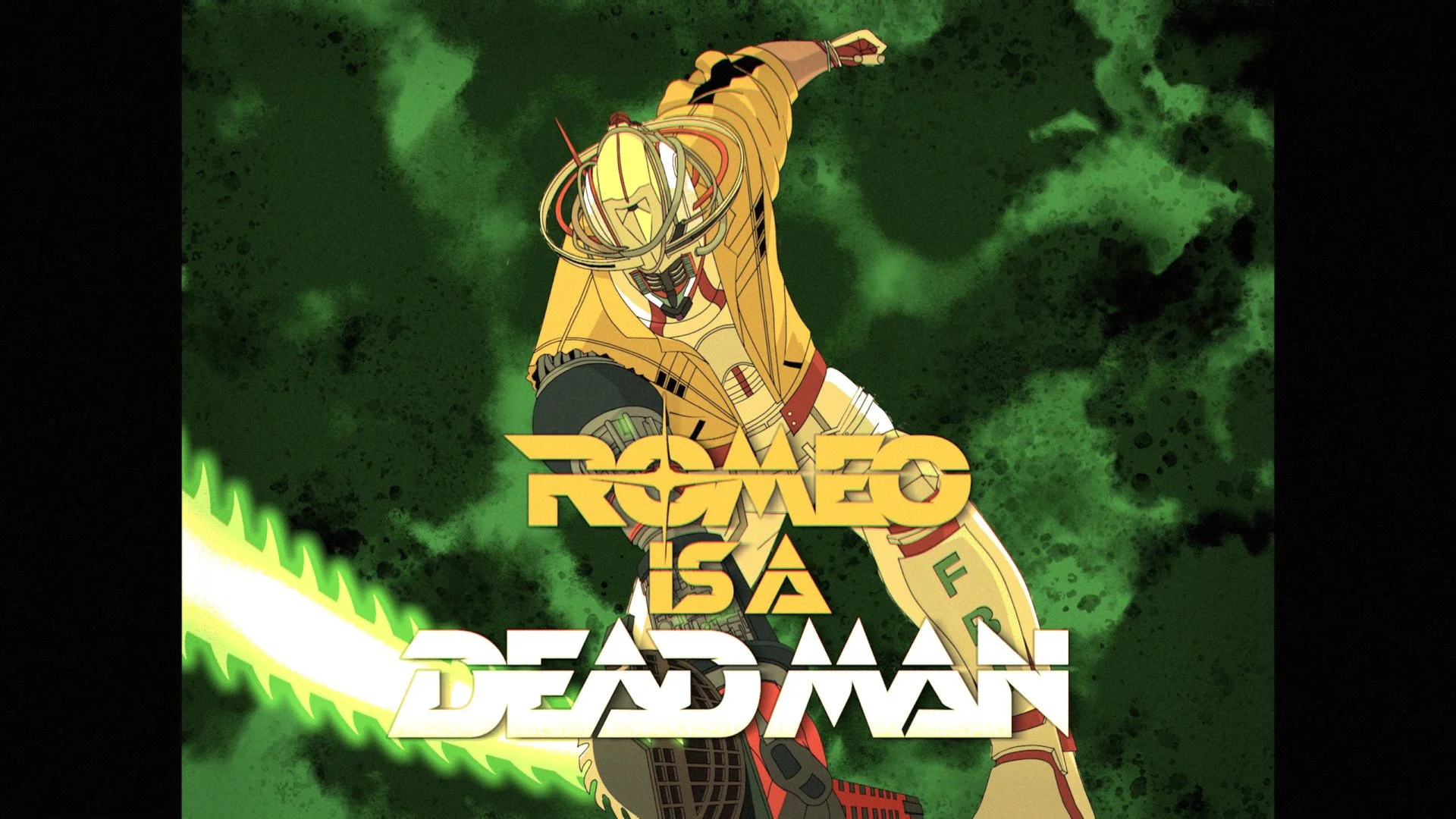
There are also short interludes between story chapters that specifically remind me of classic Mobile Suit Gundam episodes. In Gundam and other anime, these images and scenes (called “eyecatches”) are used to denote a clean break between the beginning and end of a commercial segment. It’s a cool little callback to a bygone era of television viewing, when shows were paced to accommodate ad breaks, though streaming services still include eyecatches in the playback. Even beyond the existence of an interlude, the imagery itself is Gundam-esque, as Romeo’s machine parts resemble those of the iconic mecha, and he even wields what appears to be a beam saber.
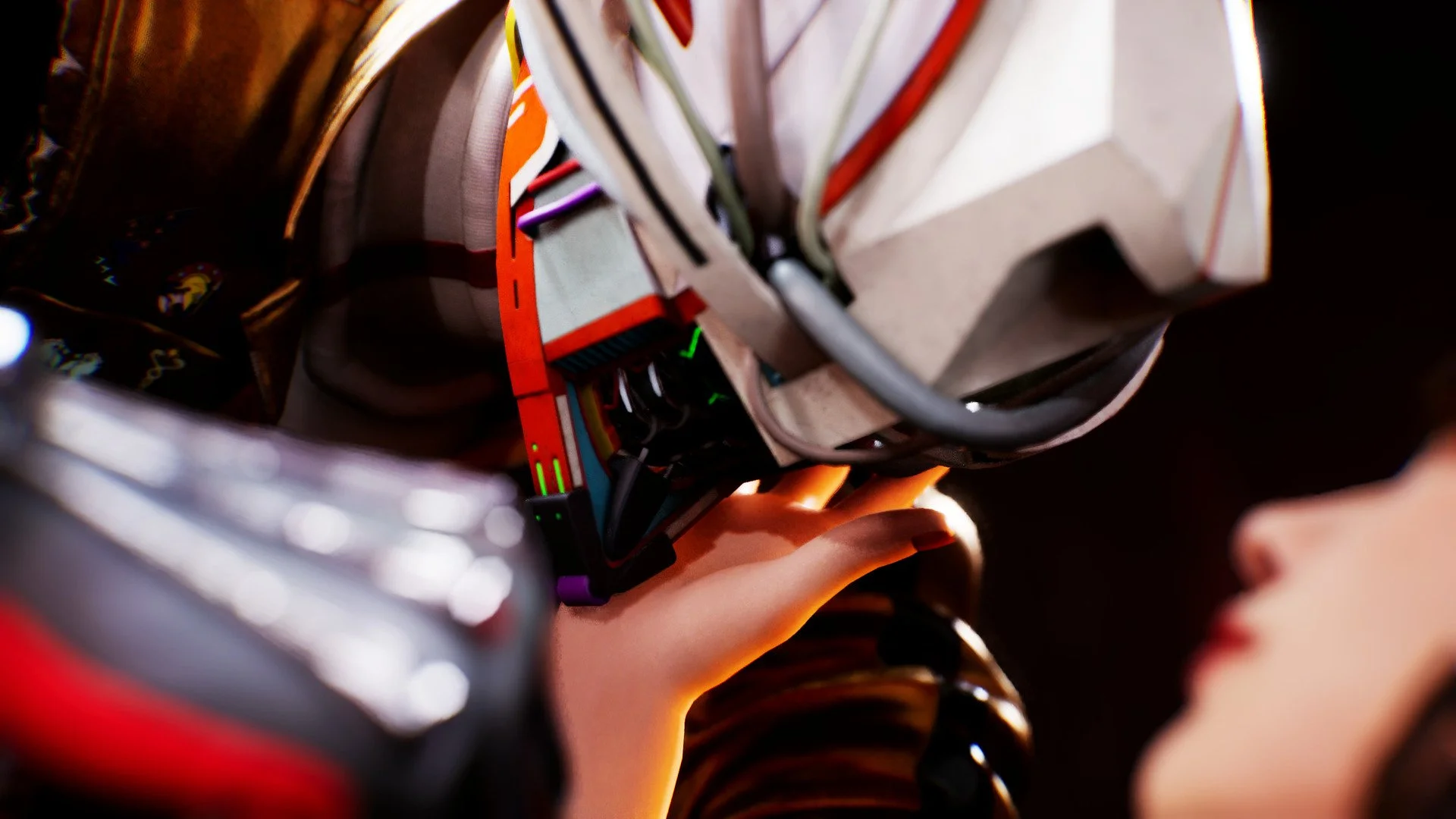
For every surprise, parody, or piece of commentary, Dead Man also makes space for reflection. As Romeo defeats the bosses, alternate realities are shown to us in the form of dreams. Different variations on the opening scene of the game present Romeo’s own “what ifs”. What if the Sheriff was an agent of evil? What if the body in the road was someone different? What would have happened to Romeo? To Juliet?
I live with very few regrets, but if such a multiverse existed, surely there’s a me who graduated from college. Maybe there’s a version of Taylor Rioux who didn't pick up Final Fantasy XIV and thus never met his wife, or one who spent more time on his art. Where would those versions of me be now? For Romeo and Juliet, there’s really only one pressing question: is there a version of this where they stay together, living happily and healthily for the rest of their natural lives (or beyond)? If there is, could it be this story? In search of an answer, Romeo…no, DeadMan stands centre stage, gazing upon the very stars that have cursed him.
Romeo Is a Dead Man was played on PC with a code provided by the publisher.
![[PATREON UNLOCK] Update Patch - January 2026](https://images.squarespace-cdn.com/content/v1/5caf2dea93a63238c9069ba4/1770492485591-BNQT3OAVRO1QBYID6DA9/Update+Patch+Week+1+0.jpg)