Preview | Ledgerbound Demo - Company Culture Shock
Ledgerbound takes aim at insurance companies, bureaucracy, and office life. It doesn’t just go for the low-hanging fruit of putting an evil corporation in the antagonist role, but centers around a character who loves nothing more than her job at the evil corporation. Corporate life isn’t as much of a bore as you’d expect with wry humor, characters who prove common sense isn’t so common, and a very adult and provocative script. It is important to point out I don’t mean “adult” in the typical video game fashion of blood splatter and murder. The adult content of Ledgerbound includes sexual references, and plenty of cursing, usually as a result of your very inappropriate manager Jazz.
Ledgerbound is an upcoming tactical role-playing game from the minds at OmniMegaSuperCorp. Two Helldivers 2 alums, Russ Nickel and Evan Nickel, bring their expertise to the project. In a recent demo (which is no longer available), this ambitious title already displays a lot of charm. Tactical combat, replayability, a stellar voice cast, and a varied list of inspirations from Fire Emblem: Three Houses to Parks and Recreation blend together in this savvy RPG.
The game tells the tale of Rayna, your reluctant protagonist who’d rather be in the office. Named the “Insurance Adjuster of the Month” for 35 months, Rayna loves her job at the Heroes United Life Group (HULG). At HULG, she spends all of her time making sure heroes who are slain have their insurance claims denied by working through scenarios and proving those heroes had a way to win their battles. This sort of dedication takes time, in fact, most of Rayna’s time. She works such long hours at the office that she’s developed a parasocial relationship with her hat rack, which manifests later in the story in a particularly funny moment.
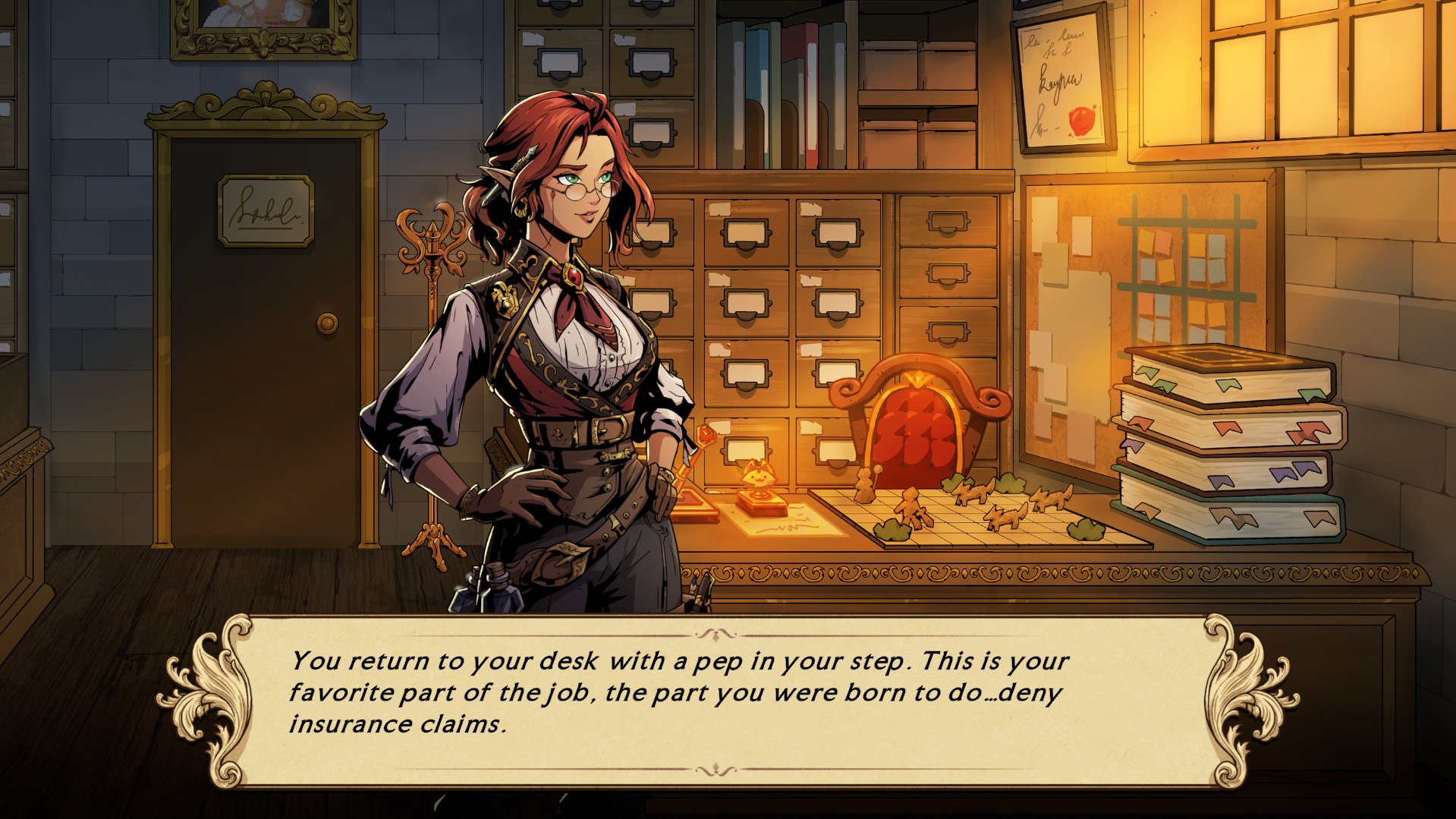
Rayna soon finds herself in a situation she can’t believe: she is unable to deny a claim for the Regulators, a high-level group of heroes who ended up biting the dust. As a top hero group, they even had a scribe, so there’s little room to interpret the events outside of what was written. Though Rayna is loath to leave her office and precious hat rack, she has no choice, as Mr. Amwing informs her the Regulators had Cosmic coverage, a payout for which would bankrupt the company, and even worse, upset the shareholders. She sets off to find a way to deny the claim, and finds herself at the center of an effort to save the world from the undying Vacari.
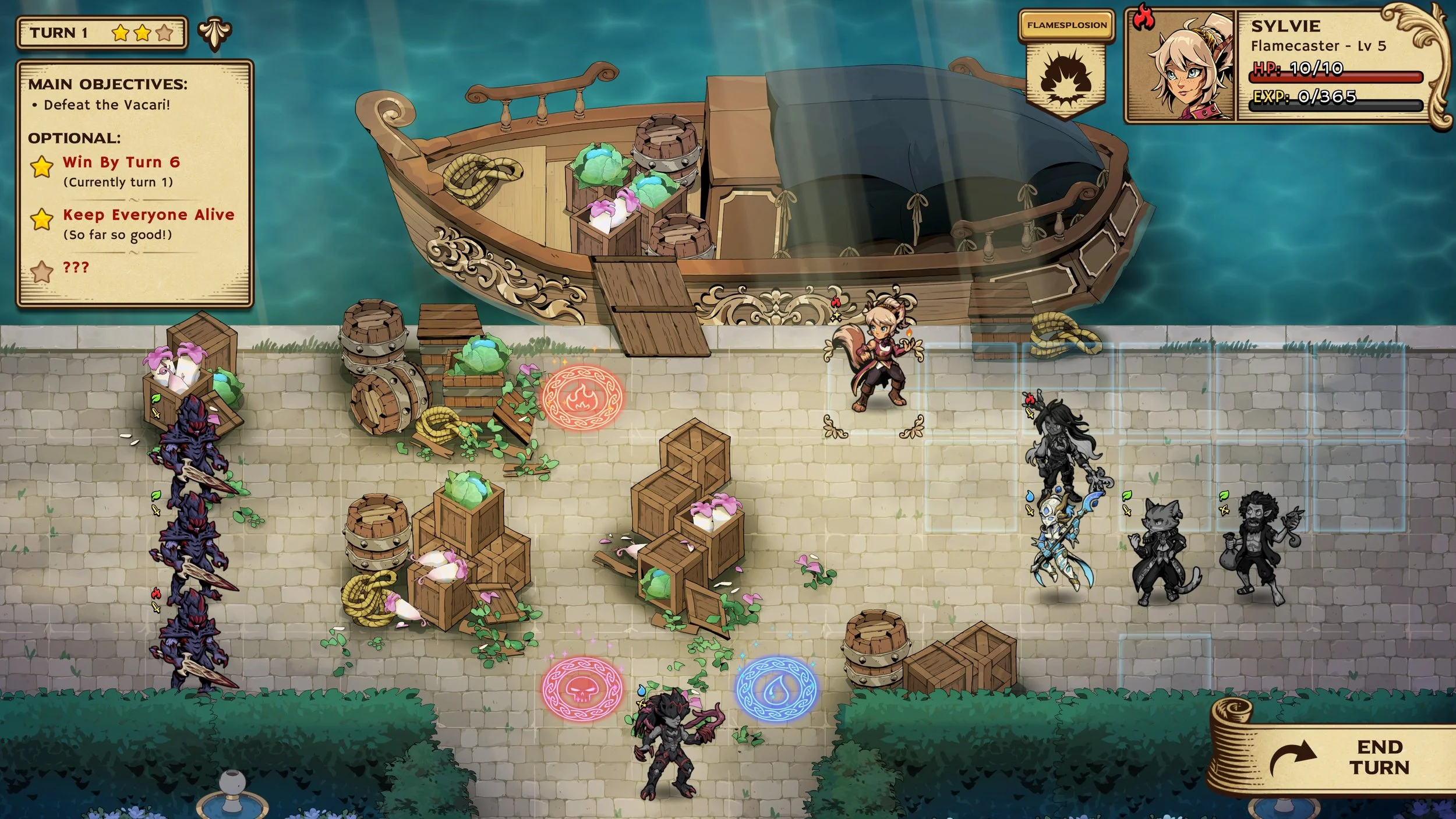
In Ledgerbound, you’ll first take on scenarios as if they were a tabletop game, with Rayna pulling out handmade miniatures to represent the heroes and their foes, placing them on a map. She narrates these first few quests as if they were trashy romance novels. This plays out as a tactical role-playing game like Fire Emblem or Disgaea, where you want to use your elemental advantage, skills, and the environment to vanquish your enemies. As it was just a demo, I was only able to glean so much from my limited time with Ledgerbound and if it can stand up to its inspirations. Combat and developing a strategy to beat some of the maps I experienced is far from simple, and even as a veteran of the genre I found myself unable to complete all the bonus objectives or even keep all of my units alive. Not to worry: not only is there a story-mode option, but if you do choose to play the standard difficulty your units can be revived at camp at the expense of a small amount of time and maps can be revisited when you have a better grasp of the mechanics and are equipped with more experienced units. Revisiting these maps allows you to earn battle vouchers which increase the quality of company swag and awards swag to you as well. Swag in Ledgerbound isn’t just a company pen or mug cozy, but useful items with company-approved rarities. Also, revisiting maps is key to fulfilling requirements to meet with Etheria, a shareholder who seems to have some BDSM-flavoured activities in mind for our bookish protagonist.
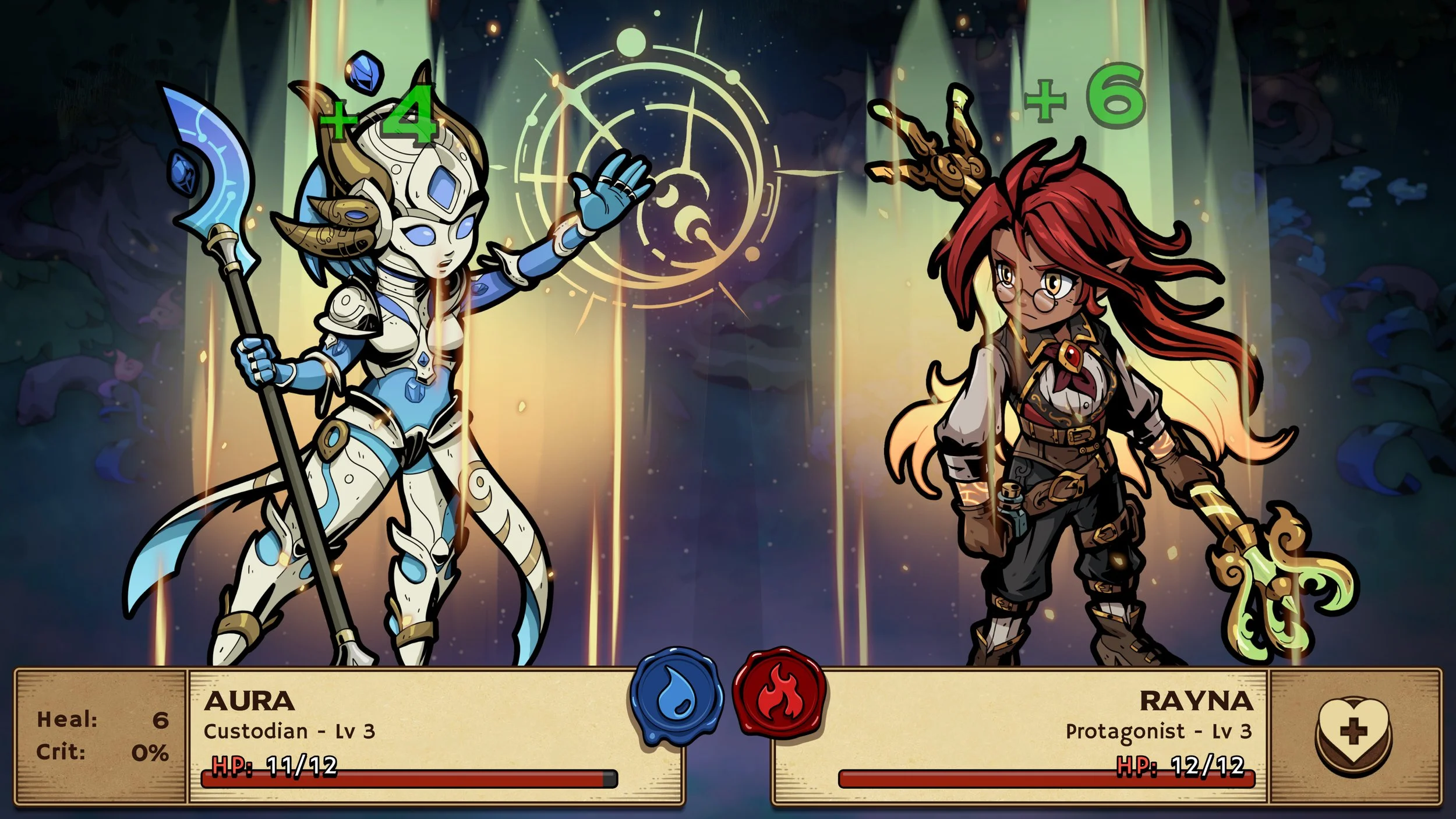
As for actual combat, it is hard to say how the demo will translate to the full game, but I saw aspects that made me excited to see how the game will evolve. For Ledgerbound, combat starts with a player turn, followed by an enemy turn. During your turn, you can move and use abilities, each of which are considered separate actions. Players must choose carefully because abilities are only available a single time per map, though there does seem to be at least one ability which circumvents this. While some tactical RPGs use environmental tiles to increase, decrease, or otherwise affect the stats of characters who stand on them, Ledgerbound has a slightly different system. In place of a forest or fortified tile, there are Sigils. Sigils usually represent the three elements Water, Plant, or Fire. They can not only power up characters of the same element, but can also weaken them if they stand on an opposing element. This can be used to your advantage by luring enemies onto a Sigil they are weak to, also allowing you to keep damage to your party to a minimum. Abilities all seem fairly useful, from Hobknob’s rat trap, which disarms and damages an unsuspecting enemy, to summoning prince Avarice’s manservant, who is happy to take a hit for his liege. The UI and controls could use some additional touching up, though, as there is no easy way to find out basic battlefield information beyond clicking on every unit individually.
Ledgerbound has a great aesthetic, reminding me of this year’s Escape from Ever After. Item descriptions are in “legalese”, your justification for committing crimes is covered under your hero licence, and there’s a lot of humour in even the most basic interactions as they are given an “office worker” flair. This combined with some great voice work from industry staples like Matt Mercer and Cherami Leigh, a script that is just off-the-rails enough that even the most stone-faced gamer is sure to chuckle, and one of the oddest parties in an RPG I’ve experienced, means I have a good feeling about the game. In particular, Stephanie Kerbis’ Jazz, a corporate climber whose wildly inappropriate dialogue and behavior gave the feeling of an Aubrey Plaza role, stole the show for me.
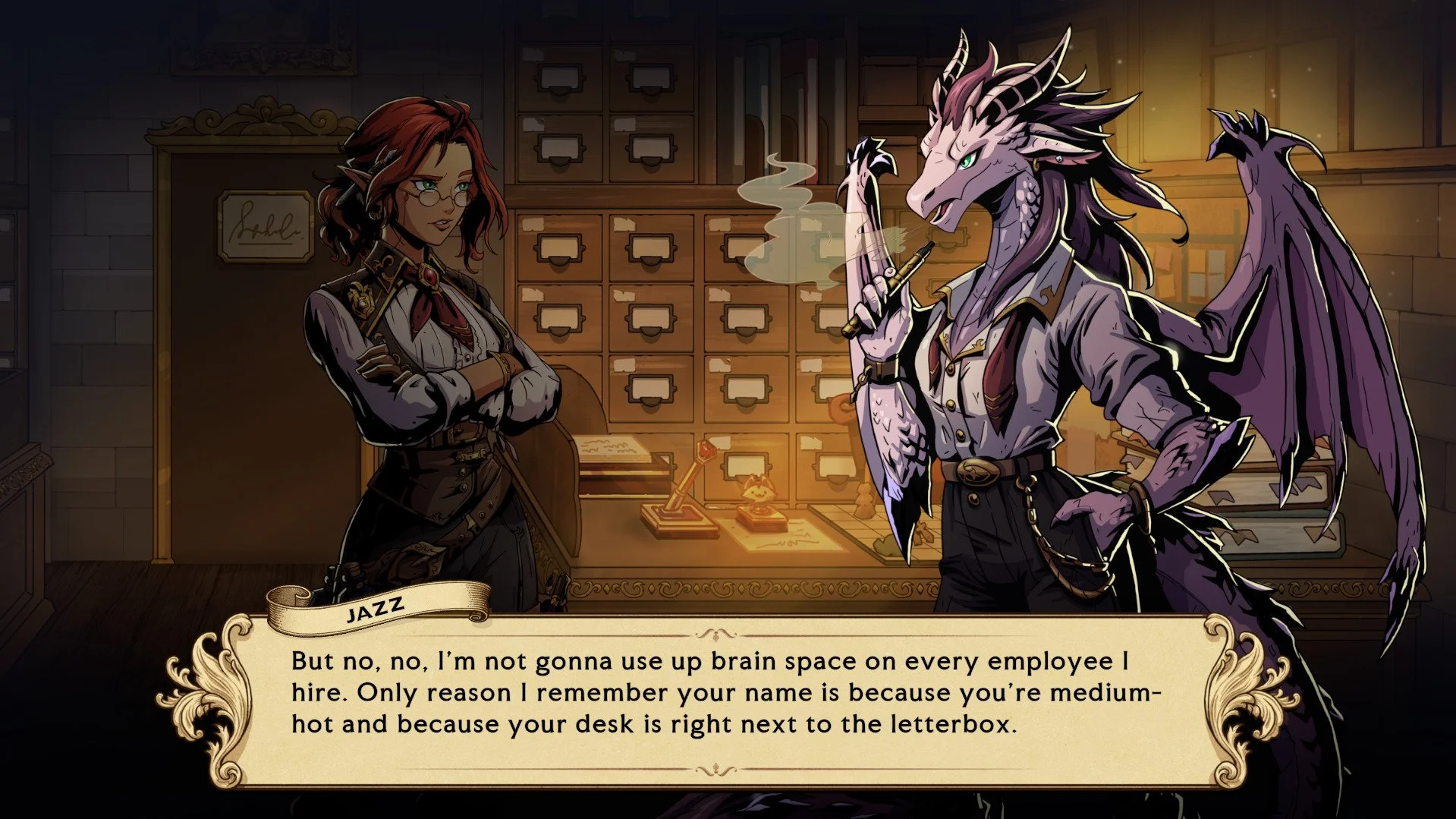
Speaking of wildly inappropriate, bonding isn’t just something that’s left for the water cooler in Ledgerbound. You can strike up friendships or romance with seemingly all of your party members, as well as some characters who aren’t. This feature is well known to Fire Emblem players, and it functions similarly. At camp you have a few options which take time each evening, such as equipping new items, stamping onboarding paperwork, readying downed party members, or having Rayna bond with other characters. This takes time but builds bonds over multiple levels, and in its current state, rewards you with powerful items and more “Liability” slots to equip items. It is worth saying that romantic relationships don’t just result in a “fade to black” cutscene, as dialogue leaves little to the imagination as to what sort of adult activities you could get up to. In my curiosity about these relationships, I had Rayna talk to Jazz the HR specialist, who was not opposed to Rayna’s idea of inviting Hobknob and his many, many, many rats into the bedroom.
Ledgerbound is raunchy, rude, and treats the Fourth Wall as if it were more of a window. You’ll run into party members who give the term “hot mess” a run for its money. The characters themselves all seem like they’re one screw loose from needing professional help, with some of the most unhinged voice acting I’ve heard to the point it wouldn’t be out of place on Adult Swim. But as humans, aren’t we messy, inappropriate, and constantly stepping on proverbial rakes? I think so, and that’s why I’m excited for this game.