Review | Penguin Colony - Foul Men and Noble Birds
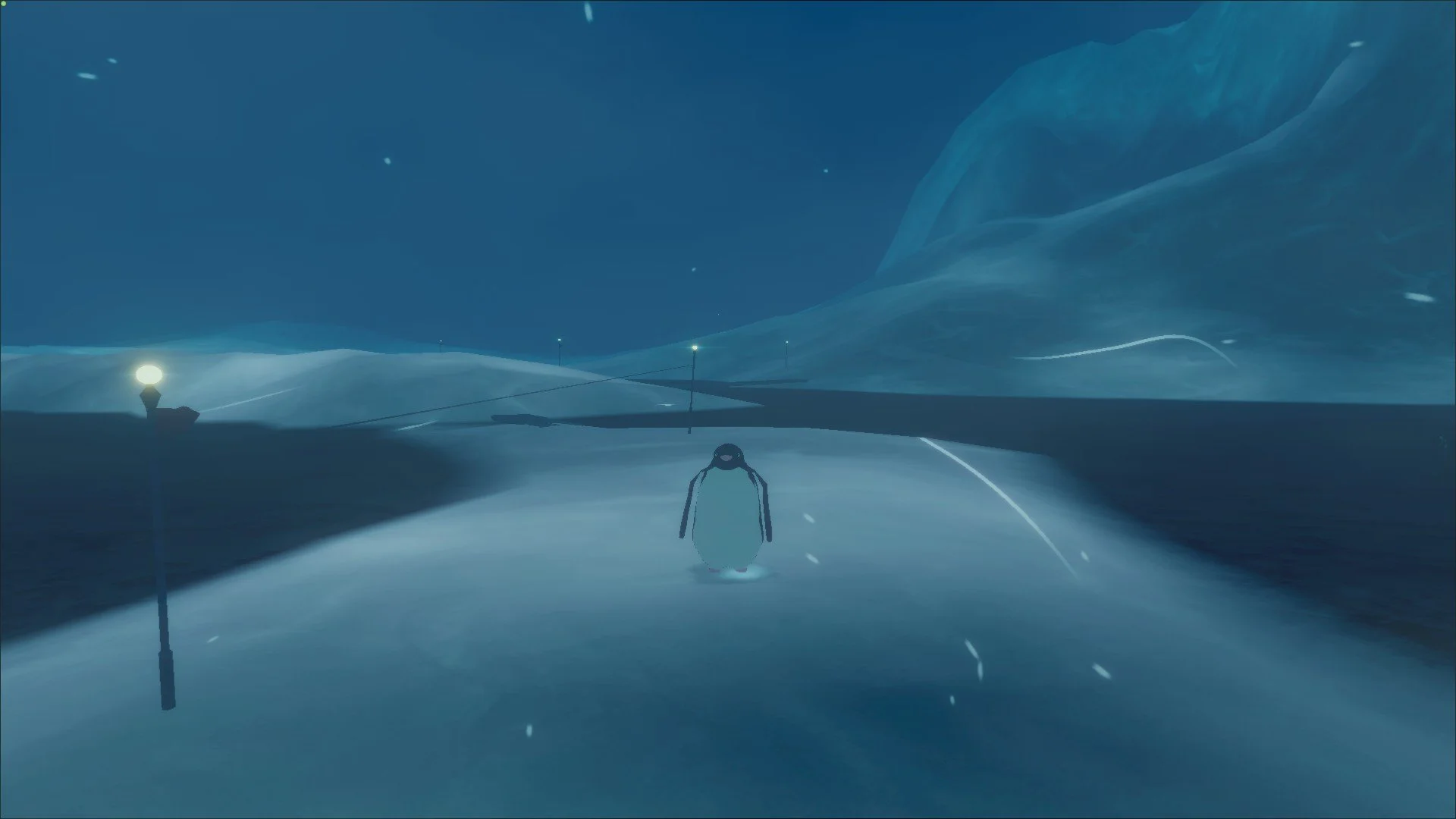
For many years, I have called the tundra my home. I have asked the wind to grant me a name. It uttered back nothing but silence. I learnt language from beings older than the ice itself, their codes and customs strewn upon the snowdrifts, infecting my mind with ancient insight. That is how I could decipher the words spoken by the men of false plumage and tar-coloured foot coverings. But I’m getting ahead of myself — far be it for me to talk of a wicked creature when much nobler critters exist: penguins.
I learned their name from one of those many men of science, caught between the biting winds seeking to unearth ancient knowledge below the ice — knowledge they could not hope to understand. I have lived amongst these flightless birds for time immemorial. I am not one of them, but they are the only community I’ve ever known.
I am fascinated not just by their flapping wings, remade to eschew the pale above in favour of swift swimming, but by their black and white plumage, their effervescent honks that emanate from fantastic orange beaks. They huddle up together and sleep. They dive into freezing waters to collect fish, and gobble them down with satisfied gurgles. They nestle their eggs on top of their feet for warmth and protection, no words come from their mouths but I can still hear them speak: “Hush now, child. You are safe here. Let love warm you.”
Oh, and how these noble creatures move! They waddle, swaying their bodies from side-to-side, slow and deliberate. They are not always so slothlike: watch them swim the choppy seas or slide down a snowy hill, and you will see their natural athleticism shine. The youngest among them can’t swim (but can fit in tight spaces); of the adults, some can climb rocks, some have fabulous lines that cross the maps of their face, some slide across the ice with surprising speed. I adore these innocent entities, these magnificent aquatic fowl.
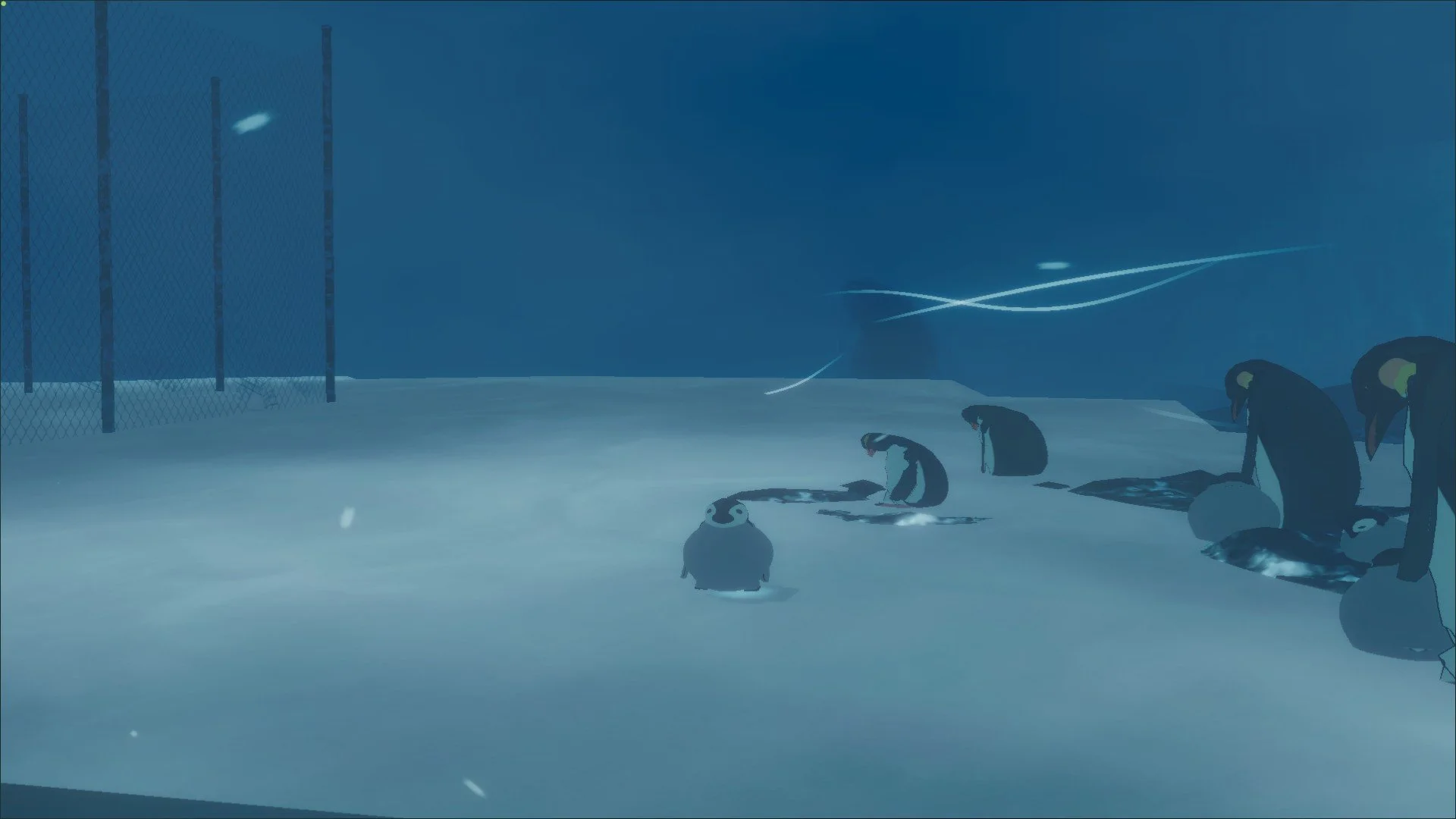
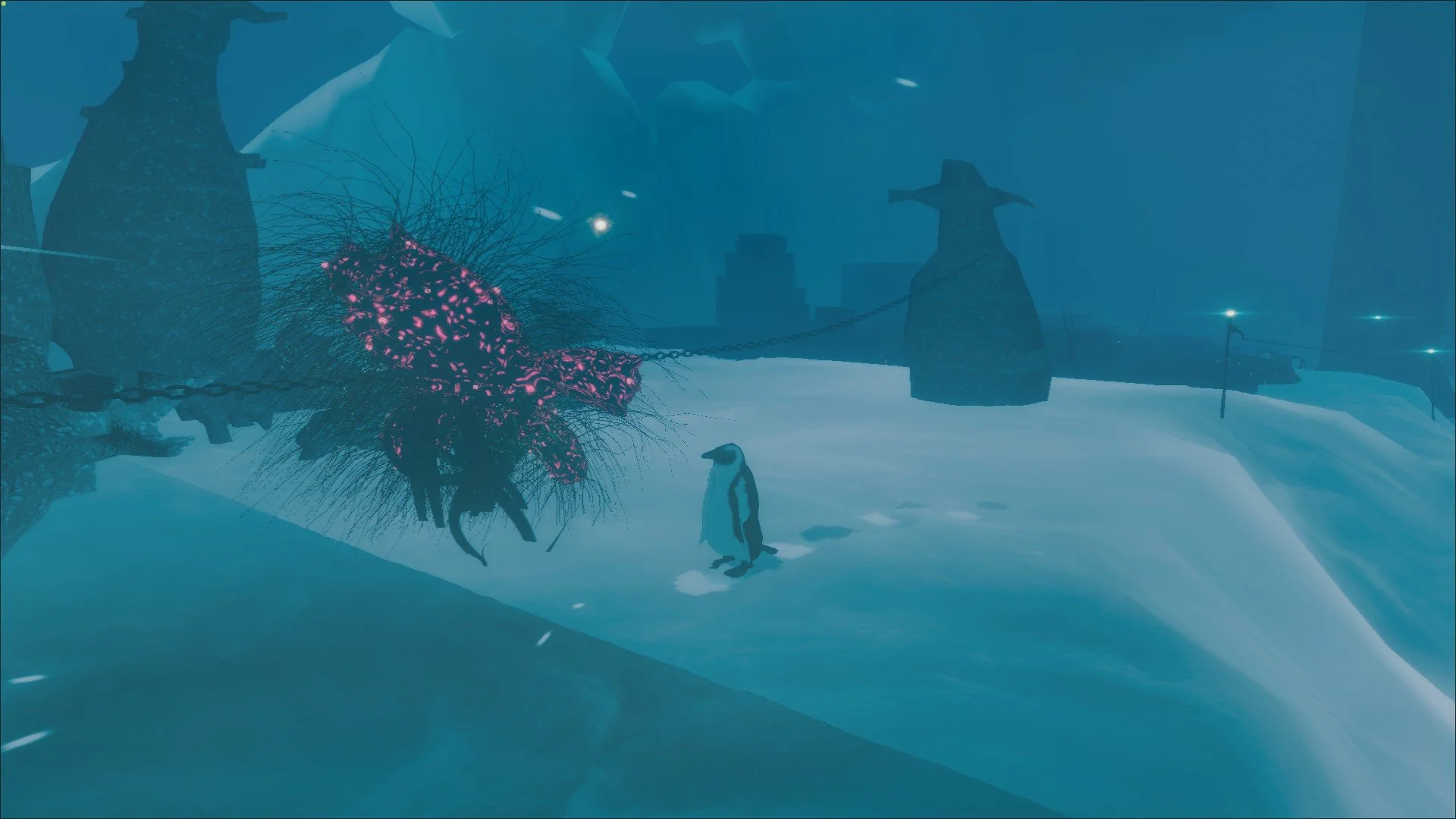
To occupy the mind of a penguin is to understand bliss. I infiltrate every recess of their brains and they give unto me full control of their bodies. I have learned to love Antarctica as a penguin would: I have swam its waters, slid across its ice sheets, walked its endless white-nothing. I know where to go because the winds tell me. Occupying the body of a downy baby, I slide through a small gap in a metal fence before transferring my mind to a larger Emperor to traverse great distances.
It all started with the sound of an explosion; upon the tapestry of the cloud-darkened sky shined a temporary red star. I steered the penguin who housed me, sliding on its belly across the snow, following the voice carried on the wind. Soon, I came upon an encampment of men. Blood and guts painted the ground red. Some mutilated themselves in their madness: they smashed their faces into poles, breaking their noses and occipital bones. Some uttered the names of Gods that died long, long ago.
I learned plenty about them, those horrid men. These “Nazis”, with their funny flags and golden eagle insignias. It seems they believed themselves superior to others of their species. This is foreign to someone like me, accustomed to the cooperative structure of the colony, diving into the ocean to hunt in sync with my not-quite-brethren.
These men came to this place, devoid of any of their kind, to ogle at the corpse of an extinct civilisation, and to reaffirm through its cadaver their belief in “Aryan superiority”. When faced with the ancient, eldritch entity that lies here, they lost themselves to insanity and violence like all the rest. Fools and cretins: they perished, like many who have come before them. But the penguins persist.
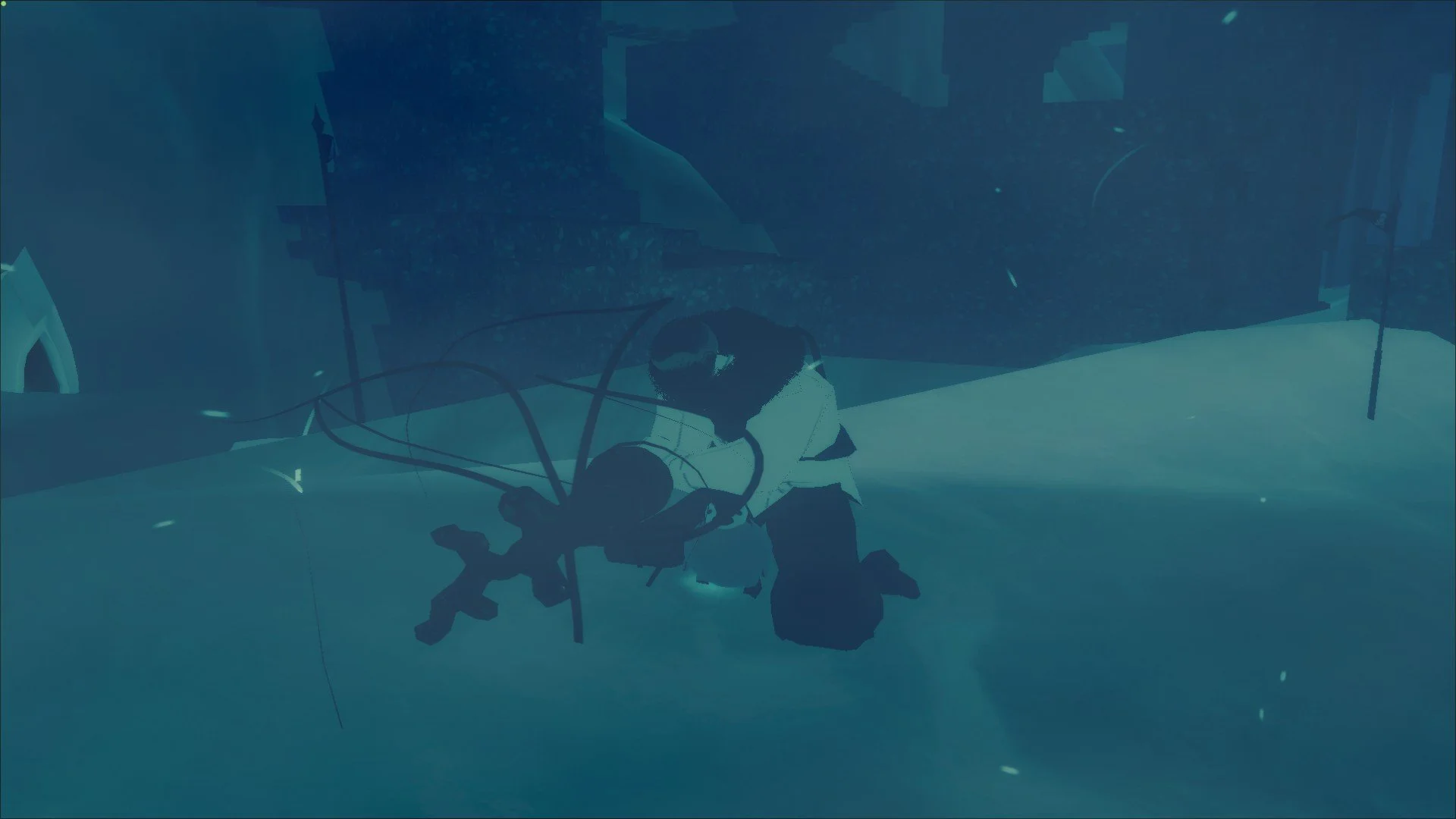
I am saddened to report, however, that a few penguins I controlled perished in the journey. One fell down a deep crevasse. A baby drowned in frigid waters. Another — perhaps by some eldritch curse, maybe something else entirely — got stuck inside a wall, the metaphysical rules of the world broken upon its black-and-white body. All for my sordid goal of uncovering the same mystery as the Nazis. And what I found nestled deep beneath the rock was…well, best not to say anything about that at all.
I do not wish to participate in the follies of men. The Nazis are driven by ego and their eschatological doctrine. Others have come to this land as well: pursuers of duty, clad in colourful furs, speaking in a different tongue. They come to the ice every one hundred years to meet with a god. Why, I cannot say. But unlike the Nazis, they do not appear to fall under its sway.
I still rejoice in the company of penguins. Even deep beneath the Mountains of Madness, you can find them huddled together, unperturbed by the darkness that surrounds them, even when it takes on horrific physical forms that could do them harm.
I do not understand the cold logic of humans — the naturalistic programming of the penguins, itself not immune to conflict or violence, is easier to parse. But I do understand the curiosity of mankind, for I too was driven by the same desire to unearth ancient mysteries. Like the residents of the ice, I am immune to the corruption that befell these men, even though I can hear that siren call carried on the wind. Mayhaps I followed that sound in a temporary lapse of sanity.
The winds eventually died, the voice they carried finally silenced. I remained, surrounded by my compatriots in the colony. I’ve experienced enough adventures, uncovered enough horrors and mysteries to last me an eternity. But being amongst these creatures? I will never tire of it. Nor would I ever willingly give up my ability to be one of them. You could call me cruel in my enjoyment of controlling these penguins wholly, but until you manoeuvre one yourself I care little for your esteem of me. I still love these beautiful penguins, and I will continue to do so until their eventual extinction. I hope that when they go, I go alongside them.
Penguin Colony was played on PC using a code provided by the publisher.