Review | The Remake of the End of the Greatest RPG of All Time - This Isn’t an RPG
Some games go with a title that succinctly summarises or reflects the gameplay or story. Something short and catchy but perks your ears up a little, like Dragon Quest. Other titles might forgo this naming convention and opt for something bold and brash, and boy did the developers deliver here. The Remake of the End of the Greatest RPG of All Time is a monster of a title. Hell, even shortening it down to an initialism doesn’t quite work out (TROTEOTGRPGOAT for all you sickos). Any game that has the audacity to not only label itself — even as an homage — as “The Greatest” and name itself an absolute mouthful of a phrase deserves some attention.
As I’m typing this out, I’m realising how challenging it might be to describe this story as the actual developers of the game used their real names and studio title in the game. And I’m not entirely sure that the main story beats of this game are entirely fictional, as parts of the plot seem plausibly real.
After coincidentally reuniting in college, childhood best friends Lucas and Jacob decide to remake The Greatest RPG of All Time, a game created by the fictional development team Circlesoft. The development of their game eventually hits a rocky patch when Lucas and Jacob have some creative differences over the remake — one wanting to make upgrades and the other desiring to stay faithful to the original. Their frustration with each other is only exacerbated when a copy of an older build of the game leaks online, paired with its own Steam page (that was mysteriously set up by some other person).
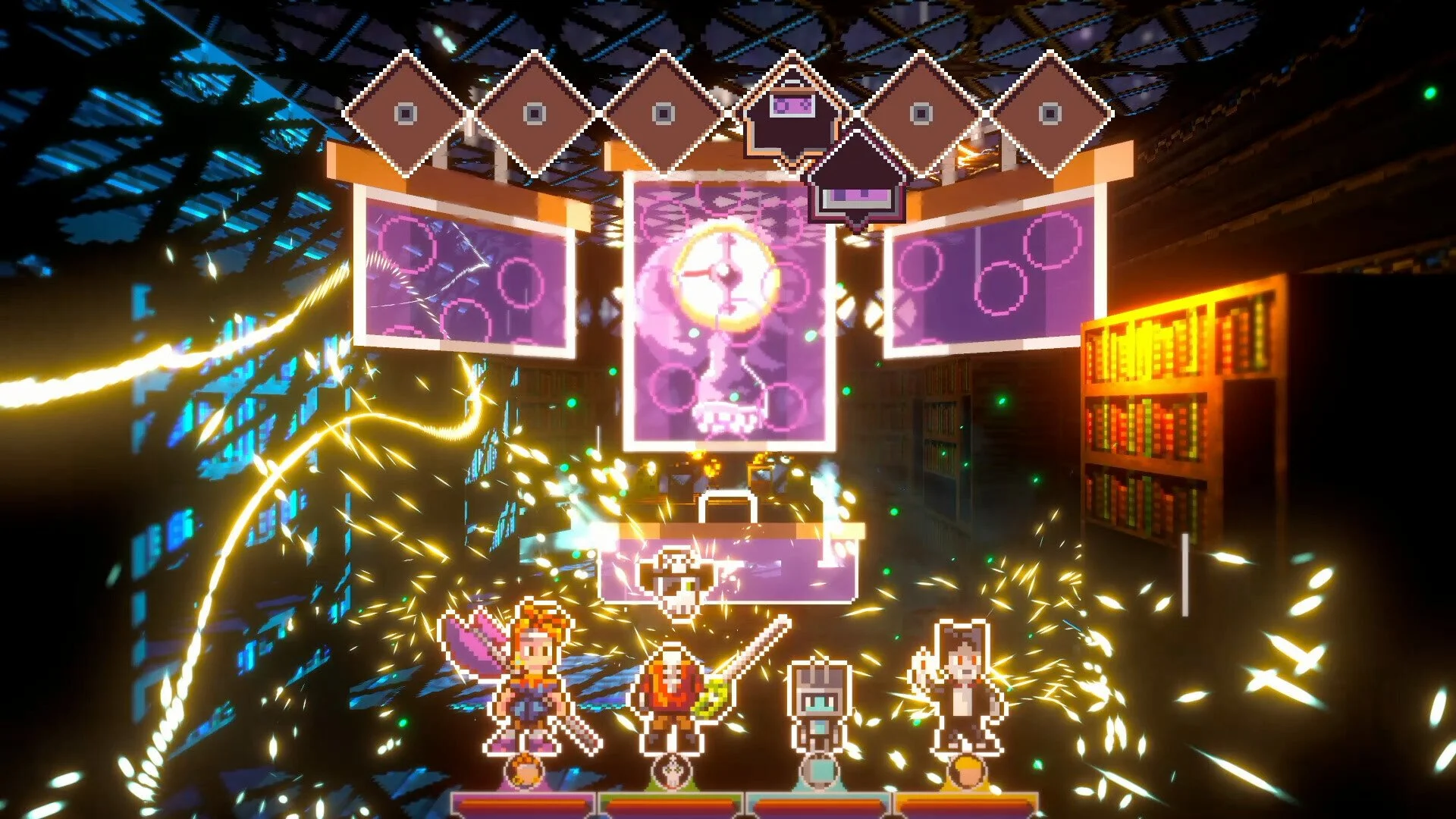
Developer Coin Drop Games created a game featuring a wild combination of genres in The Remake of the End of the Greatest RPG of All Time (hereby referred to as “The Remake”). Claiming to be an RPG (and displaying 2D-HD visuals), this is a deduction puzzle game in which you find the right combination of moves to defeat enemies, solve meta-puzzles, and unravel the mystery of the in-game remake’s saboteur.
Upon opening the game for the first time, there is no New Game option, only “Continue” with a completion percentage of around 99%. With only one avenue available to me, I hit the button and was instantly transported into a fight.
The Remake opens with a near impossible boss fight. I tried attacking this massive creature, called The Chronobeast, with each of my stereotypical 16-bit fantasy-looking characters, but all damage was resisted. The perplexing battle system was not a simple “select move and attack”. Instead, there are six slots at the top of the screen, and you choose a character, select one of their four attacks, and that selection enters the queue up top. Once you’ve queued up all the moves and are ready to fight, you press the select button and enter combat. No matter which combination of attacks I entered, I could not damage The Chronobeast one iota.
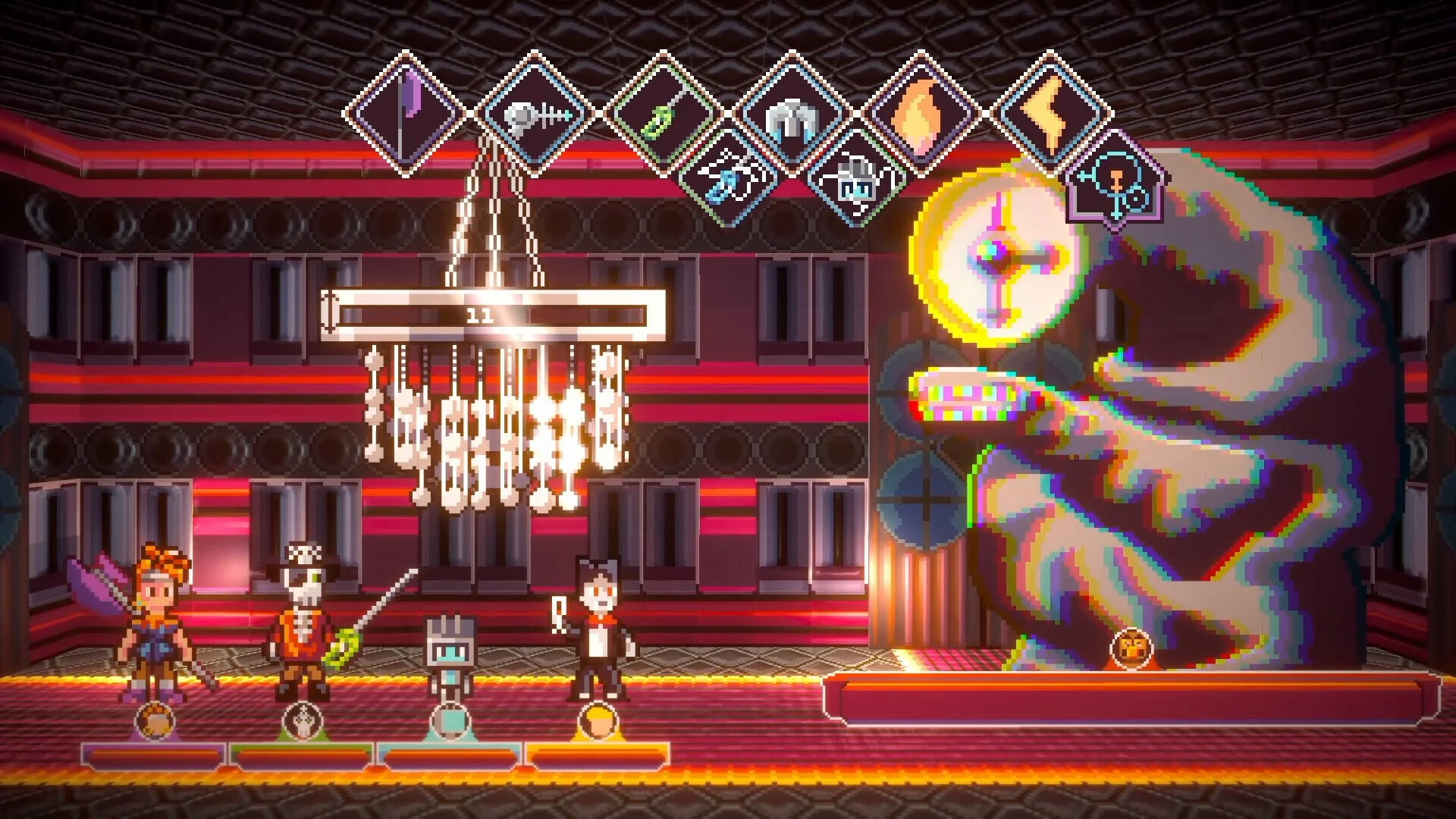
I wished the boss wiped out my entire party with one hit instead of dragging this fight out with painfully slow animations. There was no way to escape this battle or speed up my inevitable party-wipe. I could tell I was meant to lose this fight, so why is the boss toying with me? Once my final party member was dead, I was filled with a sense of relief as I saw my options to move forward: Load Save or Log Off. Given the metanarrative nature of the game, I had a feeling “Log Off” didn’t actually mean to close the software. So, without further hesitation, I logged off and found myself in a large hallway that resembled the interior of a log cabin.
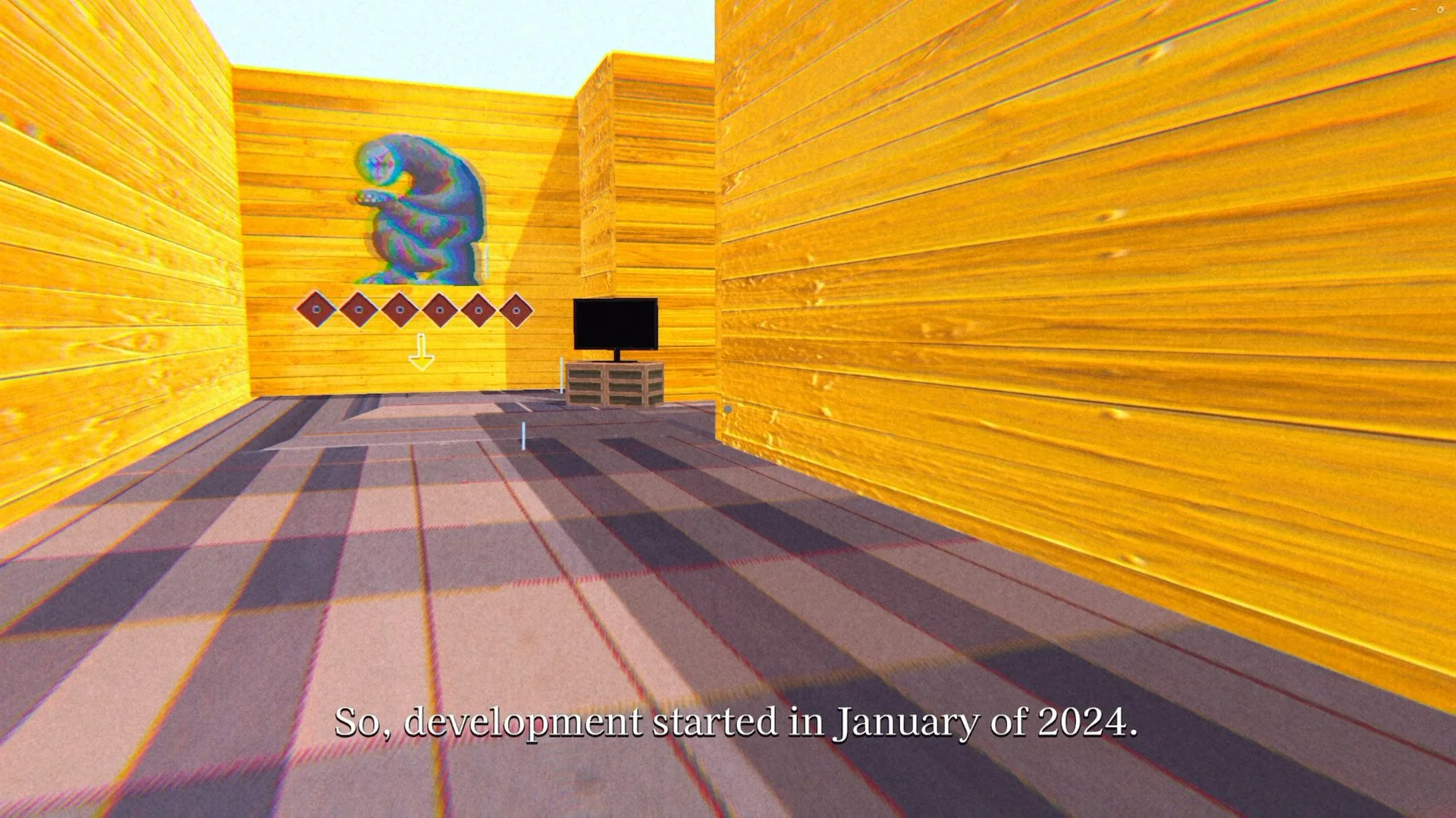
This hallway, labelled Museum, contained the metanarrative progression of the game. Within the Museum were long sections of empty hallways that often lead to images with empty slots underneath. These were meta-puzzles that were meant to be solved using clues from within The Remake.
At the end of one corridor was a lone TV that, when approached, gave me the option to “return to game”. I was curious to see which point of the game I’d return to, so I entered and, thankfully, found myself in a dungeon (and more importantly, not fighting The Chronobeast yet again). Surrounded by castle walls and flowing lava, I pressed onward.
This dungeon exploration was the most RPG-ish aspect of The Remake, in which you follow a linear path with some interactables. I noticed a peculiar speech bubble in the middle of the room and approached it. To my surprise, I was met with a prompt for turning on the developer’s commentary. At that point, I was only fifteen minutes into the game when I encountered this feature, so I had no idea whether this was some sort of meta-commentary from the in-game “developers” talking about their game, or if this was the actual developer, Lucas Immanuel, providing me with an email address if I wanted to submit feedback. Spoiler alert: perhaps unsurprisingly, the developers did NOT put their actual email in the game.
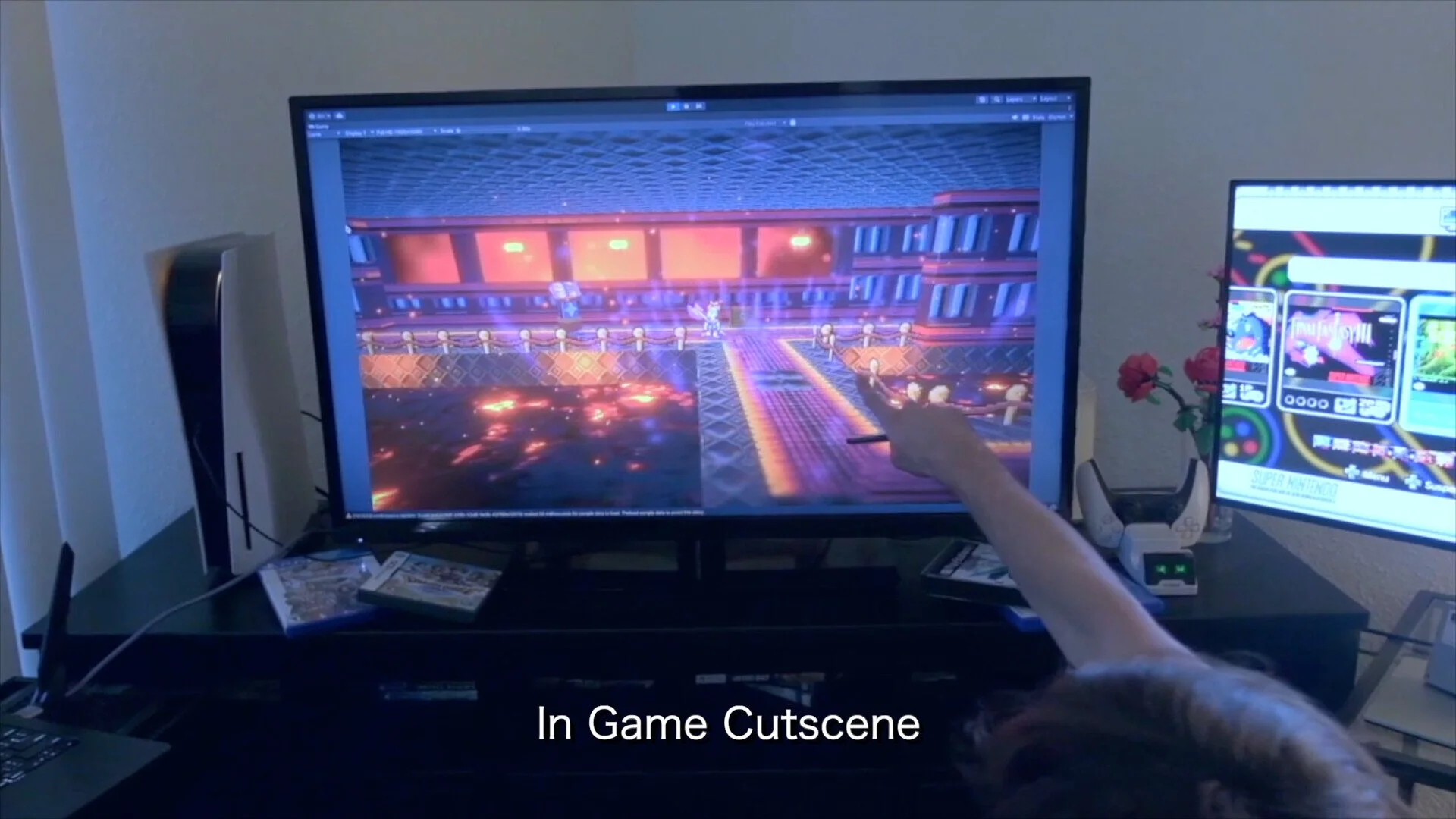
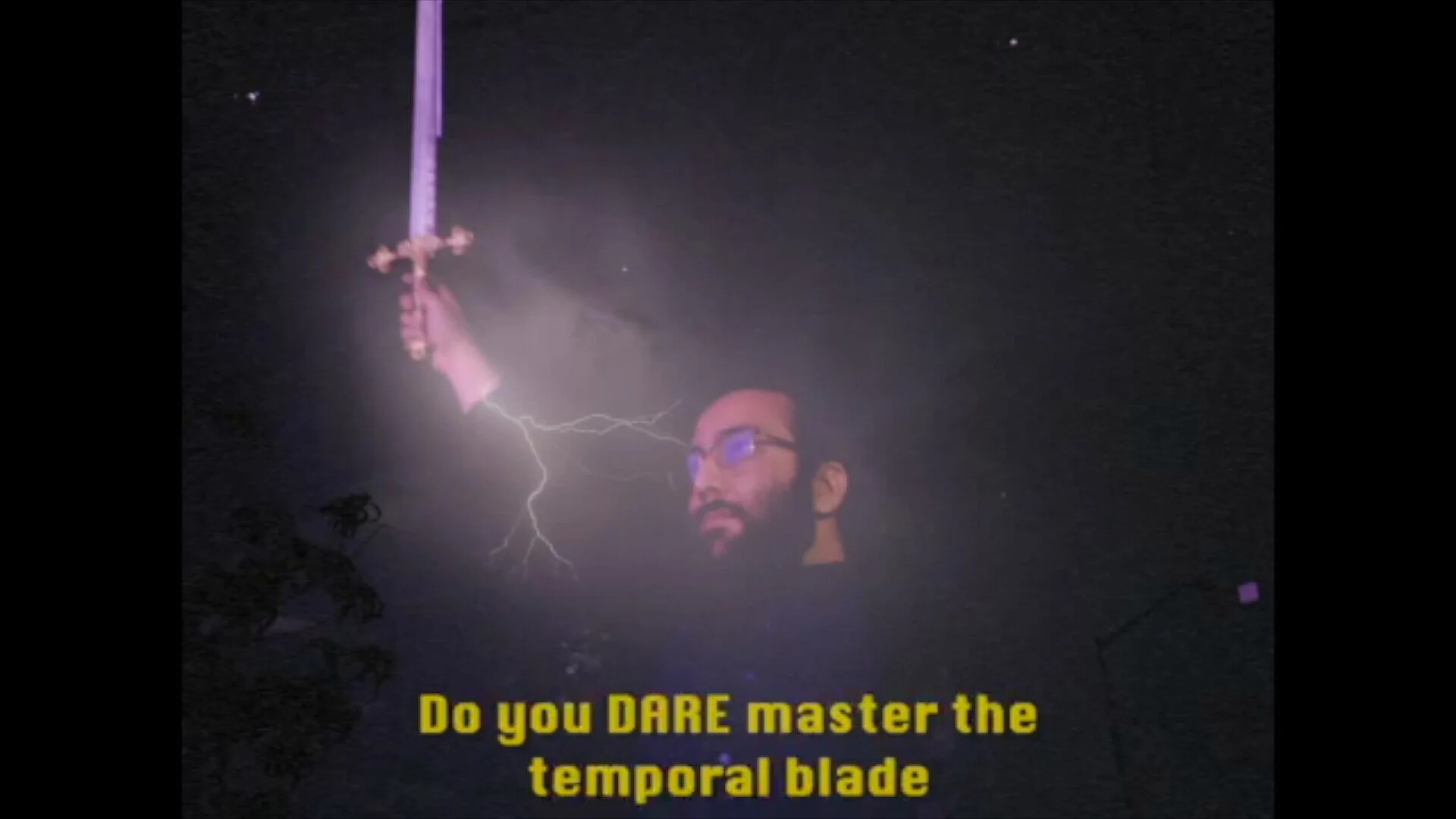
Further in the dungeon, I found a rotating VHS tape. This unlocked a video titled “Clip.mp4” that played a documentary-style short video where Lucas discusses the decision to make the game. Hidden within the clip was an answer to one of the puzzles found in the Museum. Additional tapes were scattered both in dungeons and in the Museum, and were required viewing in order to uncover various secrets and progress through the game.
Venturing further into the dungeon, I found a page of a game manual — a relic of a lost art now abandoned by modern video game packaging. The paper showed me the weaknesses of enemies I have yet to encounter at this point in my adventure. As I collected more pages of the manual, I noticed what looked like notes written on lined paper taped to certain sections, each note describing a solution to an undiscovered mystery. “Every carpet leads somewhere” meant nothing to me at first, until I noticed several carpets led straight into a wall. This pushed me to test the boundaries of the environment, running into walls and looking for ways to “glitch” out of the area to find more secrets.
Initially, I did not give the manual enough of a read through. I was stuck on a particular fight for nearly thirty minutes. A certain furnace-with-legs enemy resisted all of my attacks before I realised combining certain moves — by pairing them next to each other in the attack queue — had special combo effects. A spin followed by two normal attacks created an electric attack, which my furnace foe just happened to be weak against. The relief of finally finding this solution in the manual and getting past this damned fight was met with frustration I felt with myself for overlooking this vital information.
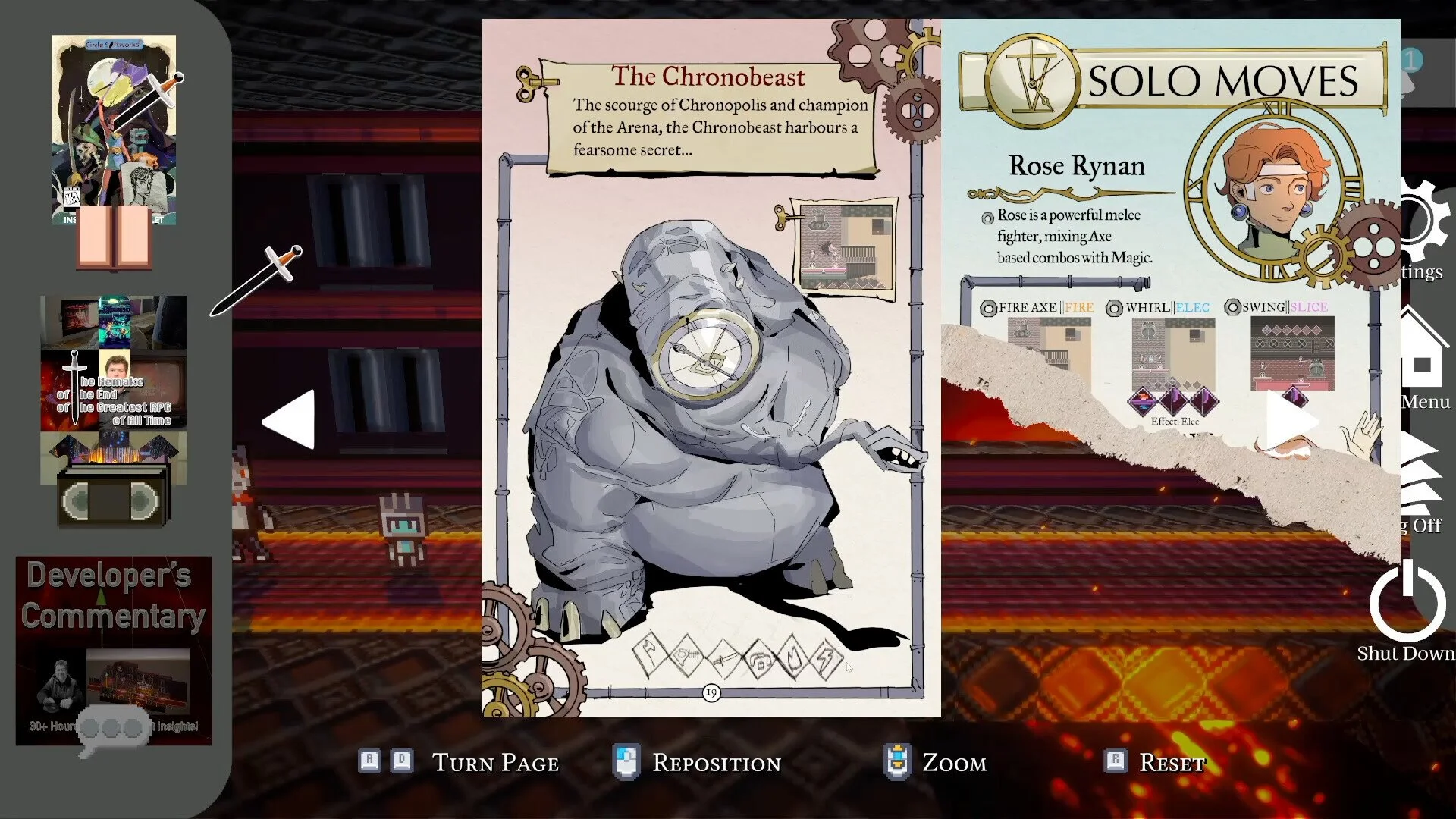
At first, the manual plainly provided all of the answers I needed to progress. Encountered a new enemy? Well, I just have to find their weakness in the manual then find the correct attack combo to create that element. Later, the answers stopped being so obvious, with some solutions not readily available. As a result, I brute forced my way through some fights, hoping to find some specific attack combination that would defeat certain monsters. Even after beating the game, there is still one element that I have no idea how I conjured.
Each of the three types of clues — developer’s commentary, documentary-style clips, and manual pages — needed to be utilised in order to find a solution to either a puzzle in the Museum or find the correct attack combination to “solve” a battle. There were plenty of clever moments that gave me a nice dopamine hit as I came upon the solution, but understanding the logic behind the game’s puzzles was not immediately apparent, and trying to follow the logic felt more irritating than intriguing. I left the game feeling like my time was not truly respected.
Whenever I got stuck, I spent far too much time backtracking to look for any sort of missing manual page or maybe some hidden area, but The Remake did not make it easy to find what I might have overlooked. With no map, no real UI (outside of the pause menu and fights), and no tooltips on items, finding missing clues became a chore I could have easily done without. The inventory — filled with dozens of items — included no description of each item’s effects, which led to an overwhelming amount of trial and error. I tried returning to previous areas to test different items, push against walls, fall into floors, and look for any way to escape the confines of the game’s boundaries but to mostly no avail. Eventually, something would give and I’d either be blessed with a new page of the manual or a new VHS tape, but not before I’d exhausted all of my patience.
The story — drip-fed through the faux documentary clips and FMV videos projected on walls — was a bit convoluted and messy, but fun. Seeing the back and forth between Lucas and Jacob while designing or testing The Remake and their attempts to persevere through their struggles made for an enjoyable insight into a game’s development. All of the (hopefully) fictional arguments were filled with such campy acting that it made it hard to feel emotionally moved by the plot, but the narrative was still entertaining regardless. I was hoping for some more impactful moments or maybe a more sinister twist. Instead, what I received was a corny antagonist that had me cringing during the dialogue; yet, I love cringe and could not look away.
The in-game developers’ debate over whether to make this a faithful or improved remake did open up an interesting mental debate: what game was I projecting onto this remake? I saw a bit of Final Fantasy in here, a smidge of Golden Sun, and maybe even a dash of Dragon Quest. But do any of those games need a remake? What RPG from my youth was I hoping The Remake would mimic? Maybe this thought process invited unfair comparisons.
By the end of this seven-hour experience, I felt confused but still oddly satisfied. The writing, while not the strongest, had me smiling on more than one occasion. There were moments of brilliance throughout the puzzle-solving elements of the game that left me charmed. The moments in which I pieced together information from all of the various clues and solved a puzzle gave me the gratification I was hoping for, that feeling that I outsmarted the game. I only wish these moments came far more frequently and weren’t countered by the exasperation I felt when I couldn’t find the clue I might have missed an hour prior.
In the end, Coin Drop Games makes it very clear that this is not the Greatest RPG of All Time; this is just a messy but passionate tribute.
The Remake of the End of the Greatest RPG of All Time was played on PC using a code provided by the publisher.