
Review | Big Hops – Let’s Do the Frog-dyssey
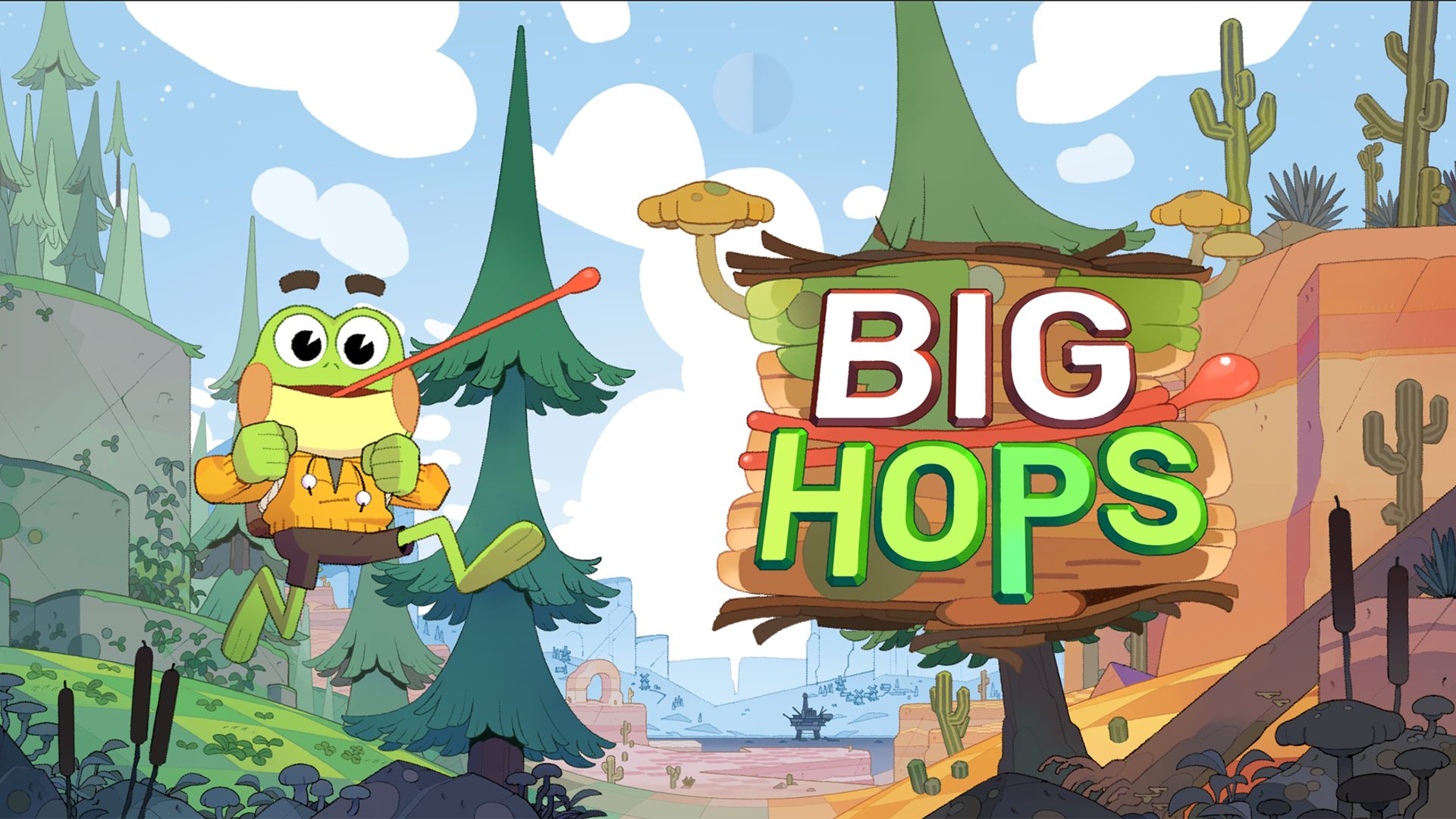
One look at Big Hops visuals and you’d be forgiven for assuming it’s a simple, kid-friendly platformer designed as an entry point for the genre. Something for parents to gift their children when they’re very young, when something like Astro Bot or Super Mario Odyssey is still too demanding for them.
But don’t be deceived. Big Hops is far from an entry-level platformer, with those cutesy graphics almost disingenuously belying a far more demanding game. That’s not to say it’s some Super Meat Boy-esque experience where it’s crushingly difficult, but it’s the sort of game that leaves you to your own devices and expects you to figure out how its mechanics work.
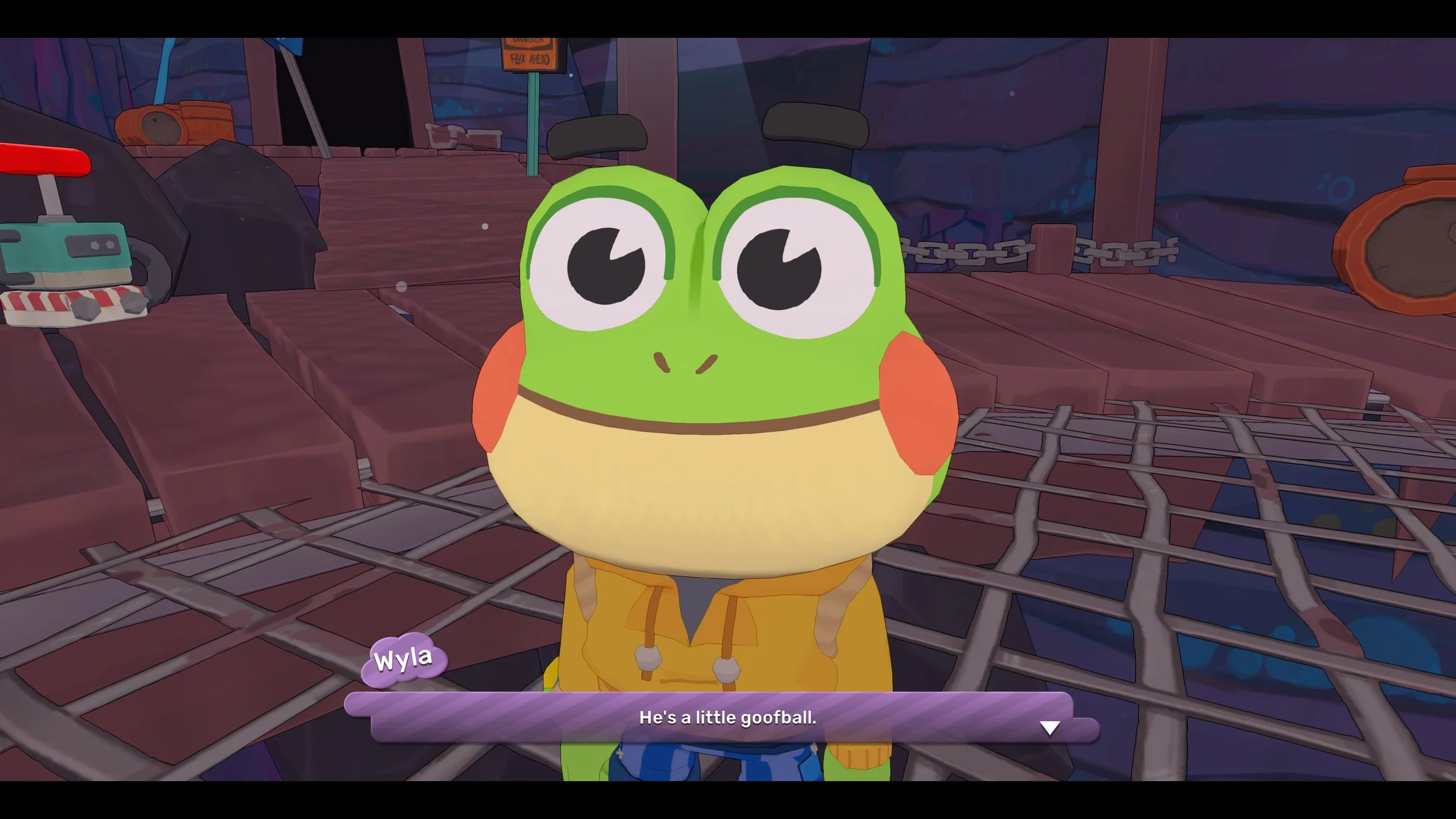
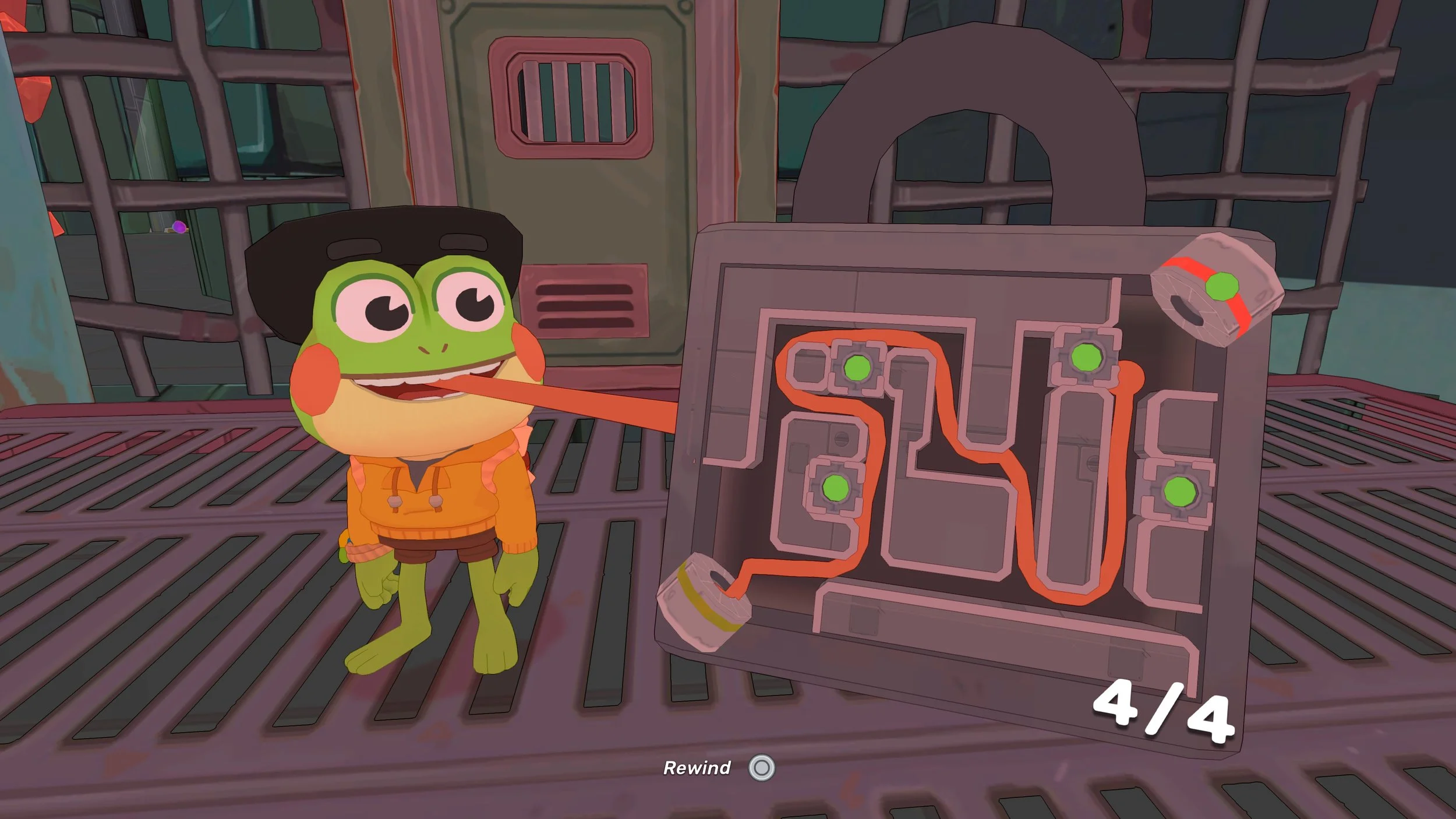
This is apparent right from the opening area. Barring a couple of basic tutorials, Big Hops refuses to hold your hand. It’s only through experimentation that you can get a knack for what froggy protagonist Hop can do, from crouch jumping and wall running to rolling and diving through the air, as well as each technique’s limitations. The most significant is Hop’s tongue since that’s used for grabbing objects, pulling switches, swinging from grapple points, and more.
Hop’s movement reminds me a lot of A Hat in Time, another indie 3D platformer with a versatile moveset, and controlling Hop thankfully feels just as good as it does in that game. Everything is incredibly responsive, and Hop has just the right amount of weight to him. He also moves at a decent pace, so even in the game’s larger areas (which are perhaps too big for their own good), it doesn’t feel like forever to get from point A to point B. Although it helps that you can spam his roll and dive to take long leaps across levels.
Momentum is actually quite important, as you need to build up quite a bit of speed sometimes to progress, especially when swinging with Hop’s tongue. When chaining swings, it’s tempting to pause with each grapple to get your bearings, but it usually costs you your momentum, and I sometimes found myself struggling to build it back up, often getting Hop stuck swinging in the wrong direction (or God forbid, in a circle) and failing to reach the next platform.
Hop can also climb virtually any vertical surface, complete with a stamina wheel ripped out of Breath of the Wild, though it’s far more limited since it not only drains quite quickly. It can be upgraded by eating bugs and stamina potions you can buy with the coins you find, but these additional stamina wheels only go up to three and are temporary. Later trinkets (the game’s upgrade system) can also help it drain slower, but it’s random whether you will get one of these rewards during your playthrough. Obviously, this is done so you can’t just bypass tricky platforming sections, but it sometimes felt like I wouldn’t have been able to progress if I hadn’t had enough stamina to climb up a wall. That said, I’m willing to give developer Luckshot Games the benefit of the doubt and assume there’s no risk of getting softlocked in the event you only have one stamina wheel.
It honestly feels like there’s rarely ever a ‘right’ way of progressing, with Big Hops almost quietly encouraging you to improvise sometimes. You know how speedrunners will find exploits or unintentional uses of techniques to get through a level? Big Hops feels like it was made with those people in mind, daring them to figure new tech out. This is especially apparent with the hidden challenge rooms you can find, since you can upload your completion times online to compete with other players. It’s a shame that Big Hops has come out right after Awesome Games Done Quick wrapped up. I bet a demonstration at such an event would be fantastic marketing, though there is a free PC demo you can try out if you’re at all interested.
There’s also a variety of fruit and vegetables that Hop can throw, and have their own functions and effects. A couple of early examples include mushrooms that serve as bounce pads and acorns, which grow tall vines you can climb without burning stamina. For the most part, bushes with specific items appear whenever you’re expected to use them (sometimes they’re hidden and need to be dug up), but considering the game lets you buy individual ones from shops and even pots to plant a bush, it’s clear Luckshot wants players to have the freedom to experiment. You could (theoretically) hold onto some berries that create orbs of water and throw a few of them against a wall to easily bypass a platforming challenge, for instance.
Some of these items are a bit frustrating to use, though. The cacti fruit, for example, spawns a horizontal rope that connects between two surfaces, which is a great concept, but it’s not clear exactly which surfaces it can connect to. More than a few times, I’d throw it, only for it to ineffectually bounce off my target. This also means, even if it does connect, the rope will shoot off in a direction you weren’t expecting, and either be unreachable or uselessly short.
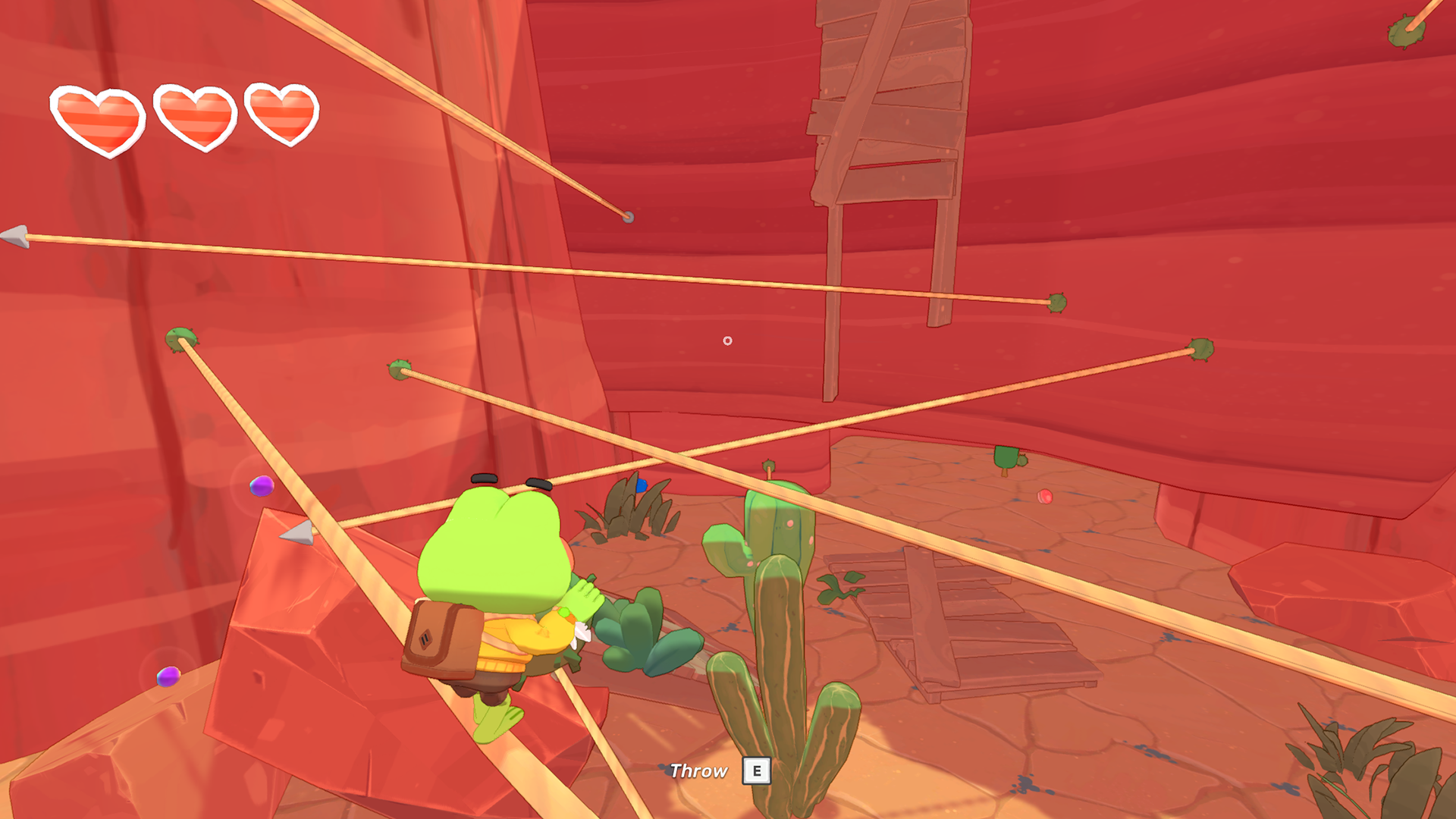
Big Hops’ lack of hand-holding and overexplaining will go down a treat with those who hate games talking down to them, but it feels like it could have done with maybe a few in-depth explanations of how some mechanics worked, especially the fruit and veg. Sometimes, it’s also unclear where you’re even meant to go. There is a compass that helps mitigate this occasionally, but more than once, I wished I had a proper map to look at.
I wouldn’t say Big Hops is a slog to get through, but between some of the more frustrating platforming challenges, the aforementioned unreliable fruit and veg, and occasional unclear direction, progression sometimes felt unsatisfying. Occasionally, it felt like I only made it to the next part of the game by accident, like I had stumbled on a solution through sheer luck and not by outsmarting whatever intentions the devs had. That’s why it’s imperative that Hop controls so well. Even if I wasn’t having as much fun as I should have, at no point did I feel like I was fighting with the controls.
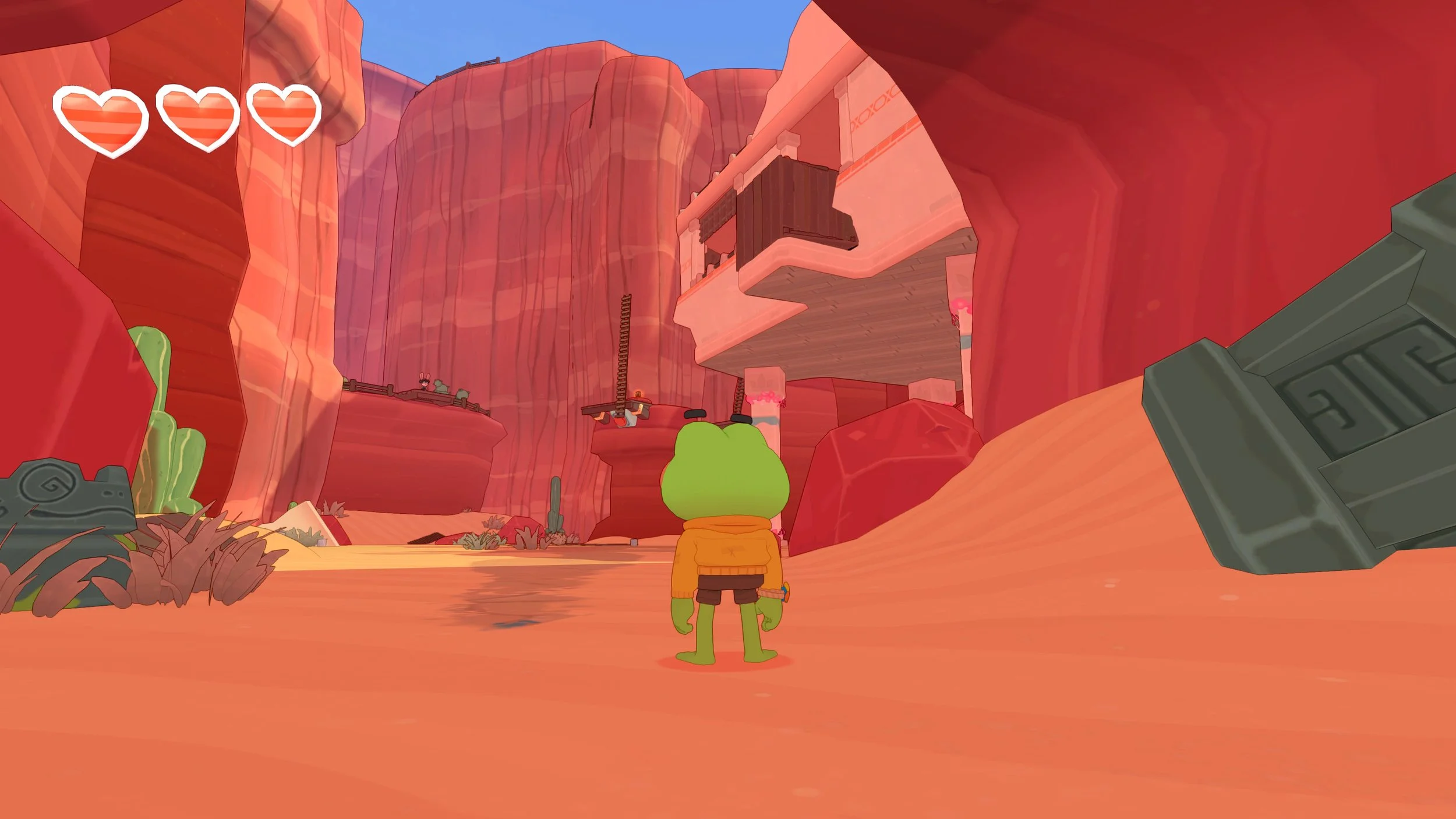
Plus, when you get some momentum going, certain challenges can be very thrilling. It’s probably the Sonic the Hedgehog fan in me, but my favourite gameplay moments were whenever I was rapidly bouncing on balloons to cross a large pit or jumping in cannons to blast through the air and latch onto a grapple point. One standout moment is a grind rail segment that descends into a desert sinkhole, with you needing quick reflexes as you build up speed and grab rocks to throw at switches to get by.
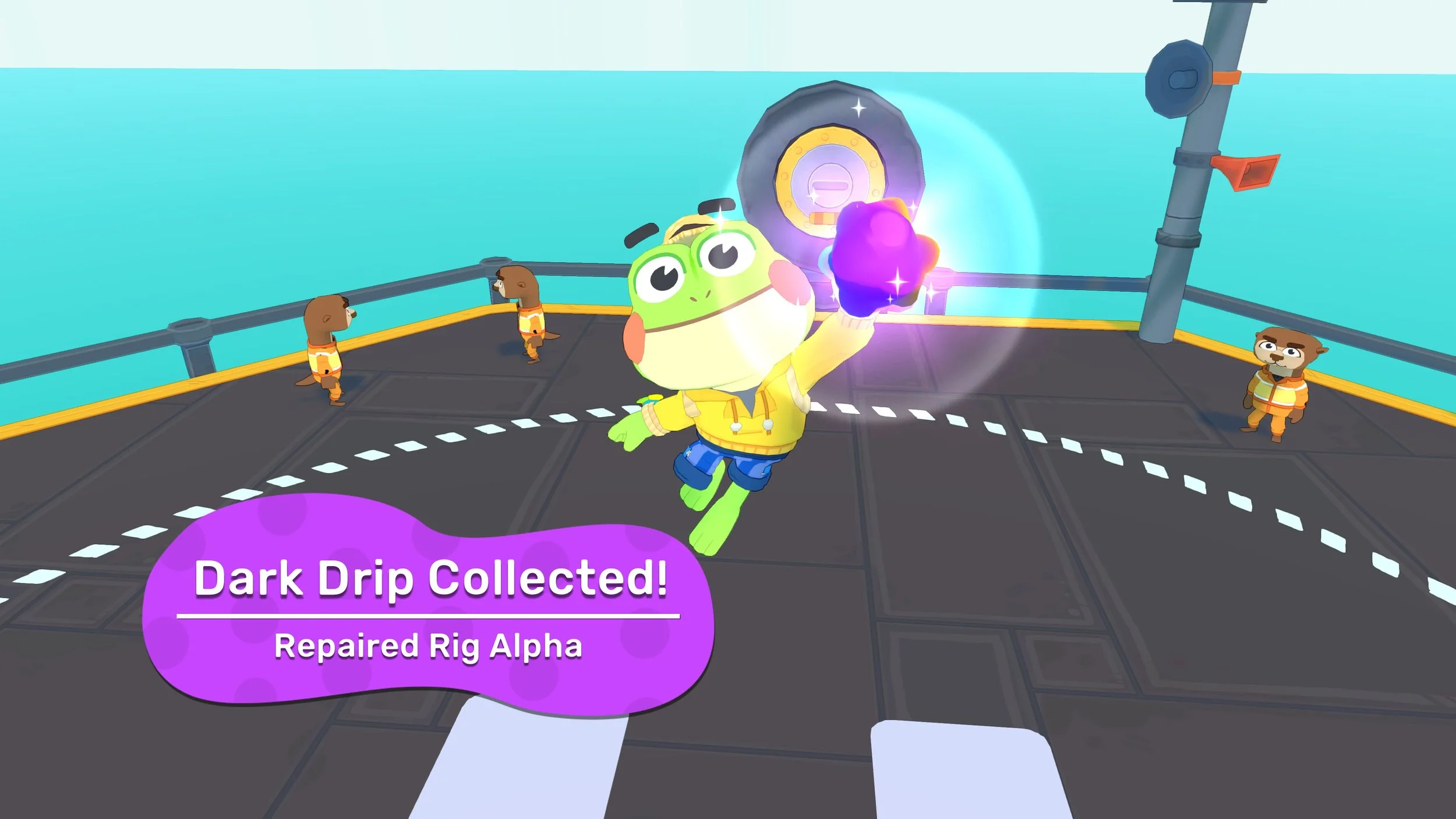
The trinkets you can unlock are also a blessing that downplayed some of my grievances the further I got into the game. To unlock them, you need to collect enough of these purple orbs (which are scattered everywhere) to form a Dark Drip. For every Dark Drip you obtain, you get to choose one of two random trinkets, which have different effects when equipped. Some of these are extremely helpful, like ones that make collecting (for the game’s numerous cosmetics) faster or increase inventory space.
You can only claim your next trinket at specific locations dotted around the three worlds you explore, and these are the only places where you can change your set-up too. I found this to be a bit inconvenient, but I imagine this was done to prevent you from simply swapping to the invincibility trinket whenever you’re low on health, and there are no nearby sandwiches to eat.
There are fully formed Dark Drips you can find scattered throughout as well (they’re also rewards for clearing the challenge rooms), but these don’t count towards unlocking trinkets for some reason. There’s strangely little incentive for collecting them at all, since, despite the collect-a-thon set-up, you don’t need to gather specific amounts of Dark Drips to reach new areas. However, they are needed to unlock a “true ending”.
This is especially weird when the whole plot revolves around Hop basically being abducted to collect them at the behest of Drip, a floating purple gremlin who’s just the right level of unlikability. It’s actually amusing how the closest thing to a helper character is this obnoxious brat who’s happy to insult you even when he’s giving you trinkets.
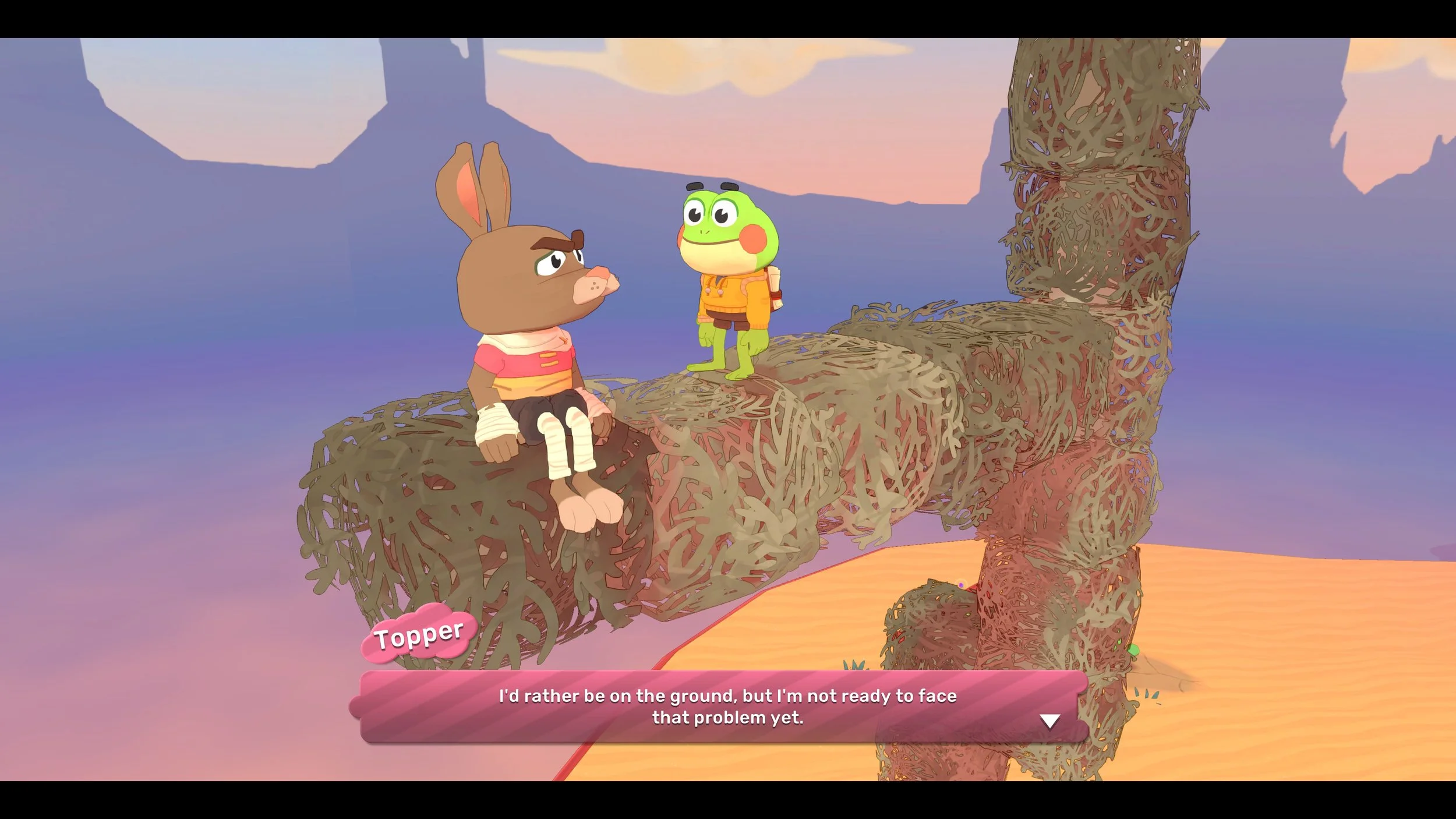
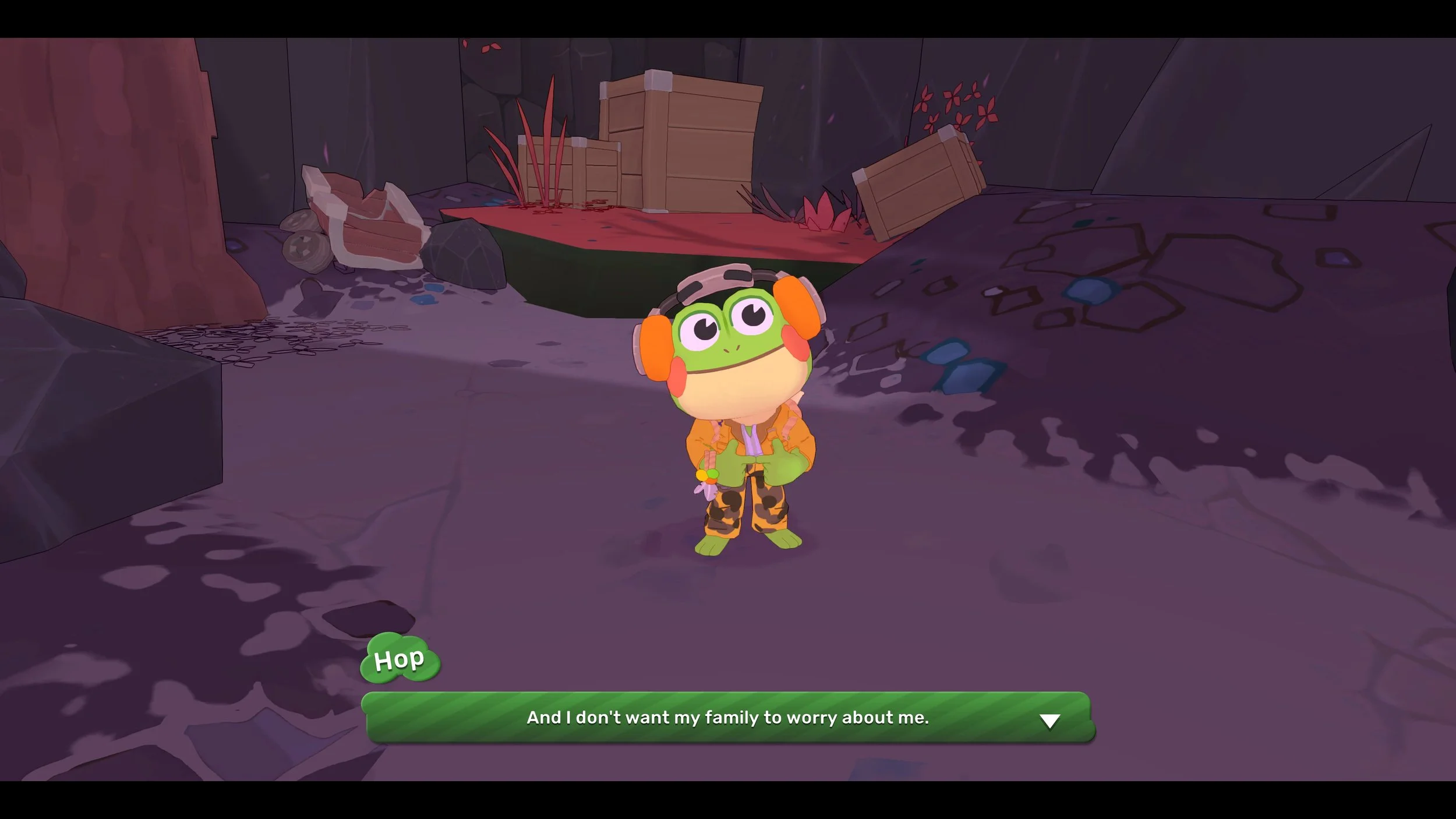
The story itself is nothing to write home about, though it’s clearly trying to attempt… something. The core premise is simple enough – Hop is just trying to get home – but each world he visits has its own little arc, such as a desert town being ravaged by a giant sinkhole and exploited by criminals looking to propagate the problem so they can keep making money.
There are some surprising complexities to these plots (as well as some funny dialogue), but if there’s supposed to be some thematic throughline connecting them, I’m not seeing it. Especially come the end, where the game suddenly tries to spin Hop and Diss as actually being friends when they’re nothing but hostile to each other for most of the adventure. And after one last (and very fun) challenge, it all ends rather anticlimactically. This might be helped by the true ending but I was hindered by the game bugging out and wouldn’t play the credits properly. It’s also worth noting that while the game ends with having a fast travel ability to go between worlds, this disappears after the credits – though we are led to believe this is being patched in around launch.
For what it’s worth, Big Hops is mostly stable, although despite maintaining a smooth 60fps throughout, I noticed a bit more stuttering as I neared the end of the adventure. And on two separate occasions, falling into a bottomless pit saw me respawn above said pit, meaning all I could do was watch Hop repeatedly plummet to his death until his health ran out. Thankfully, the generous checkpointing just made this mildly annoying, and the fact that movement is so fast and fun, the act of getting back to where you were rarely feels like much of a chore.
Between its solid controls and myriad ideas, with each world making the most of Hop’s moveset and introducing new mechanics to keep things fresh and interesting, I was certainly never bored throughout my time with Big Hops. However, I can’t help but feel there’s an even better game buried inside it. Some of these technical issues sound like they are being addressed in patches; however, a few feel more core to the game’s design sensibilities. The sprawling 3D environments clearly emulate games like Super Mario Odyssey, but with how linear it really is, I wonder if Big Hops should have focused more on self-contained, tighter platforming levels akin to Super Mario 3D World or A Hat in Time.
There’s definitely an argument to be made that this is the first indie darling of the year, and one I can see some people pushing for when award season rolls around. But, like a tadpole with legs, Big Hops doesn’t quite feel fully formed and is some stages away from being a truly great 3D platformer.
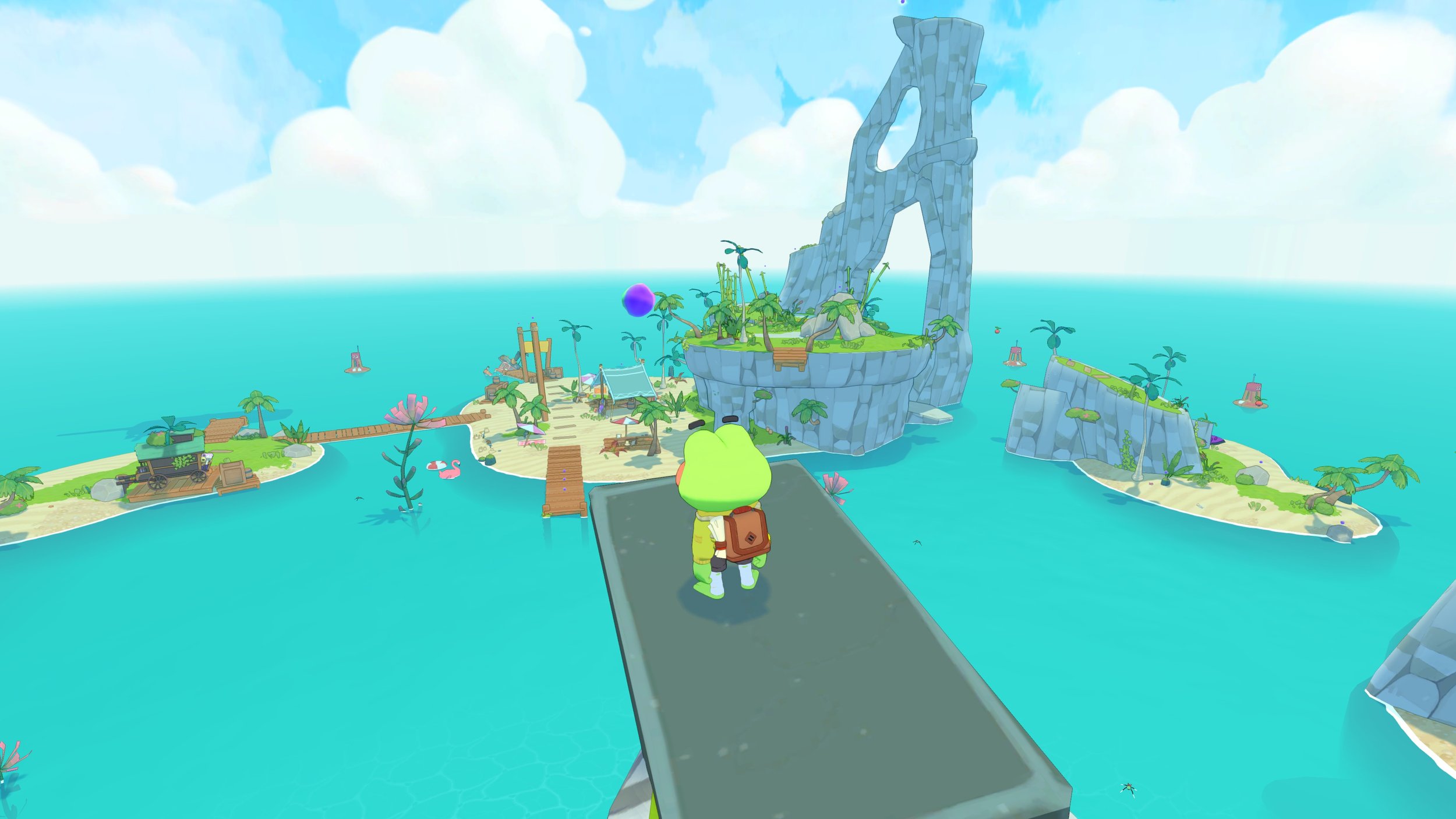
Big Hops was reviewed on a PlayStation 5. Code for the review was provided by the developer.
![[PATREON UNLOCK] Update Patch - December 2025](https://images.squarespace-cdn.com/content/v1/5caf2dea93a63238c9069ba4/1768074032703-CLHAIHFW9WVBL8GSEQRK/MixCollage-10-Jan-2026-07-38-PM-1200.jpg)


