Review | Concrete Burial - Short. Inexpensive. Mighty.
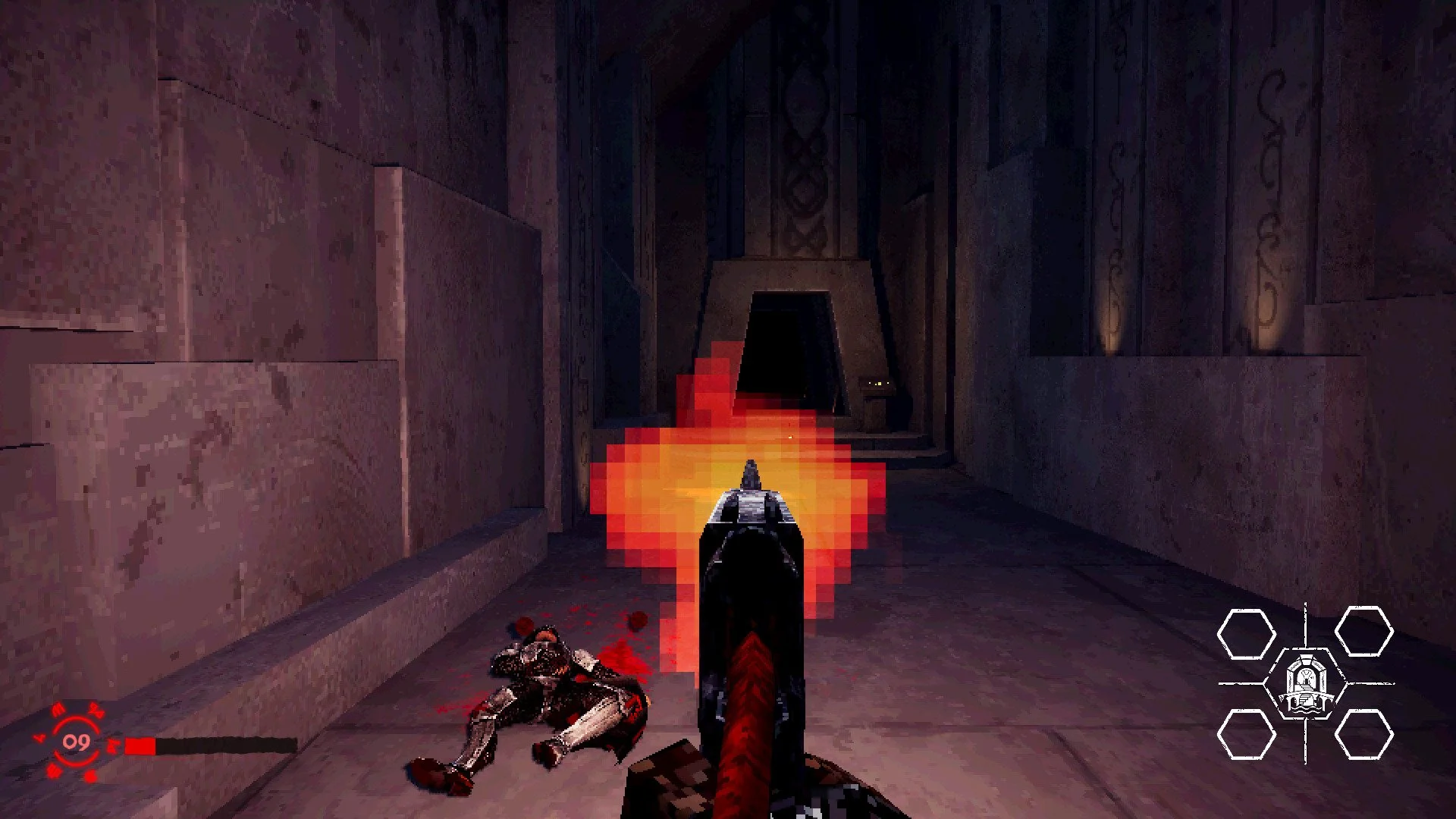
Concrete Burial is about two hours long and $3.99 on Steam. For some people, that will be enough information to decide whether to buy it or not. If that’s you, then by all means: stop reading this review and go play it. However, if you’re still on the fence, then please read on, because while Concrete Burial is not for everyone, it may intrigue you enough to give it a shot. It’s a throwback first person shooter (or “boomer shooter”), but more accurately somewhere between a rogue-lite and indie narrative experience. It’s also got a lot of red meat for speedrunners, so much so that a speedrunning mode unlocks after beating it for the first time.
Perhaps the best description of Concrete Burial is that it reminds me of some long-forgotten underground zine. One where, upon reading it, you come to appreciate the sparse but impactful worldbuilding and the terse word choice and wonder, “How did this not catch on? Where are these creators now and why did no one appreciate this at the time?”
Concrete Burial feels like that. It’s an expression of game design that is curt, methodical, and affecting, but also something that teeters on the edge of being lost in a sea of indies, especially at its low price point.
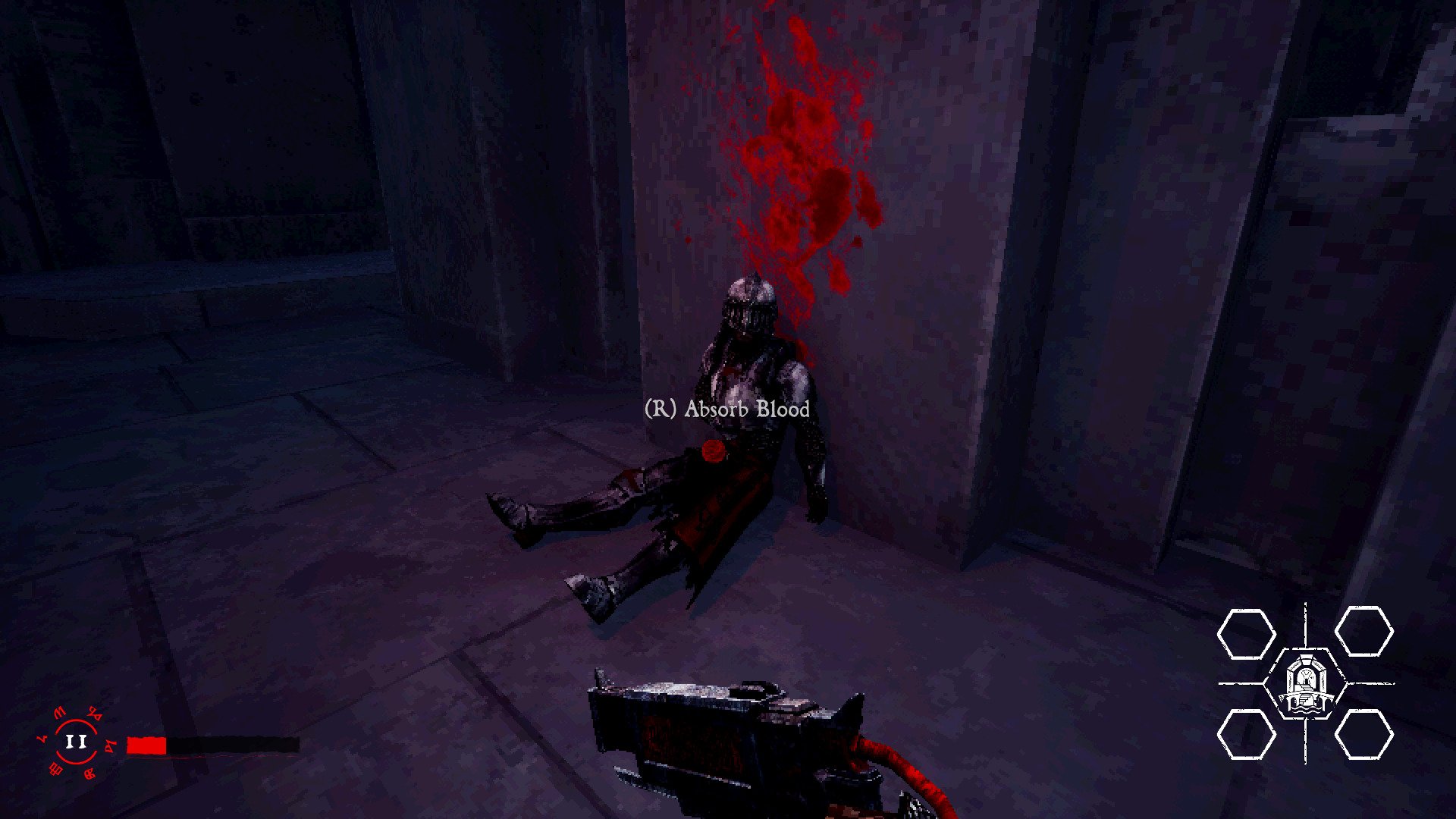
The main character is a knight of the Crimson Clan, who enters a series of catacombs known as The Whispering Crypt to complete the four trials within. One of the knight’s arms is gone. In the other is a gun that shoots the knight’s blood. Blood can be absorbed from dead enemies in the environment like gems in a 3D platformer, but by the same token running out of ammo means running out of life. Should you fail during a trial, you’ll be sent back to the nexus chamber to start again. Complete a trial and you’ll earn a checkpoint. But be warned: there is no way to save the game. If you leave the game at any point, regardless of how many checkpoints you’ve earned, you’ll need to start over.
This may seem harsh at first, but I found it to be an effective reminder that Concrete Burial is meant to be completed within two hours. With speedrunners, a few runs have already been recorded at less than five minutes. Though there are some enemies to kill, the point is more to get the Artifacts of Desire at the centre of each trial and get out. If you want, you can also collect the last thoughts of those who came before the knight, but there’s not much else in terms of side content. With this in mind, I can understand why the team at Games From The Abyss wants it done in one sitting: it’s like it took the most exciting part of a game, stripped out all the excess parts, and said “go.” Plus, if you really need to take a break, you can always do what I did: throw it on a Steam Deck and suspend it whenever you need to. There’s no penalty against that.
What makes this game work so well is that the elements surrounding this central concept are simple but effective. The soundtrack, for example, features an atmospheric, haunting drone reminiscent of tracks from The Legend of Zelda: Ocarina of Time and Metroid Prime that elevates the eeriness. The story is told through text that may be self-serious to some, but gives this curious mix of crusades-meets-apocalypse tension that kept me intrigued. Without spoiling the ending, I just want to say that the way the narrative ties up, for what it is, may be among my favourite moments of the year.
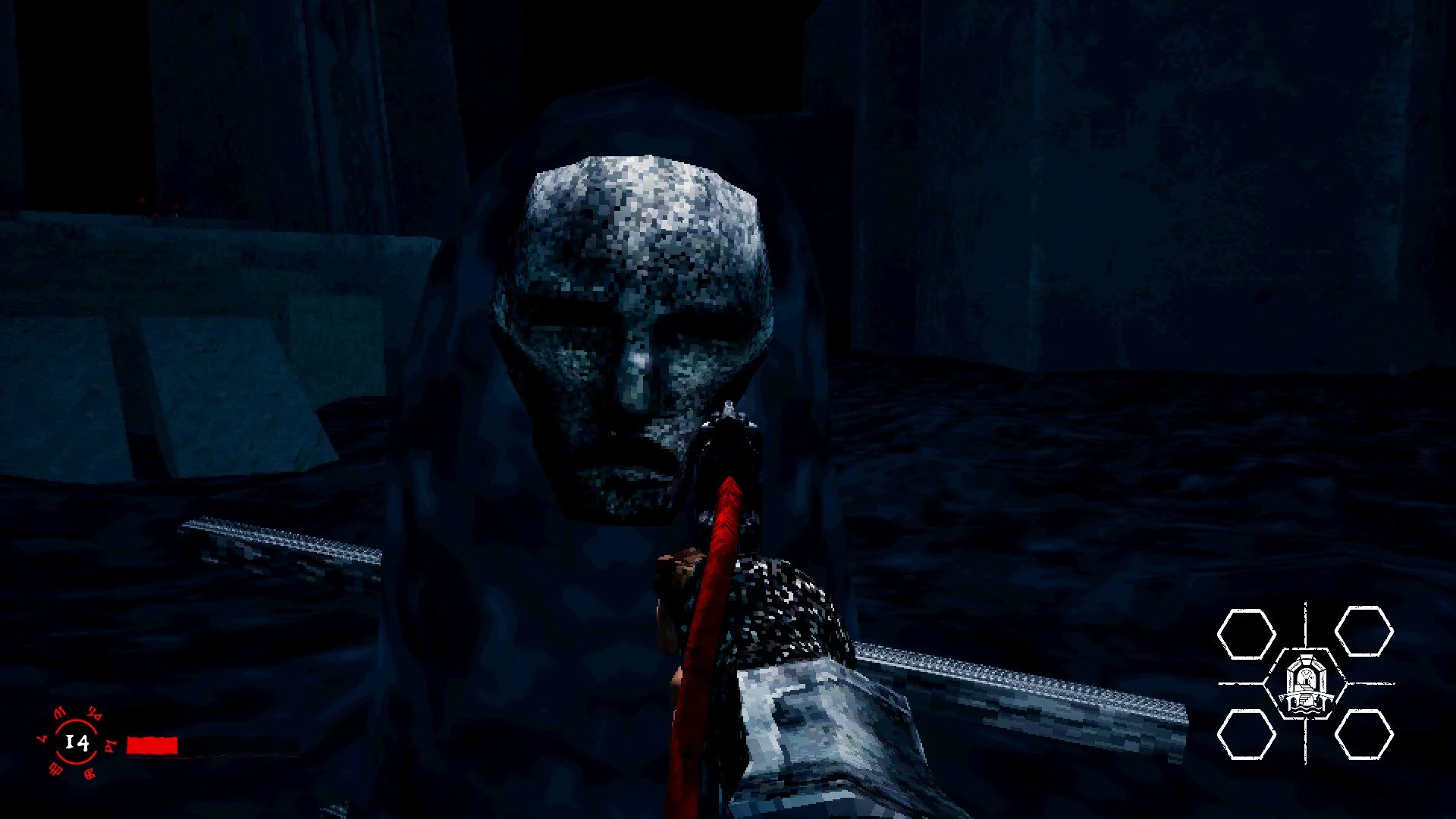
Then, there’s also Concrete Burial’s enemy types. There are only four, but each have their purpose: most common are the floating heads that approach you with a telltale hiss and purple streak, then there’s these watery skeleton-like creatures that rise up out of the water to attack whenever you’re immersed for more than two seconds, not to mention the blob-like creatures that hang out on the walls in some areas that attack with energy balls. Dealing with each of these is relatively easy, needing just one bullet or melee attack to defeat, but when they gang up on you it can get dangerous quickly.
Above all of these standard enemies, though, is the closest thing Concrete Burial has to a traditional antagonist: the Protector Entity. This red-veiled horror floats through each trial, hiding itself somewhere therein. Should you lock eyes with it even from a far distance, the knight will be sucked into a mind palace maze through which the Entity stalks, and you must find your way out or you’ll die. While the game has a spooky atmosphere overall, moments like this colour the experience in a sort of playful, Halloween-y way that doesn’t go too hard on the horror, but could make it a yearly October staple for those that really fall in love with it.
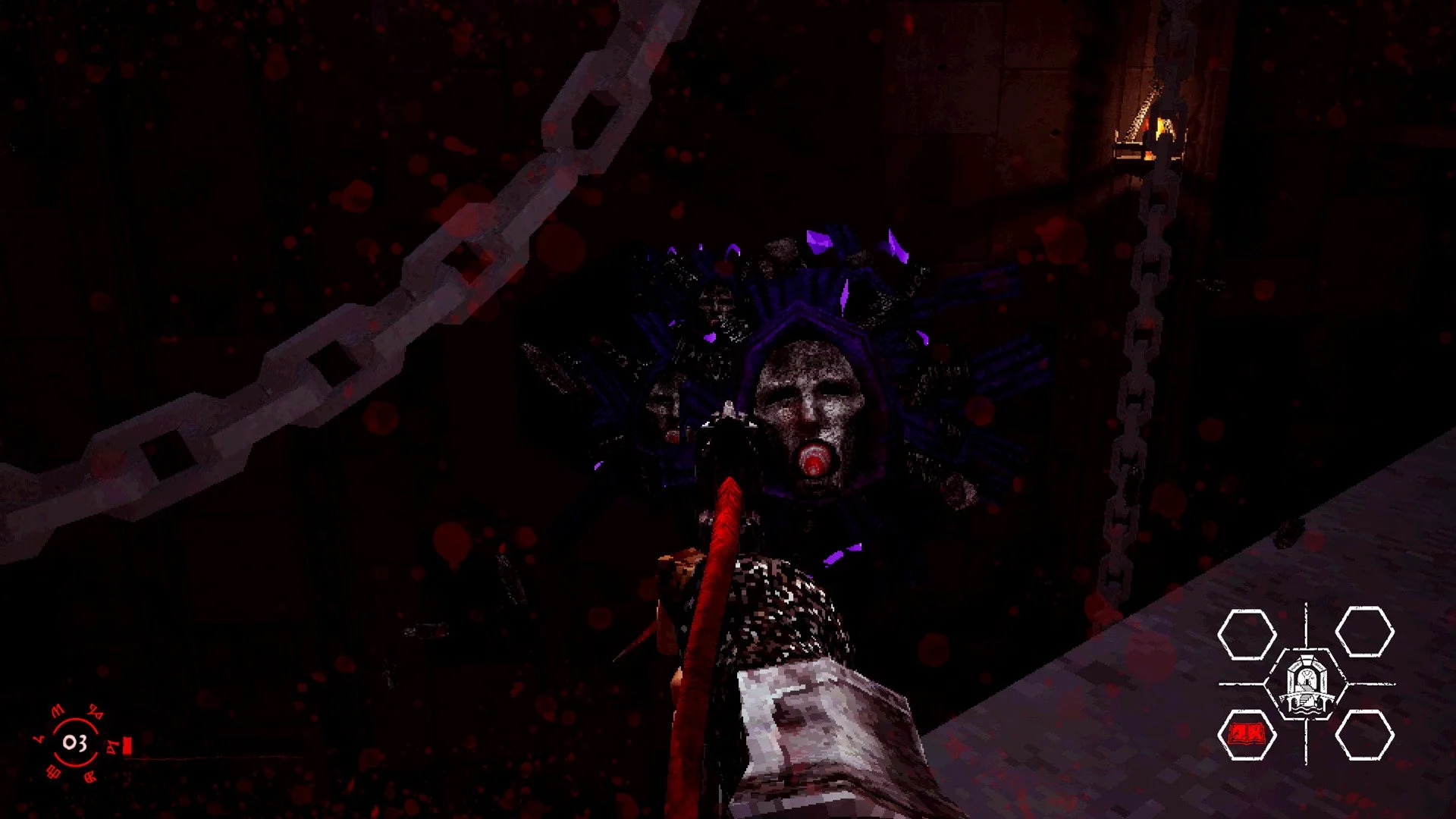
I should also probably mention that this game is imbued with late-90’s throwback aesthetics. The art direction is clear, the characters are well-defined, but the textures have a pixelated quality that resembles a Nintendo 64 game, but still a step beyond. These throwback games are currently a dime a dozen, as we live in an era where there are so many remakes and remasters that nostalgia feels like a tangible currency. However, I find that the best antidote to that feeling is when games go beyond the “throwback aesthetics” to present new ideas of their own. Despite its short length, I believe Concrete Burial stands on its own two feet.
Concrete Burial is fast enough and inexpensive enough that it’s worth snapping up for that reason alone. Yet, digging into this FPS uncovers an indie narrative experience in an uncommon guise that is compelling, challenging, and bound to unlock the speedrunning bug for at least a few people. This is the kind of game that moves quickly and leaves a long-lasting impression in its wake.
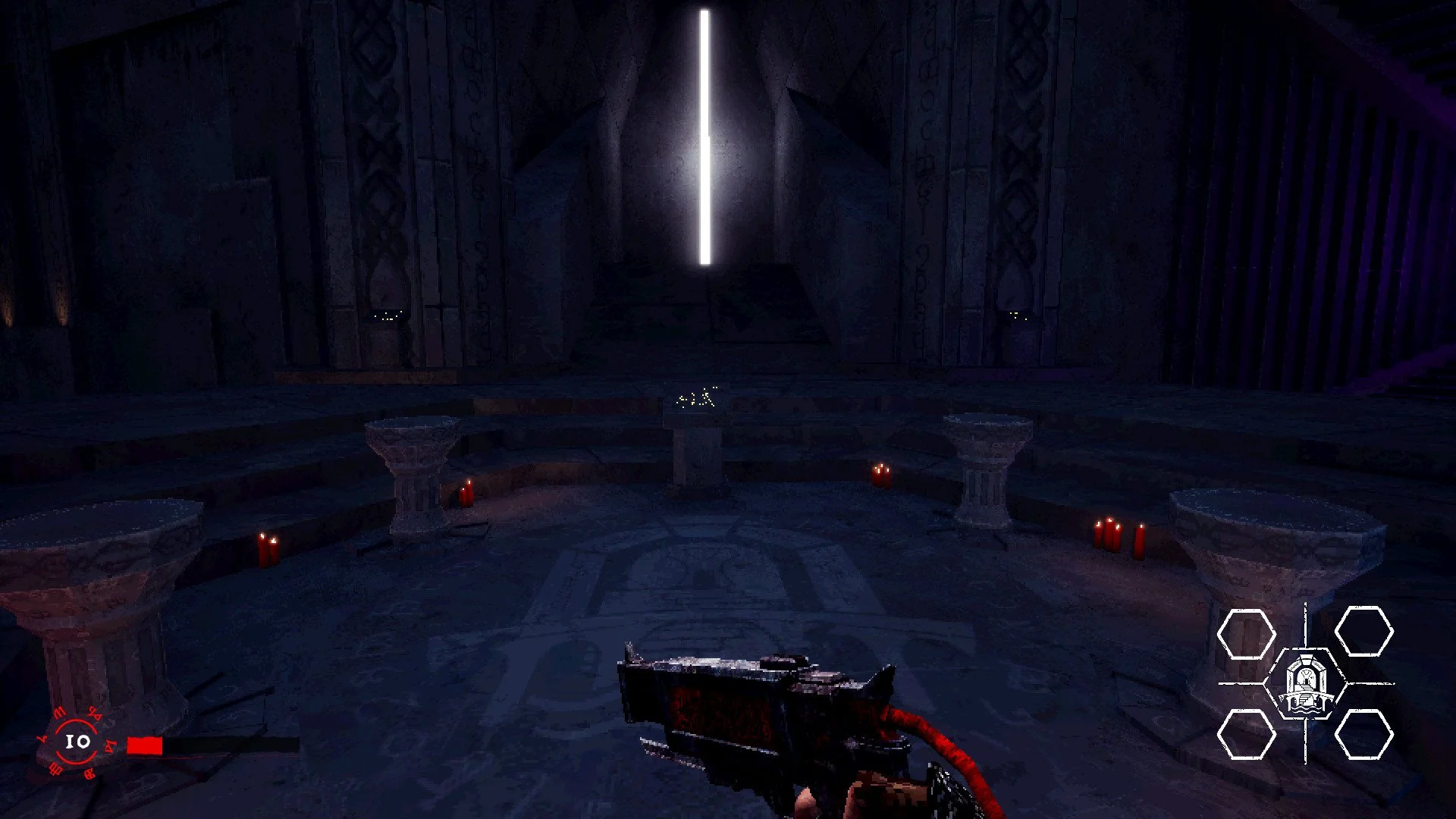
Concrete Burial was played on Steam Deck using a code provided by the publisher.