Review | Sovereign Tower - Knights of the Branching Narrative
Many of us have done it, and even more have thought about it. You make a narrative choice in a game, then things don’t pan out as expected. Maybe it’s your mistake, maybe it's something that is beyond your ability to predict, but either way you think about save scumming. You scroll through your save files weighing how much you want to be forced to live with your choices and how much material you can tolerate repeating. Sovereign Tower, a visual novel fantasy kingdom manager, relies on that temptation. It even goes so far as to make it an explicit mechanic and narrativise it. Deep within the tower lies a demon, locked away, but still capable of rewinding time and letting you replay sections with new choices to make during dialogue or the opportunity to tweak your strategy on the management side of things. Perhaps you should be cautious how much you rely on the powers of a demon locked up in your magical tower who promises you a perfect reign, though.
Wild Wits Games sets its third title in a familiar western European fantasy world with a helping of Arthurian legend. Once there was a powerful kingdom with a magical tower at its heart and the sovereign ruled from it. During the tutorial you get to see the fall of the last ruler, which has led to decades of the tower sitting empty; once aligned nations are now at each other’s throats, and a new empire is primed to sweep in from the east. After a hasty escape from a small village razed by said empire, a leper comes to the tower and opens its doors, which have long waited to part for someone fit for the throne. This is of course you. Once the lowest of the low, you now hold court, send knights out on quests, and seek to strengthen your kingdom as you see fit.
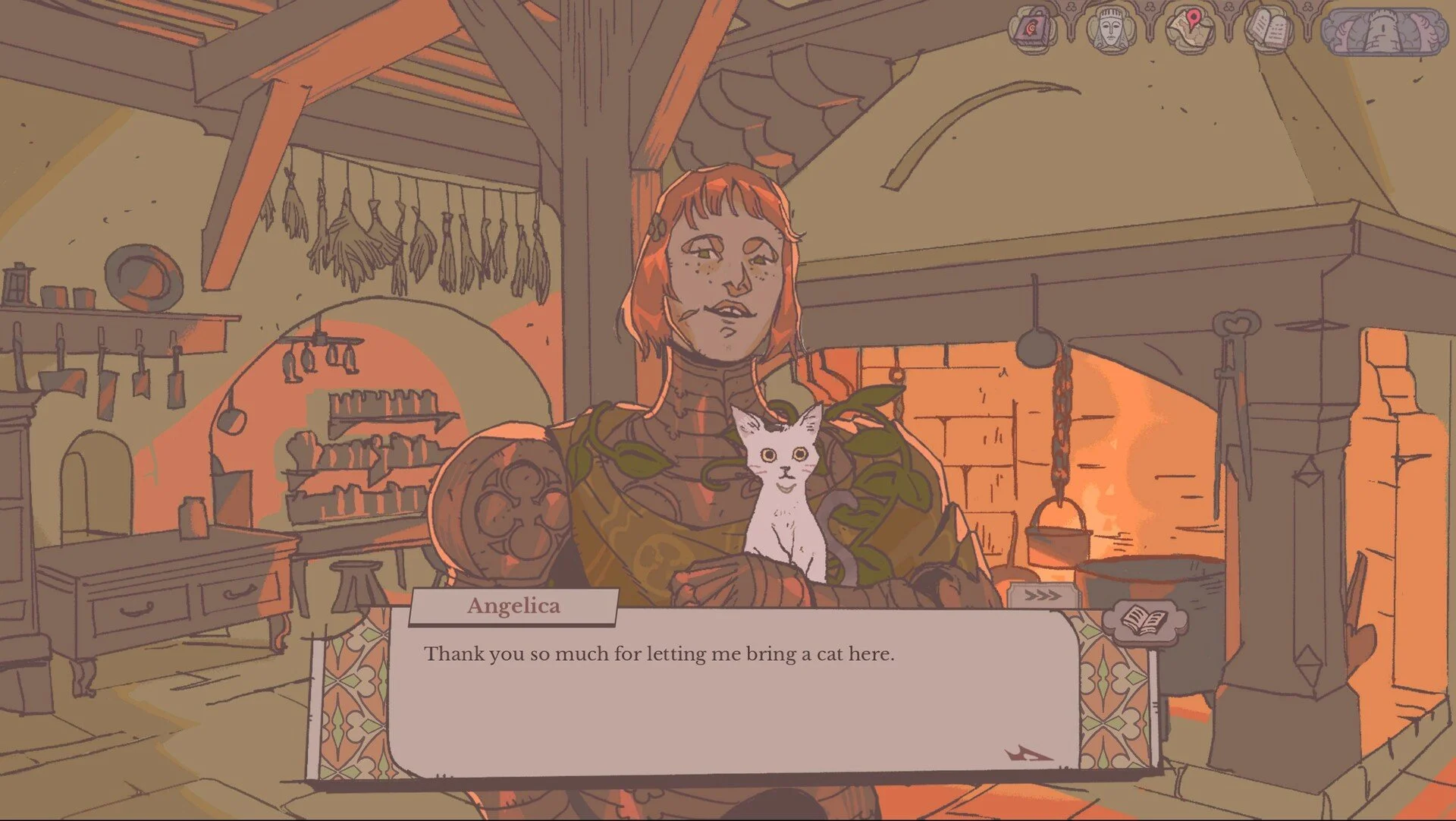
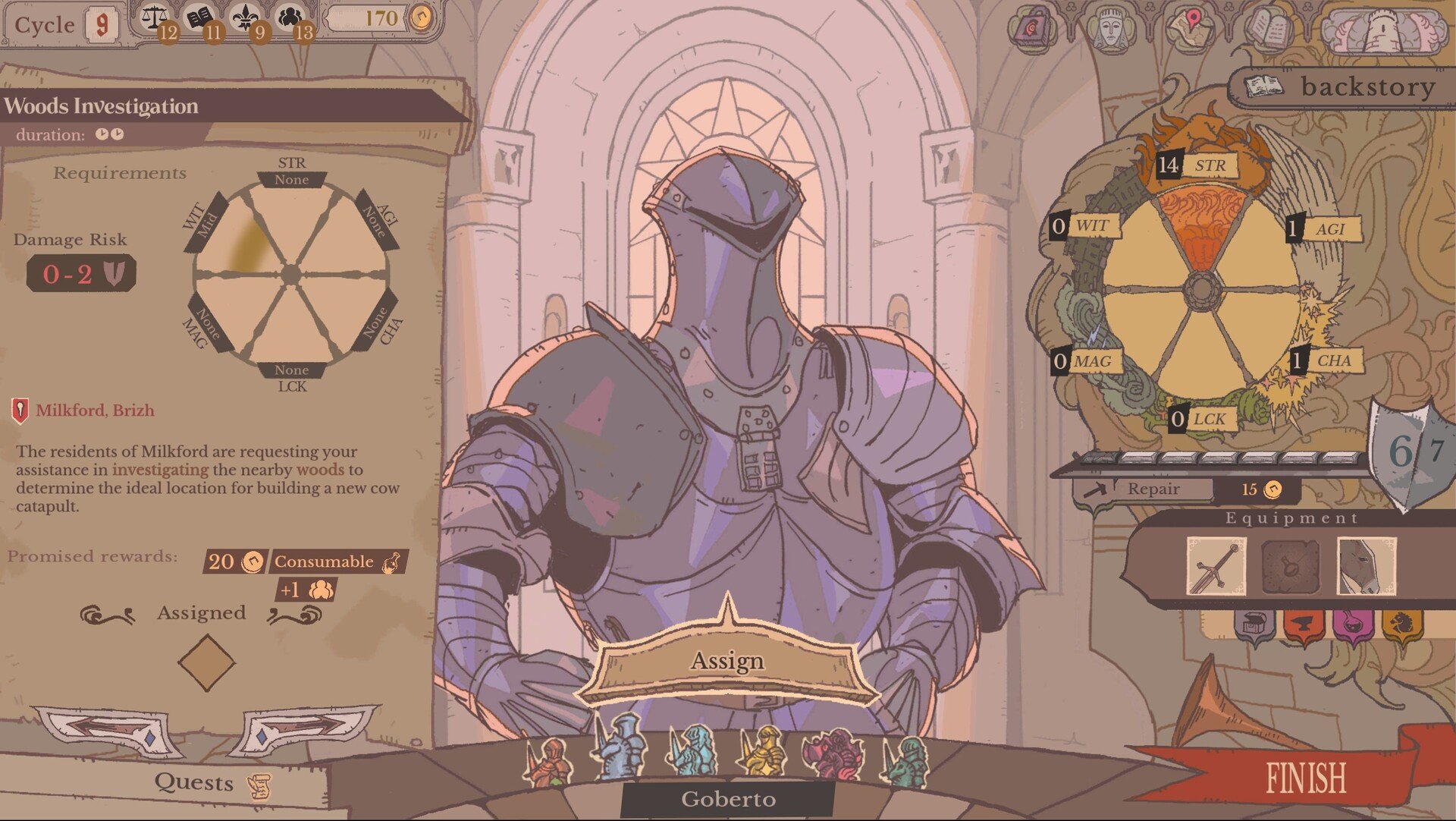
The game’s visual novel and kingdom management mechanics come together to form a low intensity, but surprisingly complex experience. A three-part daily structure serves as the backbone of the gameplay. You begin the day hearing out folks who’ve arrived at the tower seeking an audience with its ruler. Then in the afternoon you equip your knights and pick quests for them to head out on. Finally, the knights go on their adventures and report back at the start of the next day.
Knights possess standard RPG skills like strength, charisma, magic, agility, luck, and so on. They also have preferences for the types of quest they enjoy going on. For example, the animal-loving Angelica probably won't appreciate being sent to go kill the wolves harassing farmers. Perhaps the smooth-talking highborn Gwendan is a good fit for calming tension down between nobles, though. Some quests require a single knight while others take multiple and the same can be said of the number of days they take to resolve. Rewards vary, though they always include experience to level up your knights, and possibly gold, weapons, a new allied nation, or, most important, the approval of the different internal groups within your own kingdom. Balancing the happiness of merchants, scholars, nobles, and the common people is key to surviving the boss challenges at the end of each act, which serve as challenging missions for the knights that you have to pass an initial “skill check” for. Further complicating every choice is the fact that when folks approach you in the audience chamber to initiate any quest, you can choose how to tackle it and the rewards for completing it vary as a result.
Perhaps you’ve chosen the wrong knight for a quest, though. Perhaps if you went back in time with the knowledge gained of what's to come, you could circumvent a quest. What makes everything click, is the ways in which the game narrativises save scumming. Within the crypts of the tower lies a demon eye peering out a giant lock on an even more giant gate. When you hit a fail state or something undesirable happens, they’ll show up and tempt you to revisit the past with the knowledge you’ve gained.
Throughout either of the first two phases of each cycle you can pay artisans for their crafts such as potions, mounts, and weapons to equip your knights with. You can also chat-up your knights and servants as well as listen-in on their conversations. All dialogue choices can alter the direction of the narrative. As previously mentioned, not only can you choose how to resolve quests, but how you converse with your knights can determine what they think of you and how likely they are to stick around. Not so surprisingly, this also means you can attempt to woo your knights or a select few servants. Various romance options are open to you without any of the arbitrary limitations some RPGs have placed on romance in games, partly as a function of the fact that your sovereign is never physically revealed or gendered.
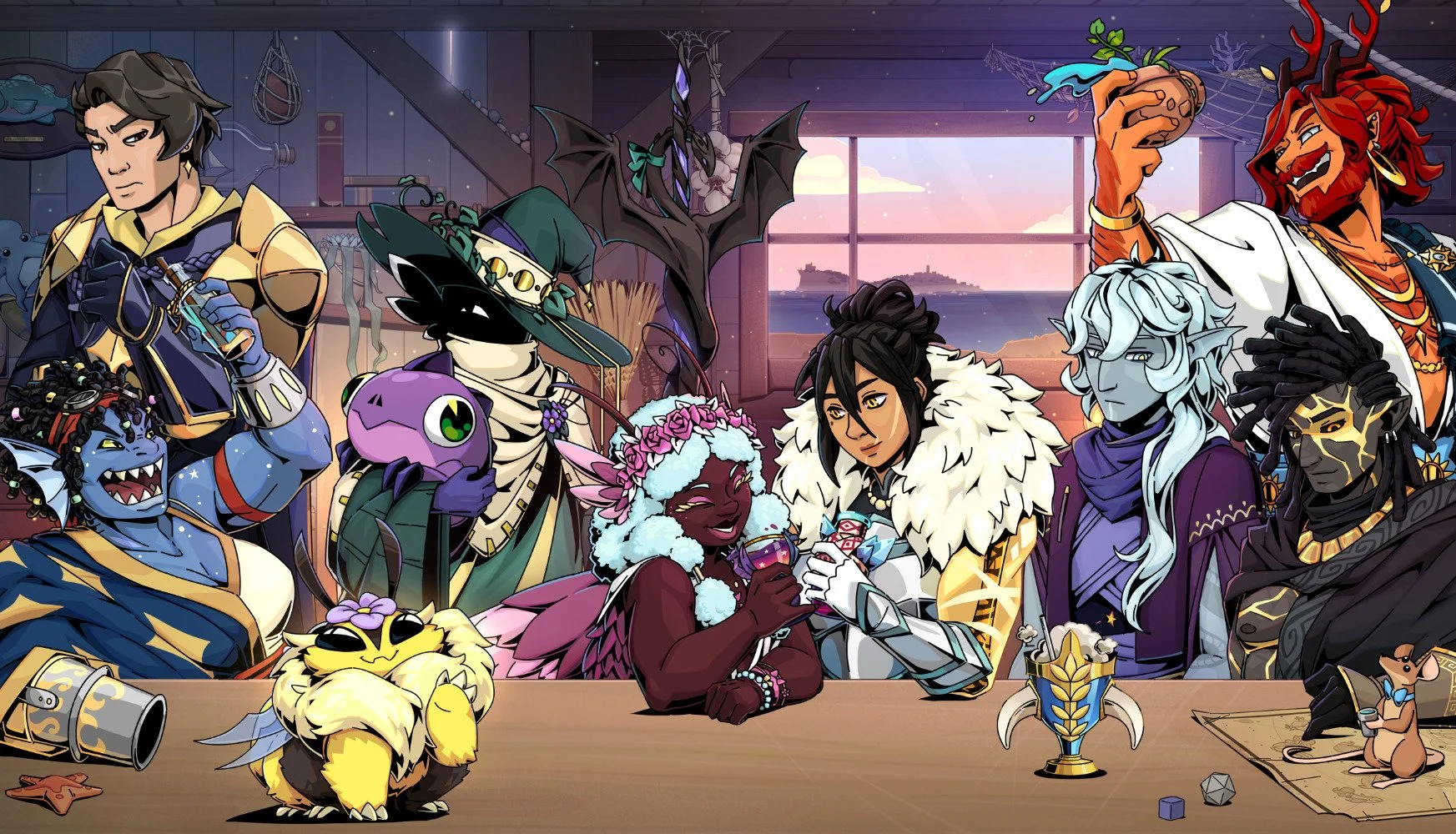
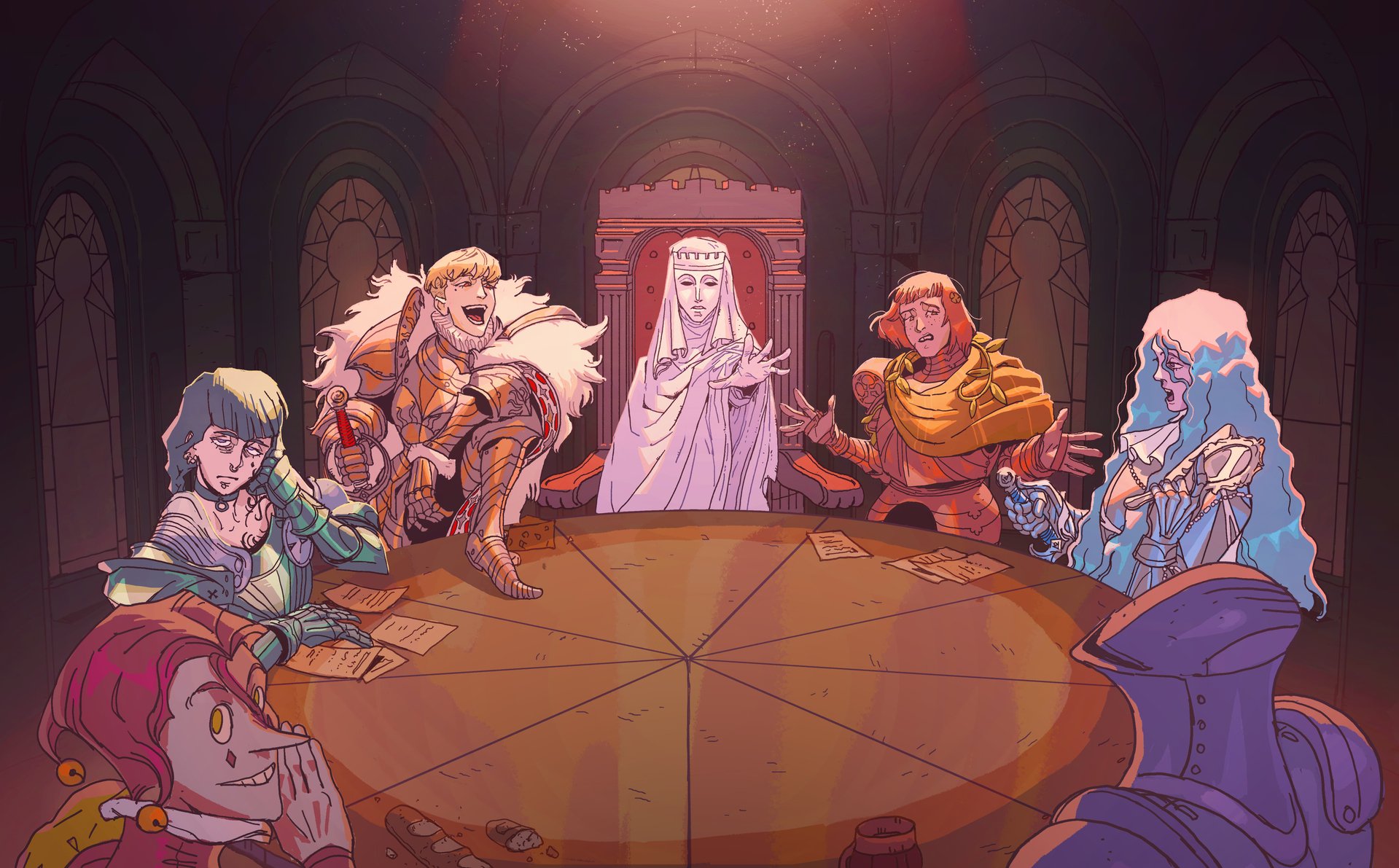
All of this is an excellent base for a certified sicko of choice-driven narratives, management sims, visual novels, and romance like myself. Key to this is the well-balanced tone that is never too serious, but just serious enough to give impact to your choices. Each character is a stock one that works in humour to ensure their stock nature never feels too dull. For example, the brawn-over-brains Goberto — who is never seen without his bulky armour, even while reading in the library or enjoying a snack in the kitchen — is a truly endearing head-empty kind of fella. Then there’s Gideon, a beautiful man dressed in the chuunibyou trope. He is a man who knows not his past and always opts for the cryptic word and dramatic pose, but his characterisation doesn’t end there. He is a genuinely well-written portrayal of the isolation felt by someone trapped between two different parts of society and your choices can work with his eventual desire to better himself or attempt to force him down a path in which he may suffer an unpleasant end.
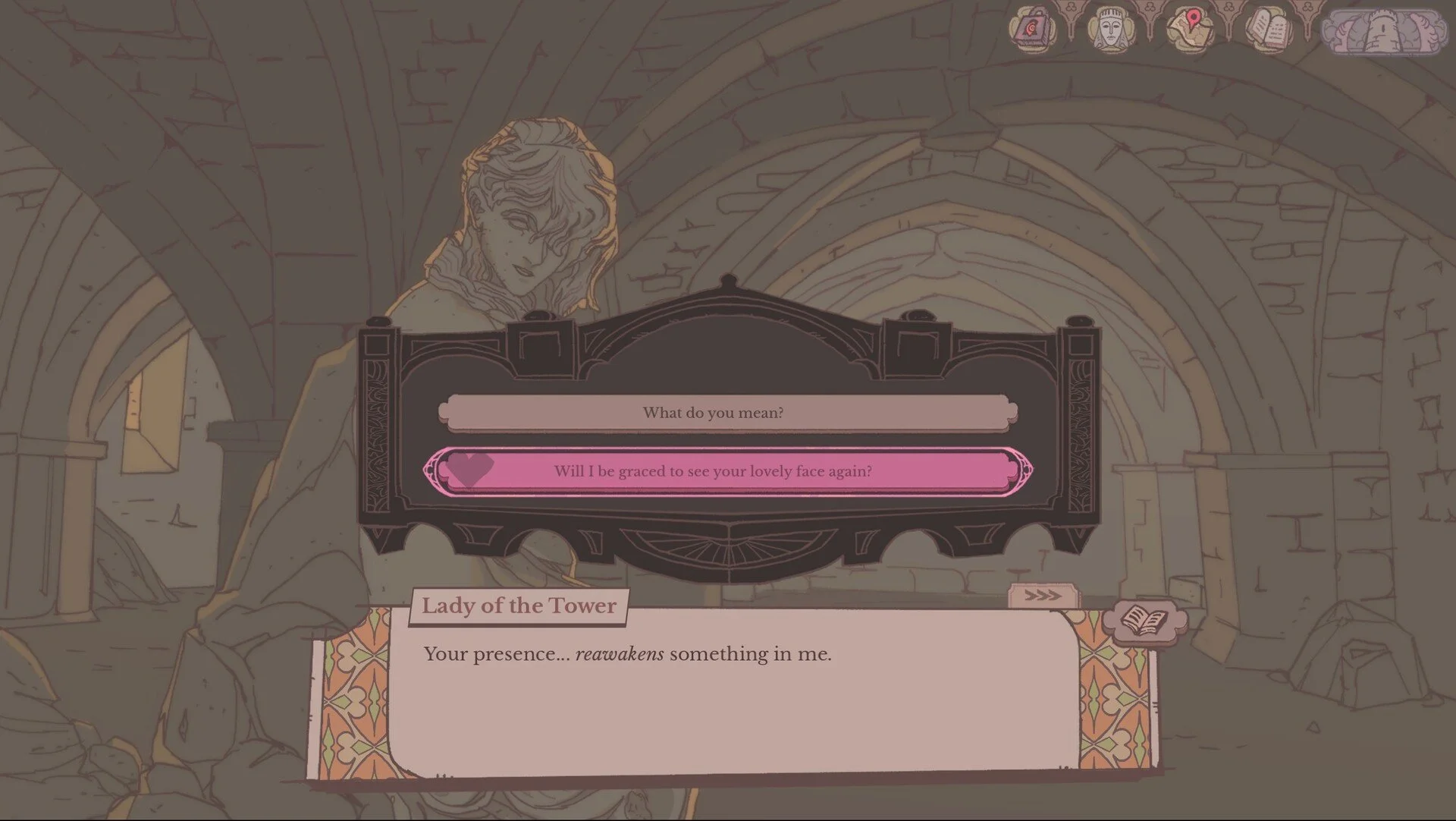
It helps that the detailed character designs are excellent and elevate those initially stock portrayals. There is a coherence to the game’s visual presentation that plays with its visual novel inspirations, featuring fine line work, and ample usage of medieval marginalia–like details that play well with the humour. All of it renders beautifully on both my PC and Steam Deck, though there are certainly pieces of text I wish weren’t so small, chiefly the income coming from the taxes as displayed on the map and some particularly small iconography in the menu for sending knights out on missions.
Sovereign Tower is an argument for games with a tight focus that stay within their means. One could certainly get multiple playthroughs out of their time with the game — each takes 5-8 hours and has a breezy pacing offered by games where you finish a day and then tell yourself “just one more day” several times over. The game gives ample reasons for multiple playthroughs, particularly given the fact that there are more knights available to recruit than there are spots at your round table. Two runs through and I’ve not even recruited every knight, let alone seen the conclusion of the stories of all those I have.
The game’s not at a Crusader Kings–level of complexity in its kingdom management. It does not attempt to account for a 100+ choices across a 50-hour experience like in contemporary AAA RPGs, nor does it have an absurdly long script like some visual novels. Yet, the ways in which its narrative twists and reforms around player agency are surprising. For instance, about midway through my first playthrough one of my knights had killed someone in cold blood while clearly under some sort of magical influence. Things continued to spiral for them, and eventually I chose for them to leave and return once they had sorted out their problems at a healthy distance from my kingdom. Some time later they returned, nearly the opposite of the person they had originally been. There were several points, including their return where I could have completely removed them from the story. On subsequent playthroughs on the same save file, new dialogue options unlock that narratively acknowledge your now-omniscient sovereign, who is able to react to situations using the knowledge of prior playthroughs. This also means you can attempt to head off the entire issue that led this knight to spiral in the first place.
Of course, even in such a purposeful experience that considers its player’s actions so thoroughly is not without its woes. When I came to the first ending, my final choice outweighed my many previous actions, making the framing of my reign not align with the full breadth of actions I took. With any choice-driven game there will be times where the game reacts in ways that the player doesn’t simply find unpredictable, but discordant with how they perceive and react to the situation presented. Part of my outcome was the result of the final act being far less forgiving then the prior two. Certainly, I had made some oversights, but to be fair, who could have predicted my goth baddie of a knight, Ursula, who is deeply antisocial and exhausted by every task I give her, to win the tourney whose champion is put in charge of a neighbouring kingdom?
Undoubtedly, what has made me return to Sovereign Tower for multiple playthroughs is the explicit acknowledgement of the player mentality that makes us strive for perfection. To min/max, read a guide, save scum, or attempt any other means to avoid imperfection, we are manipulating the systems of the game in order to pull out a desired perfect outcome. For those who cannot resist the temptation of playing out the “perfect run,” Sovereign Tower is a rare treat.
Sovereign Tower was played on PC using a code provided by the publisher.