Review | Menace - Service Is Always an Act of Valor
Menace’s launch into early access on February 5th was perfectly timed to interdict my urge to start another Jagged Alliance 3 playthrough. Developer Overhype Studios, best known for medieval mercenary simulator Battle Brothers, has brought its brand of brutal tactical combat to an isolated star system called the Wayback. You, in command of a Marine outfit tasked with bringing the Wayback into the fold of the expansionist Terran Congressional Republic, need to barter, negotiate, and scavenge for supplies to complete your mission while cut off from reinforcements.
You control squads of soldiers whose personalities and abilities are defined by their Squad Leaders (SLs). Some SLs are Pilots, and they can drive vehicles ranging from wheeled personnel carriers to heavily armed mechs. You are not forced to utilise both infantry and vehicles, but the game’s tactics shine brightest when you’re commanding a combined arms force. Despite its sci-fi setting, Menace convincingly recreates modern mechanised infantry tactics, and you are rewarded for utilizing them. This is accentuated by many firearms being copies of 20th century small arms — you might be flying around a warship capable of interstellar travel, but the staying power of the Heckler & Koch G3 battle rifle circa 1960s Earth cannot be understated.
This is my rifle. There are many like it, approximately eight million built since 1958.
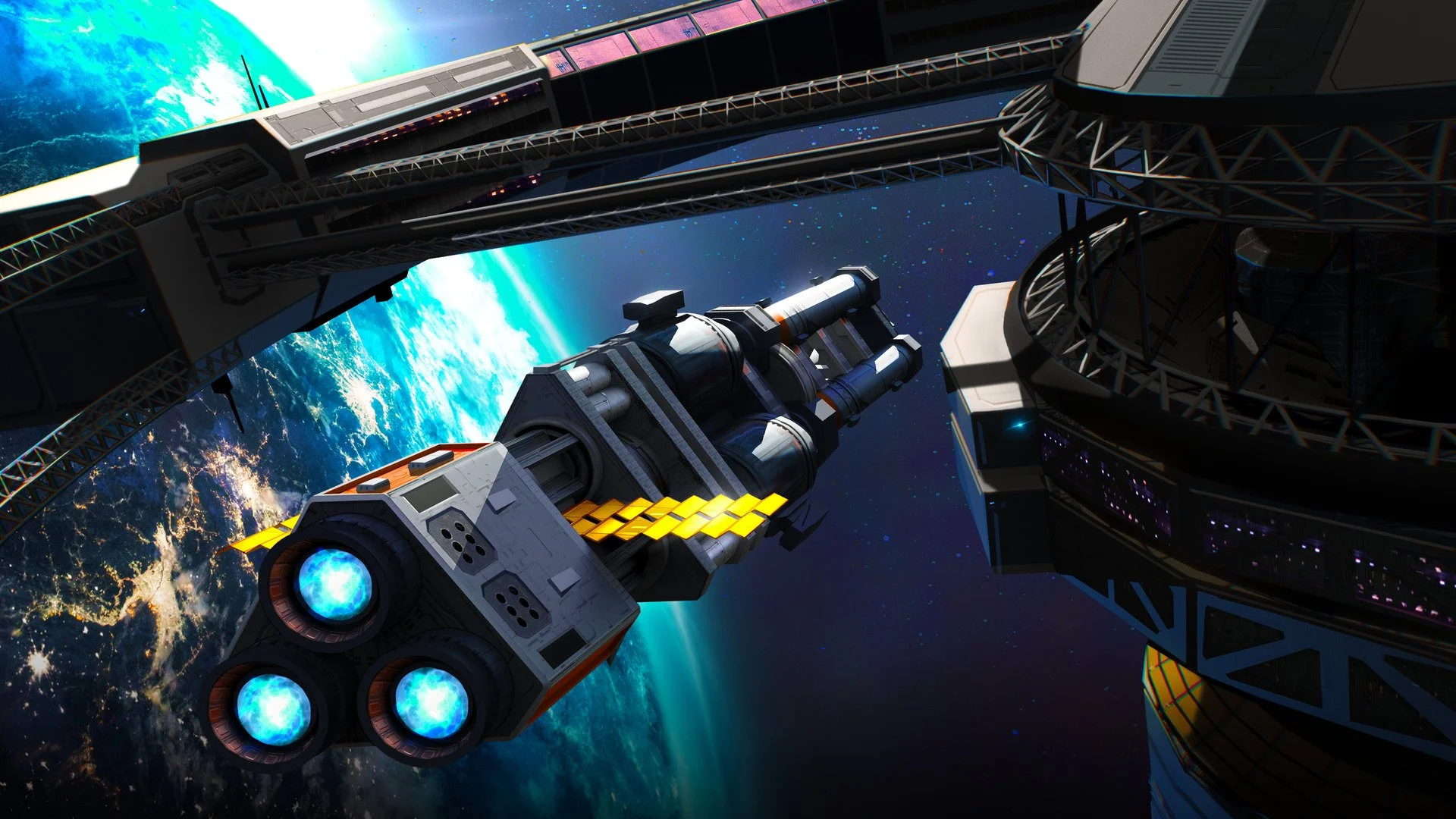
This is just one of many choices to include modern touches in a world supposedly hundreds of years in the future, which imparts a retrofuturist vibe to the game’s story. As you see in the cinematic that plays when starting a new campaign, the startup sequence for your spaceship is DOS prompts on a CRT monitor, complete with tape decks clicking and whirring, not some holographic display. The vehicle you start with is like a snubnosed Boxer armoured fighting vehicle from the modern day, also theoretically a relic. It is a future that does not imagine the future, but rather transposes the present onto the canvas of a fiction outside of present time and space. This extends to your Squad Leaders as well, who could probably trace inspiration back to the Jagged Alliance games and that series’ parody of ‘80s action movies and their over-the-top character archetypes. That game is, after all, one of the ancestors of today’s tactical turn-based games, and scavenging equipment in the Wayback reminds me of schlepping through Jagged Alliance’s Arulco.
I found Normal difficulty to be a little too easy once I got the hang of Menace’s tactics, and Expert to be too hard at the start when you have no equipment, so I’ve settled on Challenging as the ideal difficulty for me. Higher difficulty levels don’t make enemies harder, just more numerous, while giving you less resources at the beginning. I’ve encountered three of the four enemy factions, but none of them are in their final form. Overhype has made it clear that it has a lot more to do to flesh out the enemy factions, along with the neutral factions you’ll parley with over the course of your stay in the Wayback. To get to this point has taken about 50 hours of play, but I am a particularly methodical gamer.
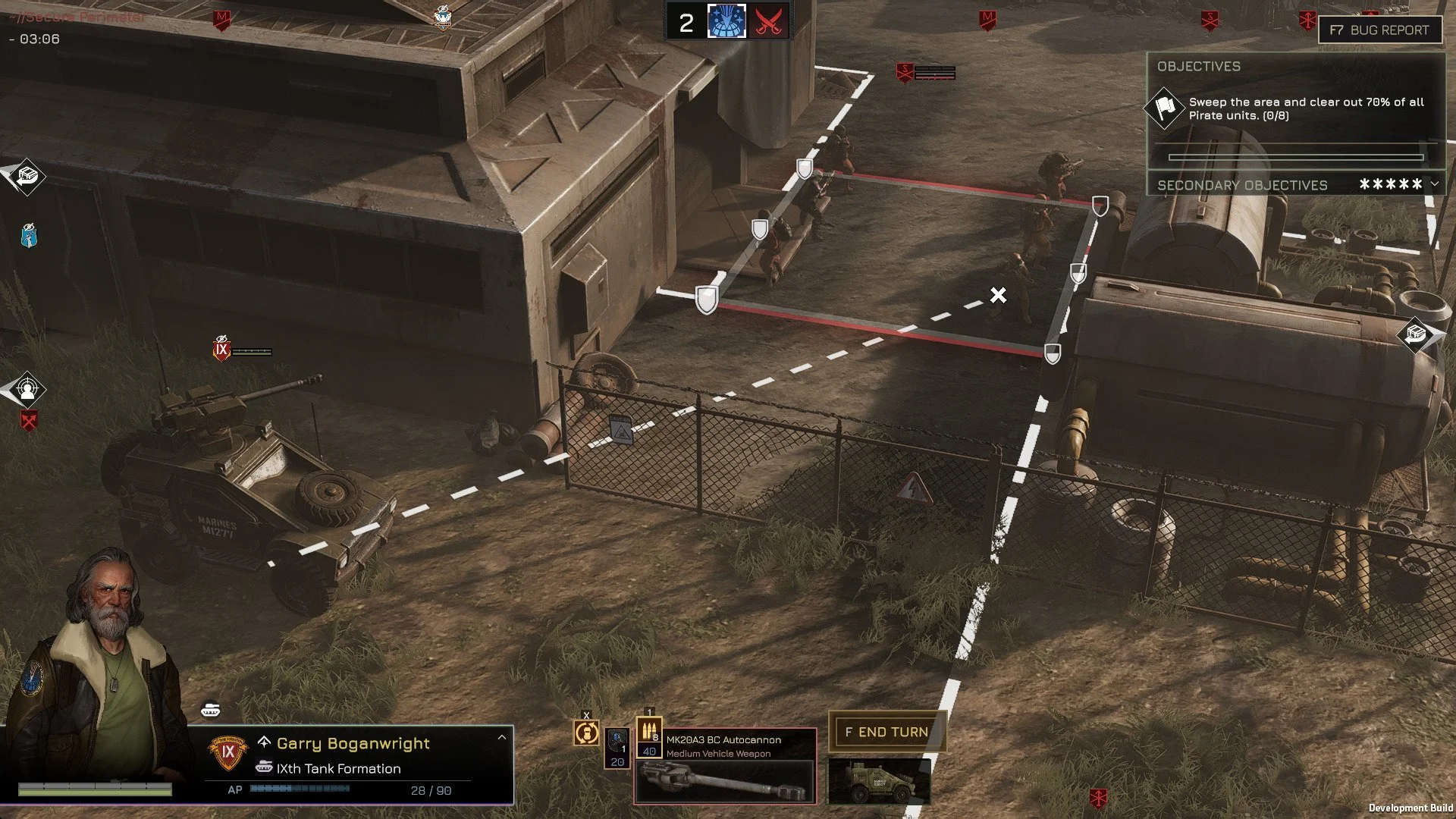
Sightlines that don’t make sense, like this building blocking the shot, are a personal bugbear at this stage of development.
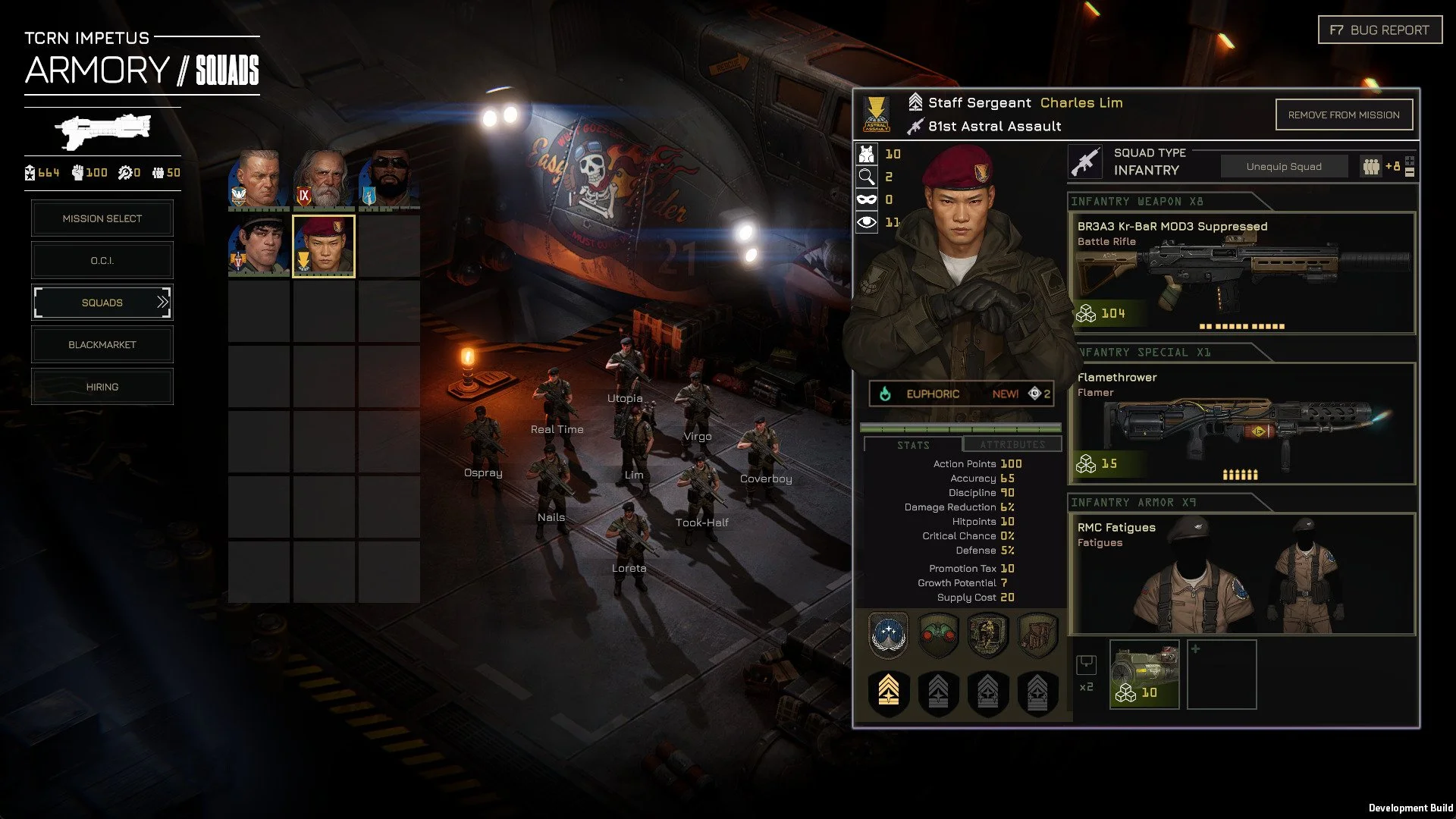
Even after all this time spent in Menace’s early state, I find myself launching the game to run another operation, looking to try out different tactics or combinations of perks on my SLs. The limitations that the game places on you inspire lateral thinking, and this is its greatest strength. You deploy your forces into “operations”, an escalating series of missions between which things like vehicle damage persist. The forces you can deploy into a given mission are limited by a points system — like building a Warhammer army list — and part of the fun is maximising what forces you can fit into the allotted points. Everything costs points, from better weapons and armour to extra magazine pouches and the squad leaders themselves. The SL roster features a mix of expensive and cheap choices, and cheaper ones tend to have low “promotion tax” as well, keeping their cost low even as they accrue perks through the promotion system. This creates a space in which cheap SLs can be a long-term investment in the flexibility of your forces, instead of a stepping stone to more elite choices. Beyond your initial SL picks, it is expensive to recruit new ones, and your choices are randomised (though it appears to be static in relation to the world seed, so you will always get the same SLs in the same order in a given seed). SLs get fatigued after too many missions, so you’ll need a couple on the bench to rotate in, meaning you can’t always rely on the same elite few. The gear you get from completing missions and operations is also randomised, necessitating building your forces around what you find on the battlefield instead of some idealised perfect build. This culminates in a synchronicity between the game’s narrative and its mechanics — there is no ludonarrative dissonance between how it feels to play and how it wants to be perceived. This is a rare achievement for a game, especially one just launching into early access.
The flexibility of respeccing your SLs stands in contrast to customizing your ship, which has lots of options for its few upgrade slots, but is very expensive to build out — much less respec — taking about two full operations to afford a single module. This discourages trying out new modules, which feels at odds with the flexibility of the squad customization. The developers have stated that they are adjusting the ship upgrade mechanics, and at least plan to add more upgrade slots. And here we arrive at Menace’s greatest bugbear — it’s really fun but very much feels “in development”. This is a combination sure to attract a lot of devotees with suggestions for improvement; indeed, the Menace subreddit has already ballooned in subscriber count, and is full of posts echoing many of my own misgivings. I think the challenge for a game with a really great gameplay loop, but that kind of only has that core gameplay at the moment, is that it risks burning out an enthusiastic playerbase.
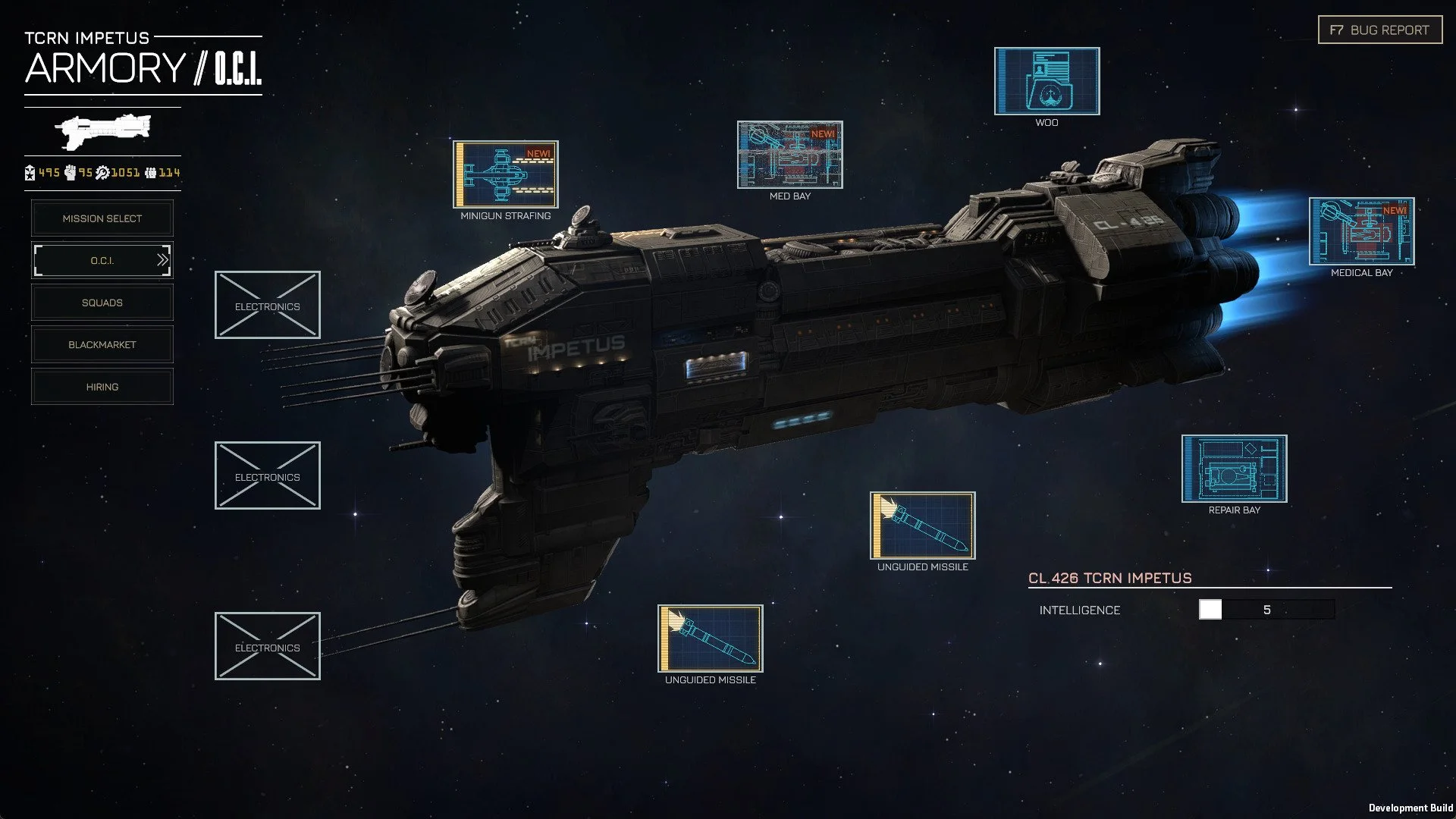
Customisation of your ship, the TCRN Impetus, leaves something to be desired.
Right now, the only thing to do in Menace is run back-to-back operations. There are two enemy factions at start, which grows to four. Missions get harder as the supply limit increases gradually, allowing you and your enemy to bring better equipped squads and vehicles. But other than upgrading your ship, there is not really anything to do in between operations, which gives an almost “boss rush” feel to the game’s pacing. The lack of an engaging strategic layer that sits atop the tactical gameplay is the main driver of this feeling, standing in contrast to XCOM’s economic and research gameplay in between missions, or Overhype’s own Battle Brother’s overworld. It therefore feels like a shell of a game — already compelling, but sure to be more so as it gets built out.
There are some smaller quality of life issues that detract from Menace’s otherwise stellar execution. Missions can easily run 30+ minutes, but there is no way to save mid-mission. So if your kid wakes up, or a misclick causes a squad to get wiped, or you just want to experiment, your choices are to roll with it or try again later. There is a notable lack of tooltips or explanations on how many mechanics and abilities work, but no easy way to try things out and learn by doing. This, coupled with a thin margin for error that can see squads wiped out with a single mistake, led me to become hesitant to try new things. Squad Leaders’ fatigue is not readily indicated, and sorely lacks some kind of warning before you send a tired SL on a mission. Overhype has busied itself addressing these; the latest patch finally quashed an AI bug that has plagued the game since launch, which had caused units to flee to the map’s edge if they were in range of a concealed unit they could not detect. Some tooltips have also been added to help new players navigate the game’s mechanics. It is responsive development like this that gives me confidence I’ll be returning to Menace again before long.
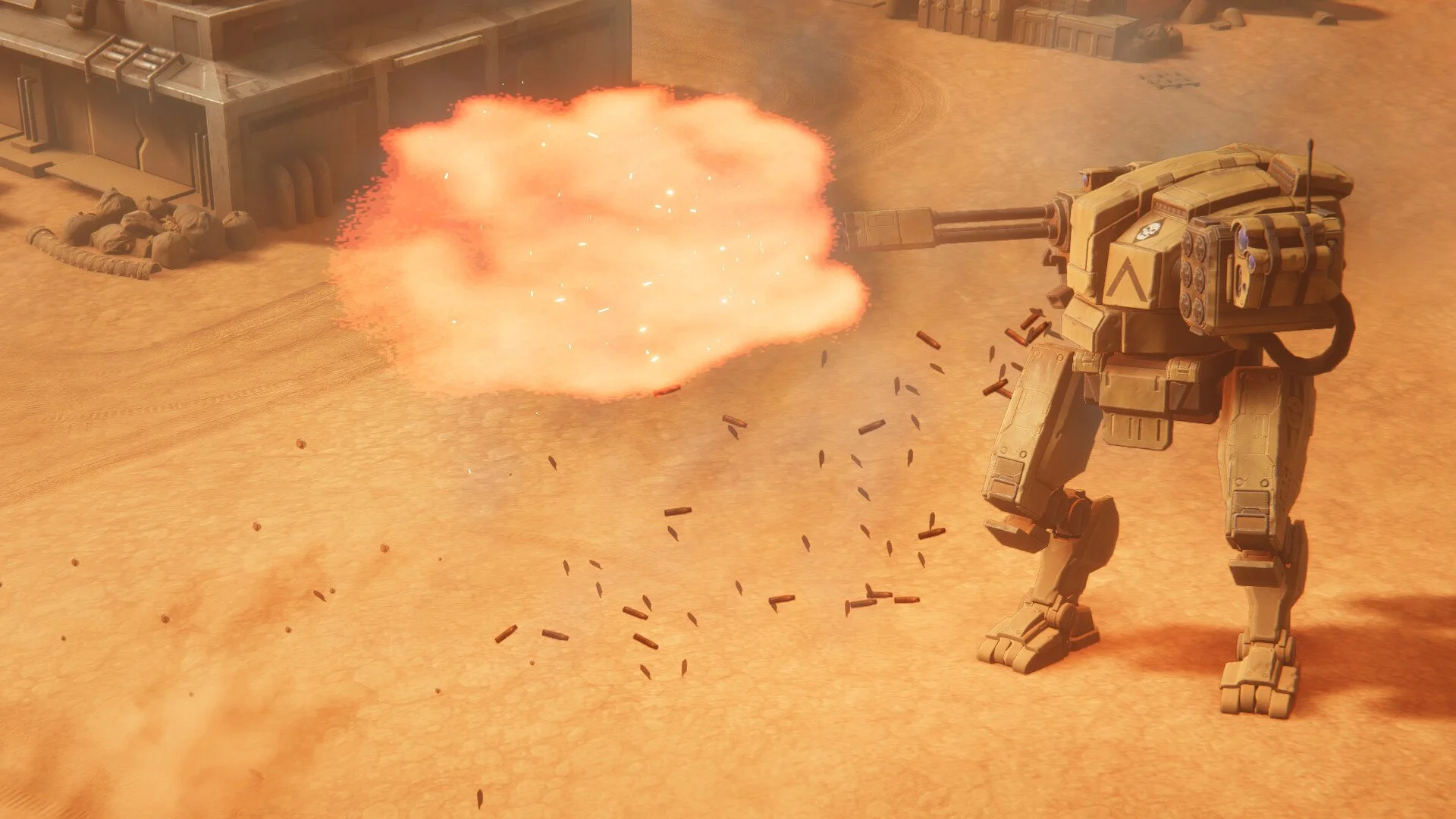
Simply put, get some.
Seeing the incredibly engaging game that Overhype has created in Battle Brothers, I am sure Menace will eventually rise to the same heights. At this point, the current build of Menace is better conceptualised as a sandbox to learn its tactics in preparation for a fuller game in the future. Purchasing the game in its current state should be thought of as an investment in Overhype’s proven ability to execute in this genre, rather than a fair price for the game as-is. Although my mouse cursor keeps creeping over to Menace in my library of games, I’m going to try not to burn out on its frustrating, if engaging, gameplay until it is in a more mature state.
Menace was played on PC with a code provided by the publisher.