Review | Valkyrie Saga - No More Room In Heaven
One of my big failures as a preeminent review artist is my bitchy, grouchy, temperamental moods. When the PC-based platformer Valkyrie Saga came to me in January almost everything poised about it being a relaxing, meditative platformer soured me. This is the weakness of a life lived in excess: something funny about it is that two months spent playing AAA games out of bitter curiosity at the state of what $70 video games looked like drove me right back into its wings — er, arms.
Valkyrie Saga is a wing-drifting-angel-parkour-sim from small developer Public Void. I’ve been needling away at it for a span of three months almost. Trying to climb the Tower of Heaven that threatens to destroy whatever civilisation is below it when it falls. There is a familiar platformer route — explore a sweeping overworld to collect secrets and abilities to make the trek easier. The game borrows from a lot of places, honestly. Dying is possible but falling is a greater failure and at any time threatens to force the player to start back over.
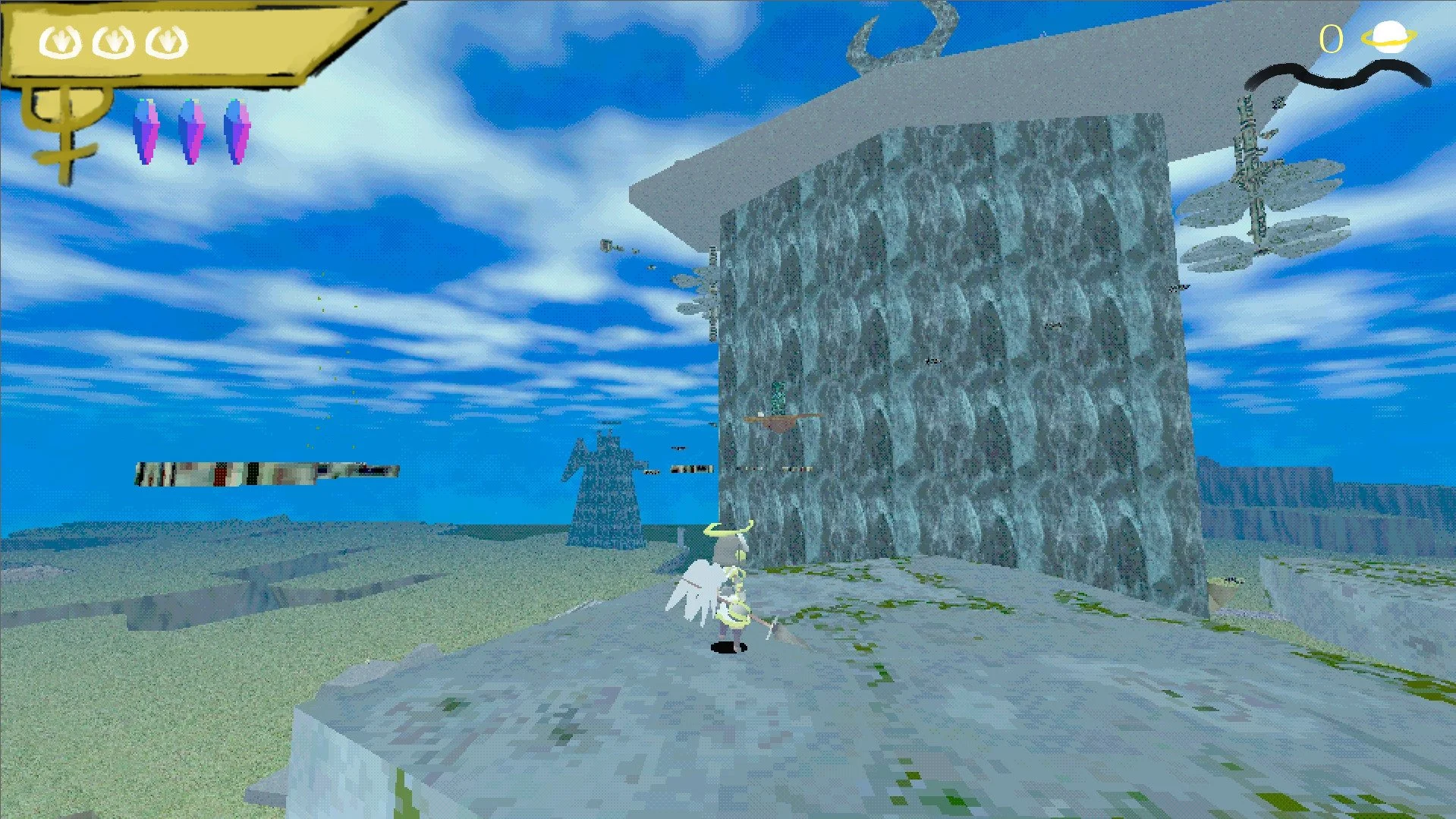
Looking at Valkyrie Saga it’s impossible to not chain a moniker like “retro” to it. The warbled textures and pastel graphics wouldn’t look out of place on any older 3D console. What I always find interesting with these amateur-developed, or even solo-developed, games meant to evoke a specific decade is how it’s often clear the developers themselves use a more modern palette. Valkyrie Saga kept reminding me of Anodyne 2 and other Analgesic Software games. I’m not part of this scene, but somewhere there’s a gathering of developers chugging away in a Discord or forum (or giant, rented office for a once-a-year game jam) that’s creating an artistic movement that will be gone by the time anyone notices.
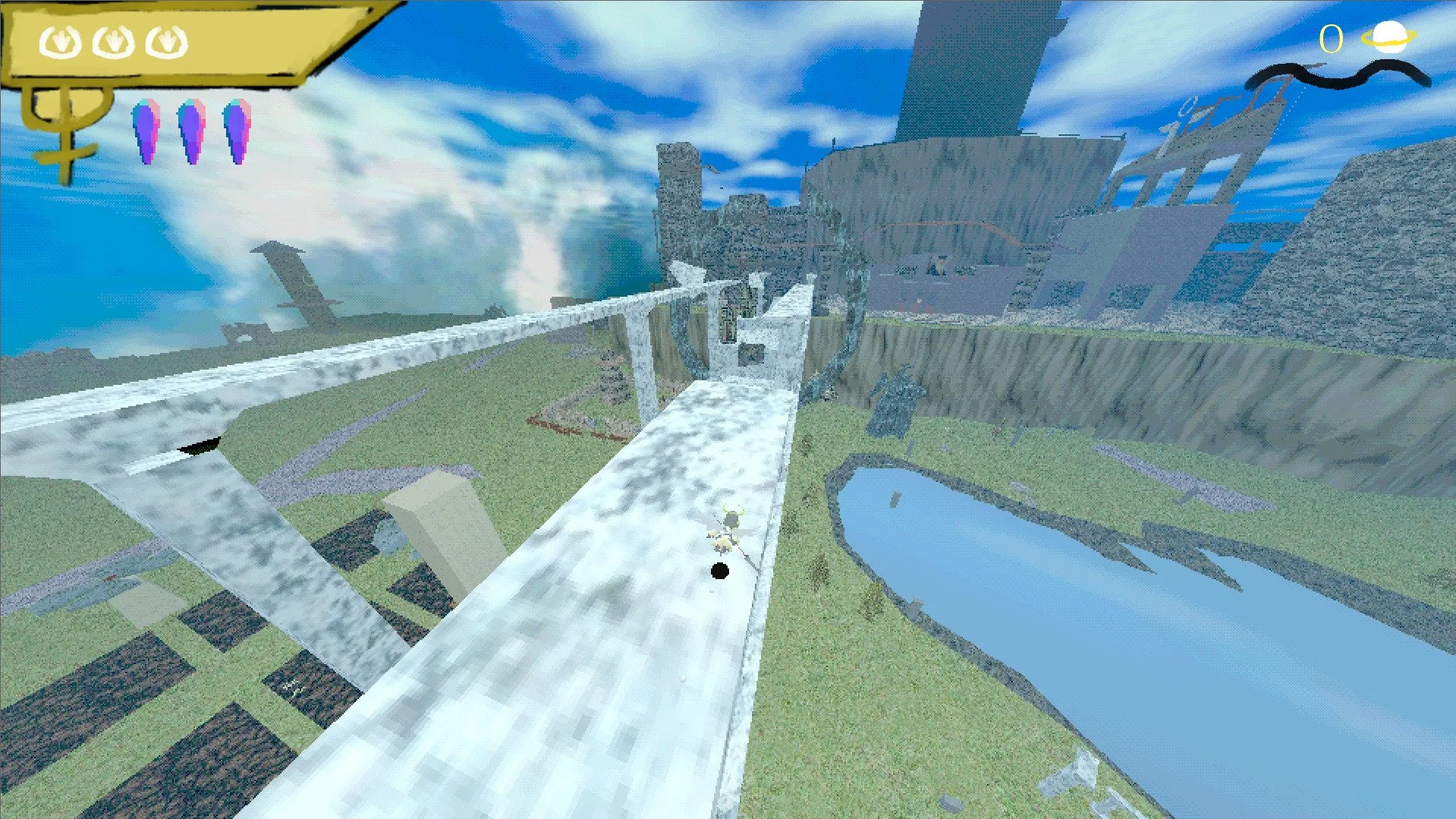
Valkyrie Saga ditches the conventions of platformers of the N64-era for a style of movement more familiar to a racing game: a single push of a button thrusts the titular Valkyrie into a forward charge. Sticky controls mean at any time the player can ditch this for a chain of abilities centered around jumping. The movement speed of the character is one of the primary abilities that changes parameters as the player finds secrets, increasing speed for each one discovered.
It's rare to see the term mentioned in tagging systems now, but “expressive platformer” was all the rage a few years ago. A subgenre of platformer where character action and something akin to parkour drive the player to develop their own style of navigation. Valkyrie Saga is one of those, if only because every individual item the player can find boosts navigation abilities either discretely or by giving entirely new moves. Branches of abilities that upgrade flight time or the number of jumps and actions a player can stack together. By the end of the game I found myself trying to push the limits of speed in every new set piece. Pushing myself further and further up the tower.
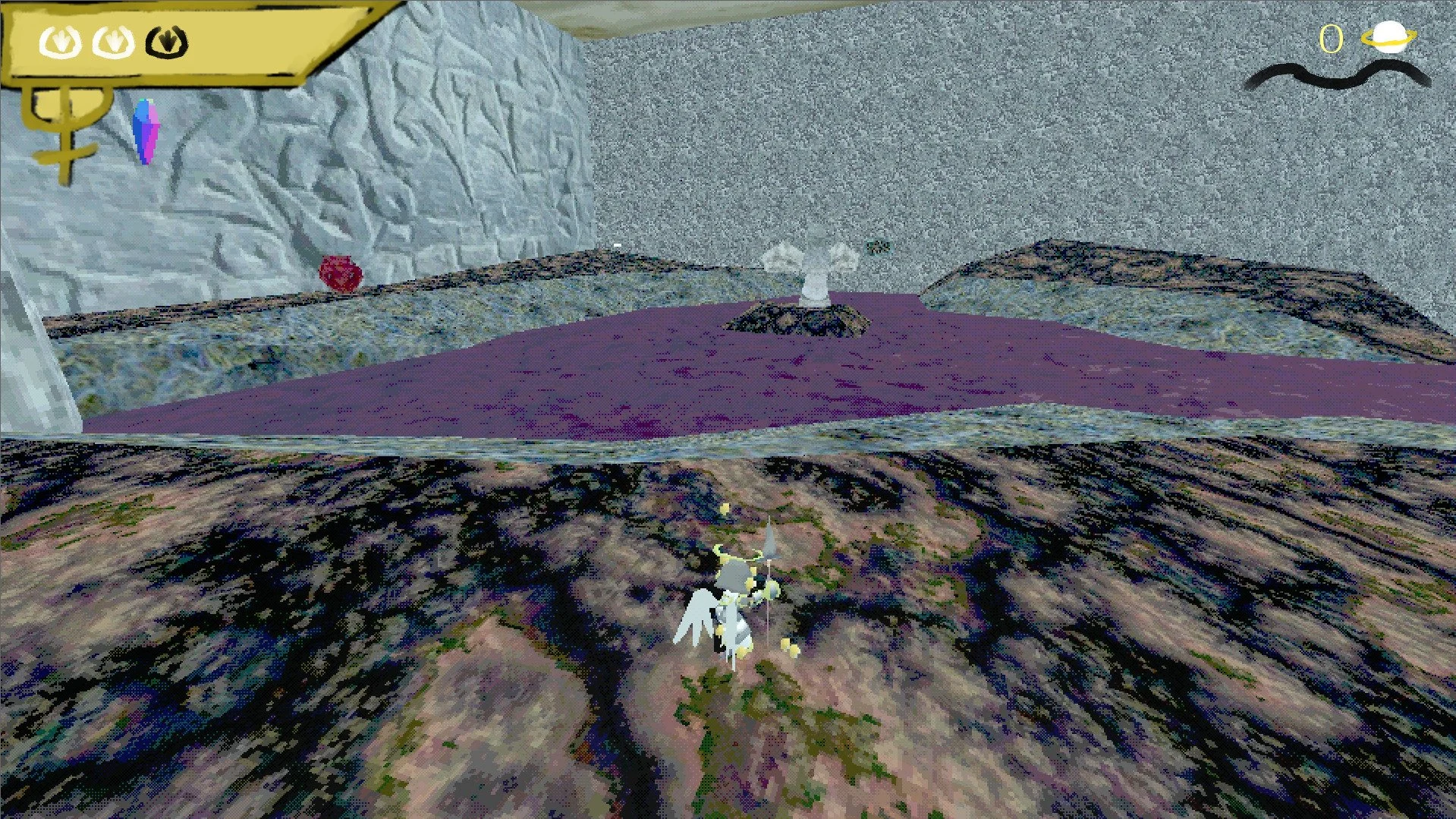
The “language” of a game like this refers to genre standards, true: but the words being spoken come with their own accent and interiority. Seemingly hand-carved text boxes with irregularly faced words dominate the screen in conversation. The atmosphere of music never changes from a kind of moody, post-apocalyptic crystal shop. The game burns out like old incense left alone for too long. I turn the camera towards a horizon dominated by the littered effigies of a civilisation I will only learn so much about.
Valkyrie Saga feels more personal than any of the actual N64 or PlayStation platformers ever could have, and maybe that's the feeling I struggle to name with games like this. Whatever bugs, glitches, wherever the game pushes against itself, I am reminded that it's connected to the heart of one person. We might, as reviewers, sometimes miss the forest for the trees when trying too hard to connect art and nostalgia to a specific past.
VALKYRIE SAGA IS WORTH EXACTLY FOUR COPIES OF TONIC TROUBLE
Valkyrie Saga was played on PC with a code provided by the publisher.