Review | Letter Lost - An Ambitious, Unstable Working Environment
The first week on the job can be terrifying. Nothing makes sense, your anxiety’s spiking, and you’re going slower than you’d like. Letter Lost will remain in my memory for tapping into that vibe. Beyond the creepy veneer and Cthulhu-coded atmosphere, the punishment of reliving my first working week is the type of psychological horror that got my heart racing. On the back of that and nearly forty hours with the game, I would love to recommend Letter Lost. It can appeal to horror fans, adventure fans, and much more. Unfortunately, the cavalcade of bugs I experienced limit me from making a full-throated recommendation. What I will say is this: if you’re into independent games that are janky and ambitious, Letter Lost is for you. Just proceed with caution.
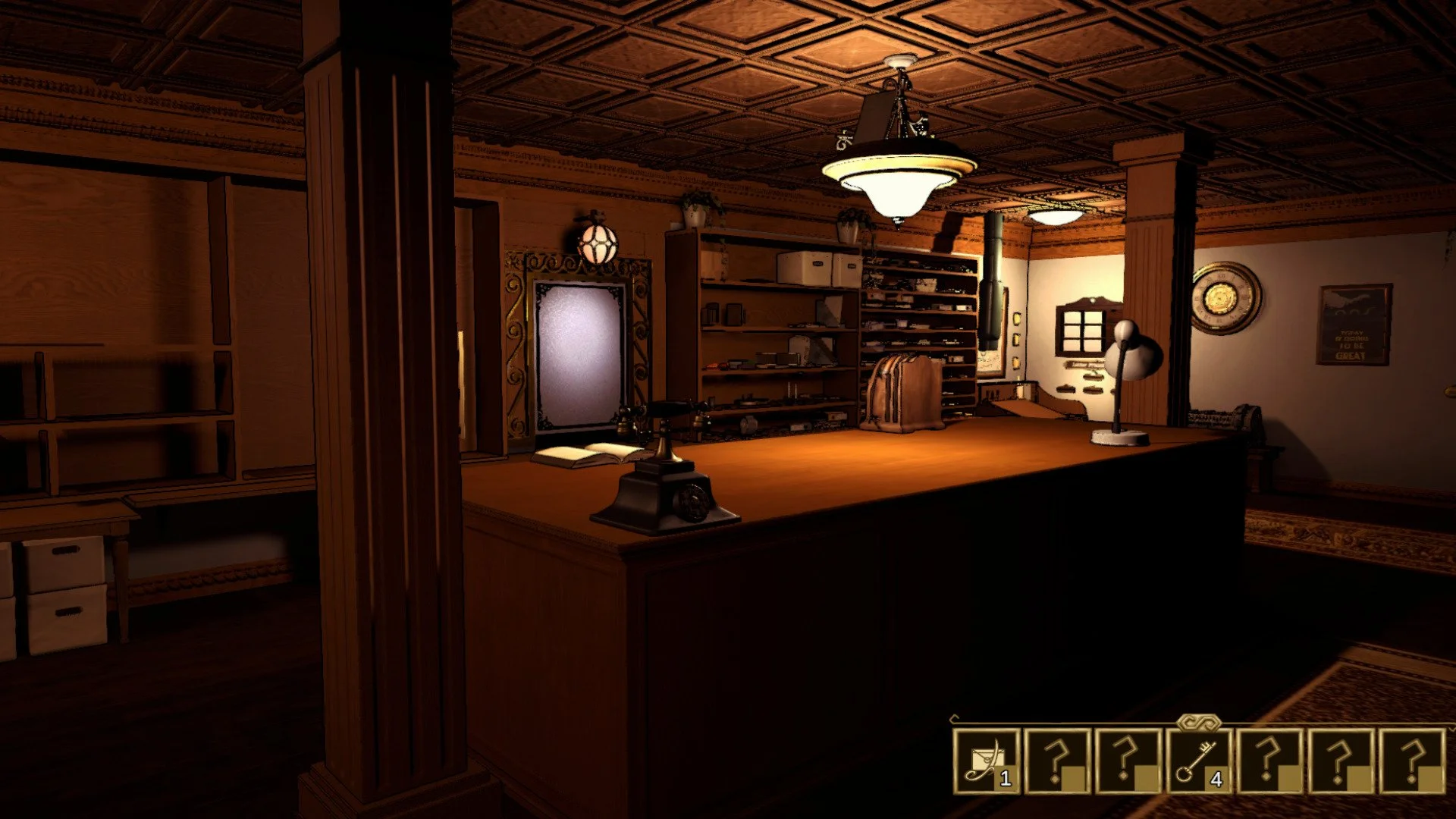
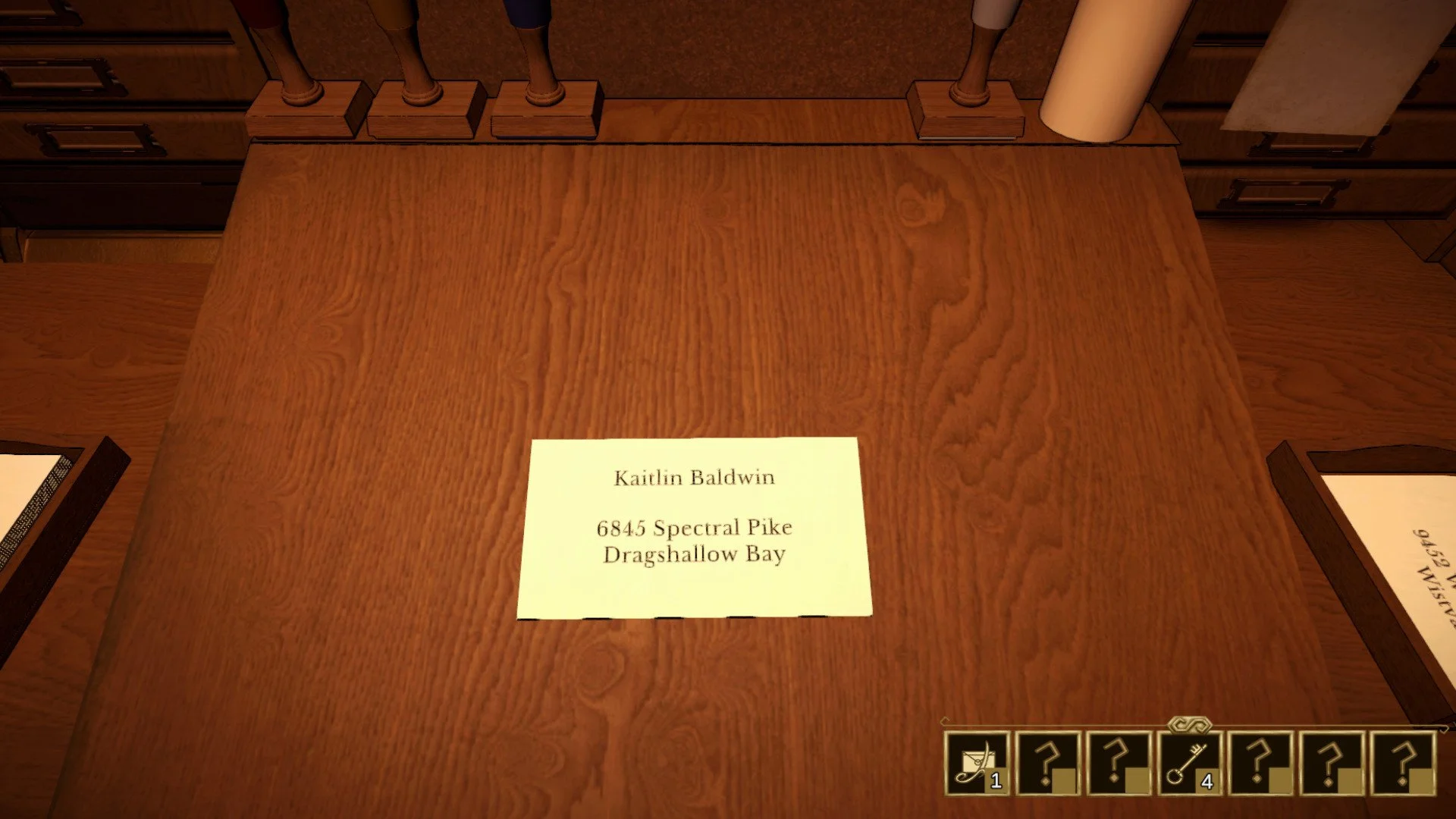
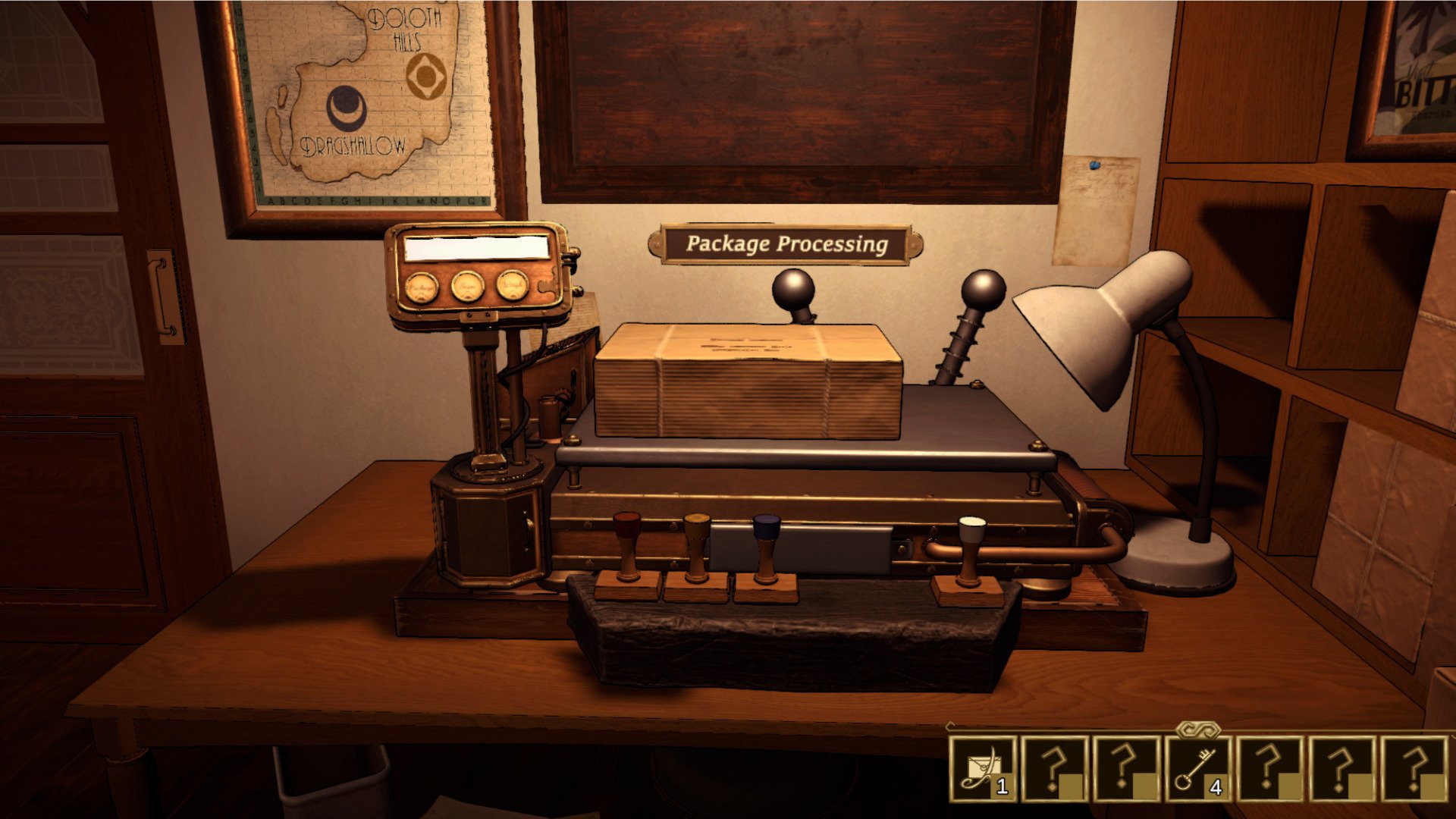
The debut title from FlatNine Games, Letter Lost ushers you in as the only employee of a post office on Kharnym Isle. Who you are and how you got there doesn’t matter, you’re just meant to get to work stamping letters and sorting packages. Over time, you get used to the oddball customers and unseen forces that physically push you into your room at the end of the day, but only after the first week does the other shoe drop. After one day of (offscreen) rest, you get back into the post office to discover that it’s your first day again. You’re stuck in a time loop.
This is where Letter Lost opens up.
From here, the developers begin to unveil exactly how much is packed into this tiny space. Going down the right dialogue tree with repeat customers could unlock important questlines. Scouring the many wooden shelves and knicknacks for secrets can take days of its own. Perusing an upgrade catalogue can make your work-life easier, or allow you to redesign the interior to your liking. One of Letter Lost’s greatest strengths is how much freedom it gives to the player. Send the mail, don’t send the mail — both your work ethic and a self-examination of your work ethic will inevitably creep in. You’ll realise that capitalism isn’t worth everything, the mail will be there tomorrow, and on some days, you need to take the time to explore. It’s sort of like a more subtle version of The Stanley Parable.
In fact, there are so many games and genres Letter Lost is sort of like, you could fill a bingo card. There’s the misty, Lovecraftian atmosphere; the rogue-lite meets Majora’s Mask time loop structure; I would even argue that the wide amount of player choice gives an immersive sim vibe, though it never quite delves into pure roleplaying mechanics. It taps into that cozy, organisational feeling when you stamp and mail a lot of letters, and it dips into horror that’s more like the PC adventure games of old than Resident Evil. However, despite these comparisons, none of them define what makes Letter Lost so compelling to me.
I think about one story that happened to me halfway through my playthrough. I saw a key on sale in the catalogue for a super high price that I thought could pair with a lock I found. Realising that the money I brought in each day would make this endeavor take several loops, I took that chance. I began stamping as many letters as I could and shipping whatever in the post office wasn’t nailed down to who knows where to make up the difference. All story progress stopped and, as if in response, the game reduced the amount of customers that’d come to the window and cut me some slack with some of the daily rule changes designed to keep me on my toes.
When I finally bought the key and saw it did not pair with the lock, the game then dropped me a big hint about where I should go next and all systems resumed as if nothing had happened. It was as if it patted me on the back for wasting my time and then shoved my face against the next obstacle I should have noticed all along. I couldn’t help but laugh.
Something else I was repeatedly impressed by is how the developers worked around the game’s budgetary limitations to reinforce the central ideas of its design. There are only a handful of rooms in Kharnym’s post office, and the vast majority of the voice acting is given to your boss, Liz, who occasionally checks in with you over the phone. Isolation is so important that it feels unsettling the rare moments you see another character model, let alone hear another voice.
Letter Lost also has a number of original radio shows to listen to for some company, along with a variety of original tracks as well as well-known classical music to throw on the record player. The game allows you to find ways to soothe yourself and lower your guard to then surprise you with something off-kilter that isn’t a set piece, but just enough to keep you off balance. An unexpected pool of blood, a hidden letter to read, or even the repeated implication you’re not alone. By allowing so much work to be done in your imagination, FlatNine lets you imagine something more horrific than the scariest CGI zombie, and lets you suffer for it too.
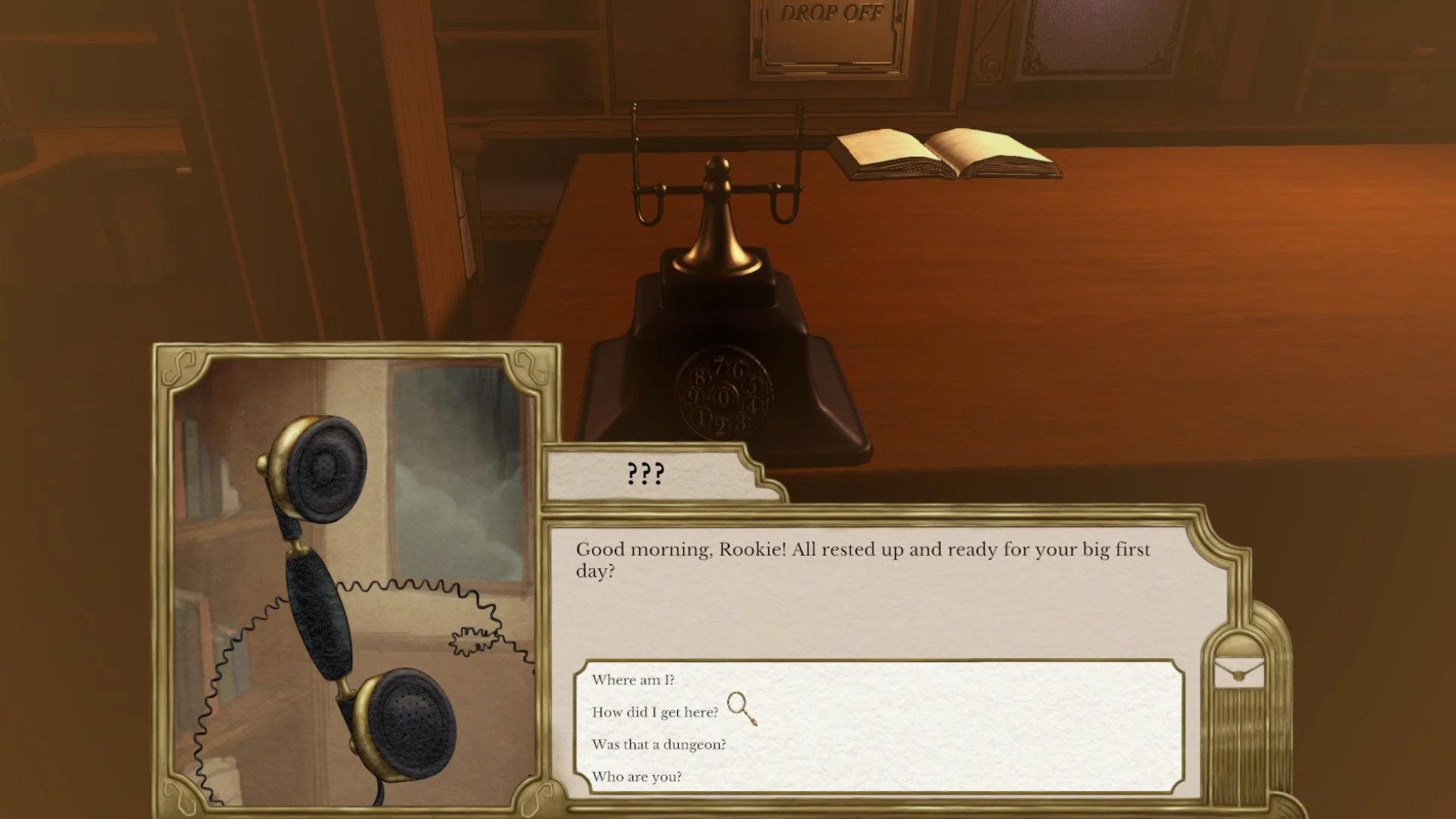
Despite my praise, I need to be clear that my time with Letter Lost was also one of the most buggy, janky experiences I have ever encountered. Every new play session would bring something a little different. Sometimes, the interact button would stop working. Other times, the game would crash when I loaded my save file, only for it to load fine the second time. Unrelated menus would pop up in the middle of certain tasks, objects could get stuck in geometry or go missing altogether, and opening some of the mail would reveal two letters stacked on top of each other like someone printed over an already printed document. I even had times where, if I didn’t send a letter using one of the quirky rules one day (for example, sending all mail addressed to a district through the sewer grate), I would not be able to send that letter for the rest of the week.
Many of these bugs were ultimately harmless and even gave the game an extra Eternal Darkness sanity meter–style experience I sometimes appreciated. Yet the biggest bug was one that was patched shortly before this review was published. At the very end of the game, presented with the final choices that would determine my ending, I could not for the life of me produce a scenario that would roll credits. One choice would send me hurtling down a hole (expected), only to plummet through the game world into the void beyond like I noclipped (not expected). Choosing another would give me the final narration, but then dump me back in the world with inventory control, but no other way to move. The developer did confirm that these moments were when the credits would roll and, congratulations, I finished the game. That being said, I did not feel satisfied about writing this review under this pretense and am extremely glad I got to experience the new patch before publication.
It’s worth noting that I played most of Letter Lost on Steam Deck, where it’s listed as Playable, but I also spent a little time using mouse and keyboard. There’s no question which control style is better: with so many little objects to pick up and diegetic buttons to hit, the precision of a mouse makes sense. I was able to get by with dual-analogue controls, swinging my crosshair around until I got in the general vicinity of the object and micro-adjusting with the touchpad when I needed to, but it’s not the best way to play. Please learn from my mistakes.
All of this said, I remember as a kid when I was confused that reviewers would sing the praises of Oblivion and Skyrim when they were so full of glitches. Here comes Letter Lost to explain why. It’s hard to get too mad at this game. It’s an ambitious, small team at work on a game that seems designed from the ground up to function within their scope. It draws from so many touchstones — horror, immersive sim, and puzzle games to name just a few — but it also strikes out on its own with a secret sauce you can’t get anywhere else. Even the nightmare of repeating your first week in the workplace also to me, which is an achievement few games can claim. In some ways, it’s perhaps to be expected that a game like this would come out with some bugs. If you don’t mind a little bit of danger here and a game crash there, I’d recommend at least checking out what Letter Lost has to offer. But, if you’re quick to anger and throw your controller, I might suggest picking up a different line of work instead.
Letter Lost was played on Steam Deck and PC using a code provided by the publisher.