Review | D-topia - Paradise (Stay Forever)
Human beings are such curious creatures; it’s only natural we’d built an entire genre around the future, that pesky thing always moving the goalposts and keeping us from knowing its form. It stands to reason, then, that sci-fi itself is less about what’s to come and more about the specific time when it was made. Who among us hasn’t had a giggle when thinking about old movies that predicted the distant year of 2015 would have people going around in floating skateboards?
D-topia, brought to us by Kyoto-based Marumittu Games, is much the same. The purported “perfect society” it builds is one where humankind has relinquished nearly all work to robots, trusting an artificial intelligence to make decisions ranging from external politics to what artworks should be displayed in its subjects’ homes, according to the data it has on their tastes.
“The A.I.”, as it is known, is the silicon heart of the Utopia Project, which seeks to attain “the greatest happiness for the greatest number of people” through ruthless optimisation of all aspects of human life. It finds, however, it can’t fully realise this goal without the aid of organic pairs of hands — that’s where the protagonist, No. 046 “Shiro” (his name is a spot of wordplay that only makes sense in Japanese), comes in.
Shiro is a Facilitator, a group that’s the only human representative of the robo-State. Across the game’s seven chapters and three possible endings, he goes around the district of D-topia, the one considered the closest to the Project’s goal, helping its citizens, making friends, and performing maintenance on faulty machines, from systems to little robotic servants (“Troids”), by accessing the hidden workings of this world.
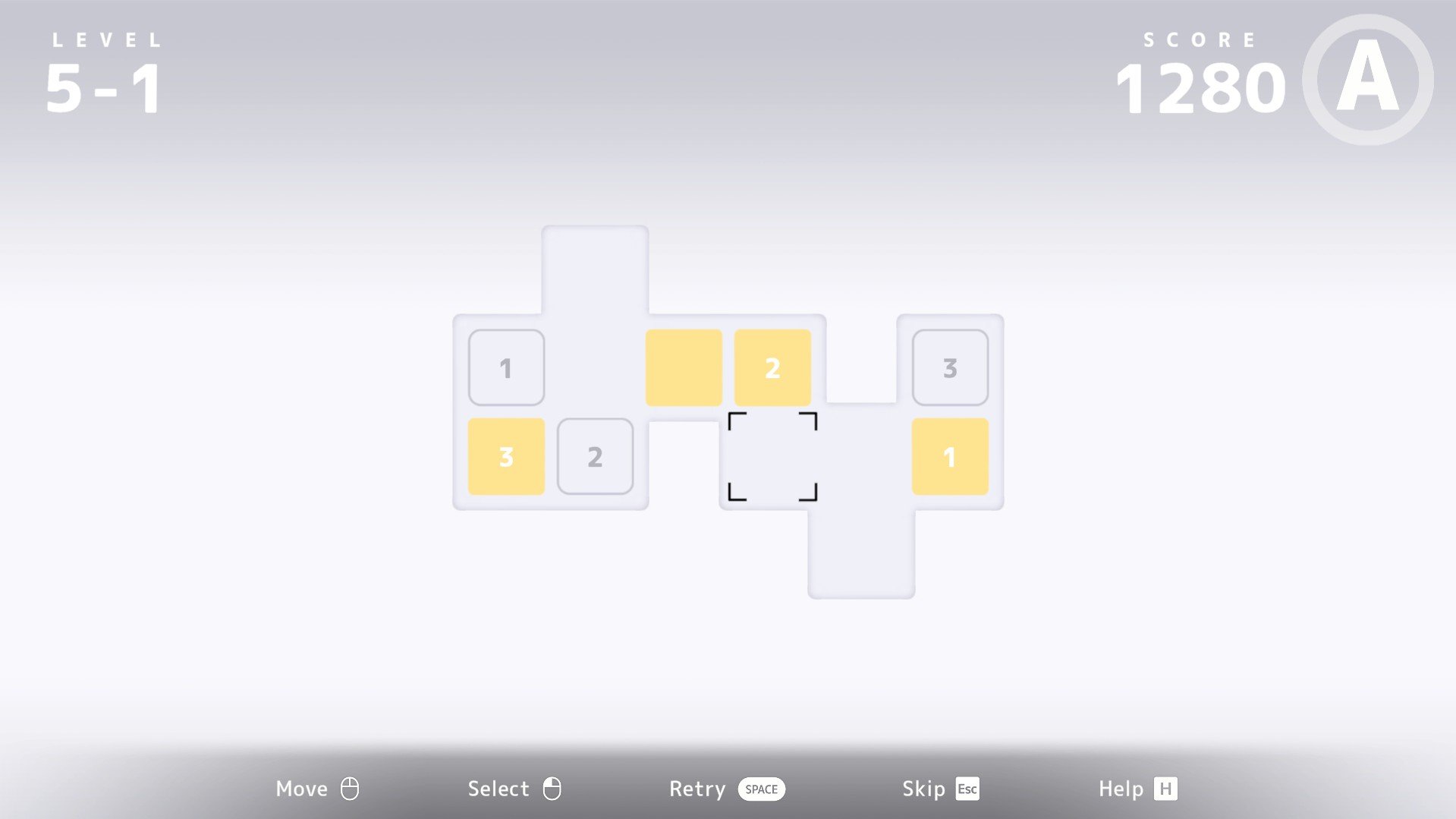
D-topia is a welfare state where all baseline necessities for living — food, shelter, healthcare — are provided as a given, making work at the Factory, a facility that doesn’t produce anything other than a series of quite easy daily puzzles, optional (and giving the player an out if they want to skip this phase for any reason). More optional still are the extra puzzle stages provided for those who cleared the main quota, a nod to overtime culture in Japan (zangyo) where one may put in extra hours less due to necessity and more due to societal pressure.
Aside from being the only source of non-text-based gameplay, engaging with puzzles at the Factory is encouraged so one earns more U-Points, the local currency, to buy treats like speed-boosting drinks, snacks, lunches on the go, and decorations for the house. D-topia sets itself up to be a true meritocracy: luxuries are always earned, never given.
Despite all this, problems still abound, usually due to the natural imperfections of the organic, which the artificial can scarcely comprehend — that’s to say, several major character arcs are about how humans (and a cute little kitty) don’t fit the strict parameters of “perfect happiness” The A.I. and its Troid cohorts enforce. Sometimes it’s because a certain piece of optimising tech is causing them pain; sometimes it’s the fruit of human cruelty, and so on.
These arcs are all well-written and their conclusions hinge on whatever decisions Shiro makes, through fluxograms of yes/no questions known by the endearingly clumsy name of “Brain Meetings”. Said decisions are tallied up and decide your ending; they may interact with other points of the story as well, such as when you choose to help someone, and they help you back later. Some optional interactions outside of these major arcs are also commented on, making the world feel very responsive. The one wrinkle is that the better ending for one of the storylines, close to the end of the game, feels a little like a cop-out.
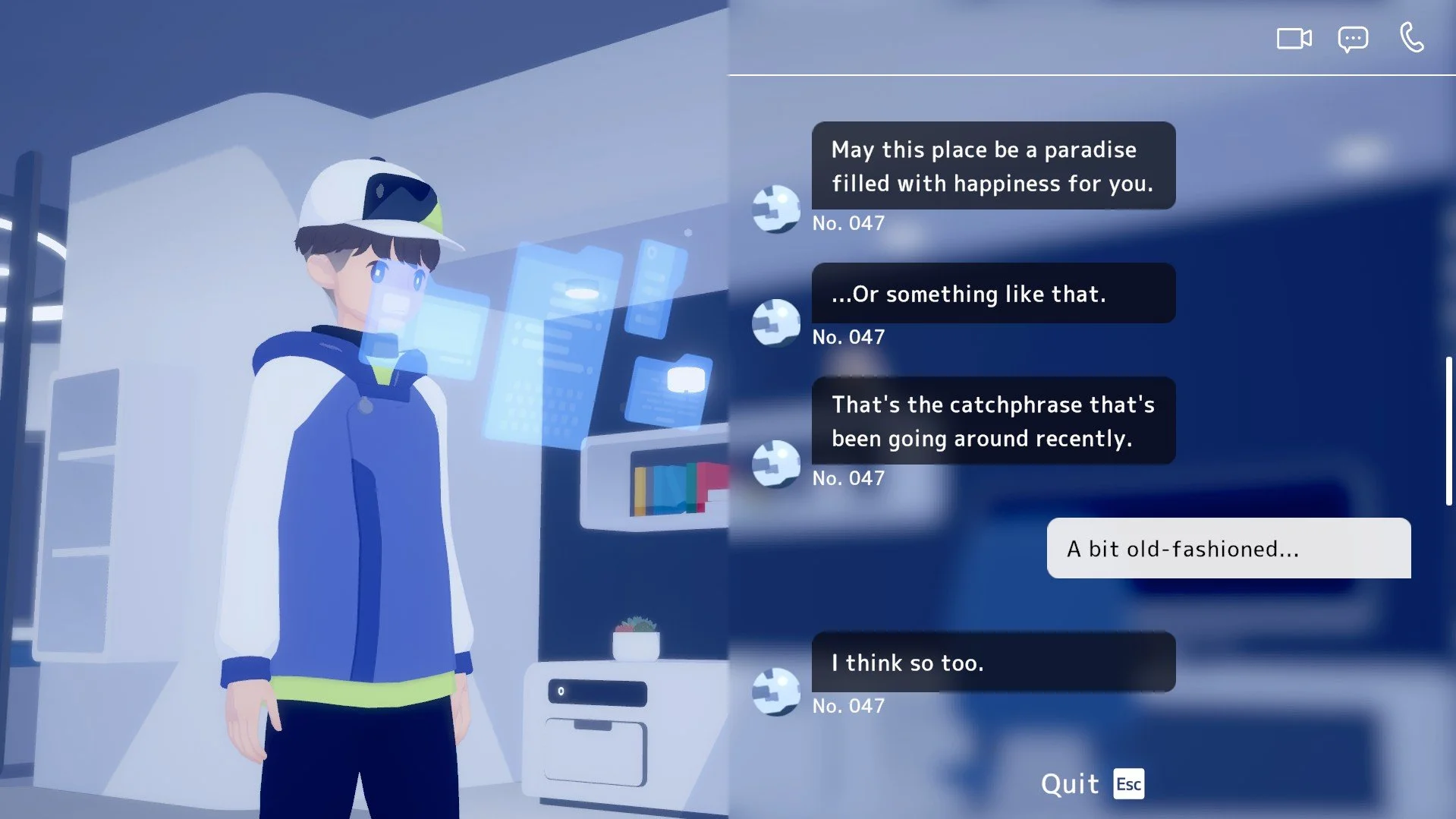
Disabled narratives are also a cornerstone of D-topia. There is incessant talk of genetic engineering, in a way that borders on eugenics; while the characters lack the tools to call it what it is, due to this world’s obfuscation of “Old Era” history, the Project’s obsession with perfection brings this to light anyway. This is strongly condemned by the narrative, though I fear it may not be that obvious to those who don’t read between the lines — in times of extremism, this sort of subtle writing is a blessing and a curse, which doesn’t really qualify as a knock against the game, more so an observation on the state of current media literacy.
True to being a product of its time, the commentary on generative AI is palpable as well. When I was first presented to the press demo months ago (for a different site), Annapurna made sure to let us know that, despite featuring a fictional AI, no LLMs were employed in the making of this title. Having played it, this feels like something the devs themselves wanted to clarify; there is a fascinating subplot around an artist and how his work was replicated by The A.I. for mass consumption in the long time he’s spent away from the waking world. The strong themes of the imperfect being more valuable than the impeccably curated all encapsulate this.
The only real piece of criticism I have to offer is that I want more. While we receive enough information on some of the implied 25 other “Topias” to draw a clear picture of what the situation is like in this scenario, as well as some scant lore on how everything came to be, the limited scope of the game can be seen in how little gets to be said at times. There is an art to not bogging your game down with endless lore, but at times the story of D-topia feels like it exists in isolation from a wider world that should be influencing it. It feels like there should be more wiggle room to discuss worldbuilding than what’s offered. It doesn’t even need to be a full sequel; just some more readables, other than the usual newscast every day, or maybe an accompanying light novel would satisfy me. I would like to know more, thank you very much!
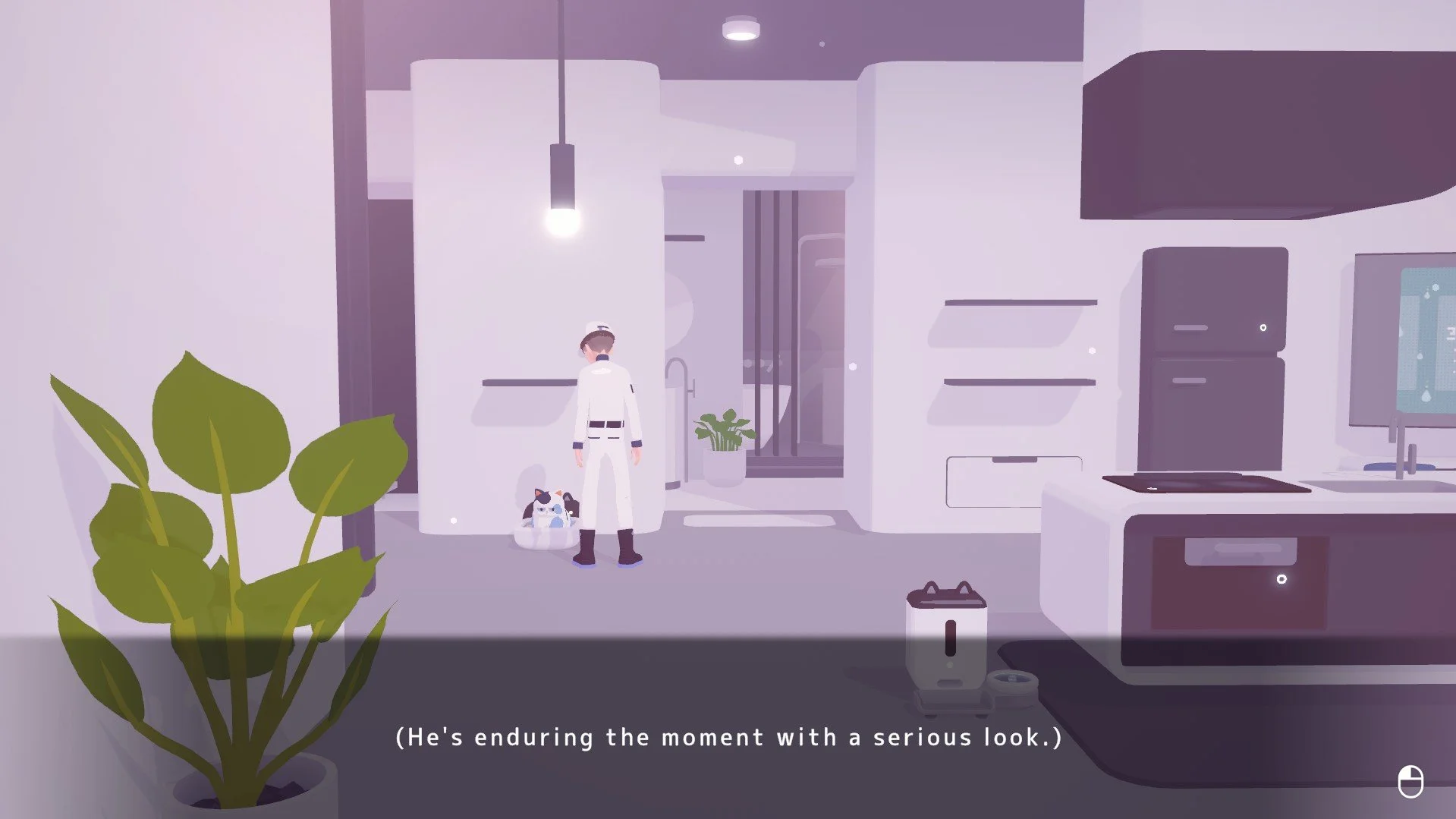
D-topia is a real delight, a smartly written adventure that got to live unbidden in my head as I took my time with it. It has a gentle touch yet doesn’t look away from complicated matters, as is right. Fans of dystopic-sounding utopias like Paradise Killer and Caravan SandWitch ought to give this a whirl and engage with the familiar questions it poses.
D-topia was played on PC using a code provided by the publisher.