Review | Truck-kun is Supporting Me from Another World?! - I’d Rather Get Isekai-d
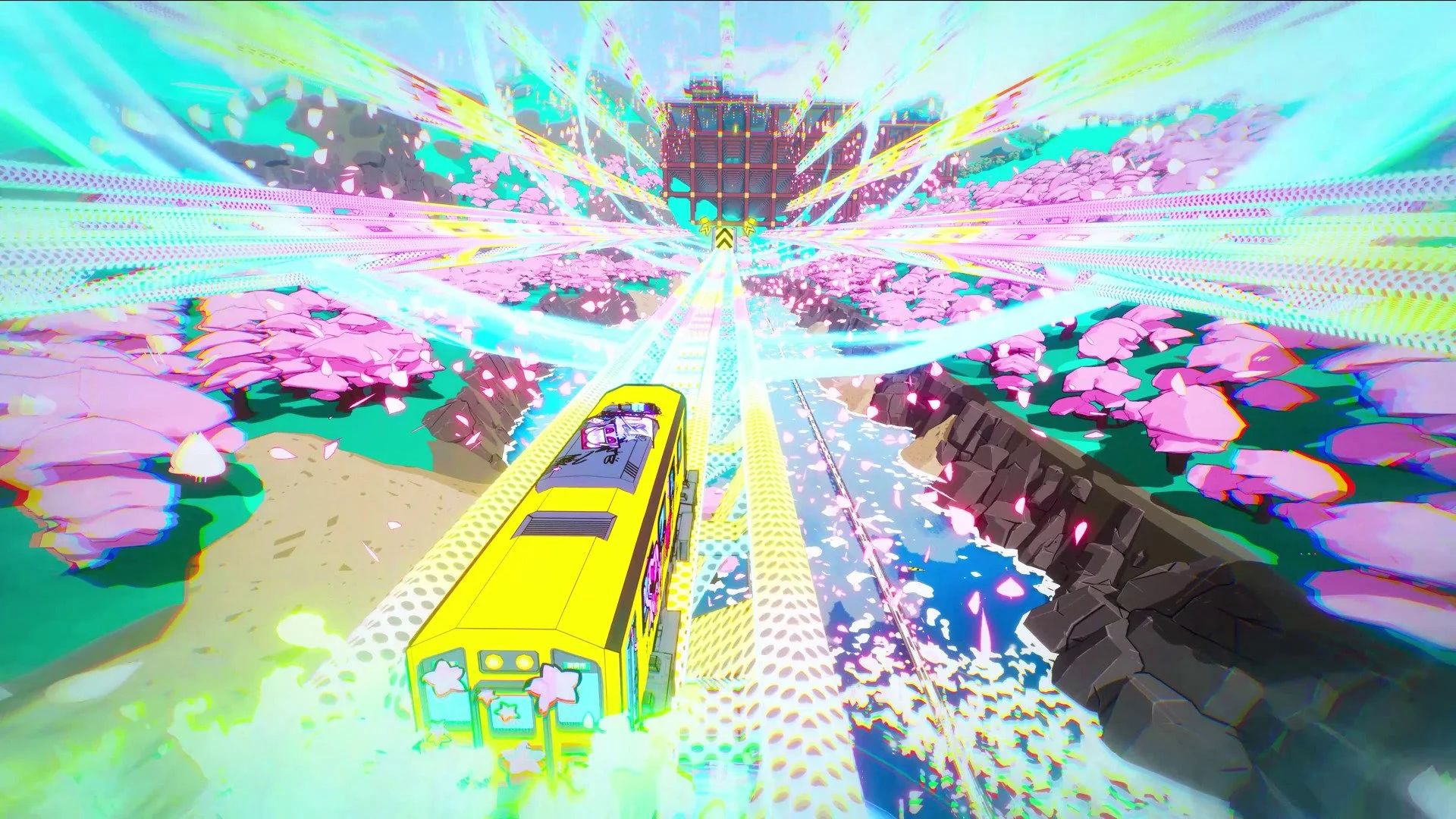
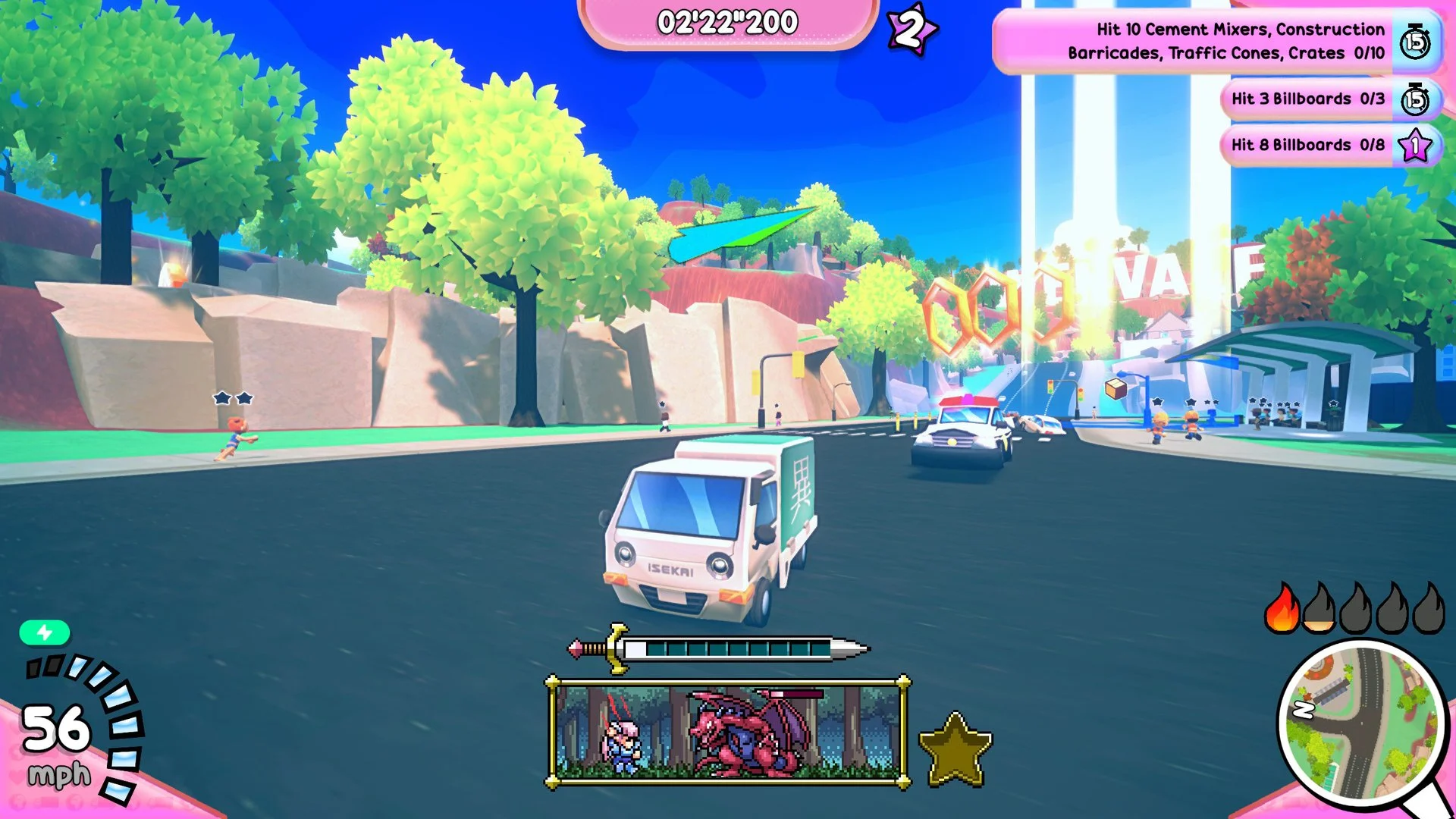
I am a demon of velocity and destruction. I jam my foot on the accelerator and careen my one-ton kei truck across the paved streets of Wenvale. A small human lazily tries to cross the street as I rapidly decrease the distance between us. As I speed towards my target, my wheels hit the curb and I hop on the sidewalk. I gleefully run him over and, instead of being left a bloody smear on the pavement, he dissipates with a poof, and is transported to a fantastical land: an alternate dimension, where his fate is to be a lowly slime slain by an elven warrior.
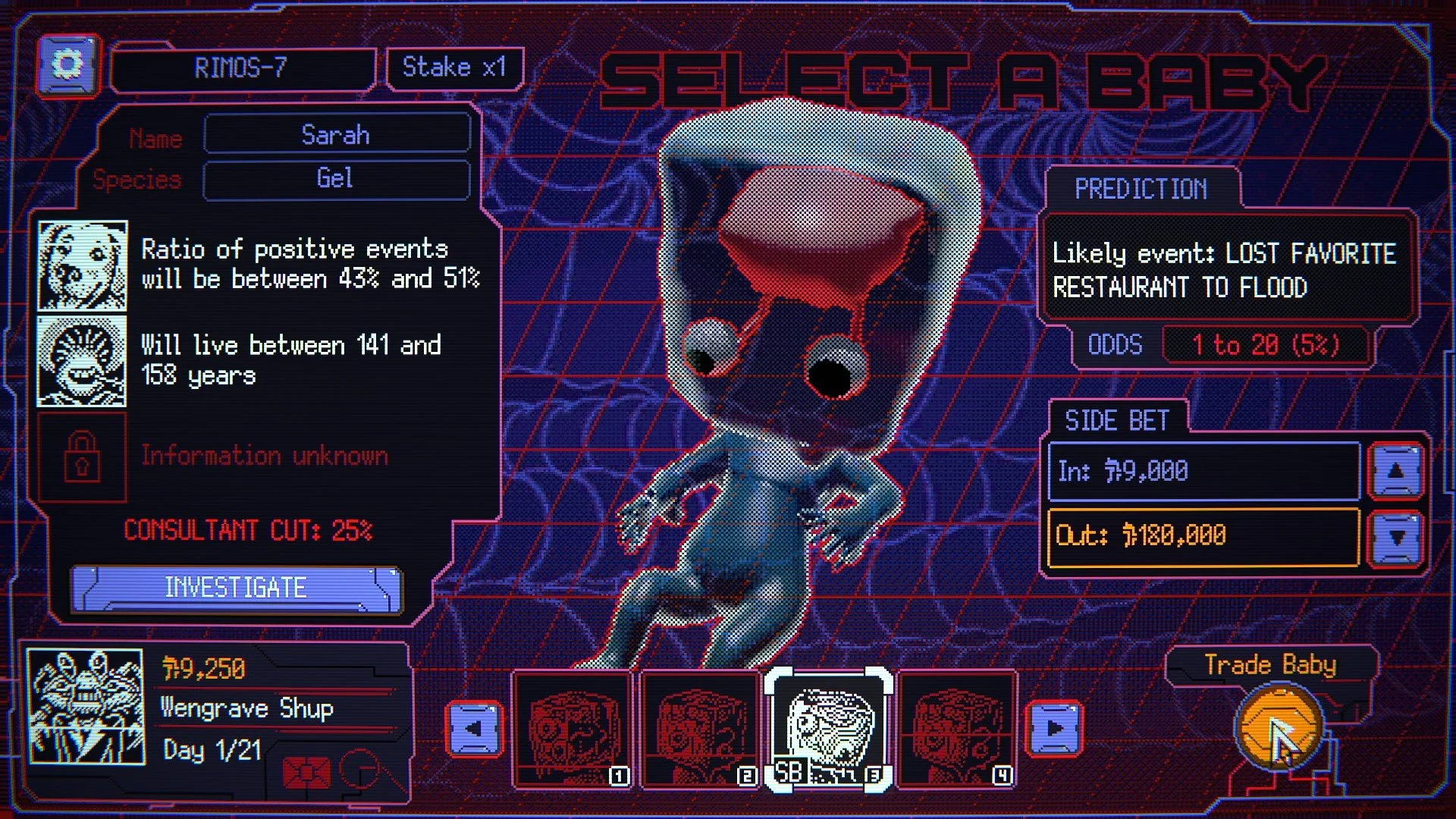
Truck-kun is Supporting Me from Another World?! (which, for my own sanity, will henceforth be referred to as Truck-kun) is the latest game from those weirdos over at Strange Scaffold. The studio has already won my undying admiration with its unconventional takes on everything from Max-Payne-esque third person shooters, match-three-metroidvanias, and a surprisingly enthralling stock market simulator in which you can literally short a baby.
The unfortunate caveat of Strange Scaffold’s approach to experimentation is that, while it is able to release many interesting games quickly and with a healthy work culture, not all of its commitments to exaggerated bits will hit the target. Specifically, I found Truck-kun particularly lacking. Its charm wears away quickly throughout its short playtime, and it fails to back up its ridiculous premise with anything exciting on the gameplay front. While its story and characters are the highlight of the show — and continue to illuminate the prevailing ethos of the developers in positive ways — Truck-kun is simply not a good driving game, and falls desperately short when compared to the developers’ excellent repertoire.
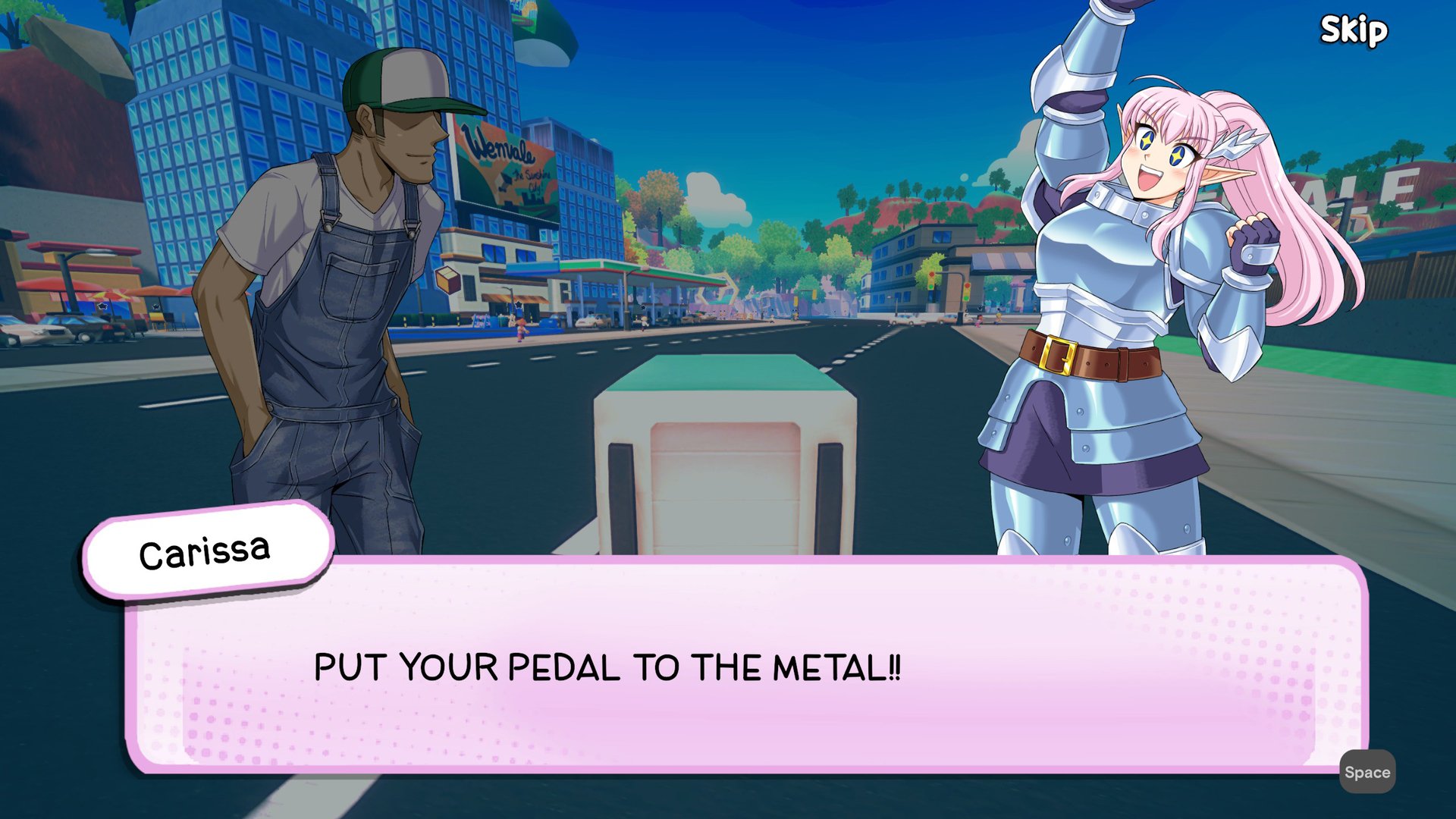
Carissa is a high-powered marketing executive that has given her entire life to ascending the corporate ladder, at the expense of her social life, romance, her video game hobby, and even her precious anime figures. On the day of her big promotion to VP of Marketing, a celebrating Carissa is accidentally run over by a truck driver, the playable character. Instead of dying, she is magically transported to the fantasy realm of Talinfold and morphed into an armoured elven warrior. She berates the truck driver for his incompetence and has a simple request: run over some more people, so they too could be “isekai-d” (the term the game uses for running people over and teleporting them, in an obvious nod to the eponymous anime/manga genre). From there, she can slay them, and their remains will become concentrated into star-shards which she can use to defeat the Skeleton King, unlock the Galactic Gate, and return to the real world.
It’s a simple game: as The Driver of the truck, you have limited time each run to isekai some funky little humans. As you do, they are teleported as various ghouls and freaks into a small bar below the screen, where a sprite of Carissa awaits to spill their blood. You can also destroy (almost) everything around you. Don’t like that hedge? Hit it with your truck. A food stall gave you the runs? Take revenge by demolishing a virtual one. That beach replete with plastic umbrellas, chairs, and tables? You guessed it: eviscerate it all and play lawnmower on the sand. The inorganic objects you collide with charge up Carissa’s special attack, which — further fomenting the Driver and Carissa’s soul-connection through the aether — can only be activated by honking your vehicle’s horn.
While you run over innocent pedestrians (disclaimer: they’re gonna be totally ok, trust me), you can complete various objectives that grant you either extra time or star shards. As you can imagine, the world does not take kindly to vehicular manslaughter — especially multiple counts of it — so the rotten pigs will be up your kei-ass. Worry not, for the truck comes equipped with the latest in roadside combat tech: sideswipes, boosts, almost-instant 180-degree turns, and some genuinely sick drifts.
I understand that the isekai genre gets a particularly bad rap: chock-full of tropes, flaccid wish-fullfilment, and narratives poisoned by what I call “video game logic.” It might surprise you to know that I did not bounce off Truck-kun because of its commitment to genre. I engaged with isekai anime and manga in earnest when preparing for this review and found it, much like any other genre, to have its stinkers and its winners, its charms and its drawbacks. Plus, an argument could be made that the “joke” of the game is that the isekai anime is happening off in the distance of the narrative, while you’re the unlucky sop that has to feed the XP grind.
Truck-kun, ultimately, fails to make the core component of the game functional or engaging.
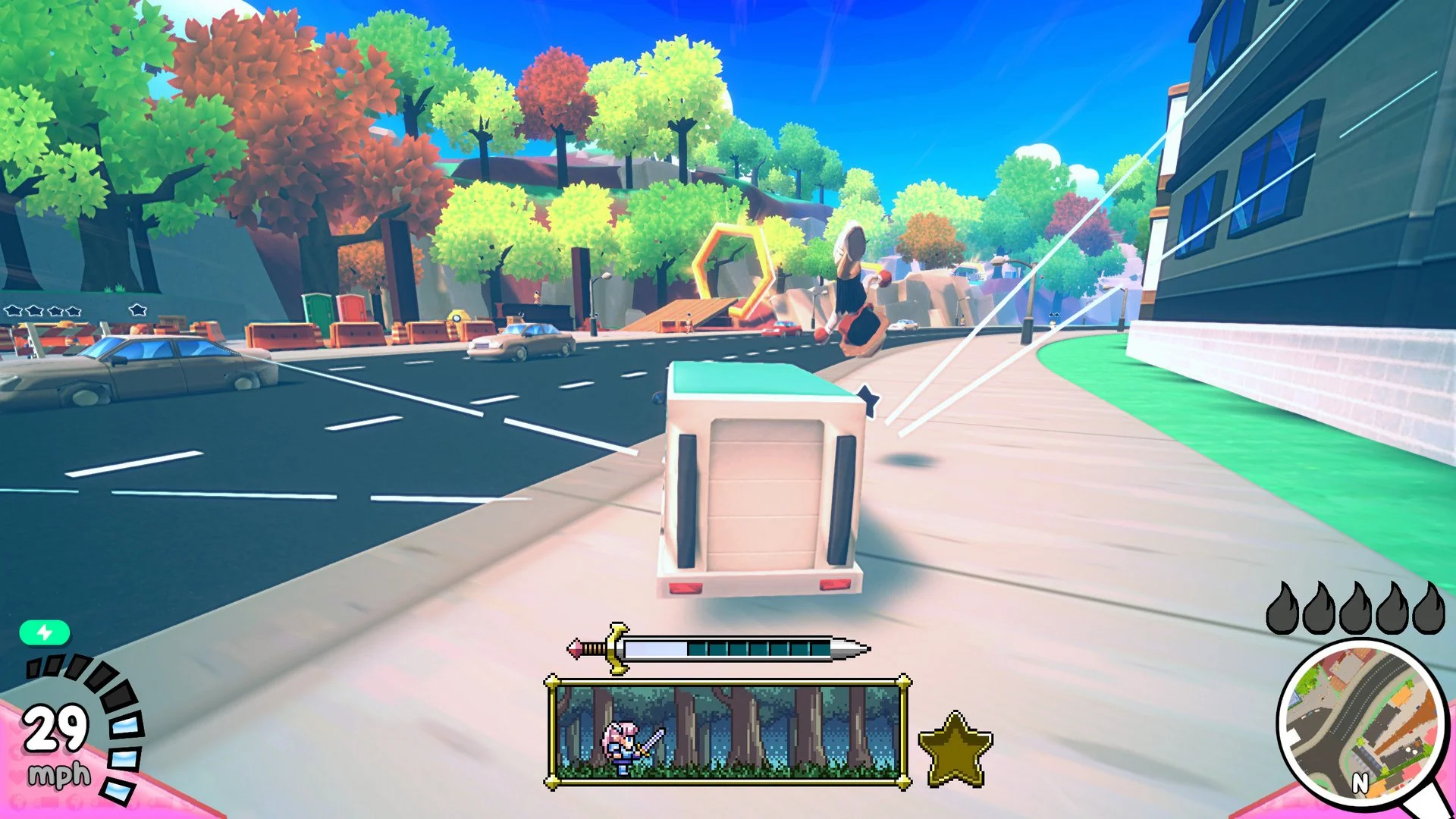
A game in which you drive and crash into everything in your line of sight lives and dies on how the car handles and controls. Unfortunately, the truck-with-a-smile-on-its-face does not handle very well. I found the controls unresponsive, the weight and physics of the car inconsistent (either the car felt too heavy to manoeuvre or too light to have any sense of presence) and the general driving lacked interesting dynamics or additions to spice up the gameplay.
Many previews gleefully compared the game to titles such as Katamari Damacy, Tony Hawk’s Pro Skater, and Crazy Taxi, parallels the developers themselves assert. But these comparisons invite more scrutiny: all of these aforementioned games control better than Truck-kun. It is a case of “gamefeel” — Truck-kun lacks the satisfying snaps and sonic decorations of a Katamari rolling up everything in its path, lacks the bravery to make your truck perform some cool tricks and flips a-la-skateboard, and lacks the defined weightiness that makes controlling the crazy taxi such a joy in a well-maintained arcade cabinet.
The lack of fail states makes the game a grind. For approximately three hours you will be driving through the same streets, accomplishing the same tasks, and it starts to feel tedious as the objectives repeat before the first hour is up. Some of these objectives lack the general excitement and commitment Strange Scaffold is known for: I do not know what excitement can be found when I am rewarded ten extra seconds for simply driving backwards for a bit, or when the pacing of the game is snapped to a halt so I can drift for seconds-on-end just for a measly star shard. The cops that chase after you as you complete more objectives are more a bother than a serious threat — they can easily be bumped off the road, and speed can be recovered by the plentiful ability to boost.
The game overflows with jank, and I have been on the record as a defender of jank, stating it is an unique element to the artistic medium of video games, almost always tied to labour practices and conditions, and as something that can be additive or defining for a video game experience. So it is with utter sadness that I must report that even the plentiful glitches failed to bring me joy. When a police car hit my truck, and it started flailing and glitching badly, I was mildly annoyed rather than entertained.
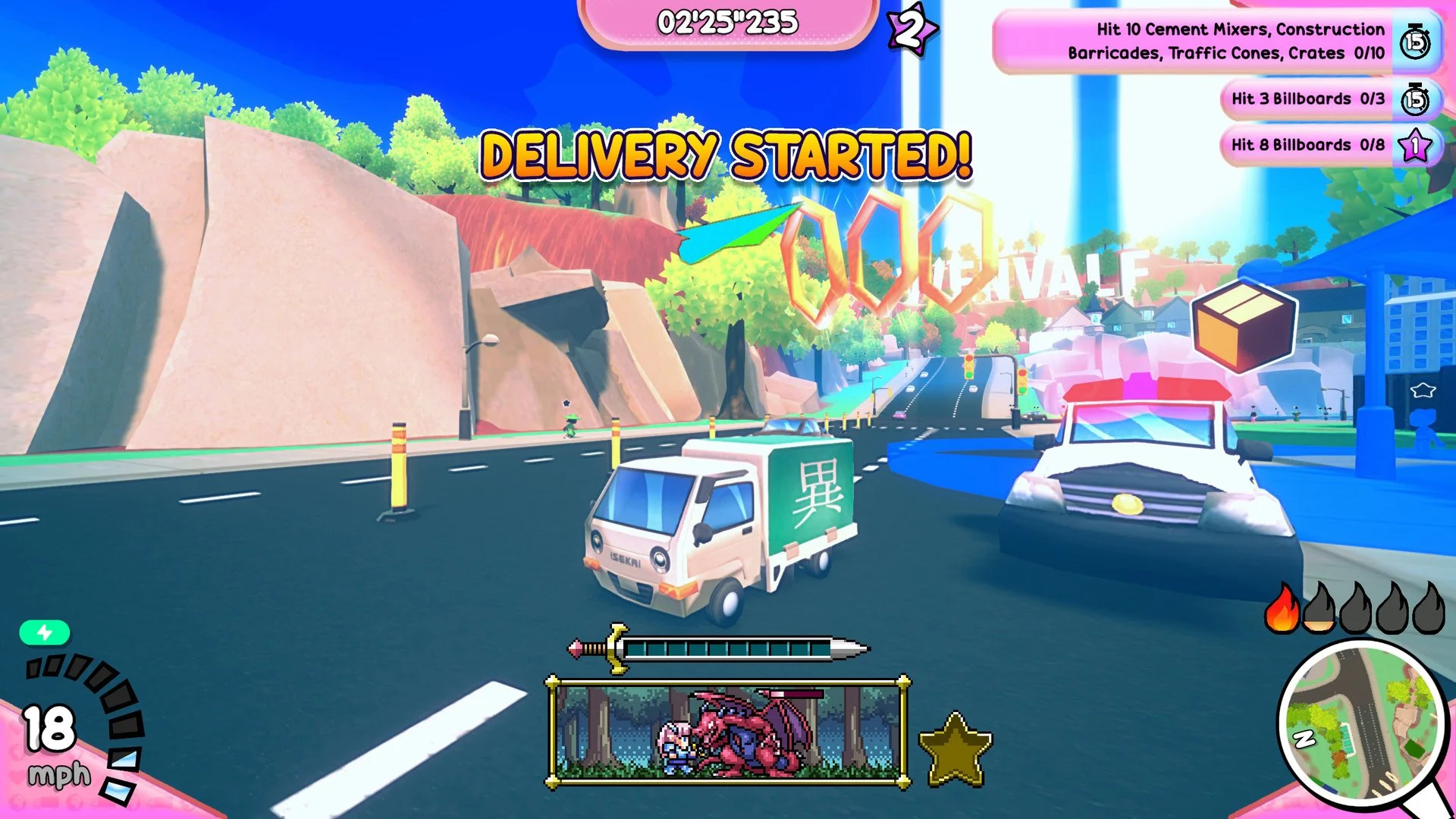
Ultimately, Truck-kun fails at creating engaging narrative through gameplay, which is a step backwards from the developer’s previous games, in which the rich lives of stock market babies or speedy runs through the Alaskan forest fomented emerging narratives the players themselves could affect. The narrative told by the gameplay is always the same: hit stuff, complete samey objectives, and in-between runs you will get exposition and plot.
It was these moments separated from gameplay that were my favourite ones, which is unfortunately a rather brutal condemnation of the game. We see Carissa and The Driver’s relationship grow into a full-on friendship, as they confront their own insecurities and fears. As always, Strange Scaffold is reaching at some capital-T Truths about our world: about how capitalism wears us down to nubs, how it ties our self-worth to our labour despite the fact we are disenfranchised from its fruits. Carissa has sacrificed everything in her life in order to rise up the corporate hierarchy, to the point where she has no life outside of accruing Capital. It took getting hit by a truck for her to realize the value of a life outside of work, and for her to finally make a friend, even if it is with the person that ran her over.
While I cannot, in good faith, recommend Truck-kun is Supporting Me from Another World?! I need to make it clear I support developers making games like this. It’s nothing but a net good for the industry to have indie studios experiment with genre and convention. I commend Strange Scaffold for always stepping out of its comfort zone and trying something new each time. While this particular game didn’t collide into me with enough force, I am still looking forward to whatever these developers have planned next.
I’d rather get isekai-d than play any more of this game, but I am happy it was released regardless of my distaste. May the next experiment prove more fruitful, and godspeed, you crazy bastards.
Truck-kun is Supporting Me from Another World?! was played on PC using a code provided by the publisher.