Review | Momento - What will your tiny decisions change?
Have you ever wondered how different your life would be if you’d picked the toy dinosaur instead of the teddy bear? Momento explores this concept across the life of protagonist Sam Finch. Where will the minor choices (a dreamcatcher or an aeroplane, a book about space or a book about plants?) lead the life that you’re putting together? How are we shaped by the environments we ourselves shape?
The game also deftly explores the idea that no matter what choices we make, there are immutable truths, things that remain stable across all the possible paths. Things that your actions cannot ever change. The evidence of these is strewn about through Sam’s rooms over the years. It doesn’t matter if you have a football or an ant farm; your dad who travels for work all the time will still miss your important events.
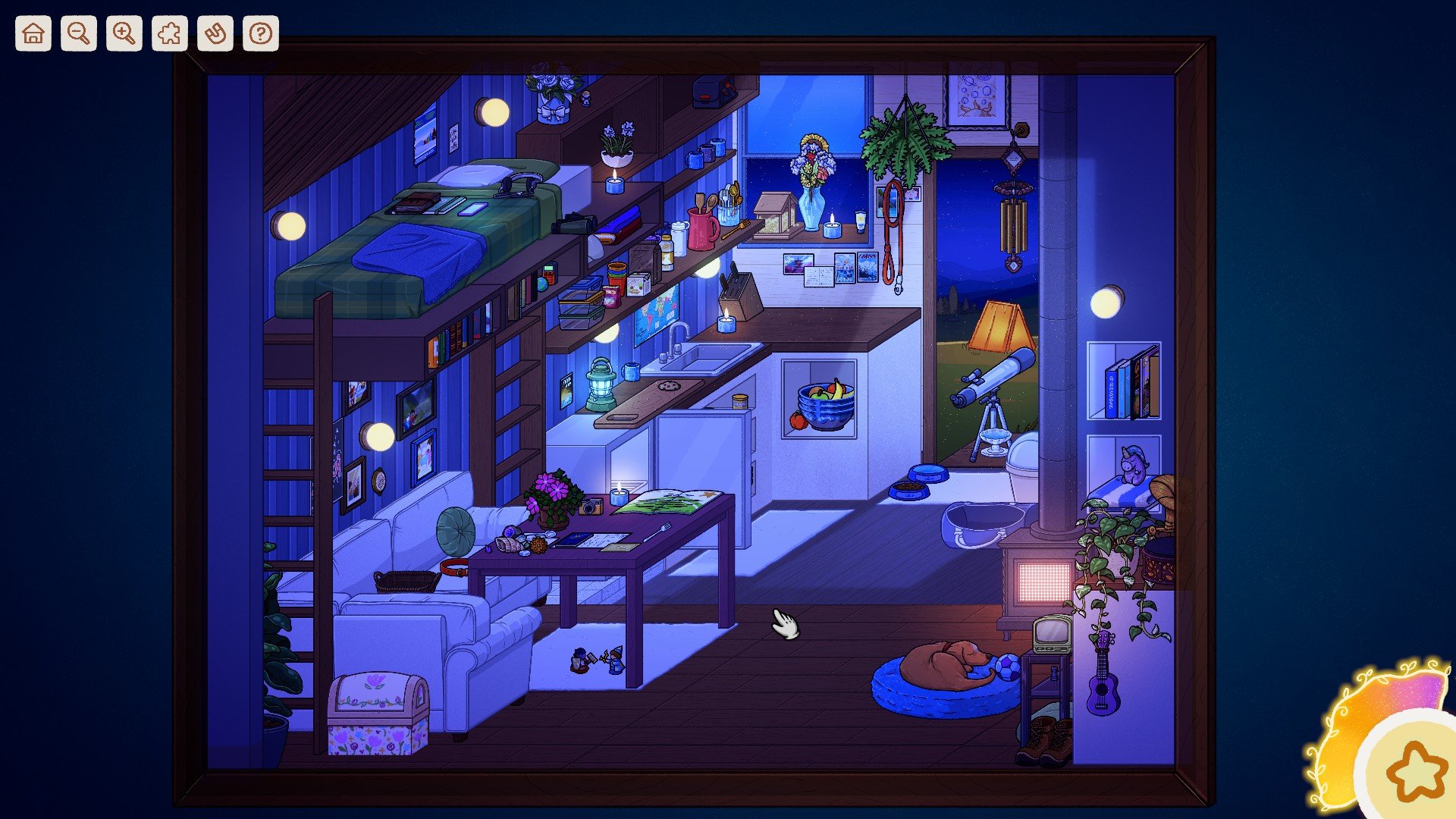
The game’s mechanics are simple and intuitive. Each room starts with some items and one or more glowing chests containing a decision. Selecting from the options available adds more stuff to the rooms based on the choice made, which you can arrange and rearrange to your heart’s content. Every room features multiple puzzles that require you to organise items in a certain way, which range from simple and easy to understand just from the name of the puzzle, to needing a little bit more out-of-the-box thinking. There’s a system to help you along your way in solving the puzzles by highlighting the items involved so you’re never left unable to solve something obscure.
Through these fixed events, Sam’s correspondence, and items and their descriptions, the various possible story beats play out. Depending on the choices you make, Sam moves through life to inhabit a range of possible rooms, careers, and relationships. There are six endings available, each showing a different direction Sam’s life might go.
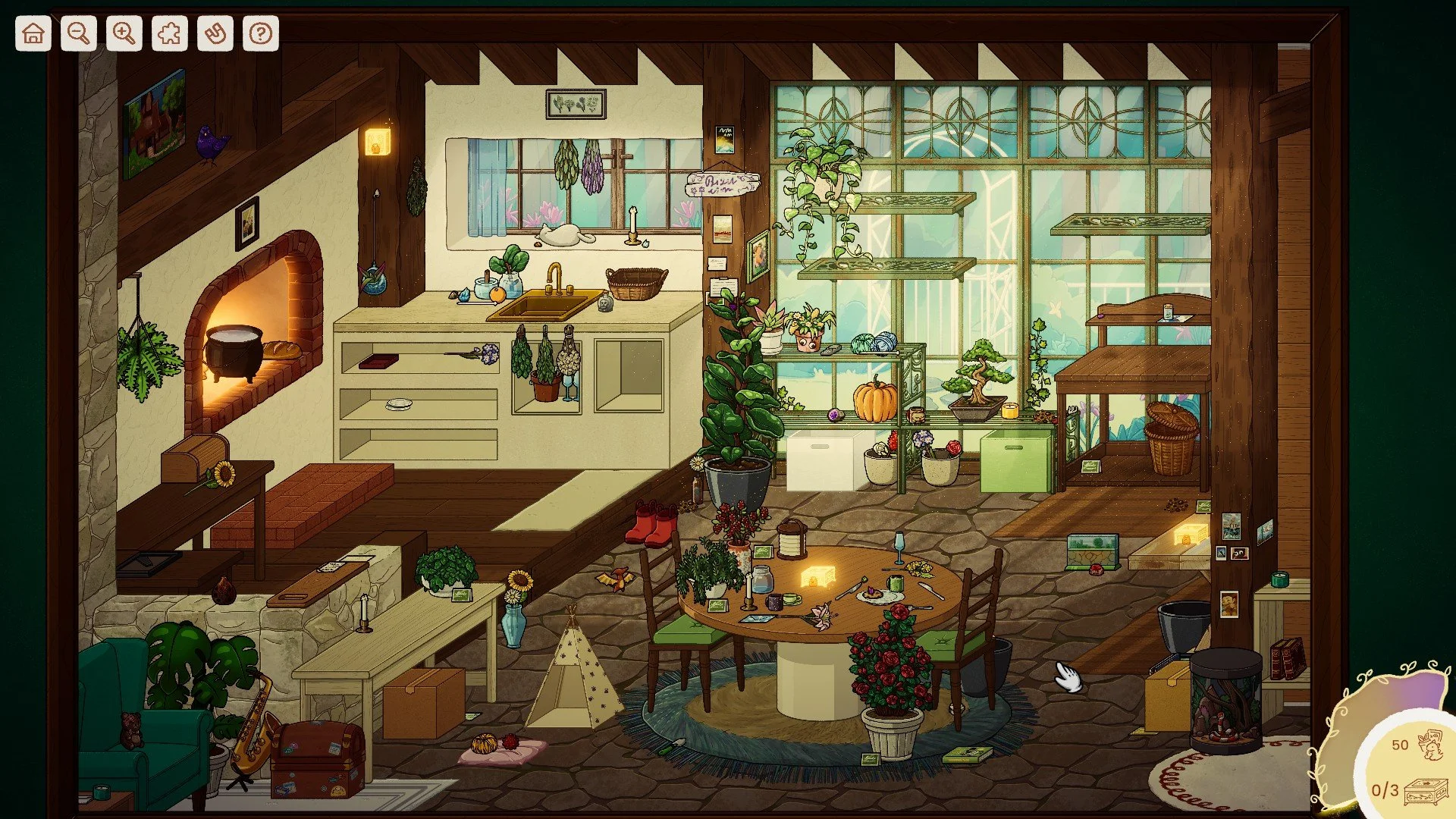
The art in Momento is very well executed and the game showcases exactly the kind of lush, inhabited spaces you want and expect. The rooms are interesting and vary from each other, incorporating colour and texture in ways that keep each level feeling fresh. The items are cute and quirky, full of charm and personality. You can place anything anywhere — if you want to put your forks on the bookshelf and your books under your bed, you can.
Because the developers have done such a great job instilling the rooms and their contents with the essence of a life, playing through the levels, solving the puzzles, and arranging the fragments of Sam’s life gives you a real sense of attachment to her and the people closest to her. I nearly finished up after reaching four out of six possible endings but went back in to get the last two endings and am really glad I did — the “true ending” was worthwhile.
As well as the story mode, the game includes a creative mode that allows you to decorate rooms to your heart’s content with complete freedom. You can select any of the rooms from the story or construct your own. For anyone who derives joy from the arranging and organising of the rooms, this mode will bring a ton of replayability to the game, which is otherwise a short-but-sweet experience.
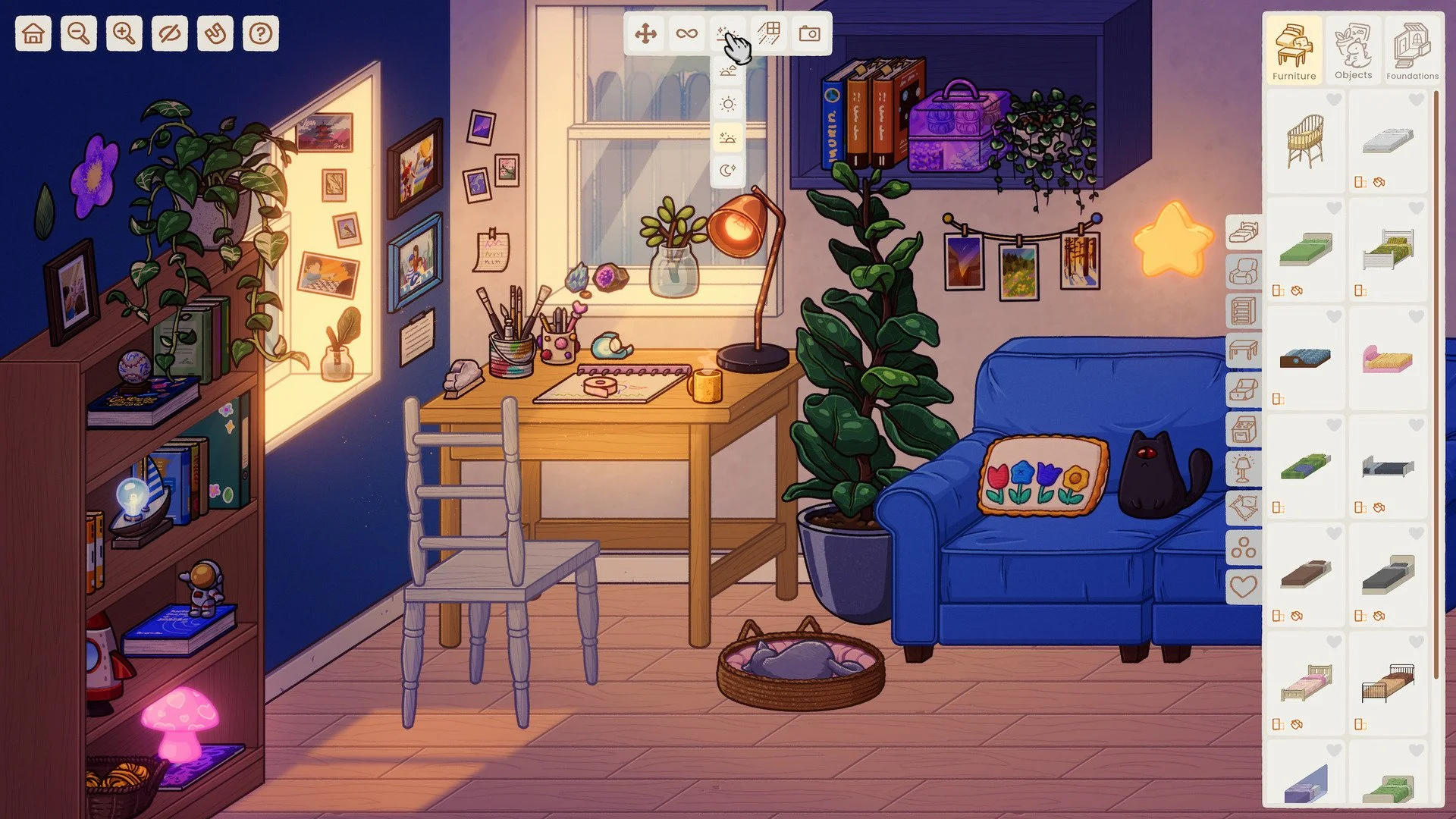
While I genuinely enjoyed my time with Momento, it is not a perfect game. Some of its flaws are things the dev team can fix, but some are more fundamental to the game as a whole. As for my minor gripes: the controls are extremely finicky, to the point of occasional frustration. The fixed camera angle is an understandable design choice, but makes it hard to get some items onto the shelves or into the cupboards you want. The quirky room design is also a little aggravating, as there isn’t always an obvious place to put clothes or cutlery. Is a wardrobe or a drawer too much to ask for?
I also wish there was a subtler way of hinting at the puzzle solutions, like an expanded description before just telling you what items are needed, but it’s better than leaving you completely in the dark. The audio isn’t quite what I’d like from a game like this — more could have been done to match the luscious art with sound effects.
Time to acknowledge the elephant in the room — Momento is positioned as a spiritual successor to Unpacking, one of my favourite games. Unfortunately, while Momento has its qualities and is undeniably a good game, it struggles to get out from under Unpacking’s shadow. For me, Unpacking is a masterpiece of visual storytelling, giving the player subtle clues about the unnamed protagonist and her life with no text. There weren’t any choices to make in that game, but the storytelling felt exceptionally strong. In contrast, Momento feels a little disconnected from itself and what it seems to want to achieve. As I’ve already said, it has an emotional climax I’m glad I saw through, and it definitely has something to say about things happening outside our control. But the choices ultimately felt disconnected from the outcomes — or at least the vignettes, the captured moments, didn’t feel sufficient to result in the vastly different outcomes.
The reliance on text notes is understandable given the stories Momento is telling, but it does necessitate compromise in other areas. The balance doesn’t work out perfectly for me. The branching narrative asks the player to believe small choices can reshape a life, but the decisions themselves didn’t carry enough emotional weight to justify the outcomes.
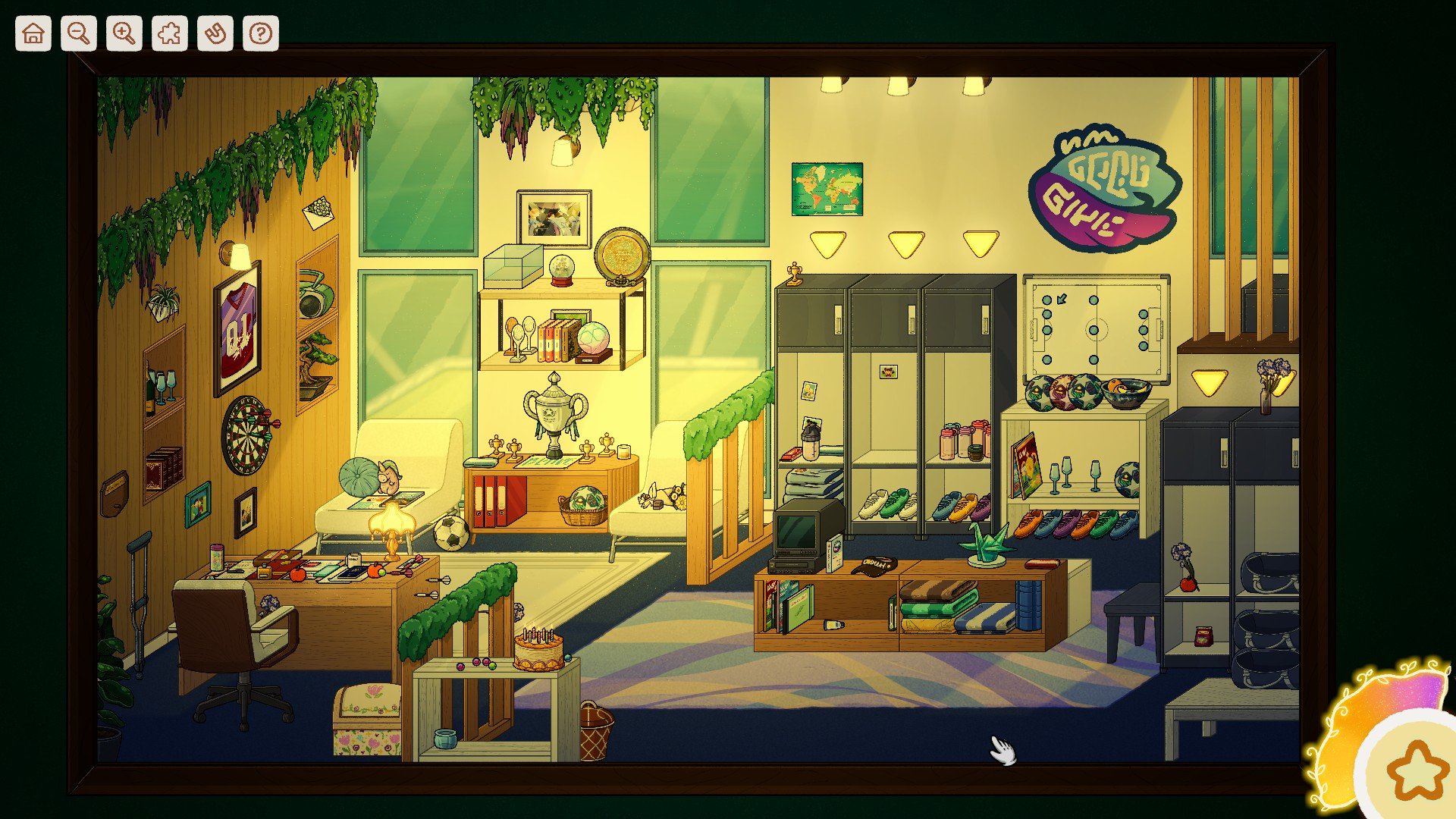
All that being said, Momento should be judged on its own merit rather than solely against Unpacking. It approaches similar gameplay elements from a new angle, trading Unpacking’s quiet environmental storytelling for gameplay that conveys the decision points and the unchangeable external constants that both define us. Momento will appeal to anyone looking for a cosy organising game with gorgeous art — particularly anyone who is looking for a more explicit story.
After I finished the base game, developers Fat Alien Cat and Nomo Studio released a 1.1 update, which adds new content and some quality of life fixes without changing the core of the gameplay. The update includes a number of variants for the first few possible rooms, which the developers explained in the patch notes are the rooms players going for multiple runs will see the most of. They’ve also added over 70 additional puzzles and some additional content to creative mode. Quality-of-life improvements include making it obvious which momentos you’ve chosen already without having to check in the menus.
As the developers intended, playing through the earlier rooms repeatedly is improved by the presence of the alternative rooms and made it much less likely that I just dumped out all the items to satisfy the progression criteria. The additional puzzles gave me a good reason to keep coming back to the game to explore them all too, and both the new room designs and the new puzzles share the same charm as the content in the initial release. I have every intention of doing all the new puzzles.
Momento is not a new benchmark for the genre, but it’s still a charming, thoughtful experience. The story is heartfelt, and the rooms and items are filled with personality, clearly made with love. If the premise appeals to you at all, you will be well rewarded for spending a few hours creating and organising Sam’s life, discovering the ripples of the choices, and seeing which parts were always meant to stay the same across lives.
Momento was played on PC using a code provided by the publisher.