Review | Forever Ago - Manic Pixie Nightmare Game
I have always known death in my life — both grandpas were gone far before my birth, a classmate died when I was a kid, another when I’d graduated — but my mom’s brushes with it stick to my mind more than any of my own. I remember when her boss, with whom she worked for two decades, passed away.
She was calm and composed on the phone, and broke down as soon as the call cut off. I also remember when we went back inside my grandma’s apartment, two years after her death, and I held her in my arms as she cried over the loss of her mom, the woman that so closely helped her raise both of her children. It was a destabilising role reversal, and I imagine I’ll be the one playing her role in the future, if/when I have a child of my own.
I ended up beating Forever Ago on the seventh anniversary of Grandma’s passing. The game follows Alfred Foster, an elderly carpenter, as he grapples with the pain of losing his partner of over 50 years, Audrey. The vehicle for his narrative is a road trip through the places where they shared cherished memories, now reshaped by the cruel march of time.
In theory, I should be able to relate. I remember getting misty-eyed when I once passed by the street I grew up on and found that my childhood home had been remodeled to the point of being nearly unrecognisable. I’ve had dreams where I knock on the door and ask to come in, only to find a completely different place inside, too. It’s a second kind of death, not unlike the one that’ll come for us all.
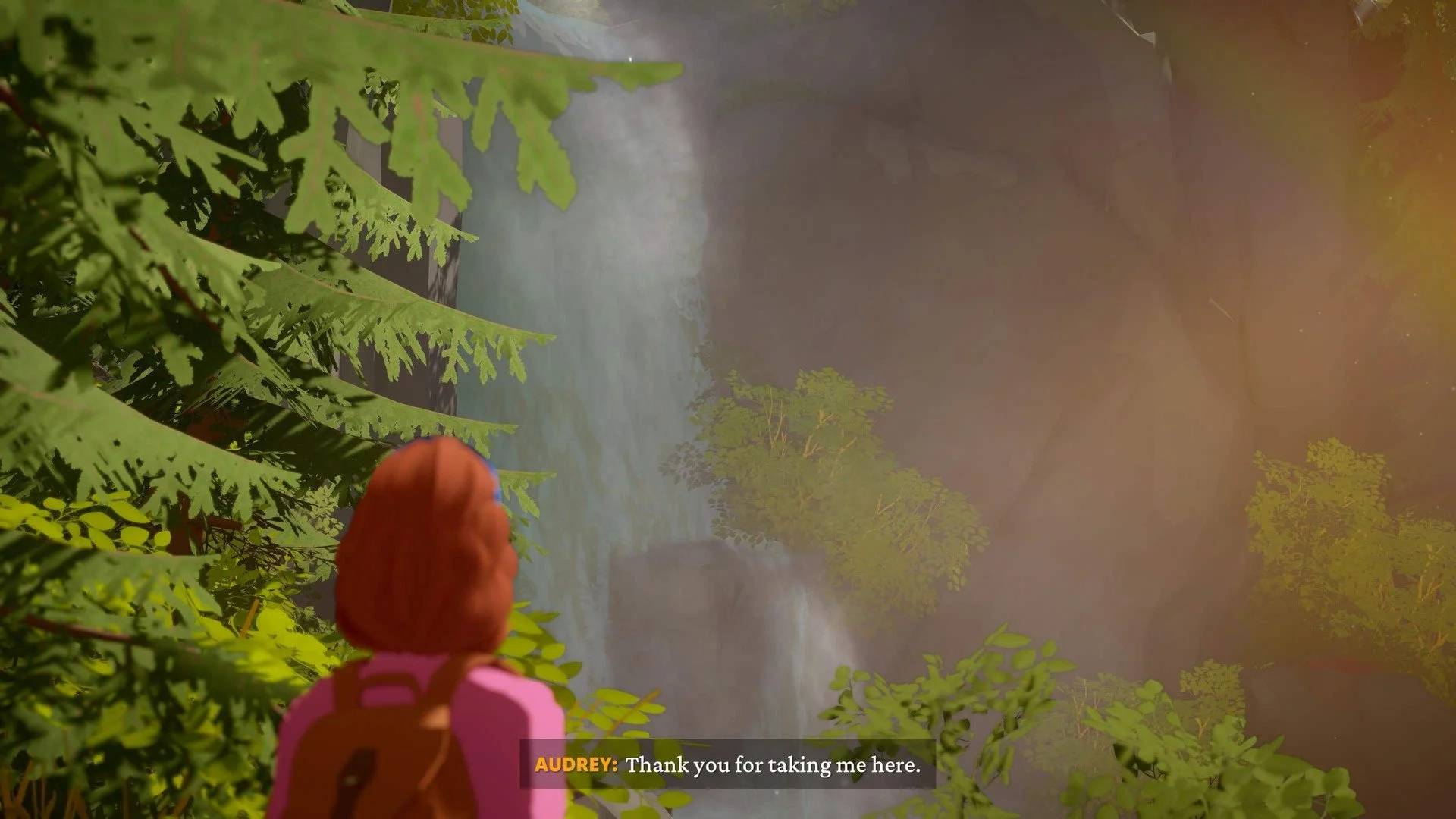
In practice, what Third Shift has served up is a tale that, while unafraid to show the uglier face grief can take on, is marred by clichéd writing and one-dimensional characters. What most haunts Forever Ago is a criticism just as cliché as the trope itself: Mrs. Audrey Foster is, through and through, I’m sorry to say, a manic pixie dream girl.
It’s the dead wife archetype — you know her, you love her, our protagonist certainly did. Alfred repeatedly describes his Audie as a troublemaker, an adventurous type, someone who certainly resented her slow death from cancer in her presumed early 70s. She took him on all sorts of journeys when they were young and lent him a whimsy and curiosity he sorely lacks, encapsulated in her motto: “you can’t plan life”.
By contrast, her husband is what I charitably describe as an entitled asshole. It wouldn’t be fair to define him as such based only on his grief-stricken outbursts, during which he yells at customer service workers and tries to push away a dog that wants to stick around him. However, the game depicts him unflatteringly in his past as well — in a flashback to his youth, he tries to throw his weight around so he’ll get the marriage proposal he made up in his head, and throws a tantrum as that fails.
I can tell why Alfred loved Audrey. She seems like a great person; of course she does, when most of his memories of her paint her as such. Her existence benefits him and him alone, providing him with a character arc as boring as they come — if you’ve seen Up (and I may be heartless after all, but I’ve never cared much for that movie), it’s that.
Even as she lashes out about him coddling her too much in her sickness, you’re never meant to see it her way. Audie is a complete satellite. She is at once the object of Alfie’s grief and the one who, with her endless kindness, makes him carve a path to self-improvement — you could argue she has agency on that front, but only for his benefit.
In contrast, I have no idea what she saw in him. He’s not particularly kind, or funny, or smart — it could be a self-effacing portrait, because she was just so great, but it does nothing for him as a character I’m supposed to care for. When he faced danger during his road trip, I had no tears to spare. I just sat there doing an exaggerated take on his voice acting, going on and on about my Dead Wife, giggling to myself as I did. It was very flippant and very fun.
Funny: sometimes I do worry I put Grandma on a pedestal when I speak of her. If she had a nasty side, she never let me see it. In my memories I’m usually the innocently cruel one, the little smartass who went through her recipe books and corrected her orthography (and many years later, finding it was consistent with the spelling she’d been taught). I still think the Grandma that lives in my heart — the one that’s revived in my dreams to a refrain of “you were alive the whole time?!” — is a fuller portrait of a person than what Forever Ago has to offer.
It also doesn’t help that, while it certainly condemns Alfred’s most unpleasant impulses, the narrative seems to be firmly on his side in a core aspect: things are worse now than they were in his youth. The people-pleasing young man he has to deal with at the store is annoying. Seeing the past commodified, his special place turned into something he can’t access without a premium card, does suck. The flyer in a motel corkboard that advertises an “AI revolution” is bullshit.
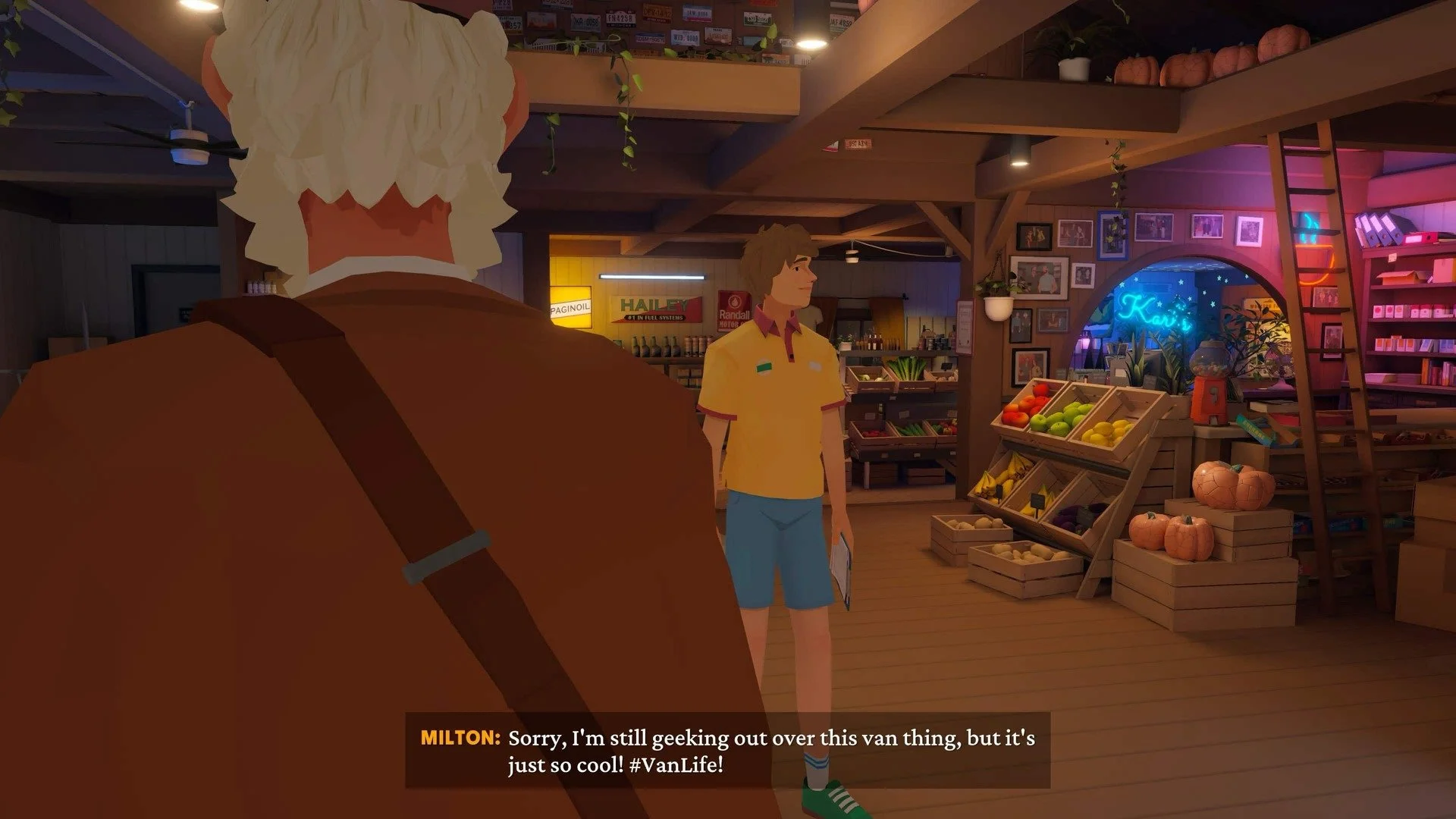
There is an absolutely maddening exchange where he goes to that special place, a local diner absorbed by a nostalgia-bait chain, and tries to order the pecan pie muffins he shared with Audrey before the remodelling. The waitress informs him the new management has never had that in the menu, due to “allergy concerns”, but offers him a “creamy dreamy cupcake” with sprinkles in its place. It is a completely fictional idea that a chain restaurant would stop serving any nuts because some people are allergic to them, and it reeks of new thing bad in a revealingly ugly manner.
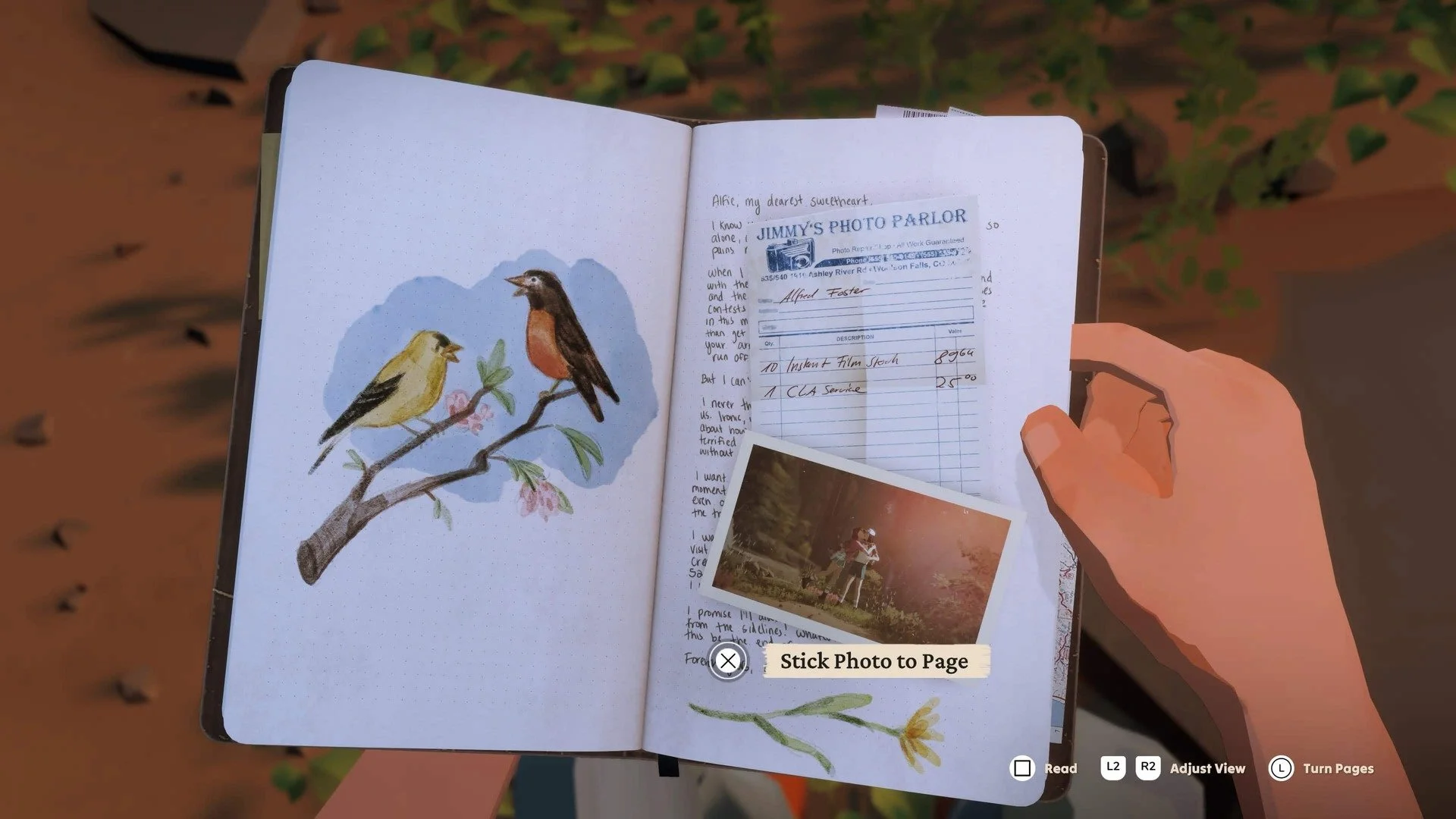
I do, however, understand Audie’s grand plan to have her stubborn beloved come to terms with her passing. She leaves him instructions to go to all those places, and there’s a throughline: they were mostly crap in their heyday, too, becoming cherished by means of the love the pair shared in them. It’s a clever exploration of “you can’t plan life” as a motto, and having Alfred capture the unforeseeable current forms of these locations through the couple’s shared hobby of photography turns them into tangible memories.
It still doesn’t really hold a candle to its obvious major inspiration, Life is Strange, or its spiritual successor, Lost Records: Bloom & Rage. Those protagonists had starry-eyed attitudes, for one, and the registering Max and Swann did was fuelled by genuine fascination with the world around them. Alfred felt to me like he was only taking photos because Audrey made him — and, by extension, me — do it. There’s supposed to be an arc of him re-encountering his passion; I’m not feeling it. It’s just too by-the-numbers to entice me.
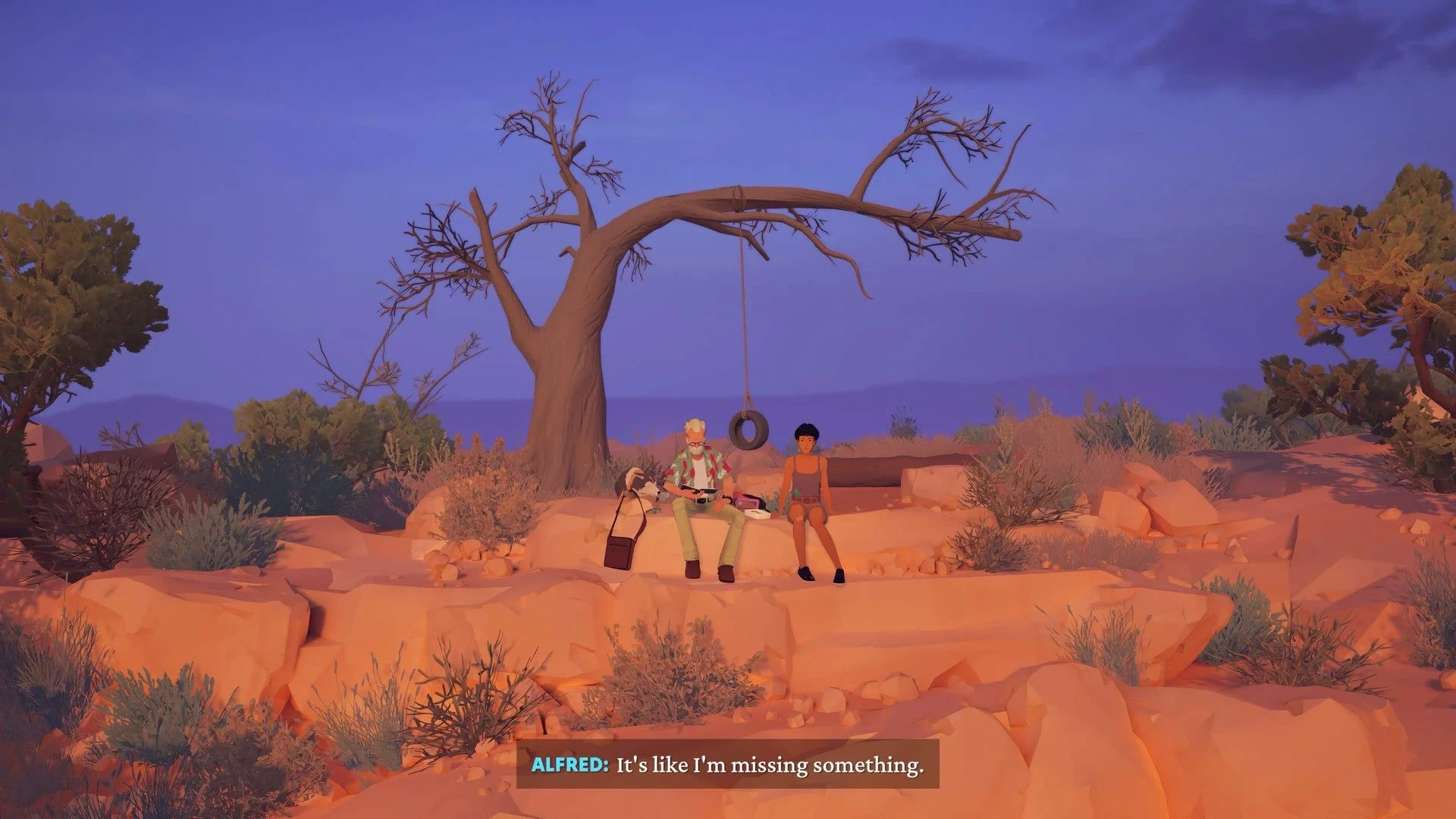
Forever Ago has the bones of an interesting story, but you can only get so far without the meat and sinew to make them move. The tepid main characters turn an endless source of pathos into the most tired version of itself. If you desperately wish for a narrative game about a complicated bond and an unfixable past, you’ll find this one far behind the ones it tries to build upon.
Forever Ago was played on PlayStation 5 using a code provided by the publisher.