Review | Dead as Disco - A Night to Remember
Sometimes, a game is just fun. Dead as Disco is one of those games. It didn’t take me long to realise this — the first time I synced up my hits with the soundtrack, it clicked. Every punch made me enjoy the soundtrack more, and I didn’t care about anything other than being as stylish and groovy as possible.
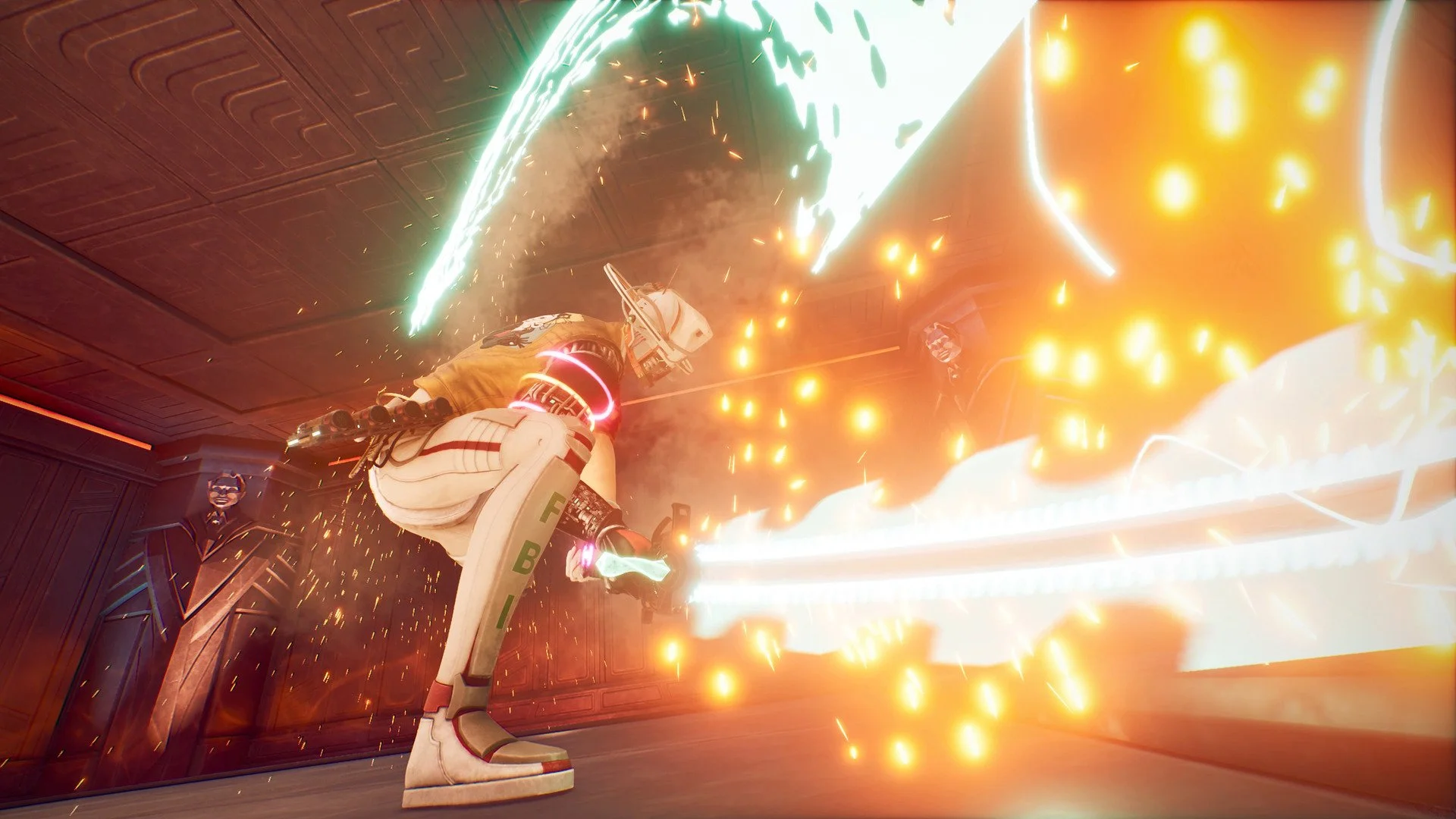
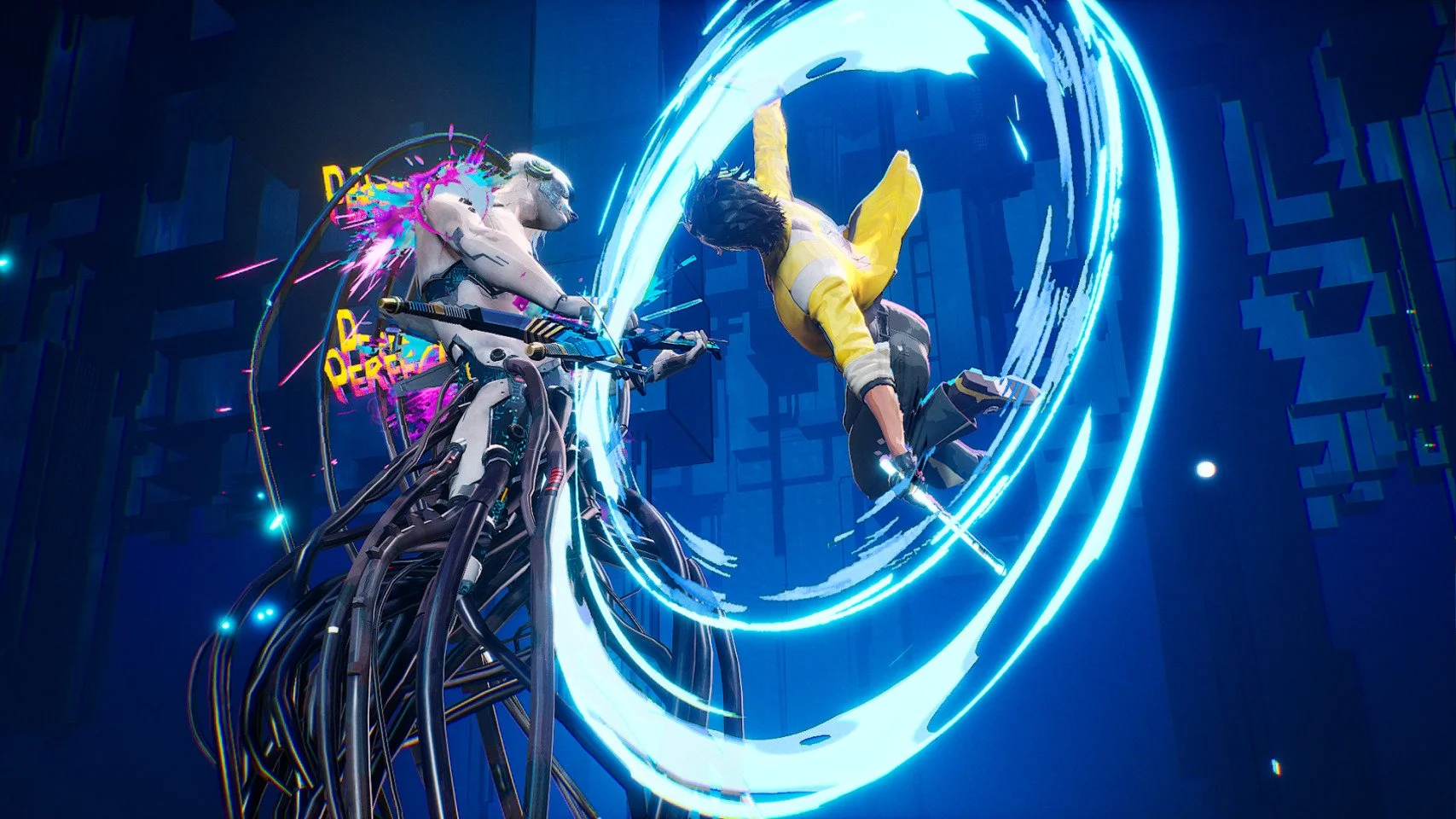
Dead as Disco follows Charlie Disco, who is on a quest to save his band's soul by selling his own. Charlie has been dead for 10 years, but has returned to life for a single night through a contract with the otherworldly to get revenge on his former bandmates — who now act as Idols for music corporation Harmony — and to solve the mystery of his own death. The game is a beat-em-up, with the main gimmick being that combat is directly tied to the soundtrack. Charlie was the drummer of the band, and for a game about rhythm and tempo, it’s the perfect choice. He uses a mix of punches, kicks, and of course, drumsticks. The speed of his attacks — as well as those of his enemies — goes as fast or as slow as the music. This naturally creates insanely cool moments, as combos automatically sync up with the soundtrack. Combine that with the visual effects of landing attacks being given a mix of paint splatters, a flash of stars, and the esteemed “PERFECT!” text flash when on landing hits on beat makes the gameplay satisfying. There’s lots to have fun with; there’s parries, perfect dodges, abilities, heavy attacks, etc. Enemy variety is also good, and some enemies require specific approaches. There’s an enemy with a shield that can’t be attacked from the front, there’s a ranged enemy that shoots a laser, and another that runs at Charlie and forces you to dodge. However, I didn’t feel the need to try too hard with the combat and use the abilities or go for maximum-damage combos. I was perfectly content to stick to the basics and the game didn’t punish me for it. It’s also important to mention that parrying and dodging have visual indicators that’ll clue you in as to when you should act, which did wonders for helping me focus more on grooving, and less on sweating. There is an incentive to go further with the combat however; there’s a scoring system that rewards good play.
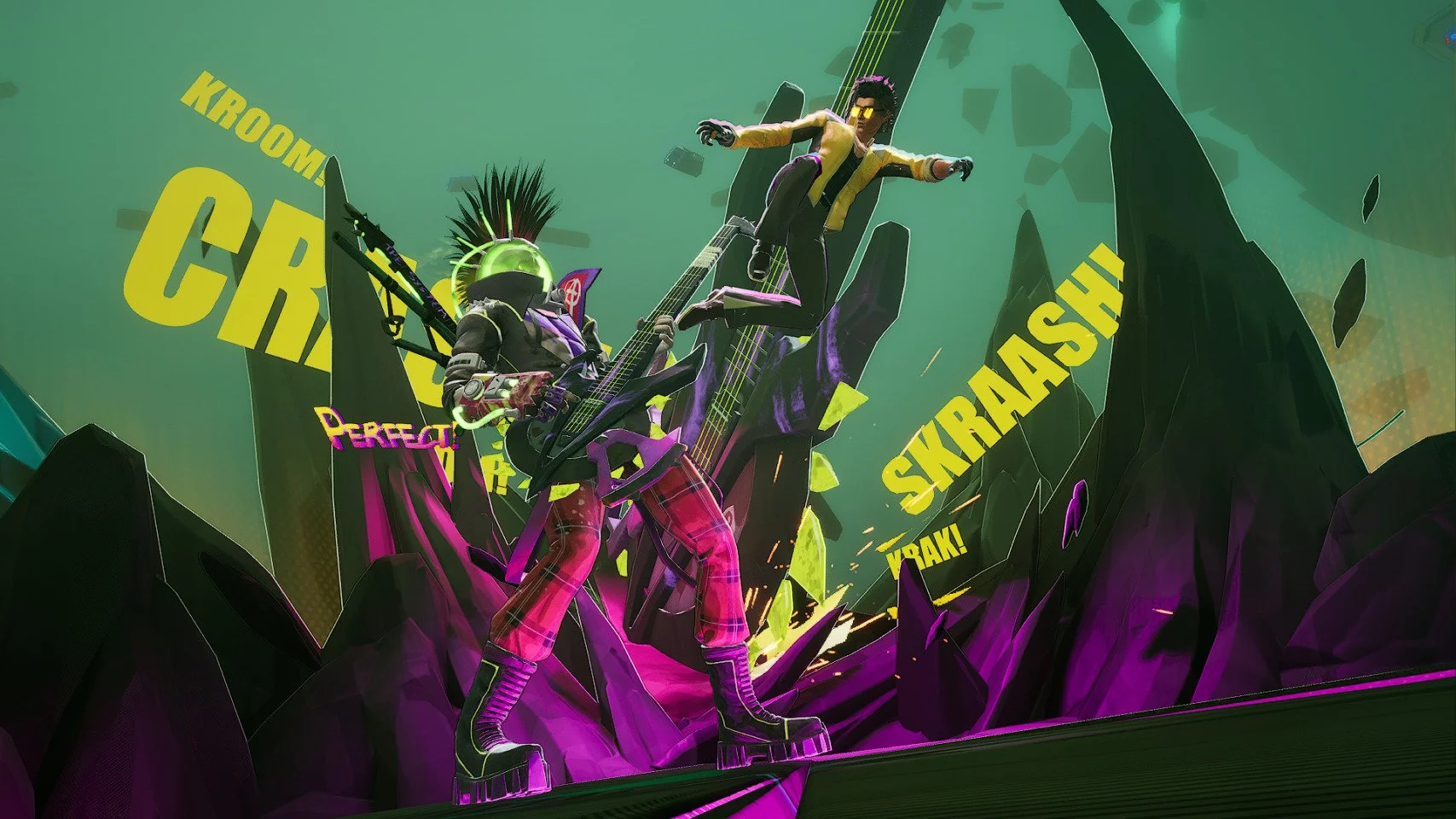
As of writing, the game’s early access release features four bosses, with additional Idols planned for release in game updates. They’re all pretty good, and can be tackled in any order you wish. There’s also a pretty good attempt to cover a lot of musical bases. Prophet is hip-hop, Dex is metal, Hemlock is rock, and Arora is K-pop. Musically, I preferred Arora the most, but Prophet comes close. With that said, there’s still a lot to love with every boss. Metal is not something I listen to often, ‘cause it’s not my taste. But Dex’s fight might just be my favourite. Dex is more machine than man, his music generates electricity for Harmony (by virtue of them hooking him up to a generator), and he has a lot of angst. Those three details are what make the fight for me. Every attack he and the other bosses perform just oozes character — in Dex’s case, my favourite was when he pulls off a hair whip using the cables that serve as his hair.
The icing on the cake is the level design of every arena. There’s several of them for each boss, and you move through them as the fight progresses. For example, fighting the Prophet has Charlie go from a subway, to a studio, to an extravagant gladiatorial colosseum. There’s lots of character in them, and while I’m not sure if it’s true for every boss, Dex says “Welcome to my mind!” after changing arenas. It wouldn’t surprise me if the fights did go from reality to inside the bosses minds, though, as every arena says something about the boss it’s tied to. This game has meaning and depth that is just begging to be discovered, and honestly, it wouldn’t surprise me if what I saw for myself was just the tip of the iceberg and that there were details and connections that I overlooked.
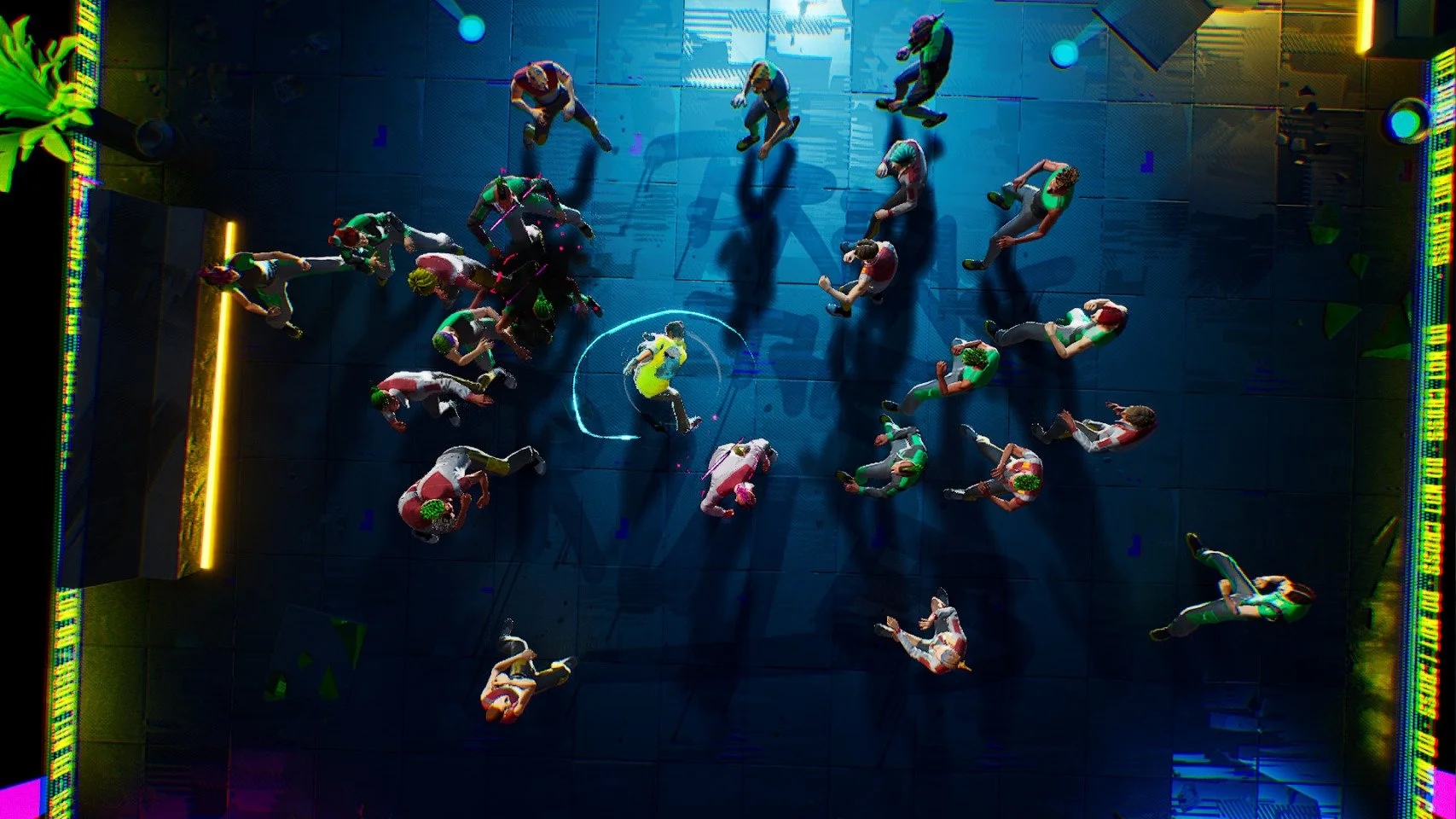
Outside of the bosses, the game has a sandbox mode to play in. It has three modes: Challenges, Free Play, and Custom. Challenges are just, well, challenges you can tackle for unlockable furniture that can be used in the hub area. The real appeal is Free Play and Custom. These two modes allow you to import your own music files into the game and set the BPM, then throw waves of enemies at you so you can groove out. Free Play will throw you into the action immediately after selecting a song, and Custom will allow for greater tuning, like what enemies show up, modifiers, and different objectives (usually, it’s just to survive until the song ends). It’s great. I’ve uploaded some of my favourite pop and rock songs, as well as anime openings, and spent about an hour playing them just to see how well I could match the beat.
Dead as Disco is one of the most satisfying games I’ve ever played. The combat is not so difficult that I can’t get lost in the music, but it has depth that I could plunge myself into if I wanted. The bosses have so much personality and express themselves in a way that makes me want to learn more about them and pick apart the details in their movesets and arenas. All this, and it’s only early access? I am excited to see where the official launch takes the game.