
Review | Lego Batman: Legacy of the Dark Knight - Into the (Bat) Cave of Gold (Bricks)
When we look at the most successful AAA open-world games, we might often recognise the same strengths: larger than life worlds that are pieced together brick by brick for players and made vivid through high-fidelity graphics. What if one of those games had a world that was really large, but also really small? What if the world was pieced together with plastic bricks? What if the high fidelity brought light to scratches, reflections, and hairs both the size of your characters and no bigger than your thumb? I know you’ve seen the title of this review and so I’m not leading up to much of a reveal here, but even through making jokes with low-hanging fruit or excessive setup, I can’t understate how impressive the world of TT Games Studios Limited’s Lego Batman: Legacy of the Dark Knight (LotDK from here on) is.
LotDK is the latest Lego game in the long line of licensed Lego tie-in games developed by TT Games Studios Limited (formerly Traveller’s Tales) and published by Warner Bros. Games (formerly Warner Bros. Interactive Entertainment) that started with Lego Star Wars: The Complete Saga and Lego Batman: The Videogame nearly twenty years ago. Whilst there are many reasons that LotDK stands out from this portfolio, a big one has to be that Rocksteady was credited as a co-developer, putting the Batman: Arkham Trilogy — which should technically be a quadrilogy but whatever — in the rearview mirror. With the developers of possibly one of the best AAA open-world games of all time (Batman: Arkham Knight) helping out, and with an experienced developer being afforded four years between releases when it has historically turned games around in one, LotDK stood on strong ground before it even released. Even with that knowledge in mind, the game never failed to exceed my expectations.
LotDK is an open world, narrative adventure game where you play as the World’s Greatest Detective: Batman — or at least his famous toy counterpart. Unlike previous Lego games, context isn’t really needed to jump into this one. The game is fully voice acted and plot elements are introduced naturally without the assumption that you’re familiar with the source material. Not only does this create a better entry point for parents and children familiar with vastly different renditions of the Caped Crusader to play together, but it also gives LotDK stronger legs to stand on as a robust, singular entry without a necessary reading list.
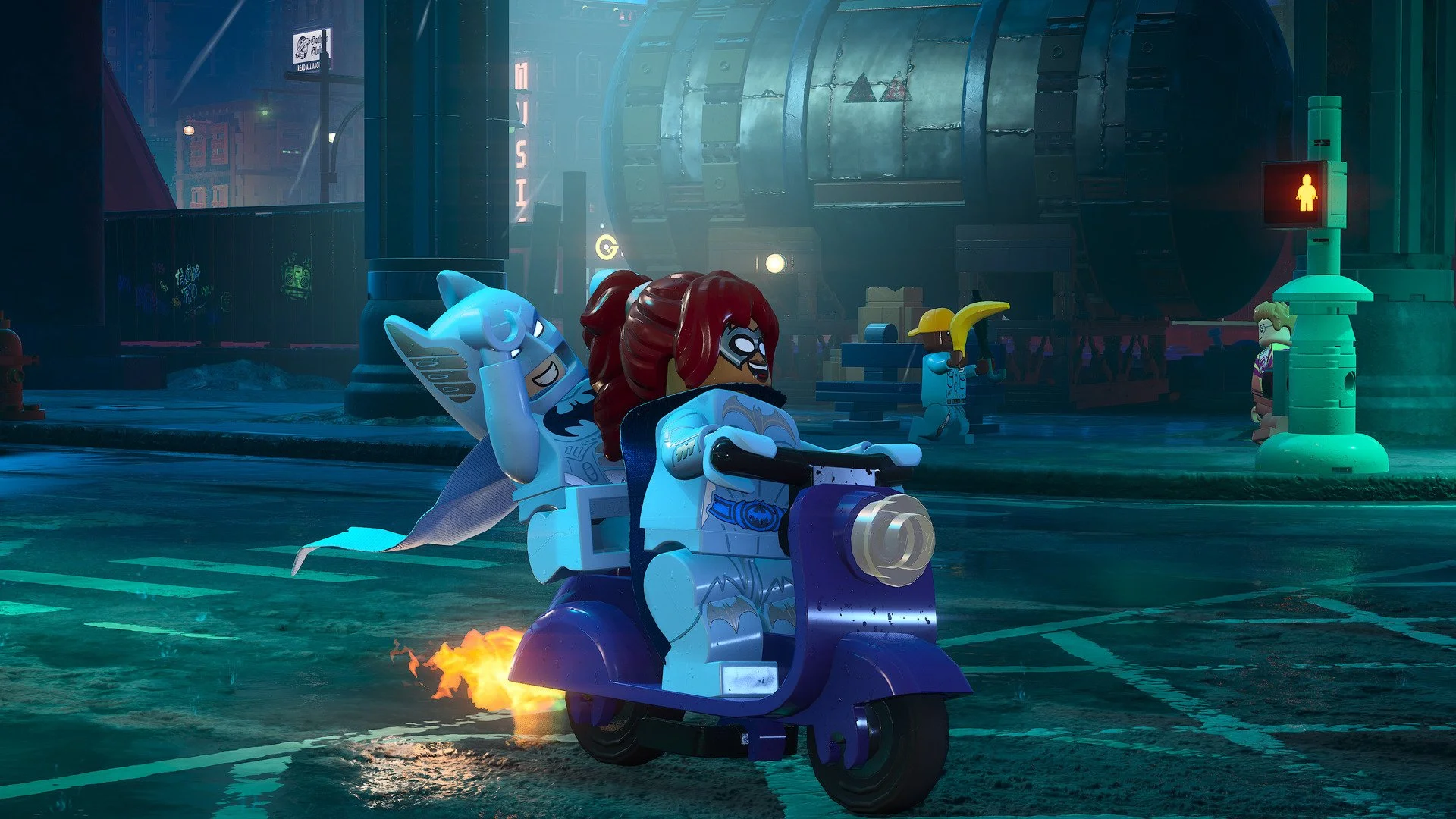
Much to my surprise, LotDK is a gleeful celebration of its titular character and almost everyone is here. The many faces of Joker, Bane, the Penguin, R’as al Ghul, the entire Bat-Family, Jim Gordon, and many more don’t just make quick appearances but often have multiple-hour segments dedicated to them. The game also does an excellent job of reconciling the disparate tones of Batman’s many adventures. The melodrama of The Dark Knight Trilogy and the passionate taunts of Catwoman are padded with humour whilst the surreal intensity of Batman’s hardship in the Arkham games is almost left untouched. This strict tonal management creates a diverse, rich, and eccentric game despite sticking close to the hero’s serious gothic roots and never giving Gotham a daytime.
Each of LotDK’s seven story chapters sees you play alongside a different Bat-Family member against any number of Batman’s array of iconic villains across a handful of linear missions and a few hours of playtime. Some of these stories pull from Batman’s widely recognisable live-action film catalogue, whilst others felt more like deep cuts, pulling from comic runs like Under the Red Hood or one of the many detective stories. Each new character introduction is paired with a handful of new game mechanics, lending the game a great sense of pacing with constantly expanding combat, traversal, and collectible hunting.
Most collectibles, the parry and crowd control focused combat, and the gliding and vehicle focused traversal mechanics are all lifted from the Batman: Arkham Trilogy. However, LotDK contains an even more distinct feeling via its pool of different playable characters and the game's unique Lego flourishes. The characters fight with gadgets that vary in humour and utility. To name some early-game examples: Batman fights at range with throwable Batarangs or by pulling enemies to him with a grappling hook, Catwoman can explore small spaces with cats or send enemies in a beyblade-esque spin with her whip, and Jim Gordon can perform crowd control with a ricocheting canon or a demobilising sticky foam gun. This combat — alongside the rest of the game — leverages the humour that’s now synonymous with Lego media to great effect, with ridiculous moments such as having Batman throw bins over enemies’ heads or dance the waltz with them before throwing a Batarang for the finishing blow. LotDK further utilises current generation hardware to heighten both the impact of gadgets or general attacks and the responsiveness of movement more than Rocksteady’s trilogy.
In addition to its excellent combat, tone, and traversal, where LotDK stuns the most is its world design and visual identity. Lego Gotham, like Rocksteady’s Arkham, is incredibly macabre. The bricks and studs that build the city are never touched by the sun — only lit by streetlights, moonlight, and neon signage. Exploring the world can be done instinctively: clear landmarks including Wayne Enterprises, a chemical plant, and a zoo make navigation easy, even without a minimap. Not since The Legend of Zelda: Breath of the Wild have I found so many activities scattered throughout the map, often engaging my curiosity as I move between designated goals. Solving Riddler’s puzzles, participating in Catwoman’s heists, and rescuing zoo animals are just a few highlights from the pool of open-world activities that were invariably enjoyable to play.
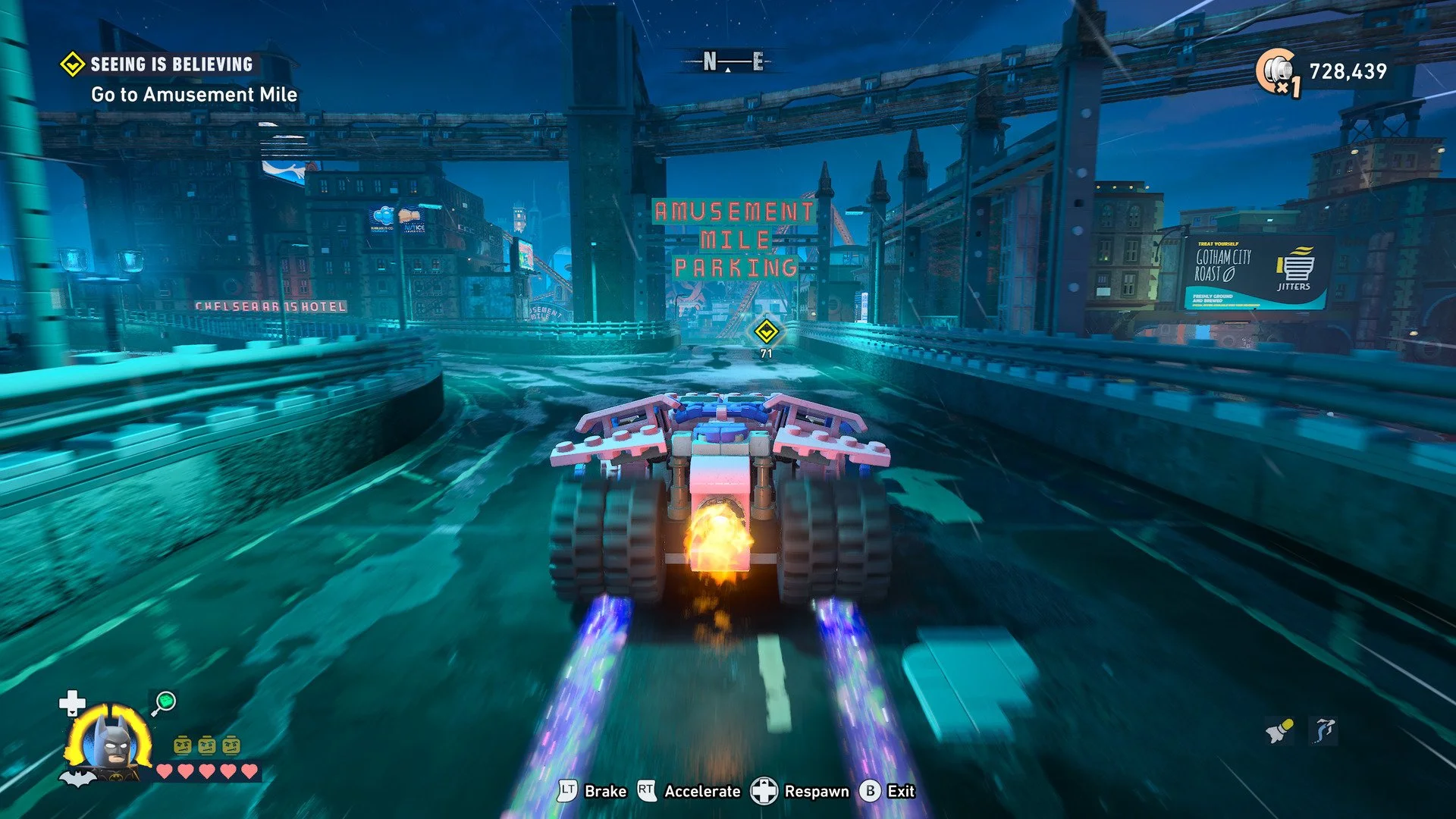
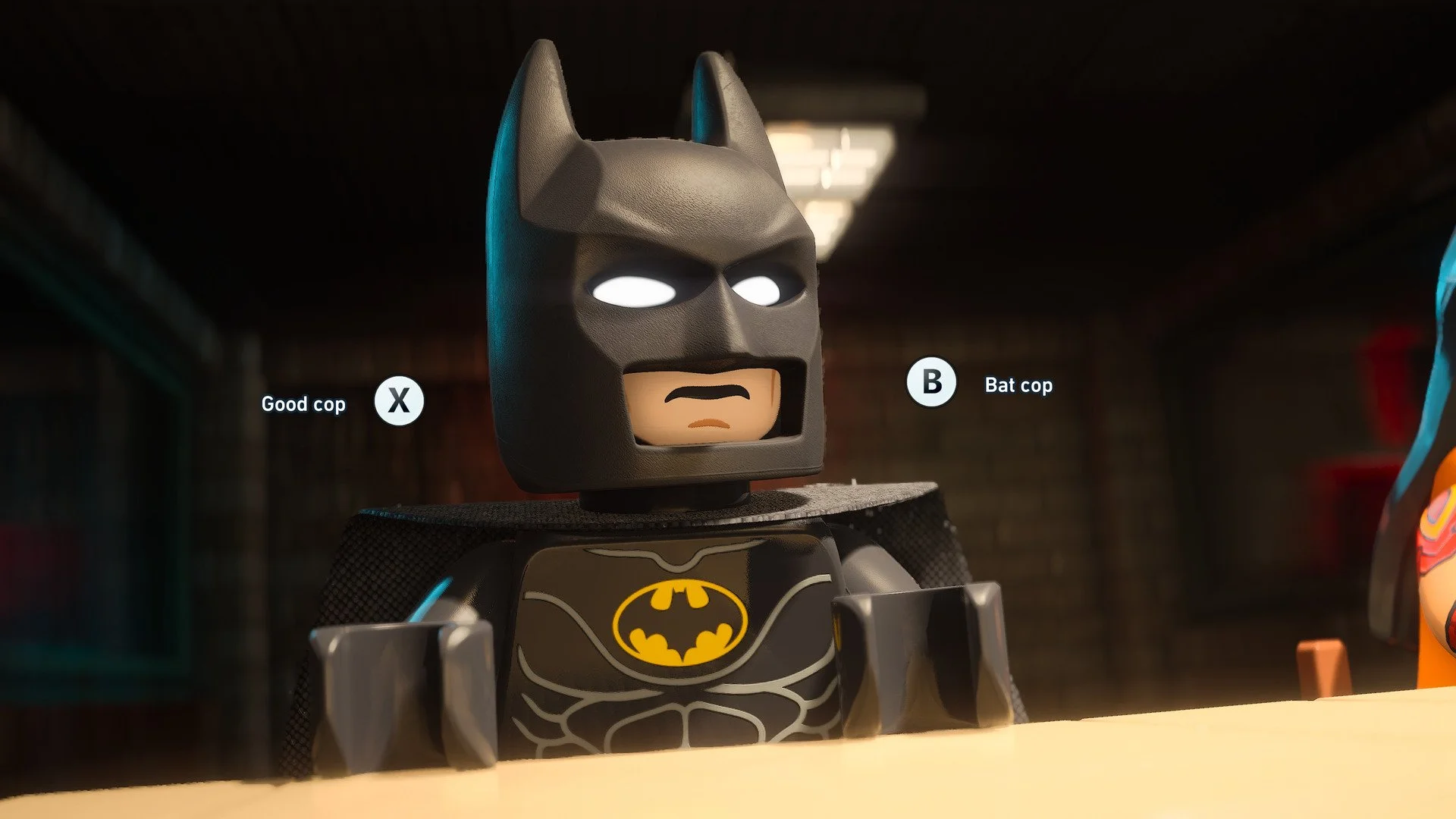
The impressive visual fidelity and clean performance don’t just signify that LotDK is among the shiniest and most expensive pieces of shiny that are shining this quarter, but they also give the game a magnificent vibe. I alluded in the lede of this review to how the most superfluous details are painted with extreme technical competence. What this shapes is a Gotham that is consistently striking. I find it very difficult to recommend games based on their vibes. As someone who appreciates games like Biomutant, Starfield, Lifeless Planet, and Clash: Artifacts of Chaos more than the average person for the impression they leave alone, writing formally about how I like to leave them open in the background, or sit on benches in game for a while, or lose hours to photo mode feels unprofessional. That being said, all of these things were fun to do in LotDK, and seeing an enormous world inhabited by a tiny Batman with plastic seams on his arms, long strands of human hair on his cape, and scratches on his hair piece was terribly surreal and highly memorable; Lego Gotham — whilst massive — felt like it could be lifted from the carpet of a child’s room.
To conclude by expending the last of the low-hanging fruit: a more honest adaptation of all of the Caped Crusader’s adventures has not been better built, with every piece clicking and snapping perfectly into place, and an almost tangible Gotham put together with every block placed deliberately. The Batcave has never been this deep, and never has it been this rich with gold bricks. However, you don’t need me to recommend Lego Batman: Legacy of the Dark Knight. It was obviously going to be great. Why? Not because it had an amazing team of people developing it, experienced with all versions of Gotham’s Guardian, but because you should always bet on black.


![Review | The Knight Witch - Wicked [Cool] Witch](https://images.squarespace-cdn.com/content/v1/5caf2dea93a63238c9069ba4/1674902221285-F8Y8XHI78OWJGDAMEVIN/The+Knight+Witch+0.png)