Review | Wax Heads – Community Rocks
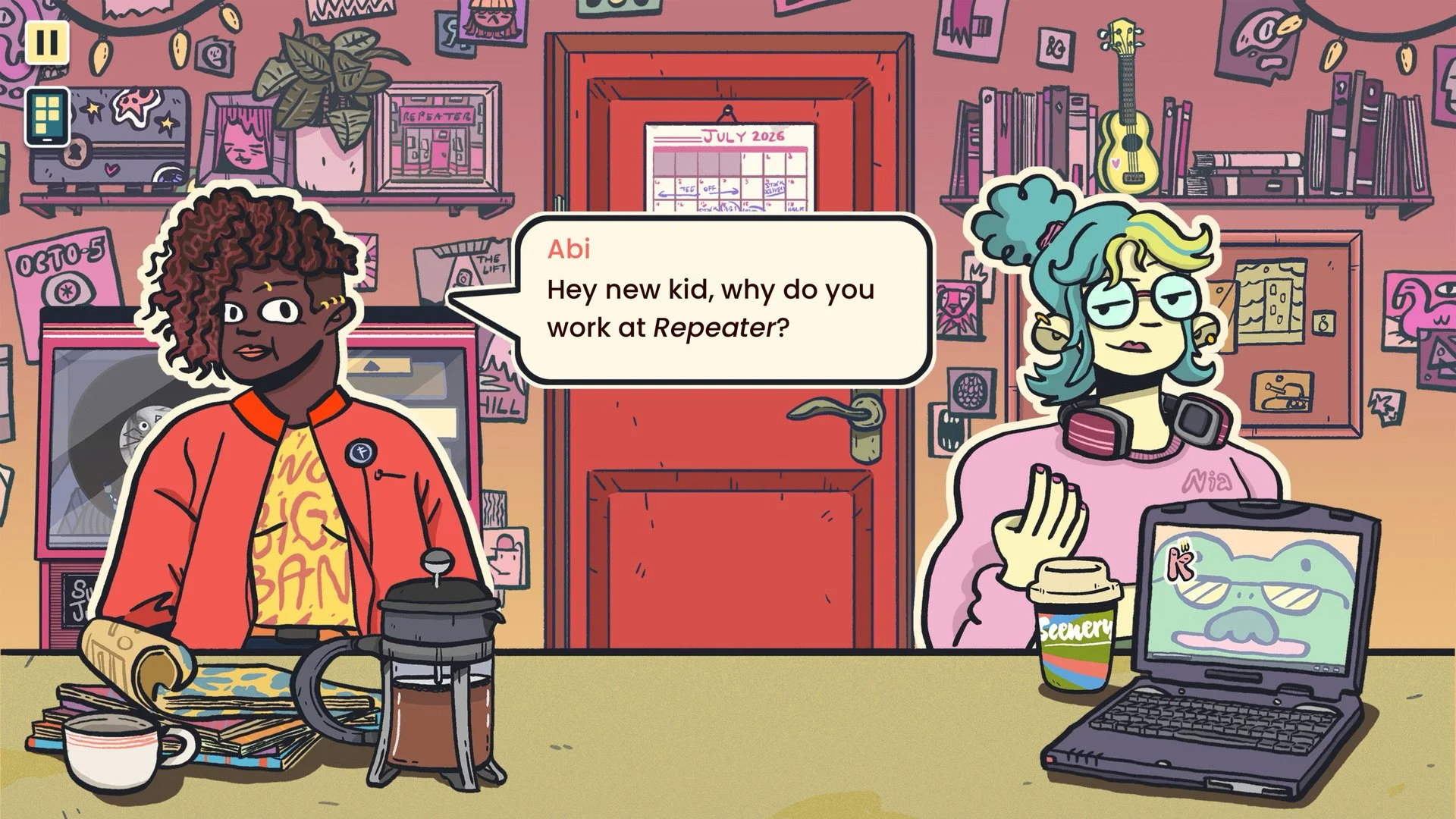
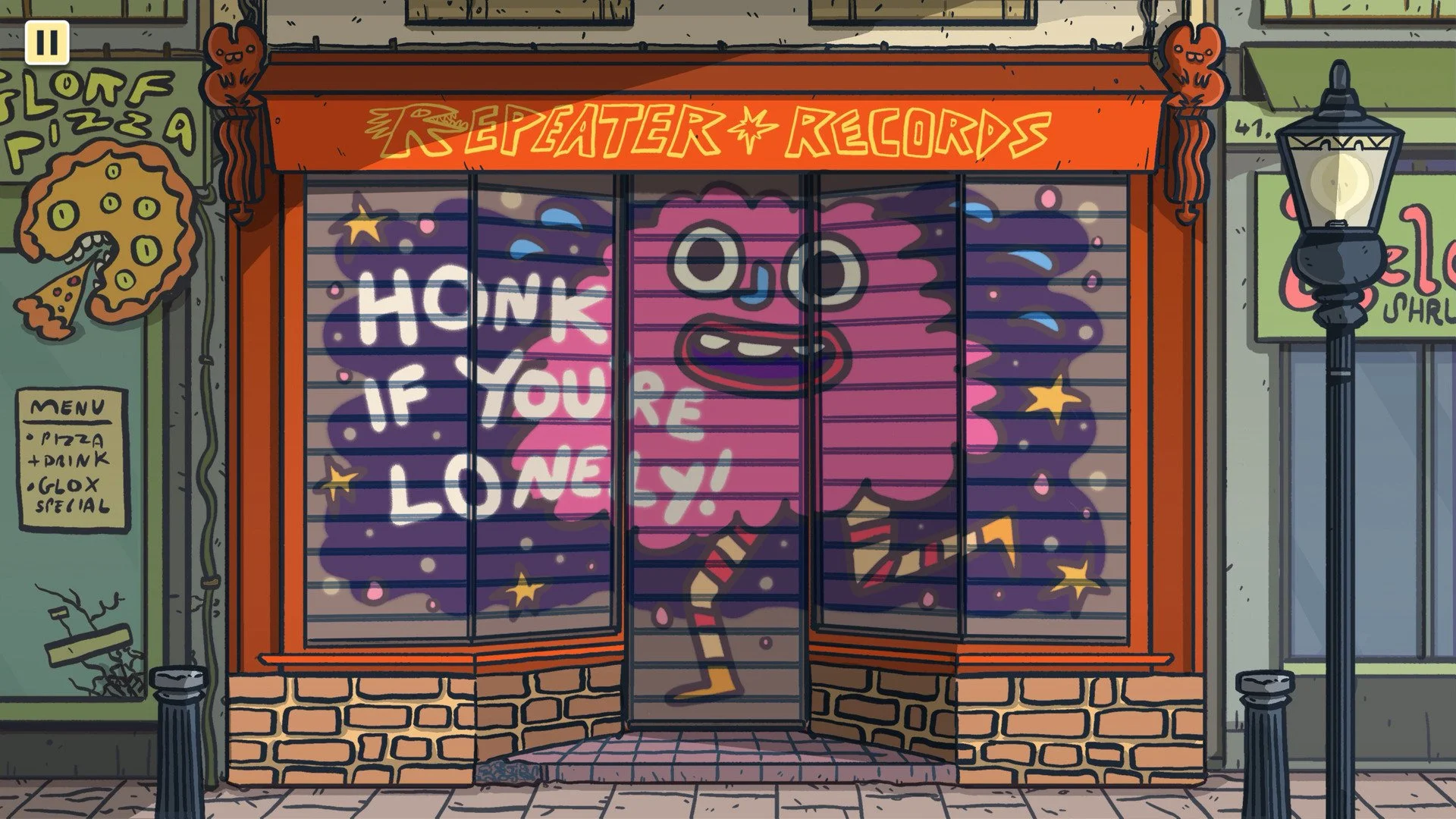
One thing Wax Heads, the new cozy-punk narrative sim from Patattie Games, does great from the get-go is to instill a sense of routine. Each day, you arrive at Repeater Records, have a little chat with your coworkers while you get ready to open the store, and then you attend to each customer, fetching the records they are looking for. Sometimes their demands are pretty straightforward, but most times the customer is not so sure about their request, either because they don’t remember the exact title, or they are looking for something within a genre or music that puts them in a certain mood.
The recommendations puzzle is extremely surface-level, as it doesn’t permit second chances or even a conversation around the work of art you’re offering. The customers respond to your first recommendation with either rad!, okay, meh, or sad, depending on how close you get to the thing they’re looking for. There are no major consequences for fumbling a recommendation, other than receiving less money to redecorate the store. The dialogue also changes, obviously, with customers thanking you and walking away happy if you nail it, or expressing their disappointment otherwise. Because of this, the game is a pretty relaxed experience with no fail states, allowing you to focus on the story about saving a record store that means so much to its community.
In my experience working at a bookshop, customers rarely end up buying the first thing you recommend. They have their own taste, after all, or what happens often is that they already own the obvious thing you think they’d like. I know that the game doesn’t aim to realistically portray the experience of working at a shop, but in skipping the whole process, a lot of interaction is lost, and interaction is the way you flesh out recurring characters.
I’d excuse this if the game compensated with high-quality writing, as many visual novels with limited gameplay mechanics do, such as Coffee Talk or VA-11 Hall-A. Some characters are really well-developed, like Matteo, who feels guilty for continuing to work at a small shop at his age, and is unsure if he’s on the “right path”. The game speaks profoundly about finding the thing you’re supposed to do, according to your passions and talents, while also considering the economic conditions that sometimes force you to appreciate any kind of opportunity, without leaving too much room for risks. However, all the other aspects of the writing were pretty underwhelming. The dialogue felt completely unoriginal and was filled with clichés.
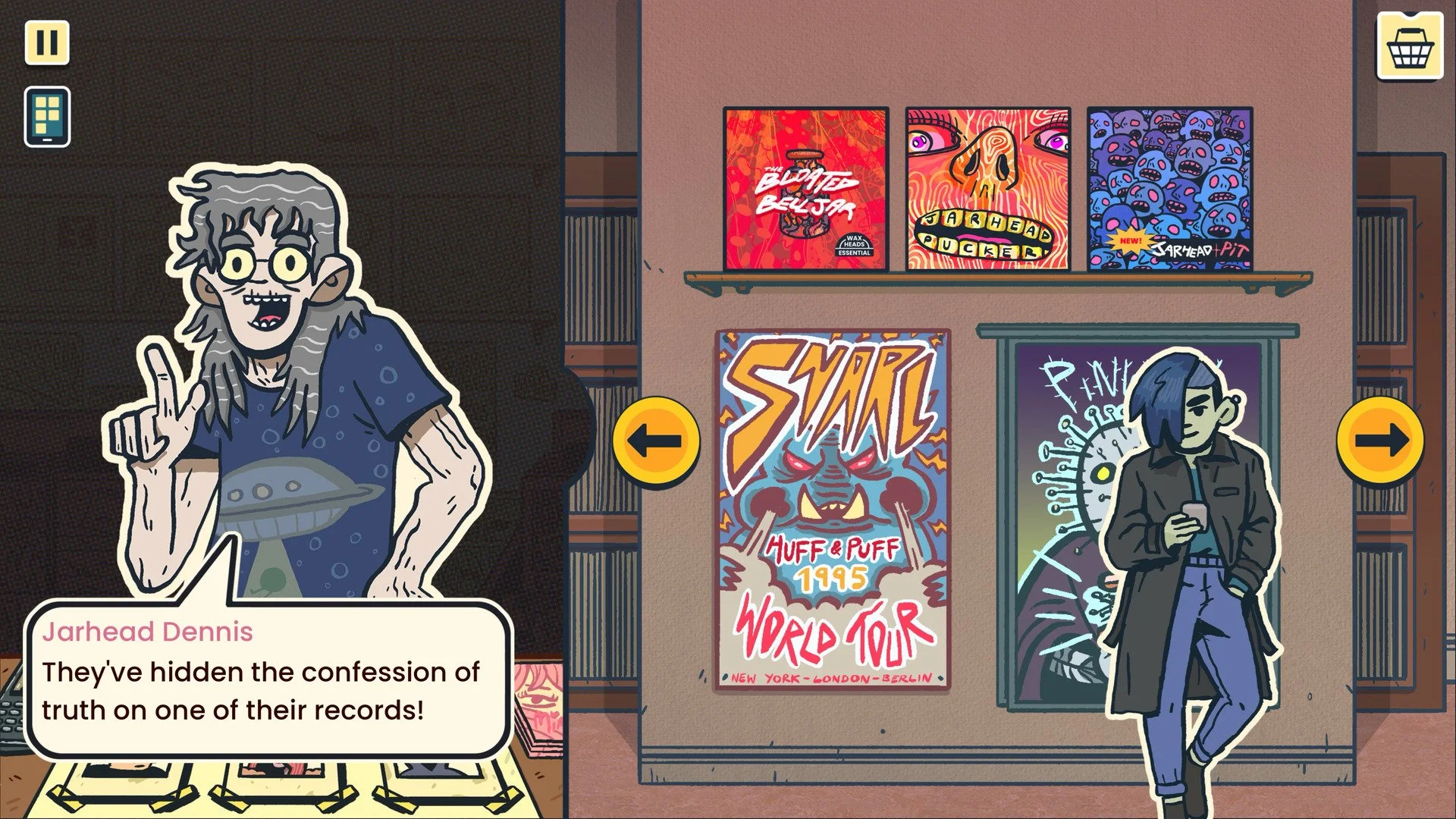
If you’ve worked in retail, you know there are some weird guys in your community, and they have their representation in Wax Heads. Sadly, they feel more like caricatures than real people, and are played as comic relief instead of a real commentary on the diversity of a neighbourhood. There are ways to feature idiosyncratic or weird characters without mocking them. Night in the Woods is a perfect example of how to portray characters like these and use them to make a space feel lived in, instead of just including weirdness for weirdness sake.
Overall, the game shines most when it isn’t trying to be funny or to force a reference and chooses to focus on the internal struggles of its characters. That's when it feels more human, and the themes of community really work. A lot of what Wax Heads tackles is in direct conversation with the issues the music industry (and games, to an extent) is suffering, like monopoly, consolidation, and the merge of criticism, storefronts, and production, which are treated with mixed levels of success. This commentary is constant, but mild. It gives more of an emotional argument than a logical one, which could have worked better for me if I had formed a stronger emotional connection with its characters.
At a point, the game gives you a vision into how this hyper-corporate future of music could look. It shows you what would happen if the corporation named Just Play bought Repeater and turned it into a store that prioritiszes consumerism over the enjoyment of cultural products, selling endless iterations of the same albums with only minor changes (another criticism of what some IRL artists do). In this reality, an algorithm replaces human critics and sellers, and customers stop caring about the craft of music, seeing it only as a product to be consumed. Again, I wish the developers had explored this criticism more thoughtfully, as it falls flat by resorting to cartoonish villains and exaggeration rather than focusing on how this is affecting music today in the real world.
To prevent this, the local community, along with Repeater Records employees, organise a fundraising campaign to save the store, resurrecting an iconic band which the owner was part of. Throughout the game, you recruit opening acts, artists, and technicians from the neighbourhood to make this final concert a reality, and keep Repeater Records alive and independent and its staff employed. The story showcases the power of community to fight against capitalism, and how places where you can find and maintain a community around art are valuable even if they are not the most lucrative.
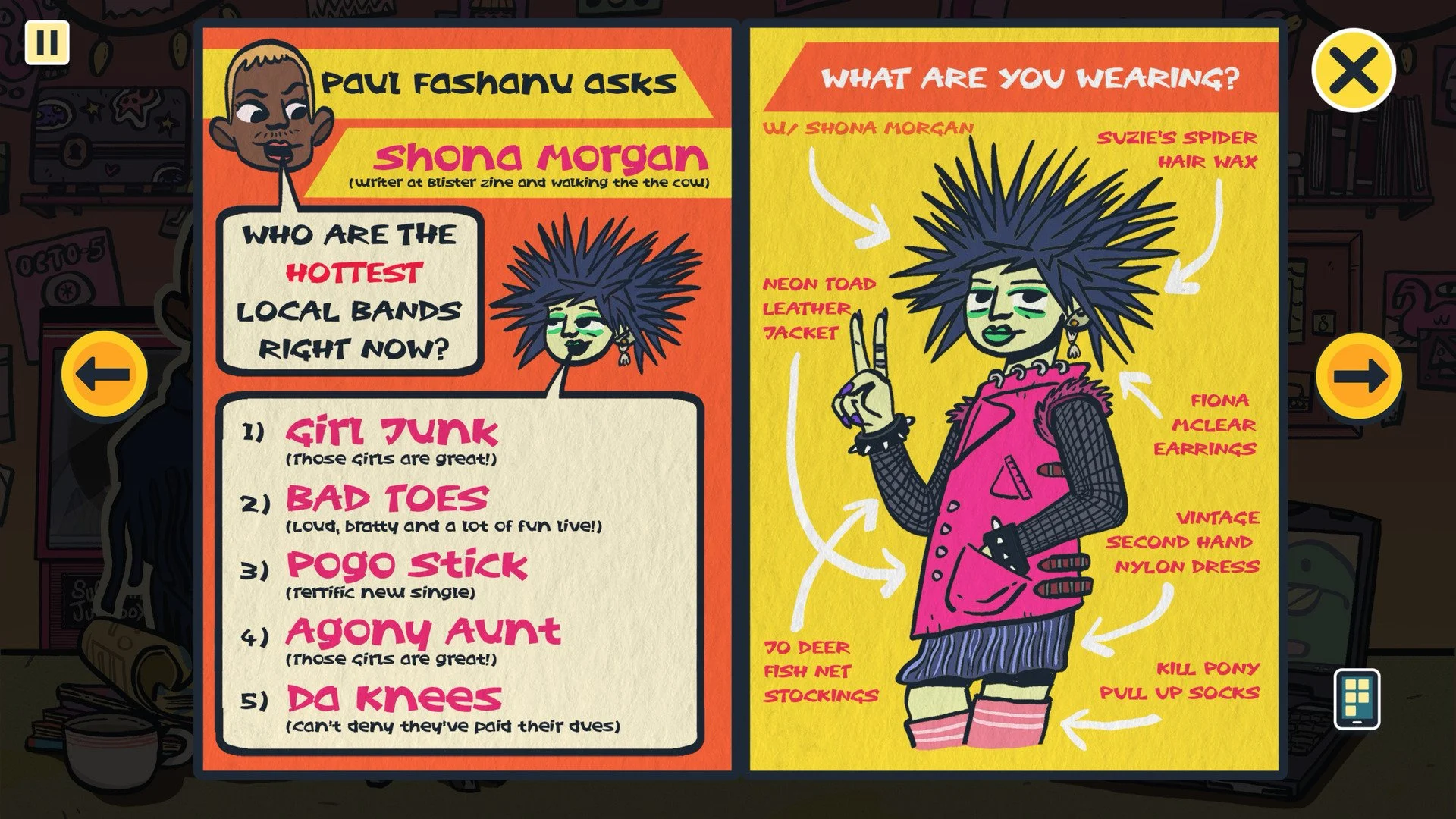
An unexpected high point of Wax Heads, and an aspect where the writing really surprised me with its quality, was the zines and blog posts that you read throughout the game. They were the best example of the game’s capacity to showcase the connection between art and mutual aid. Maybe it was because they’re written in a more journalistic way, making them more interesting to read, but for me, they worked far better than the dialogue, which didn’t have a lot of substance. Perhaps making the player more involved in the creation of such zines would help deepen your connections with the music scene.
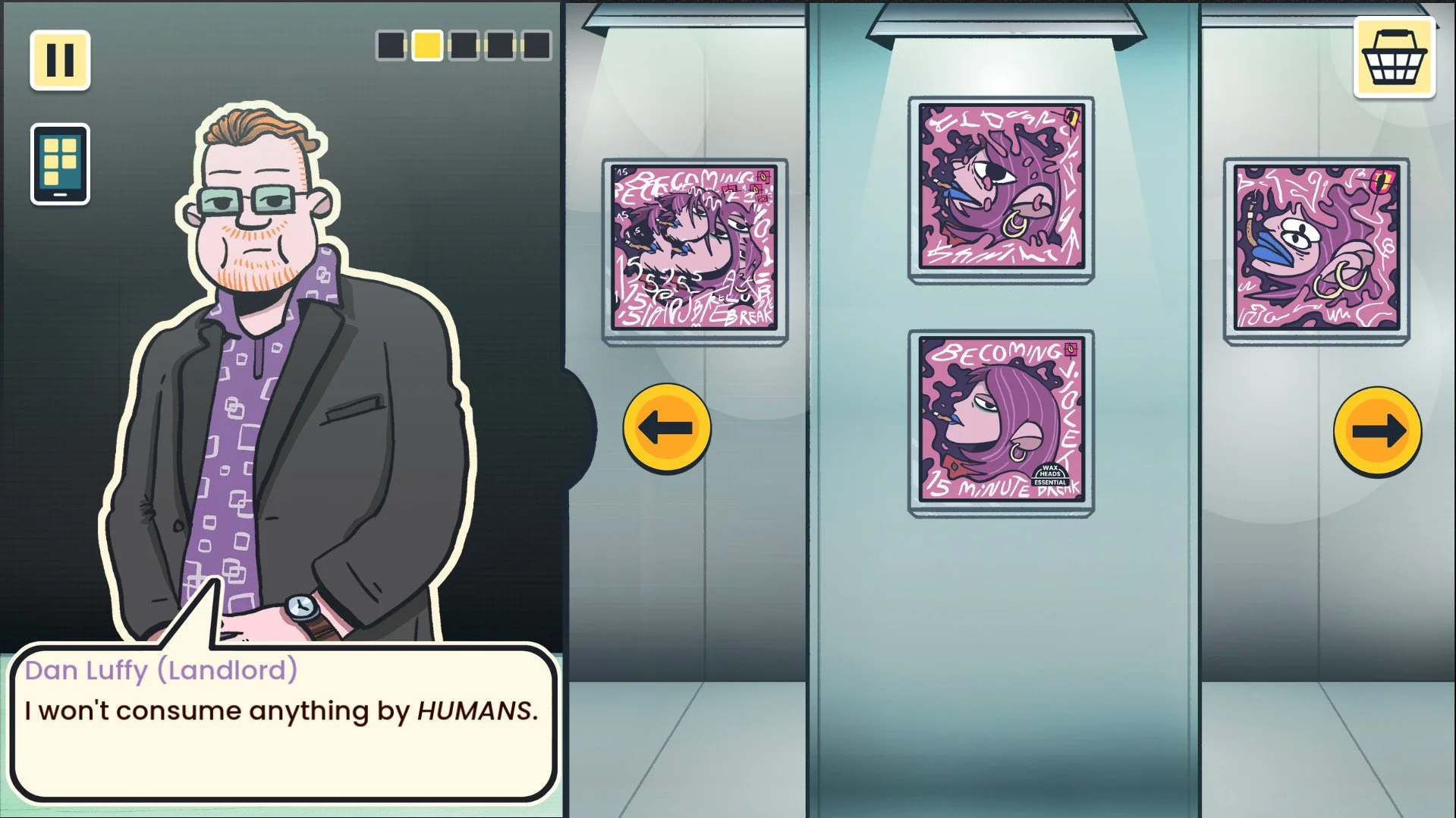
The musical universe of Wax Heads is also very captivating; being able to hear the artists you’ve been recommending is huge, and I wish the game would encourage you to listen to them more to find certain lyrics or something, because the original songs from the soundtrack are pretty good and I feel the game doesn’t take advantage of it. In the late game, you have to semi-memorise the store’s whole stock, but thanks to the album covers and descriptions, which are very detailed and showcase the game’s unique personality, it’s really easy to have a sense of how Wax Heads’ music scene works, and who are the big names in each genre.
Many of the conversations, zines, and events in the game are about collective action, mutual aid, and unionisation. There is a book with “socialism” on its cover, and one of the main characters has @Socialist_Slay_Queen as a handle on social media. While many of these details make sense for the plot and the cozy-punk label the game has, I think it comes across as cringy, or not that serious. It’s just another aspect that would have worked a lot better if it had been more fleshed out and better integrated with the characters, without villainising everyone with a different political stance. Perhaps this simple approach makes it more effective for communicating Wax Heads’ more radical ideas to the cozy games playerbase, but it made me take it less seriously.
Wax Heads' main question is “can a shop be about more than consumption?” and it really struggles to give an interesting and profound answer, instead opting to put a literal child at the end giving a monologue about the power of song.
In the credits, the developers appear as customers, giving their own personal recommendations, which was awesome. Because one really important thing Wax Heads misses is that art, before anything, is incredibly personal. The link between you and a piece of art that changed the way you see yourself and the world is quite magical. However, with all the artistic confidence the game has, especially in its musical and visual details, Wax Heads ultimately fails to integrate this magic with its story and characters.
Wax Heads was played on PC using a code provided by the publisher.