Review | Duskfade - Twilight Town for the Shallow Soul
From the deep ambers, oranges, and lilacs of its colour scheme to the way its protagonist wields his sword, it is clear that Duskfade takes some inspiration from Kingdom Hearts. This is not a bad thing. Part of the fun with the indie landscape today is how developers can take familiar ideas and spin them into something original. However, there is also an implicit promise when developers go down this route that on some level, their game will also be for fans of the same source of inspiration. Sometimes it can work to deviate wildly, but if Denshattack! had evoked Tony Hawk, Sonic Adventure 2, and Jet Set Radio but played like Gran Turismo, that wouldn’t have worked. The homage would feel hollow.
This is to say, yes, Duskfade has been influenced by Kingdom Hearts, but the connections are superficial. It plays very little like its Disney/Square Enix inspiration, and that is its downfall. There are small moments of gold, I will admit, but if that’s the best Duskfade can do, then I might as well load up another PS2 game I’ve never played before and see how that goes. Maybe Jak and Daxter.
Duskfade is set in a clockpunk world where a giant tower sprouts in the middle of Tick Town, trapping the sister of the protagonist, Zirian, inside. The world of Tearfeld plunges into a perpetual night (or dusk: there’s some artistic liberties), and it’s up to Zirian to travel to his world’s farthest reaches, sever the gold chains holding the tower in place, and save Allira, his sister. Along the way, Zirian gains the help of Cuckoo, a mechanical bird built by Allira, and deals with some unresolved feelings regarding his grandfather, too. These subplots give needed depth that allow him to grow, and are the glue that holds this larger narrative together. Without them, Zirian would be trapped in a perpetual state of himbo.
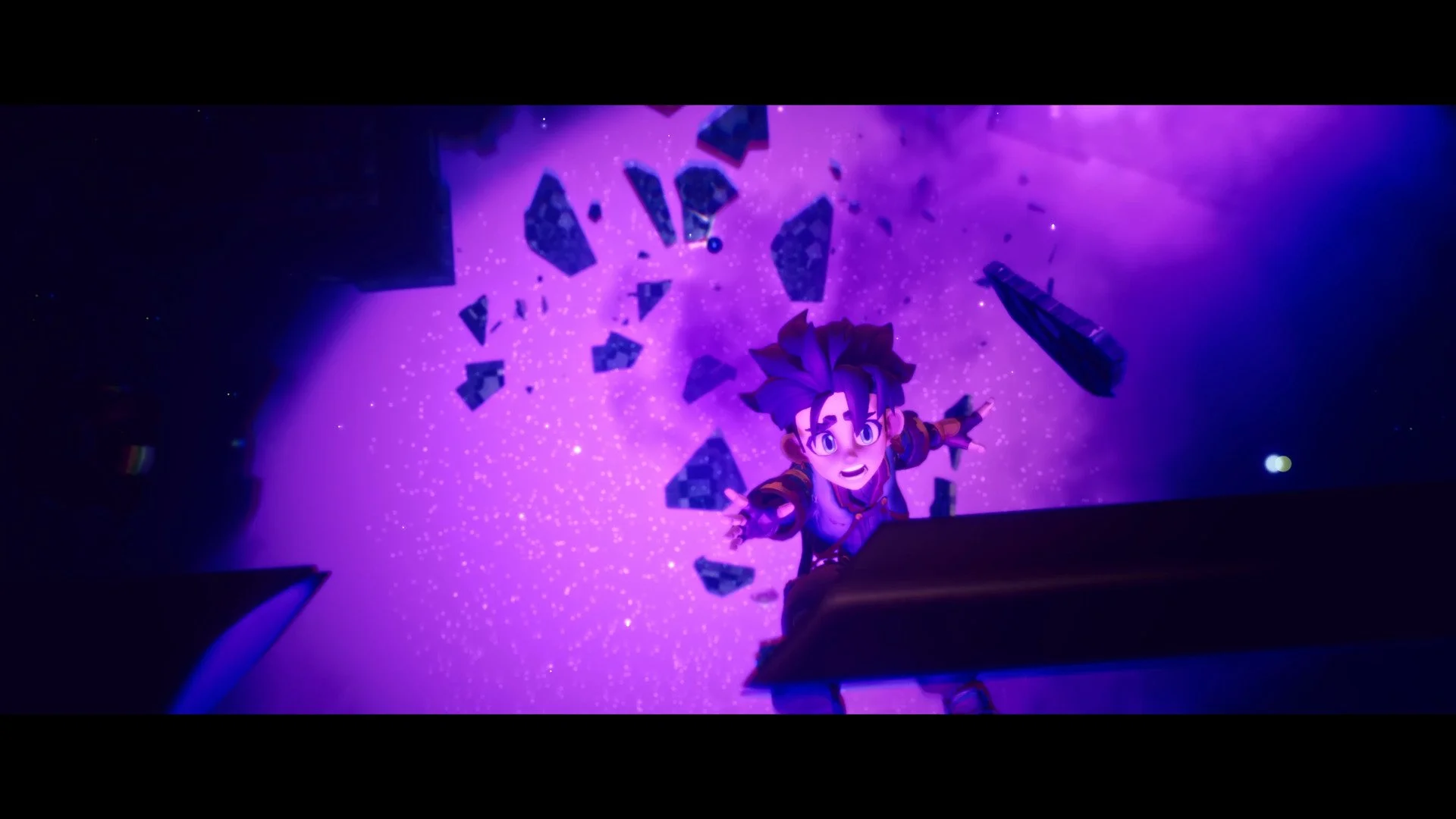
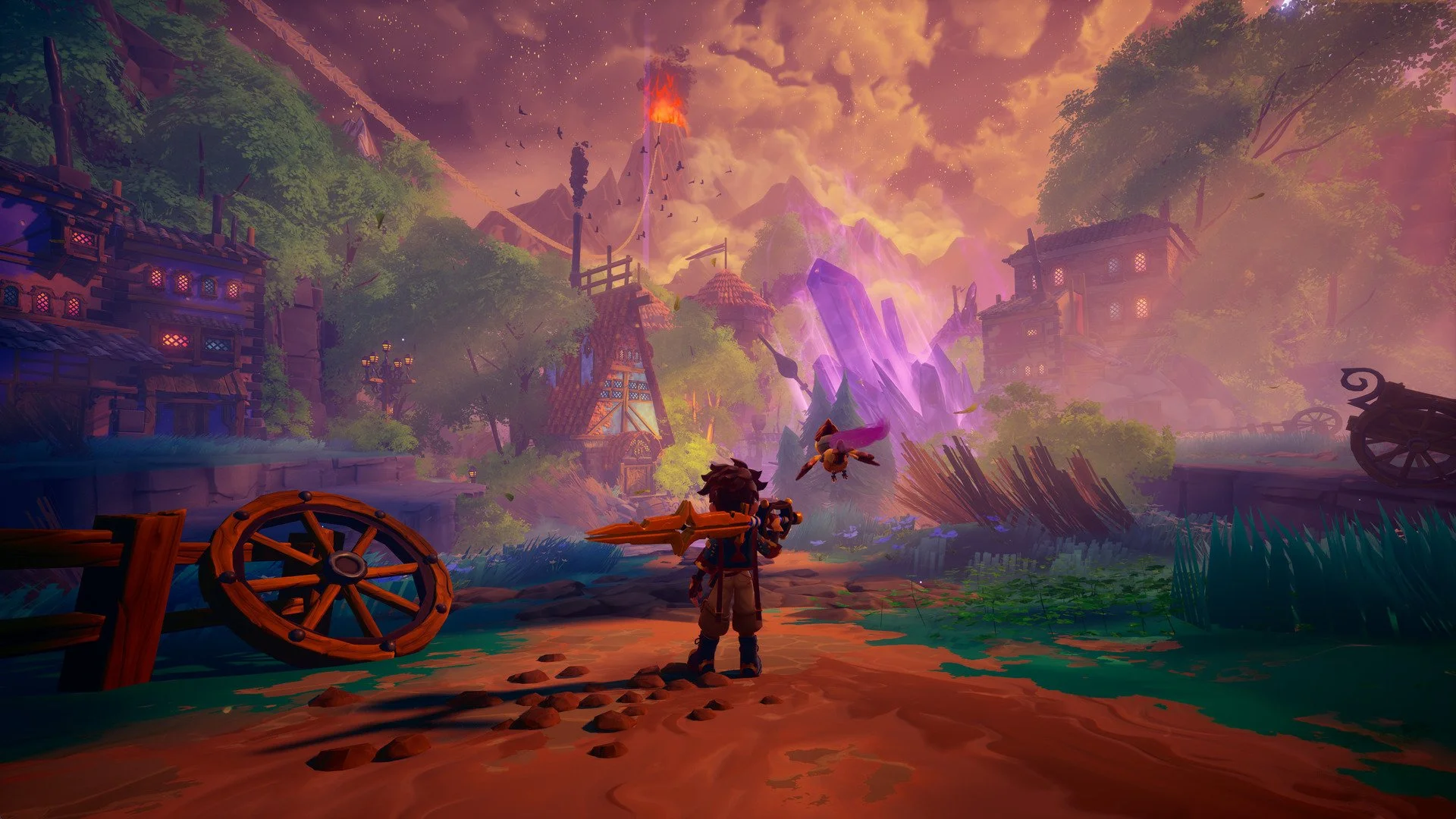
Right away, Duskfade dazzles with its presentation. The colour scheme, despite being familiar, is still an inspired choice that fills every corner with a warm, inviting glow. There are also plenty of giant crystals sprouting throughout the world that allow Tearfeld to feel cohesive across its diverse biomes. Even when Zirian has to trudge through familiar locations like a volcano and a desert, the presentation prevents it all from feeling too staid and boring. Plus, the cutscenes consistently look and sound fantastic; not even the occasional hitching can keep them down.
Yet, like I alluded to earlier, this game is great to look at, but it’s a different beast with a controller in your hands. This is not an RPG; no experience points, and certainly no stat building are present. Instead, Duskfade is a 3D action platformer where the collectibles range from currency crystals to music boxes to little dimensional disturbances that act as audio logs from a previous civilisation. You know, all the typical doodads you expect to run across. There’s a simplicity to the gameplay that will disappoint those that come to Duskfade to tide them over until the release of Kingdom Hearts IV, but as a 3D platformer it’s serviceable.
Some of the best moments come from platforming. My absolute favourite was stumbling upon a tiny hamlet and jumping up on the rooftops to discover they’d been arranged precisely for a small environmental challenge. These little surprises run throughout the game, as certain areas are set up for you to return to once you’ve received an upgrade, kind of like a search-action game. Another interesting one involves an upgrade Zirian receives that allows him to enter dimensional portals that gave me flashbacks to Super Mario Sunshine’s otherworldly “Secret” stages. In these spaces, you’ll complete a moderately more difficult platform challenge for some kind of collectible, and then go back about your journey like nothing happened. If more of Duskfade had been about cruising around the world and finding secrets like these, I would think more positively about it. Instead, we must now talk about the combat.
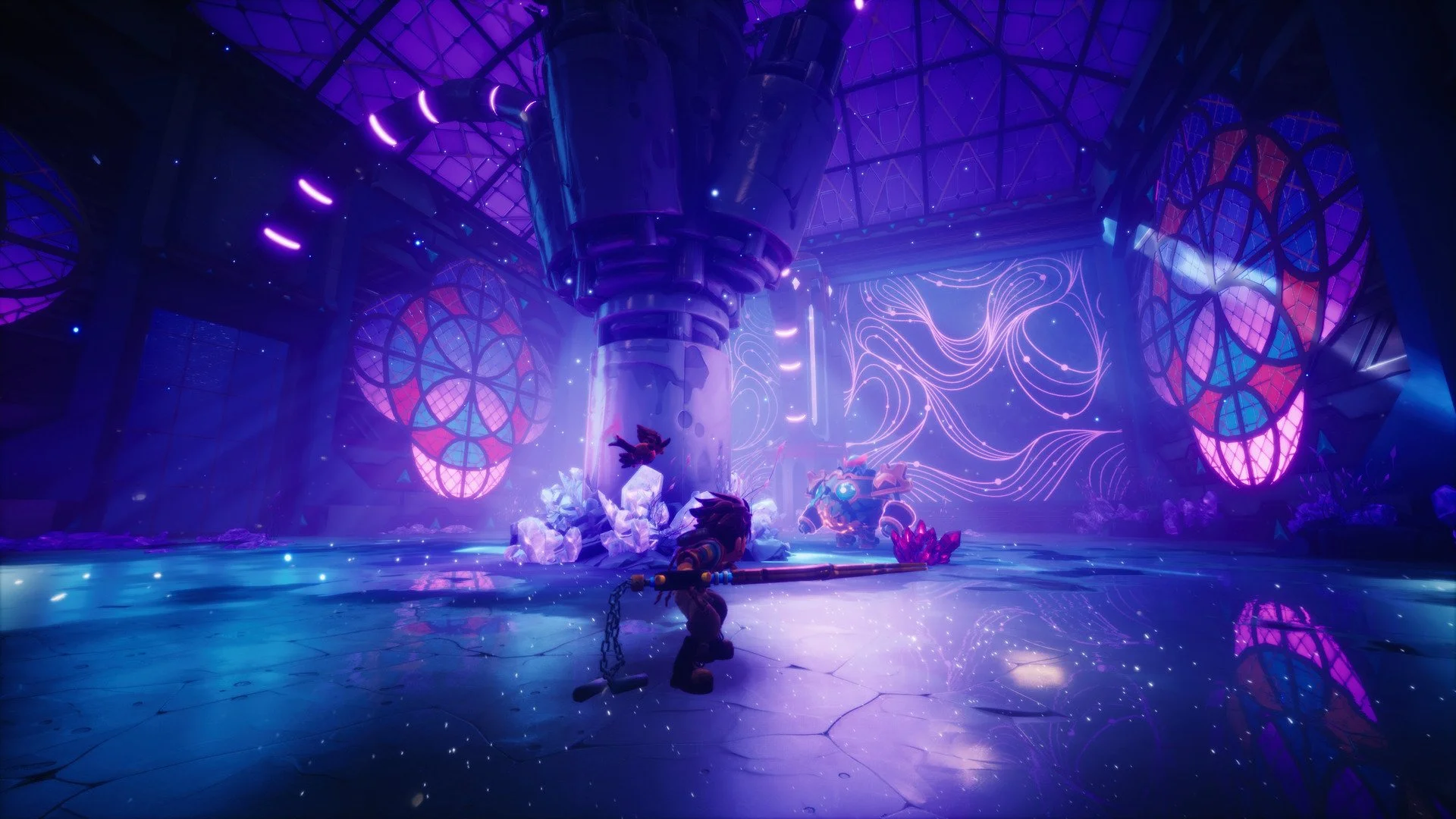
To describe Duskfade’s combat in a word: confused. Creatures swarm in whenever Zirian approaches an arena-like space, and it feels like whenever the Heartless pop into battle in Kingdom Hearts. However, the pacing is much different. In my experience, enemies liked to paint targets on my back and constantly shoot projectiles, making me dodge roll around to avoid them. This may sound like combat is supposed to be slower paced and methodical, but the enemies are still weak enough to be beaten by a couple sword combos to the face. They don’t provide the kind of challenge that makes staying on the defensive feel worth it. On default difficulty, Zirian can only take a few hits before he’s near death, and the dodge roll doesn’t provide enough invincibility frames to safely jump out of combat in tight situations. There are a couple flasks Zirian can drink to regain life, but with such a small health pool to begin with, he can be back at death’s door in seconds.
Imagine playing a Mario game where every fight with a Goomba was dangerous enough to require the mental strategy of a regular Dark Souls encounter, but still weak enough to be done in with a jump to the head. With constant fireballs and Bullet Bills flying around. That’s what Duskfade’s combat kind of feels like. Despite being this Sora-like sword guy in the story, Zirian feels weak at every turn in the heat of battle. His special attacks barely add anything meaningful to his combat. Later, when the game introduces an enemy type meant to be finished off with a specific special attack, I was equal parts intrigued that there was finally a new wrinkle in battle, and horrified because this move can only be triggered once before a cooldown, and it was faster to beat a swarm of these enemies once, wait for them to heal, and beat them a second time to finish them off for good. The new move wasn’t even needed in the end!
Now, you may think that boss battles are where this slower approach to combat makes the most sense, and you may conceptually be correct, but it doesn’t matter in practice. Most bosses feature the same strategy: fight until you take a quarter of their health, then do a platforming challenge the boss has created in a state of invincibility to flip some switch that allows you to attack them again, and repeat until it’s dead. Oh, and if you fall or take too long during the challenges, Zirian will start taking continuous damage until he’s dead, flasks be damned. At first it was fine, but after seeing this strategy four, five, six times, it ground me down until I was more than annoyed. When I did the same routine to the final boss only to find there was a second form, I’d had enough. I set the difficulty down a notch for the majority of the fight and jacked it back up in time to deliver the finishing blow. I was no longer interested in any kind of challenge the game had to offer.
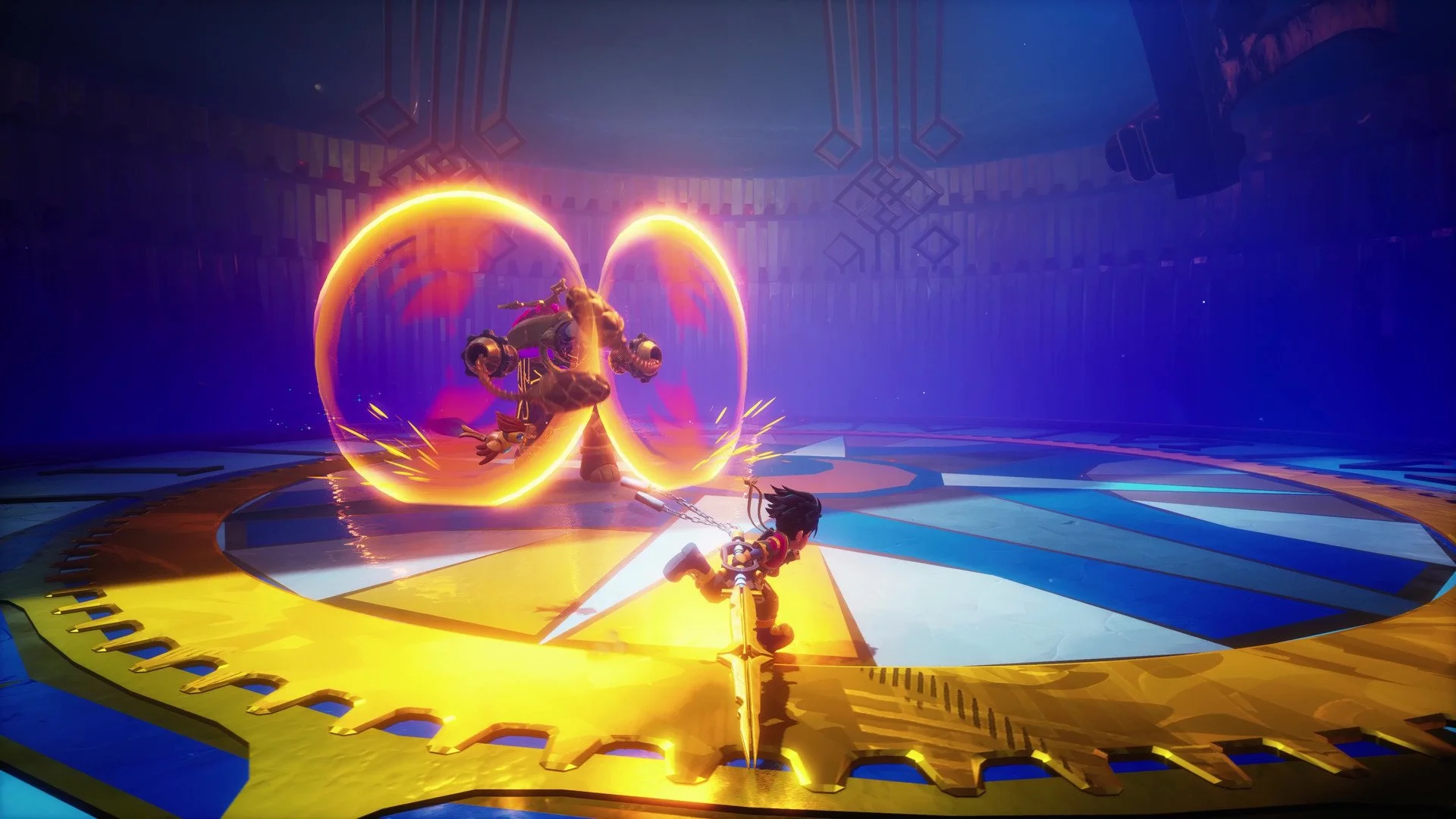
There are other lingering issues, too. The structure of the game implies four gold chains must be taken down in four different biomes: your volcanoes, deserts, etc. The paths to get to these places, though, often felt aimless, and the lack of a minimap got me turned around a number of times. Getting a full sense of Tearfeld as you dash through the in-between places is cool in concept, but whether it was a mine, a flooded city, or even a small town on the edge of the wilderness, the artifice wore thin and it felt like I was just going through these places to get through them. There’s something to be said for launching the player right into the action wherever possible that Duskfade can learn from.
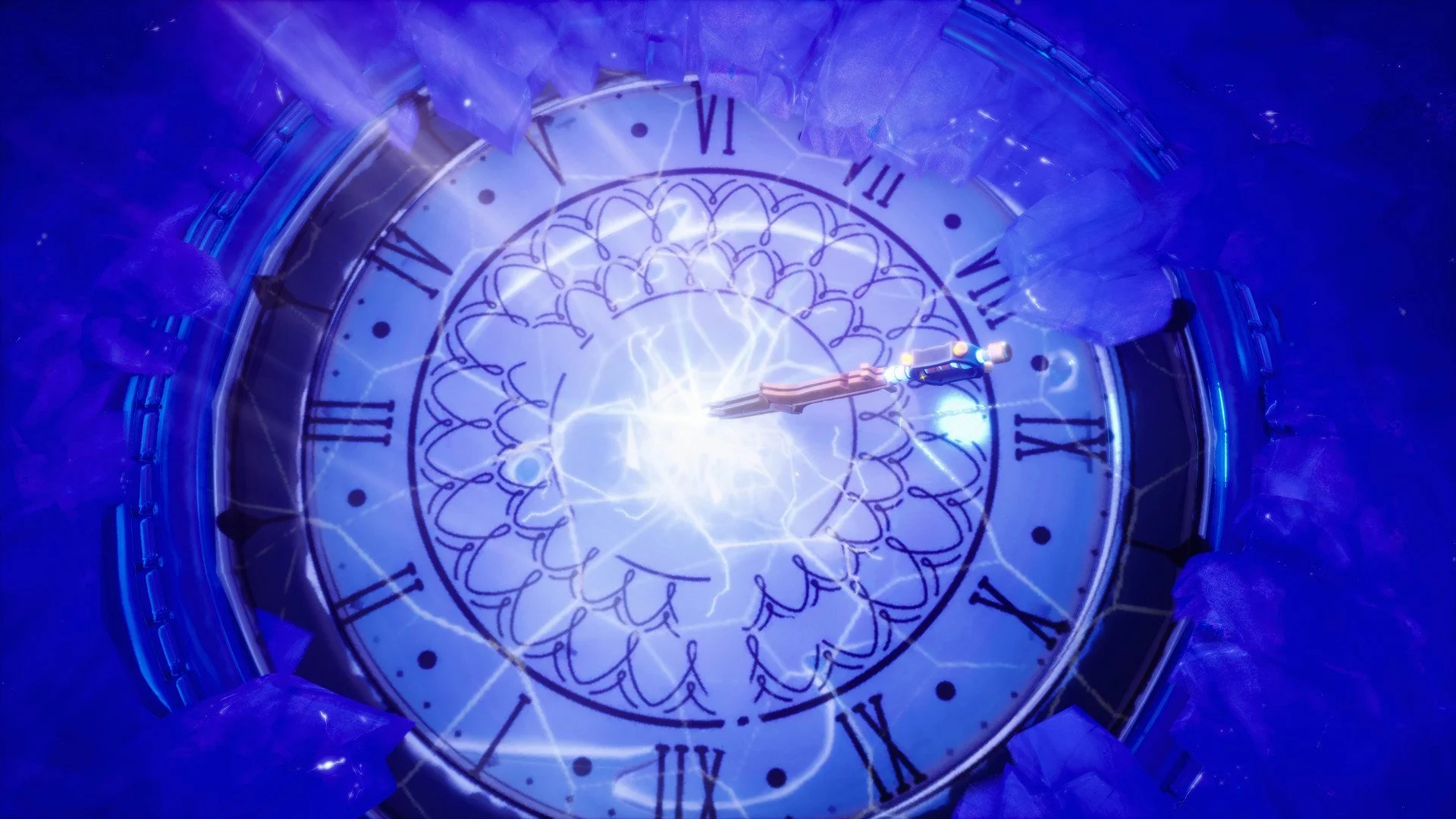
To be clear: there are things to like about Duskfade. First is aesthetic appeal: the colour scheme, the cutscene direction, and the thematic use of clocks and crystals in every corner of the game all work to give it a nice, if somewhat derivative, art style. Zirian’s arc, while not the main focus of the story, gave me something to like in him that I constantly miss in Sora: a reason to care. I also liked the idea of chasing these gold chains across Tearfeld like a little kid chasing after a rainbow. The music by Rafa del Olmo is pretty great too — the Tick Town theme in particular really seems to nail what makes a good hometown theme in a fantasy setting in a way I struggle to describe. I keep going back to listen to it outside of the game.
However gorgeous Duskfade may be, however nice it may sound, however much of a loveable idiot Zirian may act like on his journey of growing emotional intelligence, what I have to contend with at the end of the day is that this game isn’t that much fun to play. What moments I enjoyed while platforming must be weighed against the unyielding banality of the combat. Zirian never feels strong enough to match the bark of his macho persona. Traversal without a map can be confusing. The boss fights may be the worst offender of all if you like games that present creative solutions to intriguing problems: in these moments, Duskfade has neither.
Despite all of this, if Duskfade still appeals because of that Twilight Town–like aesthetic, I want you to think hard for a couple minutes. Maybe watching trailers and gameplay videos could sate your appetite. Or, if a friend has it, you can boot it up together to see how it hits you. If it still won’t leave your mind, then I suppose you should give it a shot on your own, but I would just as easily say breaking the PS2 out of storage and booting up any of the Kingdom Hearts games would be a better time. You might find more happiness there instead.
Duskfade was played on Steam Deck using a code provided by the publisher.
![[PATREON UNLOCK] Update Patch - August 2026](https://images.squarespace-cdn.com/content/v1/5caf2dea93a63238c9069ba4/1789328240713-UU4AWTFR47JK3JY62WQ3/Update+Patch+Week+0.jpg)