Review | Space Warlord Baby Trading Simulator - I Shorted A Baby (And It Felt So Good)
Content warning: Writing about Space Warlord Baby Trading Simulator means describing some pretty twisted things happening to the most defenseless beings, the kind of stuff that would put you on a watchlist if it were real. In this game, babies will die in a multitude of excruciatingly violent ways. They will get addicted to drugs. They will be bullied. They will bully others. They will become complicit in war crimes. They will murder. They will commit suicide. And that’s ok. In the real world, babies are our future, the universal symbol of innocence, the possibility of hope. In this game, they are just a bridge for massive profit. If any of this upsets you, please consider skipping this review and talking to someone you trust.
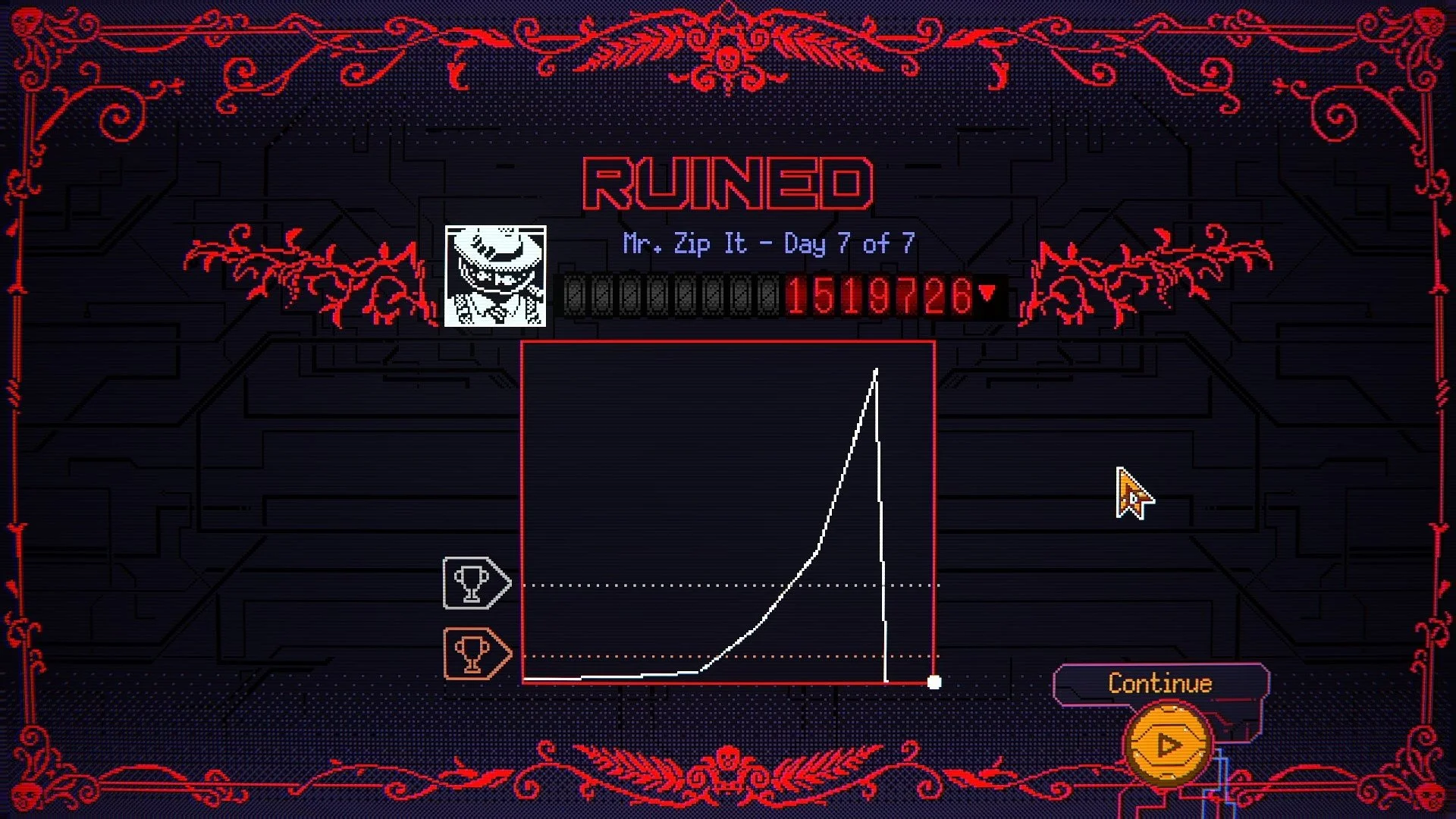
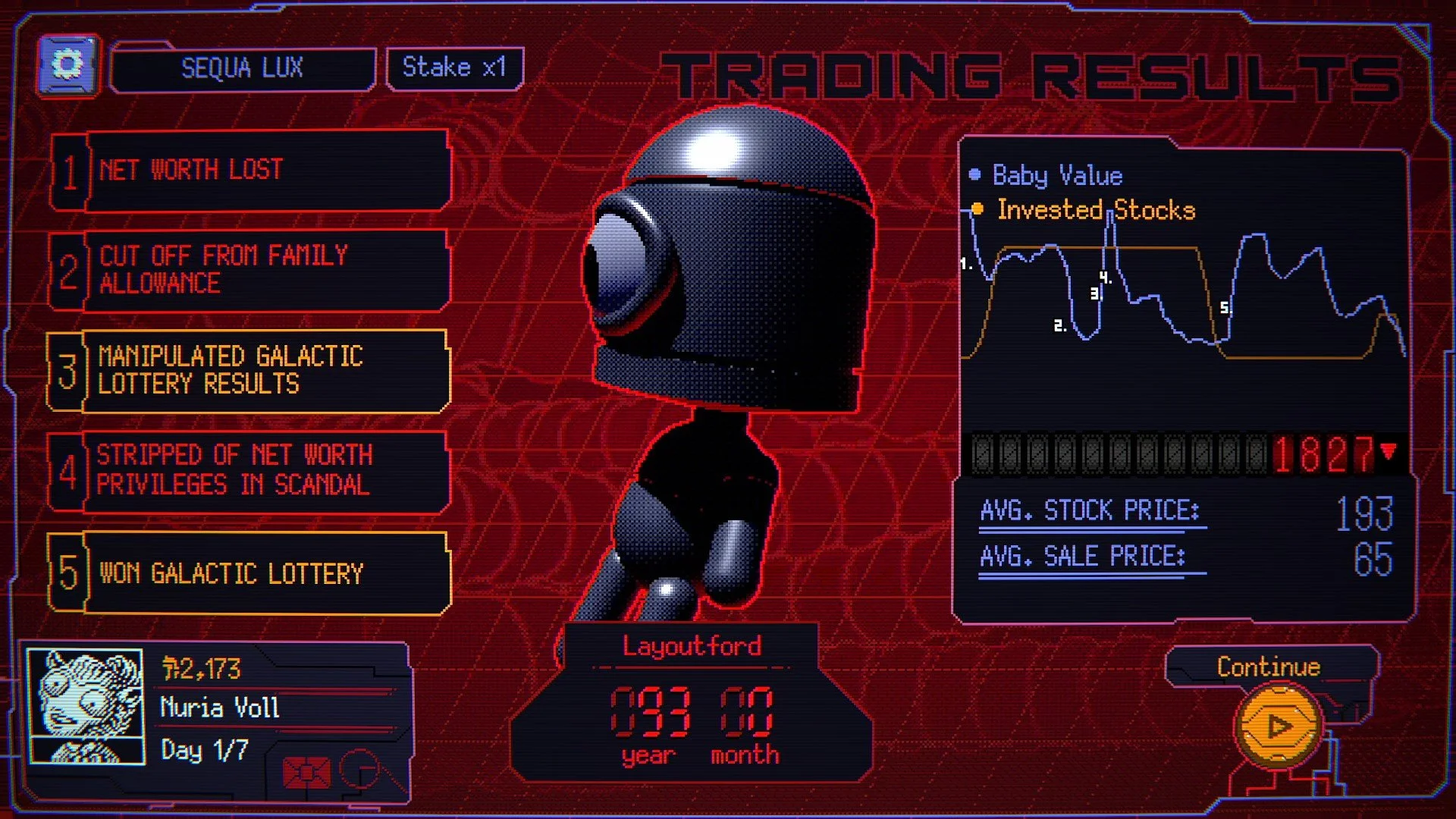
My baby has led an illustrious life. It was field-stripping assault rifles at a tender age, had a fruitful military career, and quickly rose in rank. It became a general, approved the deployment of chemical warfare, carried out airstrikes, but sadly died when it was playing with its own gun and accidentally shot itself in the face. It made me so much money.
I am not talking about a real baby, but an intergalactic infant whose value fluctuated in the free, open stock market. In Space Warlord Baby Trading Simulator, the latest oddball game from the clearly-not-ok developers over at Strange Scaffold, many universal woes are (mostly) solved by the rapid advancement of predictive technology. War isn’t as prevalent, extraterrestrials are no longer fighting as much for resources and supremacy, and a new era of relative peace and prosperity has been brokered for the galaxy. But what will poor investors do? Without anything to speculate on, how can the speculative market make any money?! There’s one thing all the fancy predictive tech can’t pinpoint: the rich life of newborns.
You wouldn’t expect a game mostly composed of static images, 3D models, graphs swinging wildly with the whims of the market, and text-boxes proclaiming the latest misstep or achievement of your baby’s procedurally-generated life to be so engrossing. Yet, Space Warlord Baby Trading Simulator hooked me completely, and this is coming from someone who visibly grimaces when someone utters the words “shareholder value” and wants to die when someone’s financial advice is to “invest in some stocks”. Strange Scaffold manages to sublimate the dopamine rush of seeing a number go up into an unexpectedly enthralling stock-market simulator, that may have me replaying through incoming market crashes and “once-in-a-lifetime” economic depressions for years to come.
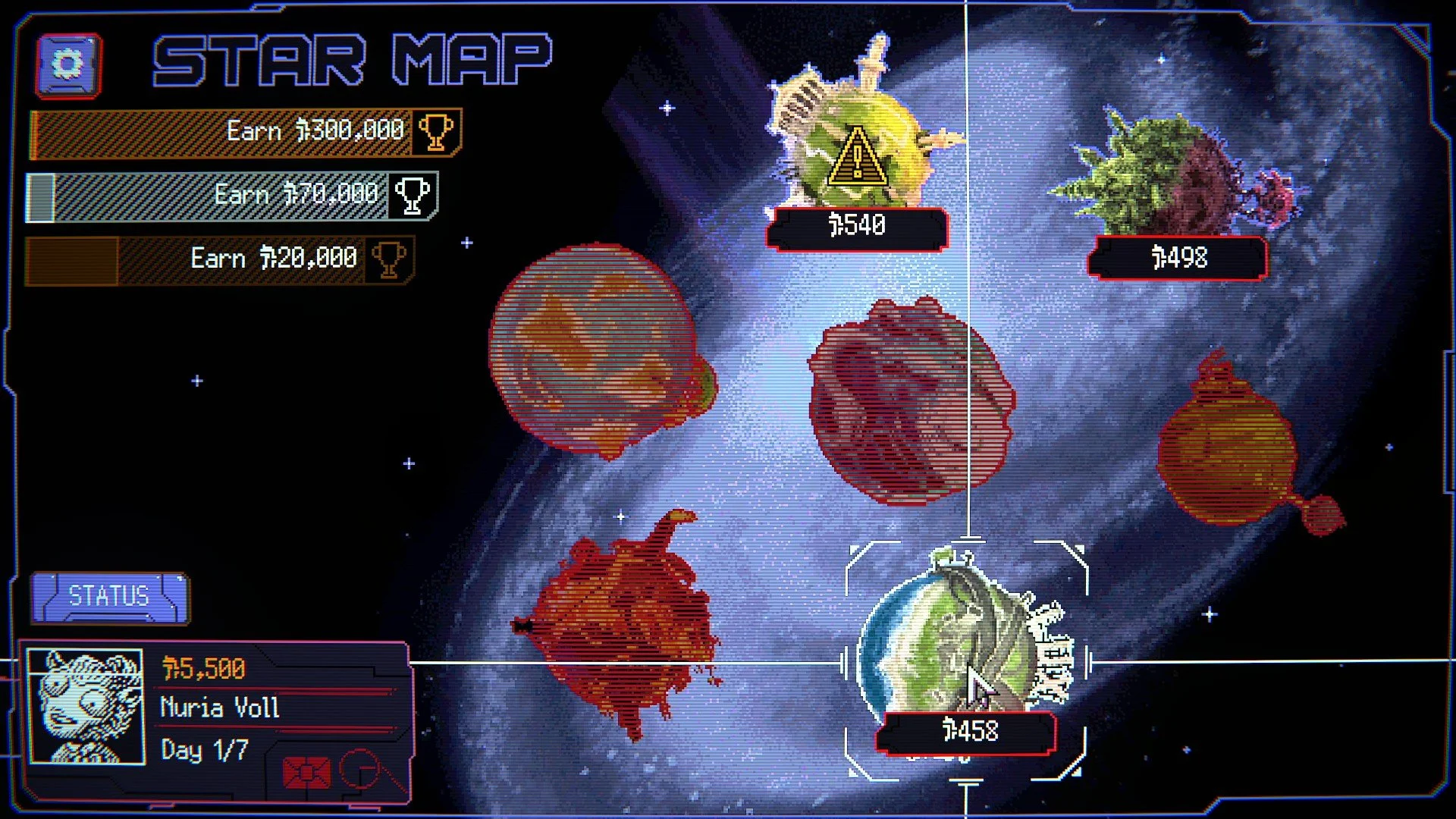
Space Warlord Baby Trading Simulator is an overstimulating bundle of joy. Despite the smorgasbord of information always burned into your retinas, the gameplay loop is surprisingly accessible and fosters ease-of-play. First, pick a character: these are the different campaigns at your disposal. You start with few, with more unlocking as you beat the campaigns. You’ll begin with the tutorial, which eases you into the game. Later, you’ll find yourself playing as a disgraced former agent for child talent, whose reputation is so pervasive that killer loan sharks and scummy consultants refuse to work with him; or a legislator who, due to a legal loophole, participates in the baby market via proxy, so selling or buying stock takes longer; or a low-level finance grunt who has been asked to make his company loads of money with a limited stock portfolio. Each campaign requires you to make a certain amount of money in a limited number of days.
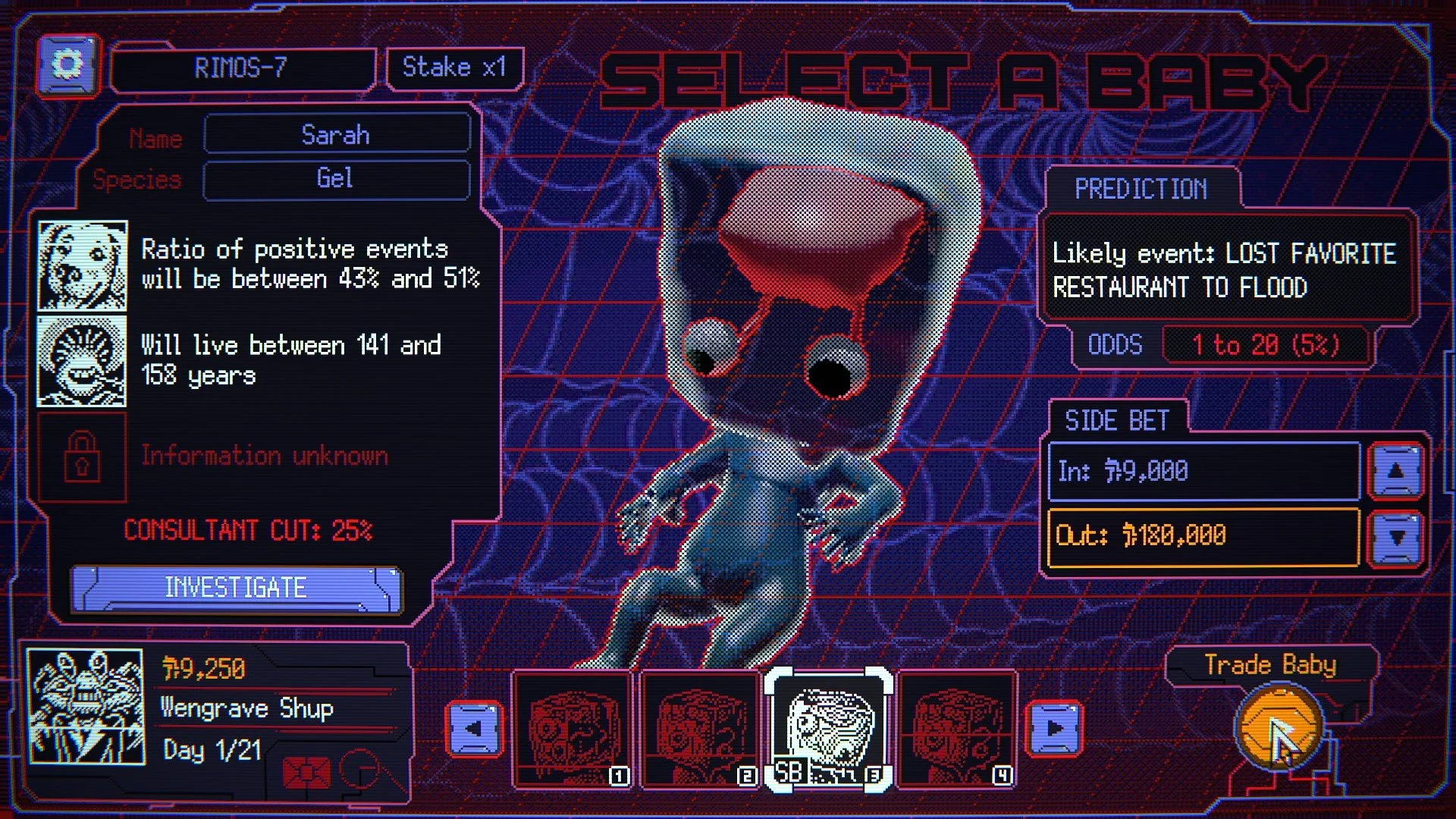
Each day, you pick a planet to trade on, pay the entry fee, choose the stakes, pick your baby, optionally hire consultants (who take a percentage cut of your profit) to get information such as the baby’s lifespan or average value, and make a side bet or two if you want. Then you’re off to the races — the markets are open!
The formula to victory is deviously simple: buy when the stock value is low and sell when it’s high. But being able to predict the highest of highs, the lowest of lows, and selling all your stock away before your baby inevitably dies is where the challenge lies. Luck is still a major factor, since the babies can have varied lives. Maybe you’ll buy stocks at the very beginning, soon as the bell rings, selling them off slowly as the baby rises in value when it becomes a famous cult member and makes TV appearances. Or maybe you’ll wait and see if the value drops when the baby falls into magma, so you can buy some stock before its value astronomically rises once it gets its life together, then selling it all off for maximum profit.
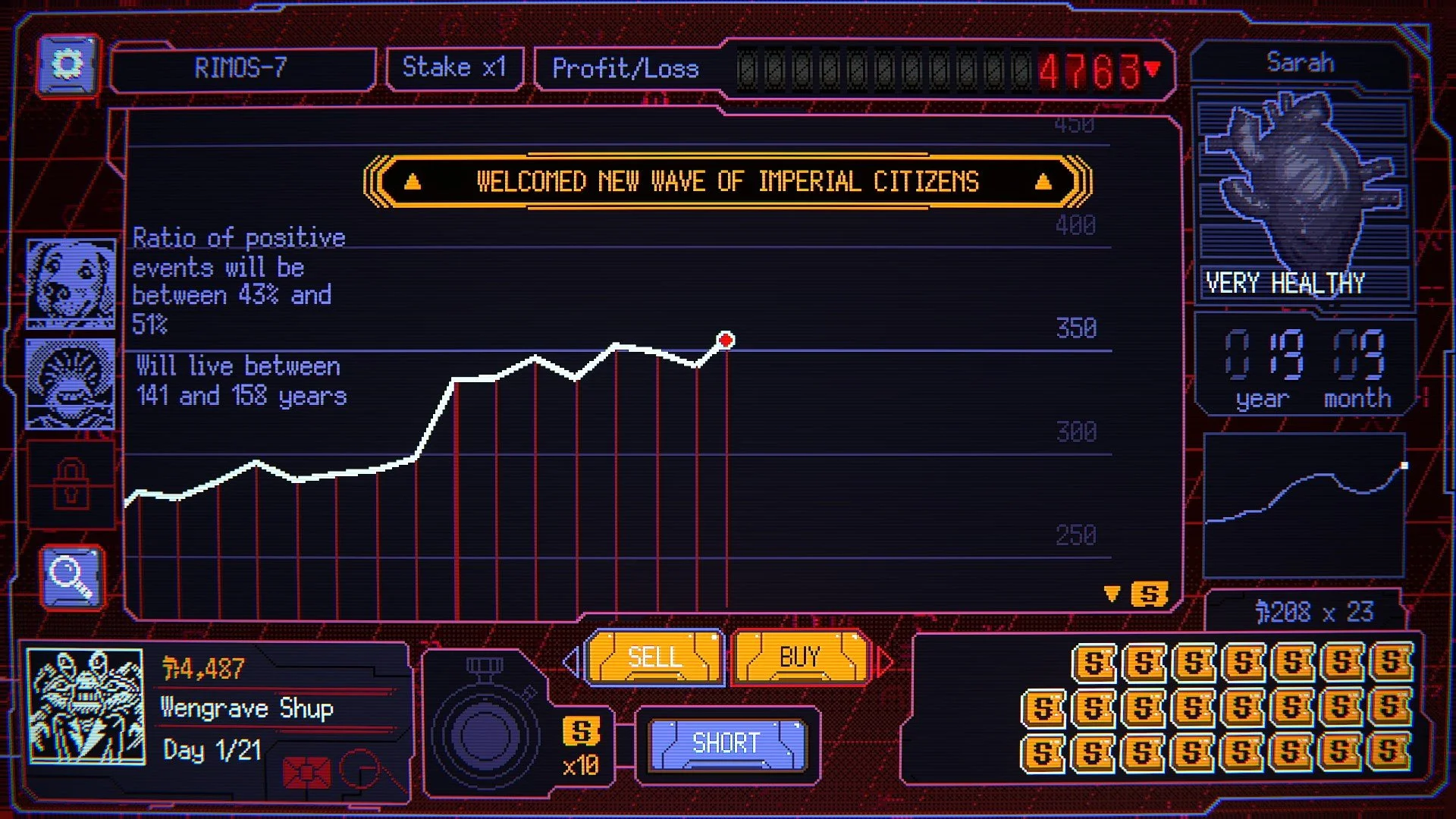
The alluring part of the game comes from holding on to stock and selling it all when it’s reached peak value, or the defeating pain of investing so much in a baby only for it to die via choking on orbital pollution without ever making you any money. The real excitement, the moments that made my heart skip a beat, comes from a phrase I never expected to say in my adult life, a quote so utterly perfect that it succinctly sums up the mechanical and thematic goals of SWBTS: you can, indeed (and say it with me now) SHORT! THAT!! BABY!!!
If at any point you believe a baby is about to crash, you can activate a short without necessarily owning any stock. If the value keeps dropping, and you wait the allotted time until you’re allowed to cash out, you gain the difference of value between how high the baby stock was when you activated the short and where it has fallen. If it goes above the original value of when you started the short then you have to pay the difference, and, trust me, the easiest way to lose a campaign is by activating a horrible short.
Shorting a baby shares the same feelings of bravado and gusto as going All In on a poker game, of activating your ultimate attack in an RPG with a 50/50 hit rate, of putting your faith in the luck of the draw. Whenever I started a short, I would celebrate anything shitty that happened to my baby because it was about to make me so much money. This is the type of game that will make you go: “Oh no! My baby got addicted to drugs!” followed by a later session where you will exclaim: “Yes! My baby got addicted to drugs!” because your baby’s newfound vice will certainly net you so many credits.
The game is, at first glance, a superficial experience, another game of luck and mild strategy that takes advantage of your dopamine receptors activating when Big Number Go Up, but I would argue that Space Warlord Baby Trading Simulator, like all Strange Scaffold games, is grasping at some subtle and explicit Capital-T Truths about our world, despite the utter ridiculousness of its premise.
The dark humour was a strong selling point to me, but Space Warlord Baby Trading Simulator also forced me to ponder some dark thoughts. While the balls-to-the-wall approach of its premise is so ridiculous it feels alienated from our lived reality, I could not get certain parallels to the real world out of my head. This banshee, this ghost that haunts us, the stock market, rules so much of our economic reality, making oligarchs guaranteed money while the rest of us sop up their change. It is not surprising that a game like this came out at the time it did. In a time dominated by speculative markets, accessible at our very fingertips (no) thanks to apps like Kalshi and Polymarket.
When I told my friend, a recovering Kalshi addict, about the premise of the game, we joked and laughed about it, we played a bit and celebrated when the baby had a good life, we cheered when his life started going downhill and we activated an amazing short. A joke they made cut to the core of the maliciousness behind the whole affair: “You can already short a baby on Kalshi.”
Space Warlord Baby Trading Simulator is an obviously satirical future — it would be insane to believe we will soon be putting our life savings on trading baby stock on the market. While we are not there yet, our world is already corrupted by the machinations of capitalist systems, and we can already bet on death and destruction from our computers and smartphones.
The game doesn’t tackle these topics head-on, nor does it have to: it is giving you exactly what you expect from the title alone. But the fact it can lead to such reflections, that it can inflict anxiety and complicated thoughts on moral relativism, elevates it from the simple experience it initially presents. You are here to bet on digital babies, and let us all hope we can only short babies and celebrate their downfalls on a silly video game, and that these exaggerated expressions of capitalism never become true.
Space Warlord Baby Trading Simulator was played on PC with a code provided by the publisher.