Review | Curse of Resthaven - Time Is Always On My Side
It’s complicated to speak about the Curse of Resthaven without weakening the game’s strongest aspects. So I’m starting this review with a request: if you’re even remotely intrigued by this title, give the demo a try. If you’re hooked in that first hour, play the game; you won’t regret it. Come back to this article afterwards; I’ll wait.
With that said, there will be some spoilers in this review, but I will not spoil the ending(s). Curse of Resthaven is a surprising indie gem that does a lot more than I expected, at times to the game’s own detriment. The highs and narrative climaxes, though, are unforgettable, and the ending is phenomenal, which makes this review the toughest I’ve written this year.
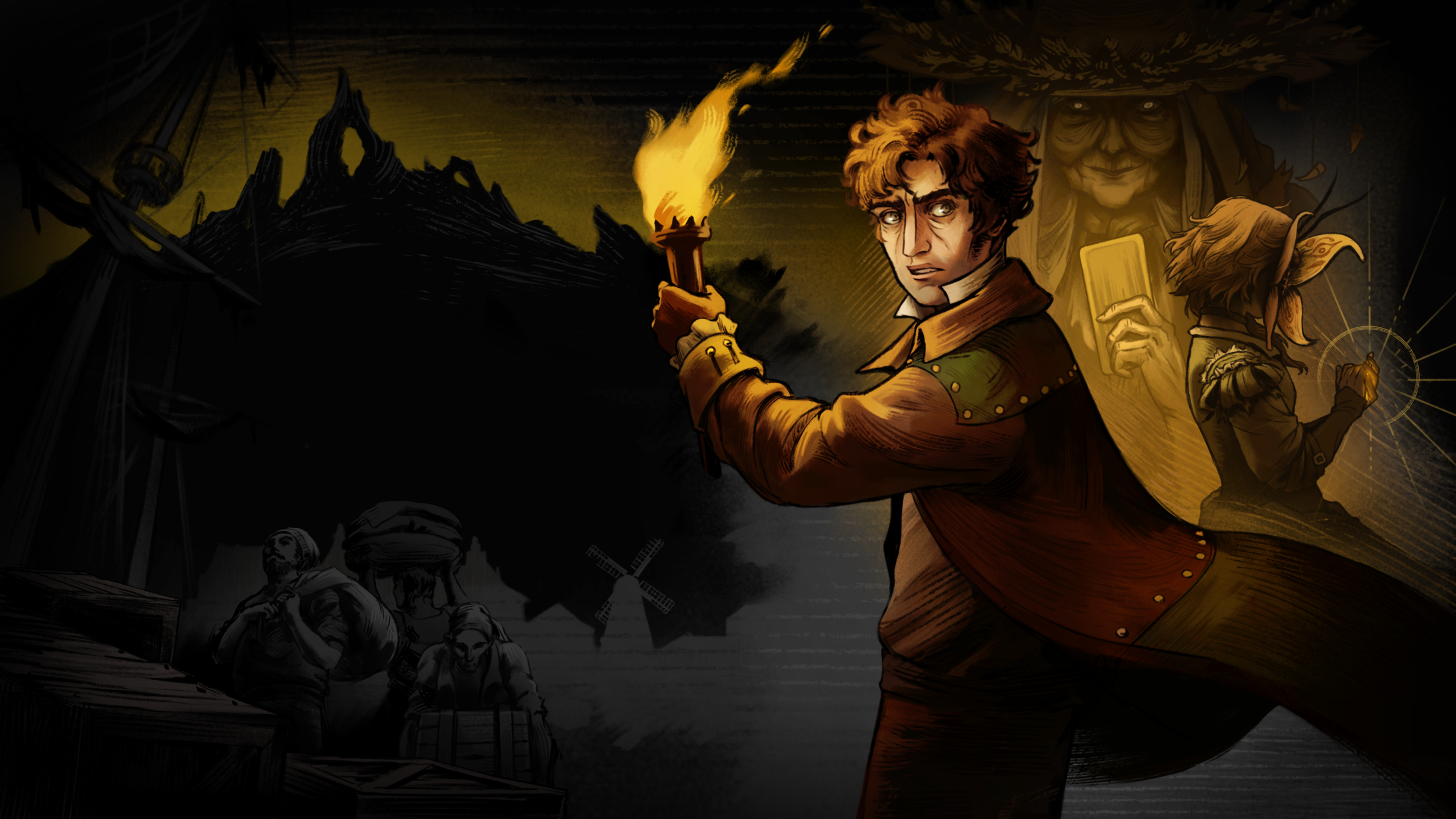
You’re playing as Ambrose, the new governor of the colony of Resthaven. You’re on a boat heading to the island to find your niece, who stopped answering your letters half a year ago. When you’re getting close, the boat takes a sudden turn, and you fall into the water, losing your sword, your niece’s letters, your boots, and your consciousness. Before you black out, you see a deformed face rising from the ocean’s depths.
As you, the player, listen to this intro, so does Sweeney, the dockmaster. Ambrose is sharing his tale with him as the first thing he does on Resthaven, before being summoned by Garet, his valet. Garet shows Ambrose around the town, which, despite being home to a modest number of people, appears abandoned and decrepit. He meets displeased traders and uptight citizens. He hears rumours about the previous governor, who died recently. As he heads to his Manor to rest before getting to work, he interrupts Garet’s discussion with the deceased governor’s pregnant widow. Garet insists that he gave her more than enough time to sort out her situation, but Evelynn calls him a monster for trying to kick out a pregnant widow. The decision lies with you, the player. Can she stay until she finds a solution, given Ambrose is a bachelor, or will you demand that she leave?
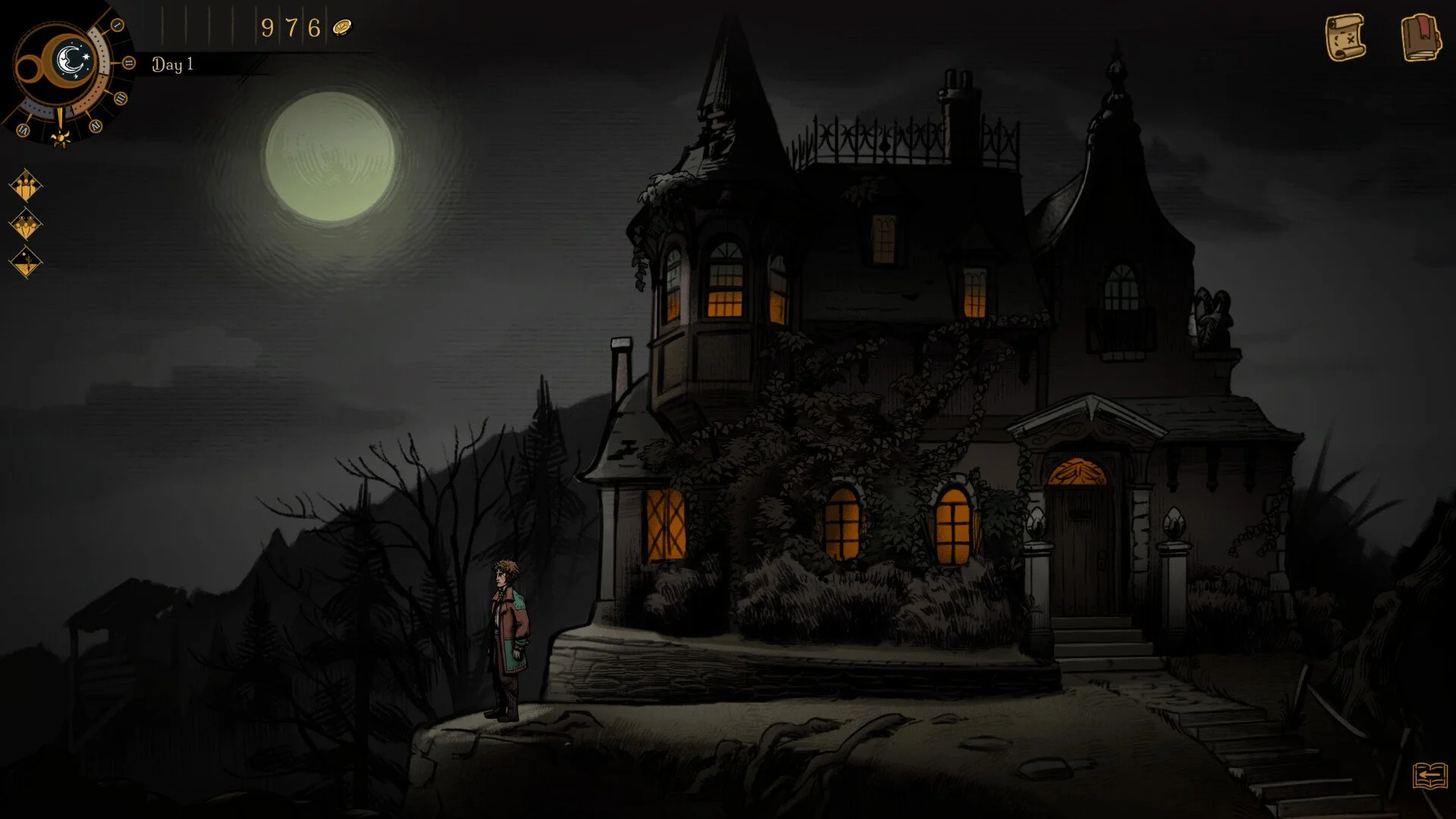
In its opening 15 to 30 minutes, Curse of Resthaven sets the table with a diverse array of dishes. Garet shows you the town and its traders, who give you items for free every day as tax. You can invest money to upgrade their stores to unlock better items and to get the traders to talk to you. The items you receive for free or purchase are used to trade at the docks with visiting merchants, your main way of financing the colony. Besides investing that money into the shops, you spend it to head out of the town on Expeditions and to hire people to come with you. While you don’t know it yet, Expeditions play out much like the encounter which ended with you unconscious in the ocean: you read the text and pick cards (which can be items or actions) to progress. The conversation with Evelynn shows you the importance of paying attention to dialogue and the inevitable reality of tough choices.
Hilltop Studios succeeds in interweaving so many disparate parts into a coherent loop that flows naturally. You need to do a bit of everything to succeed and progress, and you can only do a bit of it every day. Time is a resource that is consumed by the main gameplay actions. You can repeat them as much as you want, as long as you have the time left for it, with the exception of Expeditions, which can only be undertaken once per day. NPCs have routines and shops have working hours. Upgrades that you invest in only happen the day after you pay. The magic is how intuitively all these loops connect to each other.
You start off each day by collecting your free items from the traders. You can then sell them to the merchants at the docks to get some money. That money can be used to go on an Expedition. After a handful of those, you get your first big clue regarding Amalia, your missing niece. What you discover on those Expeditions is added as pieces of puzzles to be used in Questioning, your mechanical way of getting narrative information out of the residents of Resthaven. No NPC knows about every topic, and you can only ask questions about three topics per Questioning, so you need to pay attention to what the characters say, where they are, and whose shop is next to theirs. Soon enough, you’ll have a full routine down. There never is enough time each day, so you keep in mind what you leave to do during the next 24 hours. You’re slowly learning more about Amalia’s whereabouts and who can know things you don’t, but you’re not sure who’s telling the truth, who’s suspicious, who’s the villain. As you reach day six, everything changes.
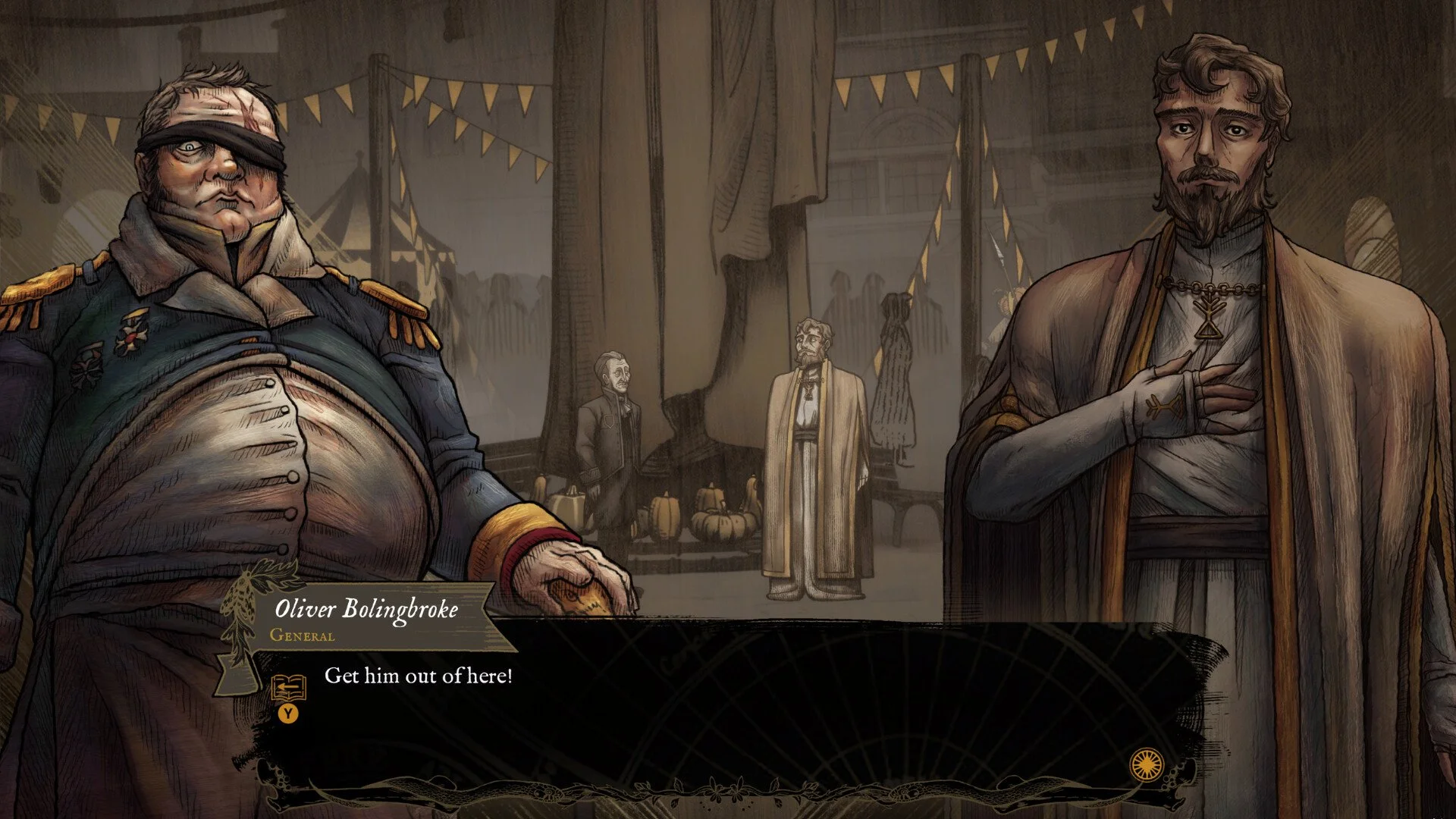
Garet, your valet, is missing from the manor for the first time in the game. He left a letter saying that he is preparing for Absolution Day, an important holiday. You head out looking for him, and the town seems weird. The colours are off, and the characters you meet are wrong. Their portraits have darker tones, and they’re filled with moths, which appear to be taking over the town. You reach the town square, where they’re about to unveil a new statue to celebrate the holiday. They pull off the sheet, and a swarm of moths flies out. Gigantic aberrations rise from the sea and take over the town, killing everyone in it, including you. You wake up in some other dimension and meet The Goddess. These six days were a ruse. Beyond everything it's shown so far, Curse of Resthaven is a time-loop roguelite.
The Goddess takes you back to the day of your arrival in Resthaven, and you don’t lose everything. Ambrose remembers the first week he spent in the Colony; the traders’ shops retain their upgrades, you keep your relationships with the Merchants (which makes it easier for you to barter and lets you know what items they prefer), and some of the tasks you’ve done in your first loop can now be completed by Garet as errands. Ambrose is the only one who remembers, though, for the most part. With the exception of the witchy Agata and the literal ghost on the outskirts of town, characters act as if you’re mad when you say that the town will be destroyed at the end of the week. But Ambrose remembers, and so do you.
Like any good roguelite, Curse of Resthaven rewards your knowledge in subsequent runs. You begin to know the characters and their relationships. Sweeney, the dockmaster, doesn’t know much about the people on the Outskirts, but he is familiar with the General, an elusive character at the start of the game. He frequents the tavern and knows about the other characters who are usually there, too. The Blacksmith brothers will tell you all about Dr. Hastings and the Old Man, their outskirts neighbours. You learn which questions to ask of whom, where you need to be on a certain day for a crucial event to happen, or to learn something new. You get better at bartering with Merchants, and you become rich. You unveil the requirements of your Expeditions and start steadily completing them all. And, of course, you keep digging into what happened to Amalia, loop after loop.
After a few, or after a lot, you finally find out what happened to your niece. You reach the point of no return, and Ambrose heads out to rescue Amalia. The game ends, along with its second ruse. You can stop here, if you want, but that’d be the same as leaving Nier: Automata behind after the first credit roll. This is one timeline, The Goddess tells you, but there is another. Perhaps that one will be better; care to find out? Here is where Curse of Resthaven blows your mind and, at times, spreads itself too thin. You start from day one again, but this isn’t a loop. You are at the actual start of the game. Not at the docks by Garet, but on the ship that first brought you to Resthaven. Your shops are all back to square one and, crucially, Ambrose doesn’t remember anything. You, the player, have the knowledge of the previous loops, but your character doesn’t. Hilltop Studios, thankfully, doesn’t ask you to redo everything. Some of the more lengthy side quests can be completed in a single step, but you need to repeat a lot. And this is where Curse of Resthaven temporarily lost me.
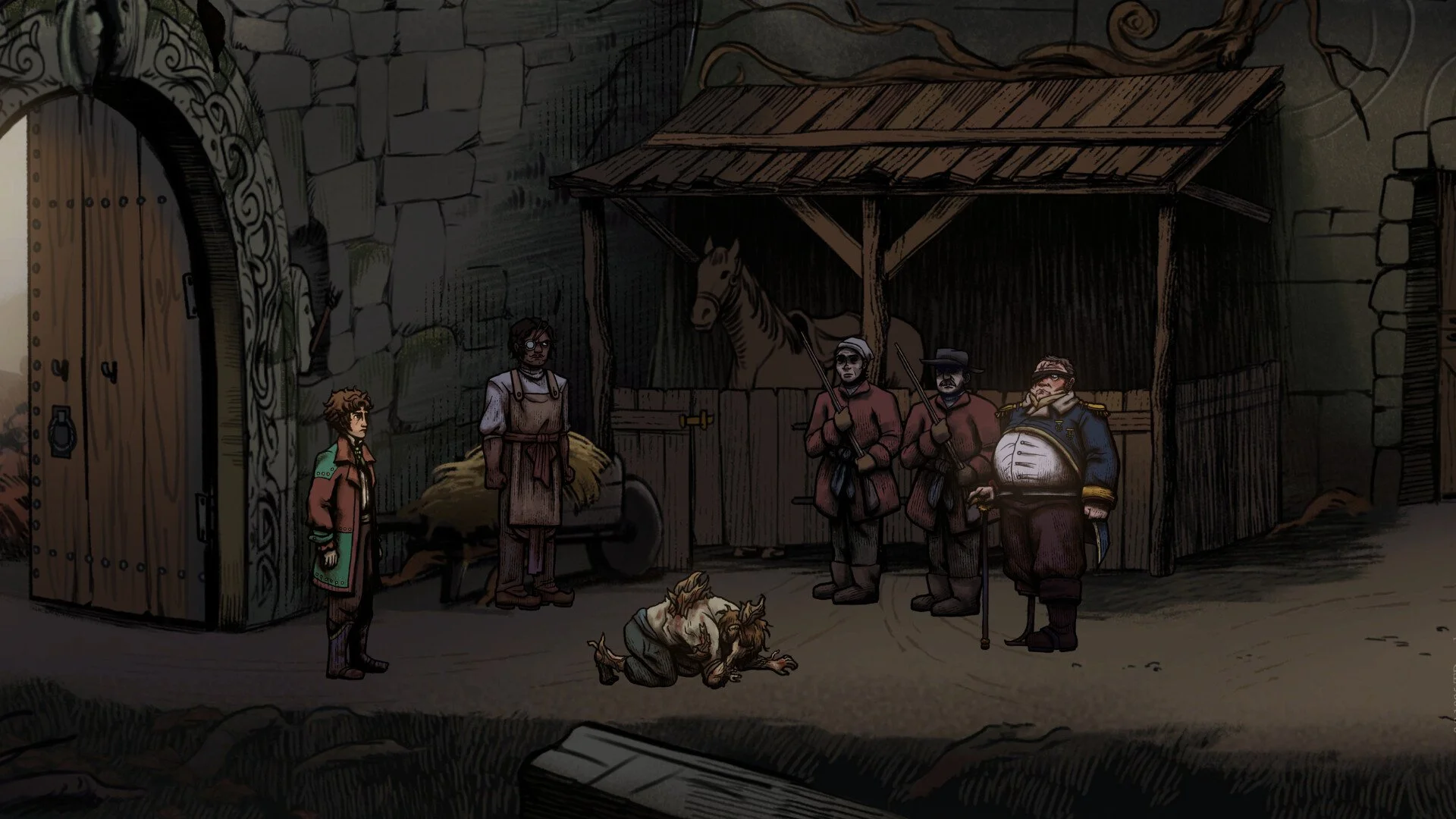
I am a sucker for time loops. I am an even bigger sucker for games that ask me to keep playing after the credits. If I want to know the real story, I crave those secret endings. I will never forget NieR: Automata, and I will always adore it. But, much like Yoko Taro’s masterpiece did in 2017, Curse of Resthaven starts off too slow in the second timeline. You are repeating too much. Too many dialogues are the same. The trading with Merchants starts to feel like a chore, and while there are some new Expeditions, those start repeating too. At this point, the core narrative was enticing me to move forward, as the rest of the game punished me for starting the second timeline right after finishing the first. I started skipping dialogue and skimming it instead, even though one of the best aspects of this game is that it is fully voiced, and wonderfully so, despite being an indie project. Every once in a while, a new dialogue popped up, a character acted differently, a new event happened on day three, even though it never had in my previous loops.
Once I neared the end of the second timeline, I was mesmerised again. What was the true ending, after all? And that’s when the other shoe drops, along with the game’s third ruse. There is a third timeline, the final one. That’s where the Ultimate Ending (as the game’s achievement calls it) lies. I considered dropping Curse of Resthaven when I started the third timeline. I had done the same things a dozen times by this point. I felt like I was as much stuck in a loop as poor Ambrose. He was hoping to save Amalia, and I was hoping to find where the Ultimate Ending was, where the climax I desperately yearned for was hiding. I ventured forth, regardless. I didn’t have fun. I min-maxed the fun out of the game. By this point, I was only trading during the first two days of each loop, accruing enough money to fund everything else. I didn’t max any Traders, and I only Questioned characters that were saying new things. I skipped through Expeditions unless they seemed interesting. I blasted through this third timeline in a way that made me feel guilty somehow, but I felt like this was a design flaw. You can’t ask a player to repeat things this many times unless they’re extremely engaging to do, and none of the tasks in this game are that besides the main narrative and the new dialogue, which became rarer every run.
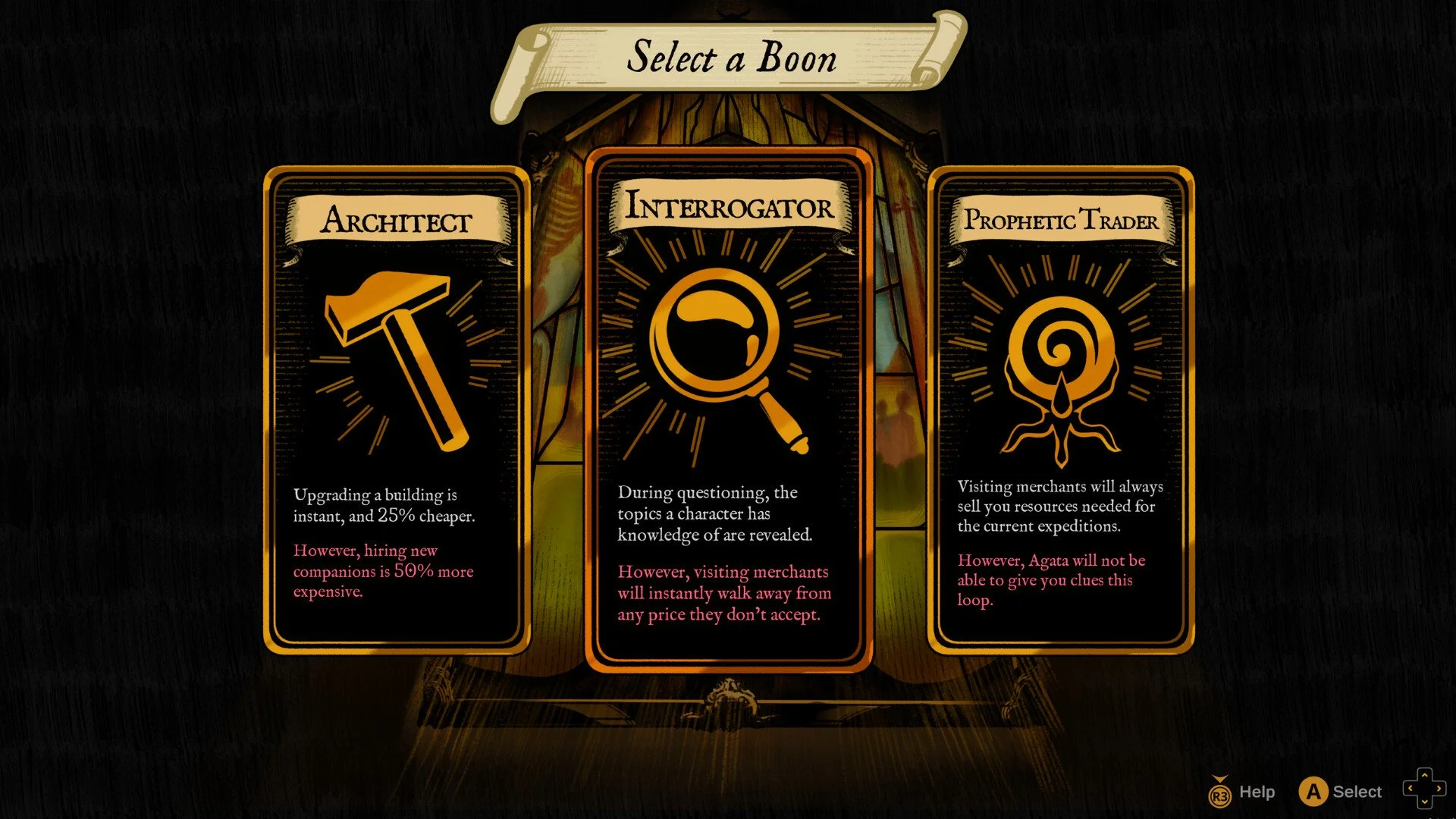
Despite how much this irked me, I made it to the finale; I finished the third timeline and achieved the Ultimate Ending and… absolutely loved it. Everything made sense in retrospect. Every character became richer, every dialogue more nuanced, every change and new detail added in each timeline took on different meanings. Curse of Resthaven is a Beanboozled sandwich. You know, those jelly beans that can either taste amazing or like literal burnt rubber? Its first timeline is one of the best narrative roguelites I’ve played, both mechanically and narratively. The second and most of the third timelines – the game’s middle – are an overly protracted slog, detrimental to the experience in most ways. Yet its finale is one of the best out of any game out there; it emotionally impacted me in a way few games have done. And it wouldn’t have worked if it wasn’t for the three-timeline setup and everything that came prior.
Curse of Resthaven is, undoubtedly, worth playing for fans of the detective-narrative genre. Even if you stop at the end of the first timeline, you’ll have gotten your money’s worth. If you give up midway through the second or third timeline, you will still have enjoyed most of your experience. And if you achieve the Ultimate Ending (which only 8.8% of Steam players have, compared to 39% who completed the first timeline), this will be one of your best games of 2026. I don’t know how I could make this game better. Hilltop Studios likely didn’t, either. But I am glad they made it, and I’ll be first in line waiting for what they create next.
Curse of Resthaven was played on PC using a code provided by the publisher.