Review | Fatekeeper - A Beautifully Janky Experience
Fatekeeper is one of the most bizarre games I’ve ever played. Its announcement blew me away with fantastic visuals, excellent animations, and the inclusion of an original language — all of this in a project created by a small indie team. Ten months have passed since the announcement, and Fatekeeper is now out in early access, and after two and a half hours with the game — which was enough to finish the currently available content — I can say it is a beautiful looking, if rough playing experience.
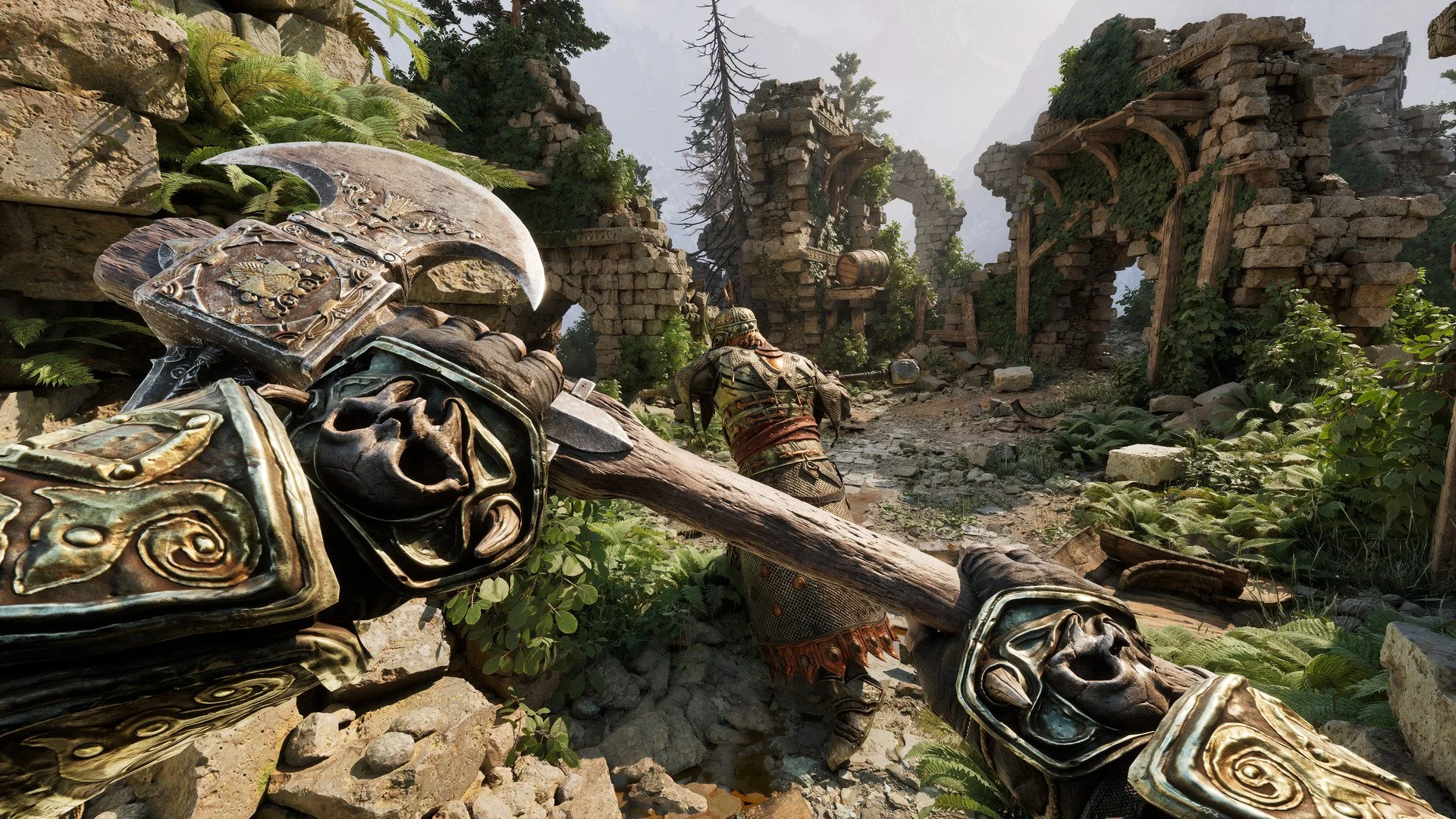
In November of 2025, developer Paraglacial employed twelve people. Despite this, the studio has created a world in which vegetation is dense and seemingly everywhere. The ray-traced global illumination seamlessly takes the player from fully sunlit areas to moody caves lit only by a couple of torches. Cutscene animations, especially how well lip flaps match to audio (a notable stumbling block in lower budget titles), are nearly flawless. Furthermore, Paraglacial managed to craft a gorgeous world completely devoid of stutters. It runs extremely smoothly even on the highest setting with “Epic Megalights” turned on (played on a PC with a Nvidia GeForce RTX 5070 Ti paired with an AMD Ryzen 7 7800X3D processor). AAA studios, please take note.
The top-tier visuals and the good voice acting (including a fully-voiced fictional language created for the game) create the illusion that you are playing a high budget, polished project, but that illusion crumbles as soon as you enter combat. This isn’t entirely negative, as Fatekeeper’s combat feels extremely floaty in an oddly satisfying way. Your attacks are slow and sluggish, but so are those of your enemies. Everything feels like it's unfolding underwater. Enemies seem relatively smart: they can react to your attacks, actively dodge your swings, and call out to one another in fear as you cut them down. But enemy behaviour, particularly in death, often feels unintentional. When struck by your massive greatsword, minor enemies fly away like ragdolls. However, heavier armoured ones sometimes defy gravity and fly much further than they logically should.
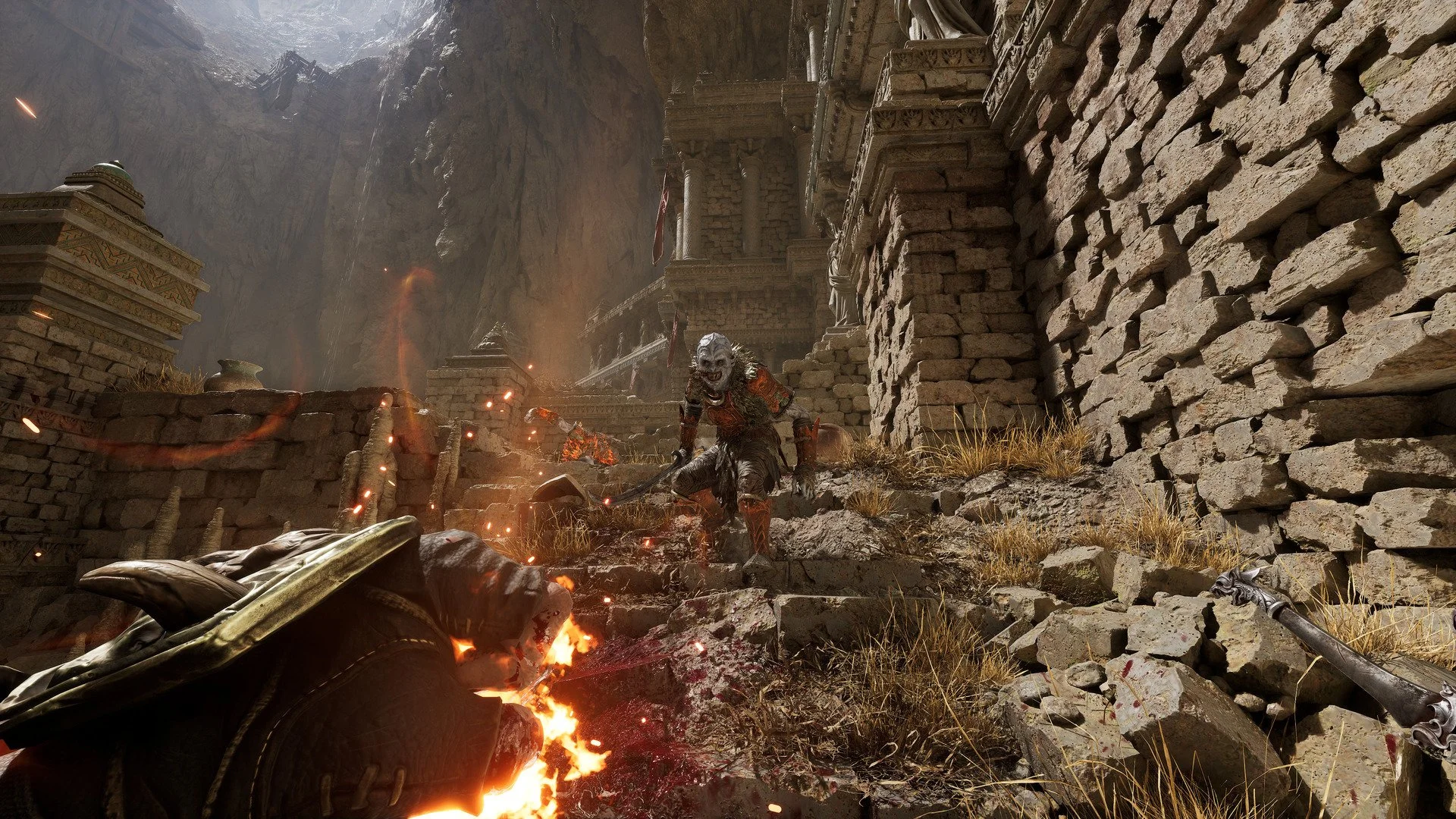
Spells have interesting interactions but feel unbalanced. The four spells are primarily based on elements — wind, fire, and ice — with the addition of telekinesis. I mainly used the ice one, as it felt impactful in most scenarios. Weaker enemies are instantly frozen, but even the stronger ones turn into icy statues of their former selves if you just blast them enough. The fire one is useful when you have oil to ignite, but both the wind and telekinesis spells are essentially useless versus any enemy that isn’t a minor grunt. In contrast to the greatsword swings, a gust of wind wouldn’t even knock over an enemy with a foot dangling over a ledge.
When levelled just right, Fatekeeper’s jankiness makes combat feel extremely fun, allowing you to cheese your way through battles. Unfortunately, boss fights place arbitrary restrictions on the player that limit said jankiness. The game’s current final boss has the ingredients of an excellent fight. It is a duel between you and the first sizeably bigger enemy than you. His attacks are similar to yours in their sheer weight, but he barely reacts to your attacks and shrugs off spells that aren’t fired rapidly. This boss fight is likely designed to encourage players to engage with the game’s alchemy system, which is taken almost whole-cloth from the Elder Scrolls series. In those games, particularly Oblivion, the alchemy system isn’t inherently interesting — you simply open a menu and combine scavenged ingredients to create potions — its brilliance comes from the ridiculous outcomes you can achieve, like brewing a potion that gives you infinite mana or a devilish concoction that makes you so fast that you can cover the map in a single jump. Fatekeeper includes a near carbon copy of the system, but removes the game-breaking outcomes. You can mix up to three ingredients (different ones, or three units of the same ingredient) to create a potion or weapon coating. Devoid of the mathematically questionable equations present in the Elder Scrolls games, Fatekeeper’s alchemy is an uninspired system that does little other than lower your enemy’s stats or raise your own. This is made worse by the fact that most of the loot you find in the game is a variety of alchemical ingredients. As it’s still in early access, it’s possible for the team at Paraglacial to address the combat issue and to (hopefully) revamp the alchemy system. While it may seem counterintuitive, what I want is more chaos — more jank, not less. There already are plenty of run-of-the-mill fantasy RPGs out there.
Mimicking the approach taken by Larian Studios, developers of Baldur’s Gate 3, what’s available for purchase right now is a sort of prologue, a vertical slice of what the game has to offer. Despite its short length and middling combat system, Fatekeeper is a fun experience that is, above all else, promising. I am genuinely in awe of what Paraglacial managed to create from a graphical perspective, as well as the consistent quality of voice-acting. The fact that publisher THQ Nordic is selling it for ten bucks is equally surprising, and makes Fatekeeper an enticing proposition for every first person dark fantasy RPG fan.
Fatekeeper was played on PC using a code provided by the publisher.