Zackary Edwards Finds Meaning In The (Monster) Hunt | Winter Spectacular 2025
What is the point of Monster Hunter?
I know, I know. It’s called Monster Hunter, it should be obvious.
However, saying the point of Monster Hunter is to hunt monsters does not explain the absolutely visceral emotional response I got from hearing the series’ most iconic music, “Proof Of a Hero”, while fighting its most iconic monster, Fatalis.
Monster Hunter games usually follow a tried-and-true formula of the Hunter, well, hunting, progressively more and more dangerous monsters as the game goes on, until there’s no more monsters left. It’s in the title, it’s not subtle. But there’s more to it.
The first time I had any hint of this was when I was playing Monster Hunter Generations Ultimate and hunted Valstrax. He’s a dragon cosplaying as a jet, and has been deemed too dangerous to be left alive. I was excited, and entering the quest, I noticed something strange. An airship was circling the arena.
In MHGU, the Hunter’s goal for most of the game is to help the Wycademy and its airship, the Soaratorium, study Valstrax. Now, representatives from the company have come to bear witness to the fight, and put themselves in danger to do so. I had only noticed after the fact, but the description of the quest is, “Friend, it's time to settle things with Valstrax! Each and every one of us will keep a close eye on you from the Soaratorium. Please...win this thing and come back alive! — Wyventurer”
This elevated the hunt. It was no longer just killing a dangerous monster, but living up to the expectations of the people that I had been helping. And not only that, but if I lost, it meant that Valstrax would turn his sights on the Soaratorium and everyone aboard next. A simple hunt had become so much more important because of a few lines of text, and the addition of an airship in the skybox of the arena.

Flash forward to Monster Hunter World: Iceborne, and its penultimate monster, Fatalis.
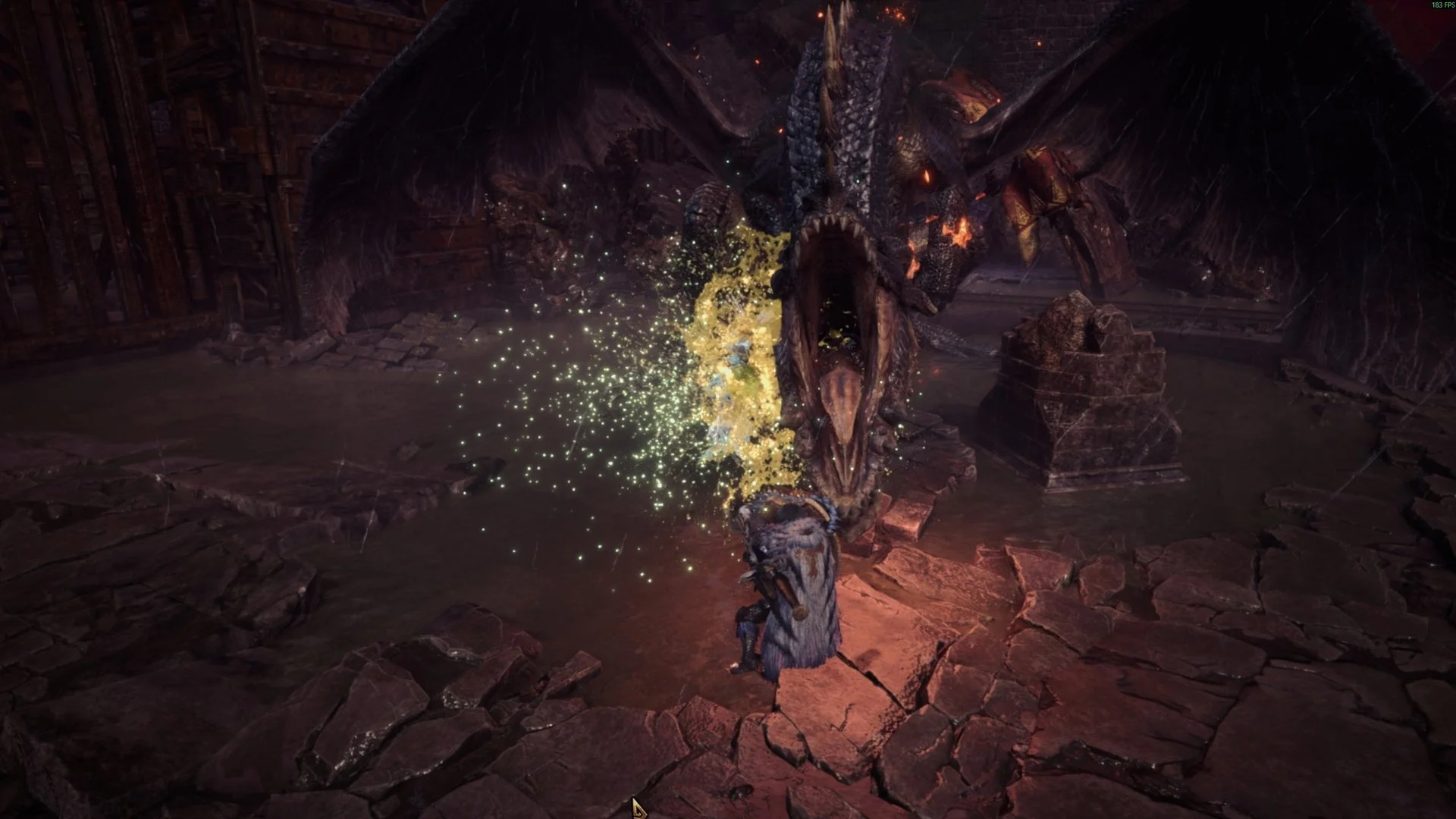
He’s a pretty standard looking Western dragon that breathes fire, and is debatably the most urgent threat Monster Hunter has to offer. Not only is he capable of global destruction, but Fatalis is one of the few monsters that is deliberately malicious. It is made abundantly clear that if Fatalis isn’t slain, it is the end of everything. You don’t need to look any further than the arena the hunt takes place in to see that he’s a threat: the smouldering ruins of a castle that Fatalis destroyed. There were no survivors.
Monster Hunter World: Iceborne has the player working for the Research Commission, and the Fatalis hunt plays out similarly to Valstrax’s. While you battle Fatalis, several Hunters and characters encountered through the story are on the sidelines to witness the hunt as a show of support.
Gameplay wise, Fatalis is every bit as terrifying as he is narratively.He is far more difficult than any monster before him. All of his attacks are incredibly punishing; getting hit by any of his attacks makes you wonder why you even brought armour in the first place. He has the greatest amount of health of any monster in the game. To top it all off, the standard time limit for any hunt is 50 minutes, and Fatalis only grants you 30 minutes. He is the ultimate challenge.
This time I was playing with friends, and we tackled Fatalis.
We quickly realised we were hopelessly outmatched.
We left, got better equipment and weapons, and faced Fatalis again. We still were outmatched, but not hopelessly. We got better and better, until we hit a wall. We reached a part of the fight that we just couldn’t pass, and it felt like we were stuck. We tried again and again, trying slightly different things each time, but no luck.

Then it happened. We broke through and reached a new part of the fight. The castle has a Dragonator — two large spikes that shoot out from a wall after a lever is pulled. The Dragonator is only accessible late into the fight, and is always accompanied by the most iconic piece of music in Monster Hunter, “Proof of a Hero”.
“Proof of a Hero” is such a banger piece of music that Monster Hunter has remixed it over and over since its debut in the series’ first game. Every game has its own version (and fun fact, it was played in the Opening Ceremony of the 2020 Olympics!), but it is cued incredibly sparingly, only for the most major of boss fights — it isn’t even used in full in the latest game, Monster Hunter Wilds. “Proof of a Hero” is reserved for two things: monsters that are insanely difficult, or monsters that must be stopped. Sometimes both, like in Fatalis’ case.
After hitting Fatalis with the Dragonator and stunning him briefly, “Proof of a Hero” begins to play. It’s bombastic and skips straight to the chorus: the most triumphant part.
That moment perfectly explains Monster Hunter. Everything I had experienced — the journey to make it this far in the game, the repeated failures, the narrative stakes — all of it had made it more than a hunt. This was a message.
No matter how many times you get beaten down, you have to get back up. You are needed, there are things that only you can do, and you owe it to yourself and the people you love to persist.
Fatalis is every insurmountable challenge you will ever face, and the Dragonator accompanied by “Proof of a Hero” is that triumphant moment of realization that success is on the horizon. All you need to do is to keep going.
It is only Fatalis, a monster that brings death, who can most effectively convey a message about life.