Review | TR-49 - Getting Lost Between The Stacks
I’m fascinated by stories of archaeologists unearthing ancient texts, like old stone etchings, and finding out they’re a scathing complaint about a market stall. That single text tells you so much about the world that the writer inhabits, and about the writer themselves. I imagine that sense of discovery is similar to how I constantly felt playing TR-49, inkle’s new narrative deduction game meets audio drama. A puzzle game filled with an enrapturing sense of discovery as you explore a historical archive full of reviews and other literature, piecing together a picture of history that’s up to you to decode and catalog.
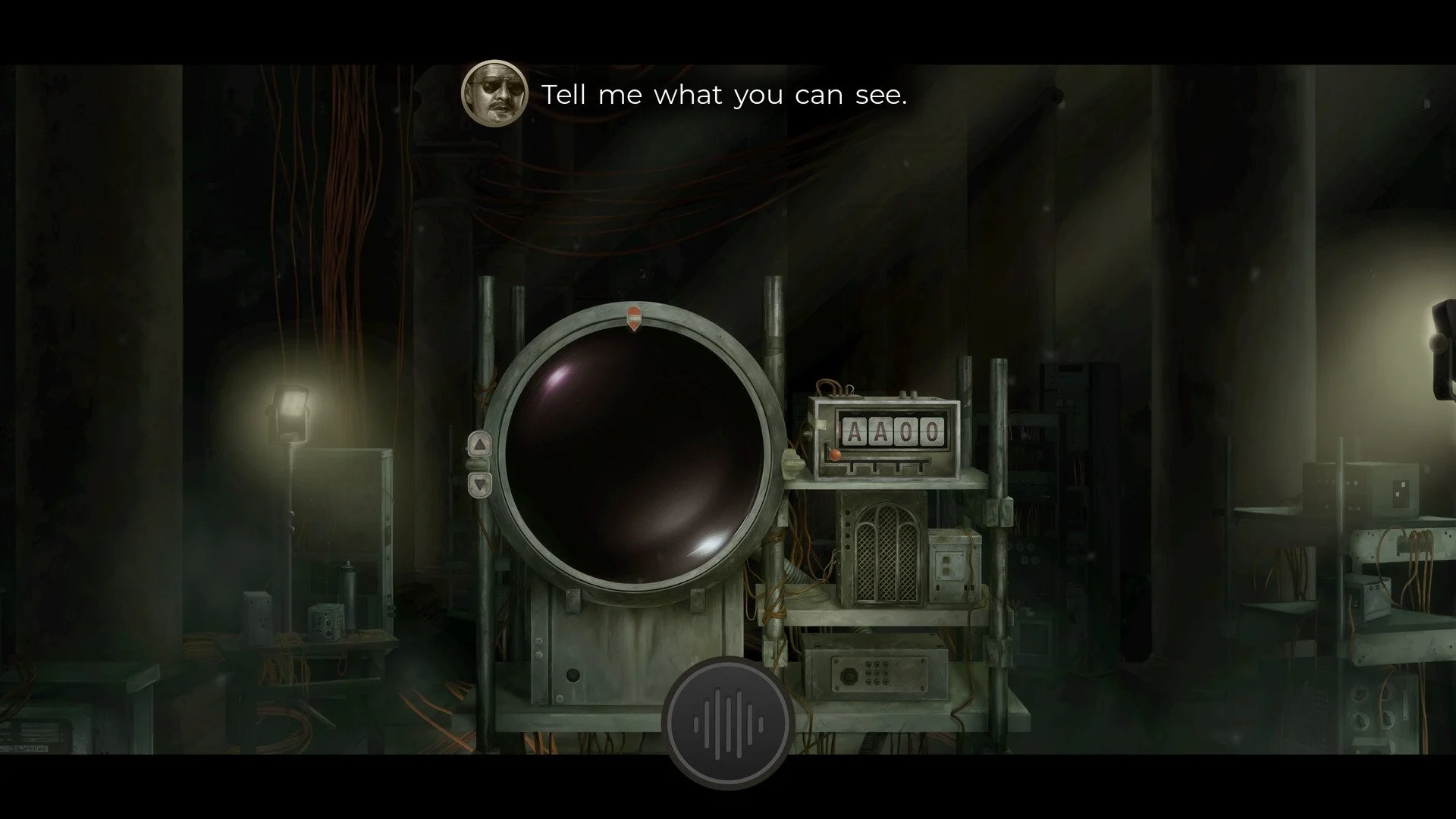
TR-49 is about a box. It has a round screen, a mass of vacuum tubes and has long been buried in a Manchester church basement. This World War II–era computer is a library of sorts, fed full of literature by its creators, and as player character Abbi, your job is to scour its archives, identifying scientific journals, book reviews and forum-style comments to uncover secrets and recover a very important, stolen tome. This is accomplished by putting codes into the machine — four-character sequences that function like Wikipedia hyperlinks, whisking you away to a closely related page when clicked directly or entered manually into the machine. These codes are often hidden in plain sight within various documents, so you’ll have to dig through each text, linking names to dates of birth, or publishing houses to initials, all in the hope of building a complete, connected library.
Much of TR-49’s story plays out here — buried in the stacks of books stored in the machine. It’s a story about the power, and limits, of language as a way to shape, and even save, the world. It would be easy for all of that to get lost in the minutiae of its books, or get so large that it buckles, but inkle manages to succeed at conveying so many different levels of scale that it feels a bit magical. There are literature reviews that show the effect one bad review can have on a single author’s life, academic journals highlighting how a far-fetched paper can alter the scientific landscape for decades, and then there are far grander, wilder ideas that I won’t rob of their impact in this review. It’s a deep, enriched narrative archive that is intimidating and compelling in equal measure.
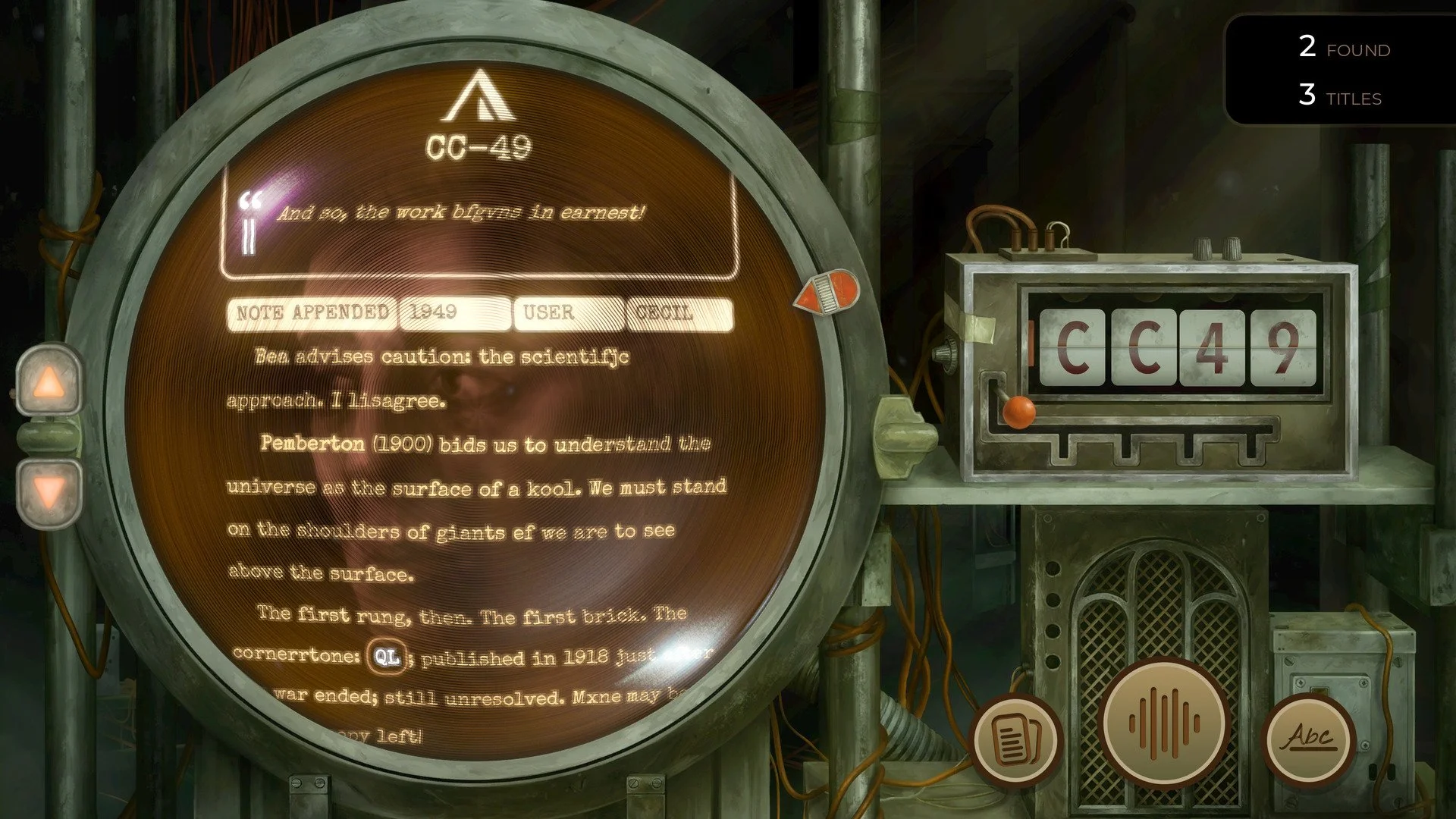
The other major component of TR-49’s narrative fares a little less well. While you’re reading, an audio drama, something like Wolf 359 or The Magnus Archives, is playing out in the game. When you hit a certain milestone, or discover a certain text, a small light will flicker on an old radio letting you know the next installment is ready to go. You have to press a button to set it going — a small tactile inclusion that I really liked. Unlike the stories in the machine, though, I rarely found the audio component as compelling. This is no slight against the cast, which is excellent, it just never grabbed my attention the way the strange, academic journals did.
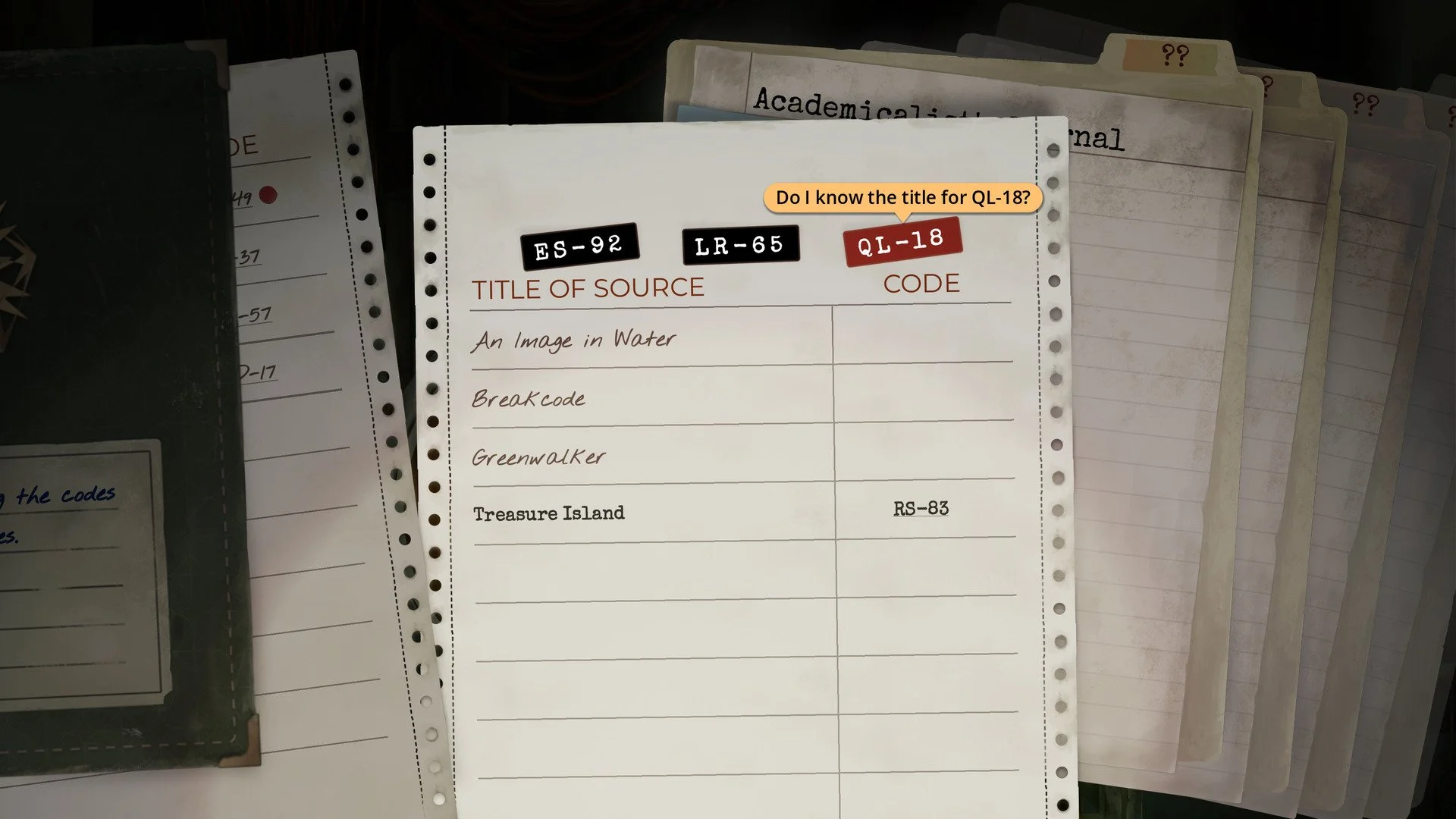
If keeping track of everything you learn across the audio drama and machine’s library sounds intimidating, don’t worry: inkle provides you with a series of notebooks that help organise your goals and discoveries in the most efficient way. Other deduction-based puzzle games often leave me with a scrawled mess of pages covering my desk, so it’s really nice to have that sorted for me. I don’t think it should necessarily become a staple of the genre, but there’s probably a “best way” to bookkeep here, and I’m glad inkle seems to have found it.
Another way inkle streamlined the gameplay experience is via the control scheme. I played through the game on Steam Deck, and since it was developed with the Deck in mind it ran and played great. Moving through documents and your own notes was super intuitive using the console’s analogue sticks. The only thing I didn’t love was how loose the ring for inputting codes felt — on a large number of occasions I would input the wrong letter without meaning to — but I don’t think that’s a huge problem, really. My giddy enjoyment while inputting the codes easily masked any frustration that it could’ve caused.
I believe that feeling sort of exemplifies my time with TR-49: it’s so exciting to discover a new text, or figure out a code that connects multiple pieces together. From the crackling sound of the round screen as it shifts to show your newly uncovered secret to the feeling of switching on the radio, knowing you’re closer to the truth than before, the experience is incredibly tactile, both physically and mentally, and I found so much to enjoy in the whirring of this machine.
TR-49 was played on Steam Deck with a code provided by the publisher.