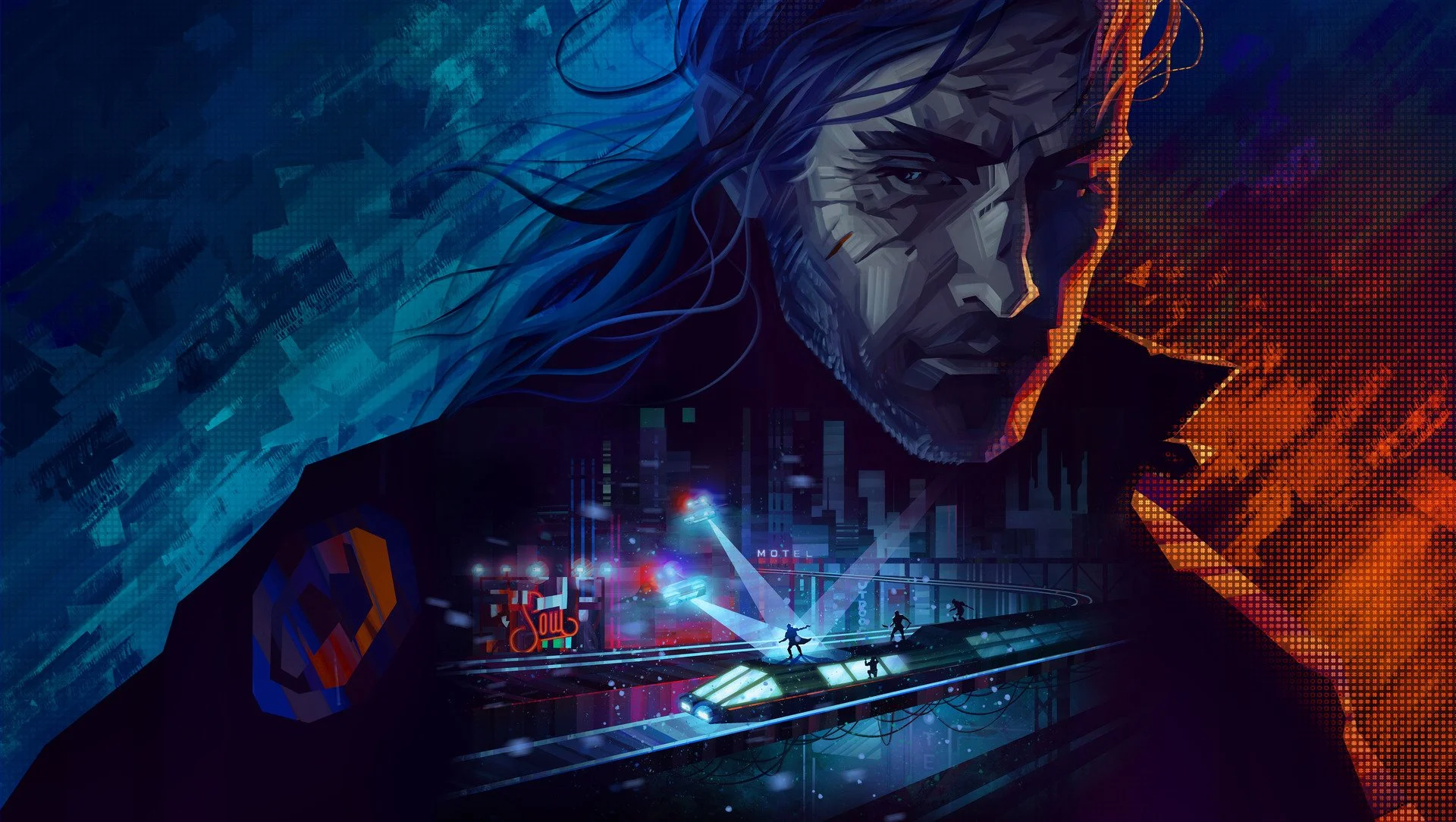
Review | Replaced - As Alive As You Want Me To Be
Sad Cat Studios’ Replaced immerses you in its cyberpunk neo-noir story through the impeccable use of cinematic techniques, pushing its 2.5D pixel-art aesthetic to stunning results. From its first moments, the game plays with aspect ratios, focal lengths, and dramatic lighting with a rare confidence, and doesn’t stop until the credits roll. This cinematic approach to art direction is nicely (but not always pleasantly) integrated into the gameplay, as you punch, shoot, and parkour through Replaced’s captivating levels.
Replaced is $20 on Steam, and with a duration of around 10 hours (which could’ve been less, but more on that later), it is a pleasant experience overall, managing even to transcend the familiar mould that the genre of cyberpunk has become. Fortunately, it keeps the genre’s tradition of offering a soundtrack full of synth-heavy bangers, some of which channel the gripping emotionality of the Stranger Things soundtrack, adding to the already astounding atmosphere of the game.
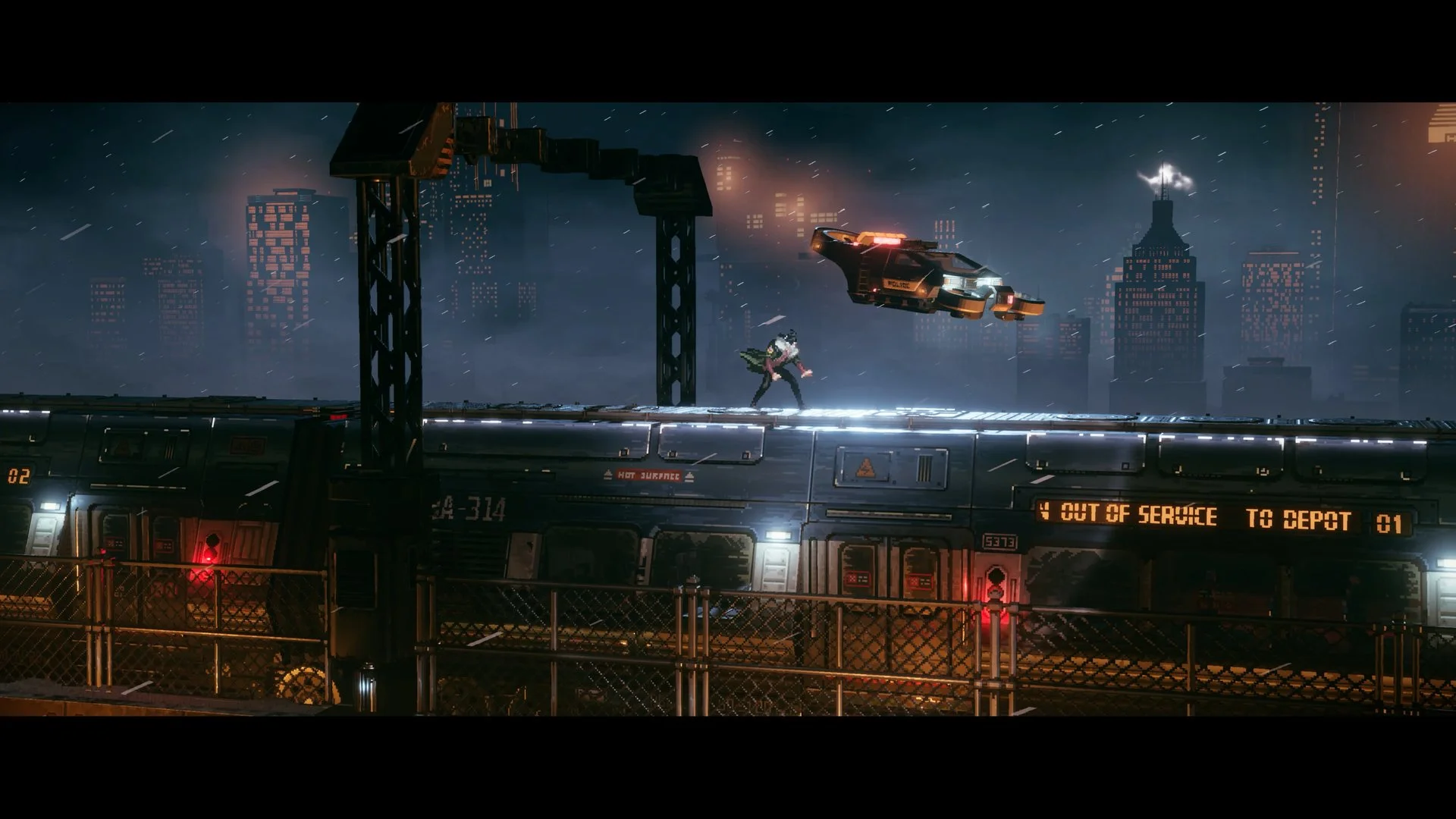
You play as R.E.A.C.H. (also styled as Reach), an AI stuck inside the body of its creator Warren Marsh after an incident caused the neural link between the user and the machine to collapse, killing Warren in the process. Your function as an AI was to find compatible pairs of organ donors and recipients. However, after Phoenix Corporation bought you, the algorithm was exploited to create an organ-harvesting network that extracts body parts from involuntary donors, who are then discarded outside Phoenix City’s walls. Those who survive, known as Disposals, have started to gather around a secret base called The Station, and are ready to fight back.
Replaced’s cyberpunk setting draws inspiration from classics like Neuromancer and Blade Runner. It’s set in an alternate 1980s United States, following the detonation of nuclear bombs on American soil. After corporate cops try to kill Reach, he is forced to escape beyond the city walls, where he meets Tempest, the leader of the Disposal rebel group, who convinces him to help the Disposal cause of overthrowing the Corporation. The game’s story takes a while to really take off, with serious pacing issues in the first half that are not fully resolved by the end. Fortunately, in the latter chapters Reach's journey of self-determination and self-realisation starts building some interesting complexity as the AI’s motivations come into conflict with its intended purpose.
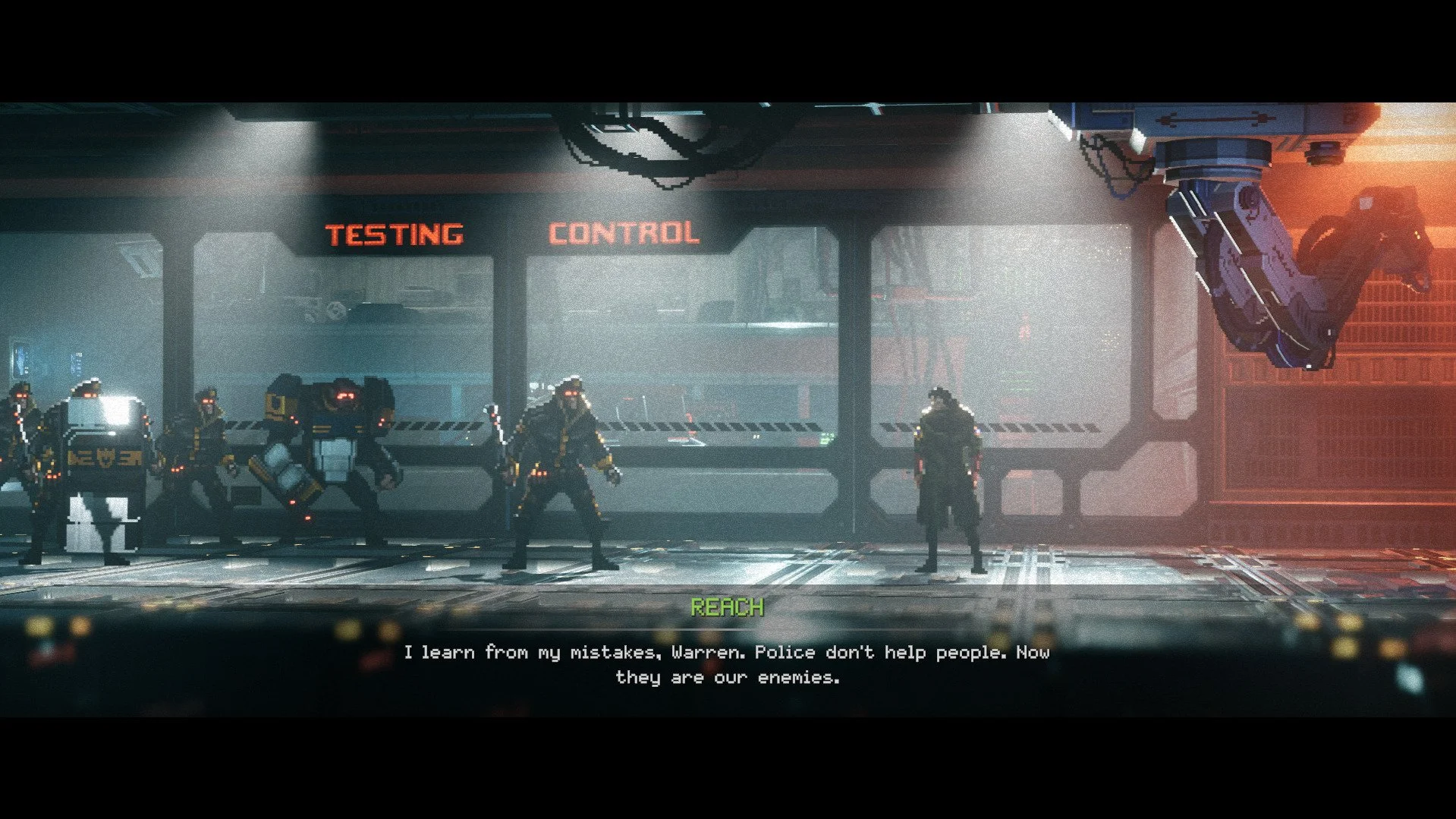
Another area that does not feel as polished as the graphics is the gameplay, specifically the character movement during exploration sections. It feels slow and clunky, which could be attributed to Replaced’s influences from old-school 2D adventure platformer games like Another World or Prince of Persia, where your character feels slow and heavy to add to the realism. However, the realistic detail added to each movement animation, although cool-looking, makes it last more frames than I’m used to in other games, so I often ended up pressing the next inputs while the animation was still playing. I failed several platforming challenges because of this issue, which became pretty frustrating by the end.
I’m not saying I expected Silksong levels of fluid platforming, but the gameplay feels dissonant with how a cybernetically enhanced human would move. In an interview with Epic Games, Replaced’s Director Yura Zhdanovich mentioned the Australian film Upgrade as an inspiration for the game. Replaced shares thematic and plot elements with the movie, in which a human must share his body with an AI that gives him extrahuman strength and reflexes. In the movie, the protagonist moves perfectly, without room for human clumsiness. That feeling is present in Replaced’s combat design, but I wish SadCat had added the same flow to the platforming.
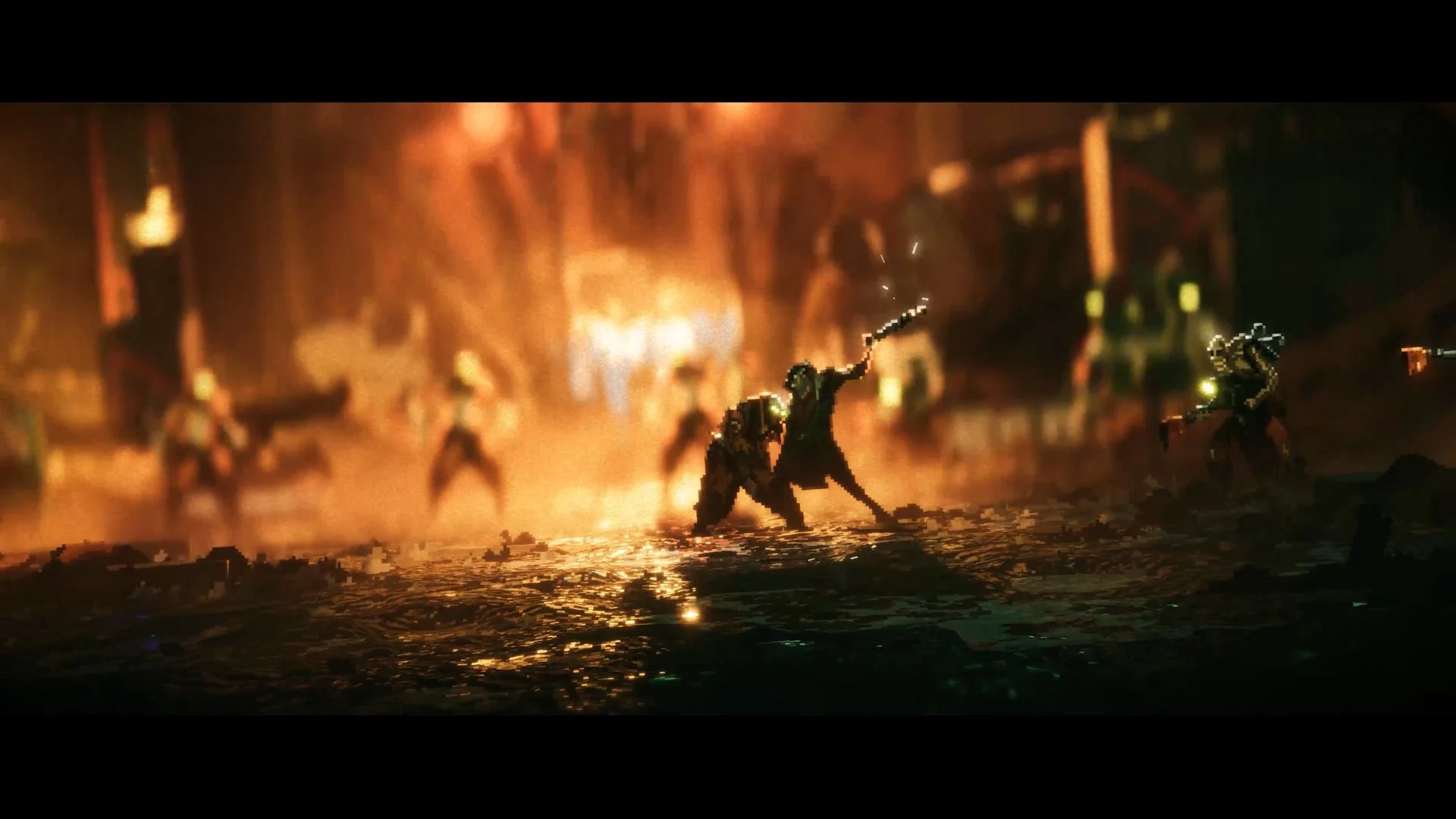
The combat sections, which are in the style of the Batman: Arkham series, prioritise quick reflexes for dodging, parrying, and juggling several enemies at once. It feels very fluid, and chaining parries, hits, and executions with your gun looks really badass. However, I’d appreciate more variety in enemies. Besides the three or four boss fights the game has, every combat encounter starts to feel somewhat the same, regardless of the upgrades and additions to your moveset.
It doesn’t help that the exploratory sections that are not parkour-focused (the ones that are parkour-focused are well-designed but grow tedious due to repetition) are reduced to the usual fare of moving boxes and powering up generators. There are complete chapters in the game of just doing that. Those parts made me almost abandon the game, but the combination of great-looking graphics and some unique story ideas I hadn't seen in other cyberpunk media made me want to play through to the credits.
Several lore elements are explained in text logs scattered around the world. I found it interesting to read most of them, as they are well-written and reveal important aspects of the setting, but the tedious traversal discouraged me from fully exploring the levels and finding them all. Replaced’s side quests also resort to just talking to an NPC that asks you to deliver an item or message to another NPC, for which you receive a health or combat bonus as a reward. I found them quite boring and ended up avoiding them in the latter chapters.
The game has some really great and coherent comments about our current state of technological oppression, such as the intellectual and emotional numbing that comes with the use of AI chatbots, and how to find one’s humanity in aiding the vulnerable. The way these themes are woven through Reach’s arc makes them land surprisingly well, considering the dialogue is not the game’s strongest suit.
Though rough on some edges, thanks to its striking audiovisual presentation, entertaining but challenging combat, and story with a compelling main character, Replaced is a great addition to the game library of anyone interested in the human condition in the age of AI, whether they are a fan of the cyberpunk genre or not.
Replaced was played on PC using a code provided by the publisher.