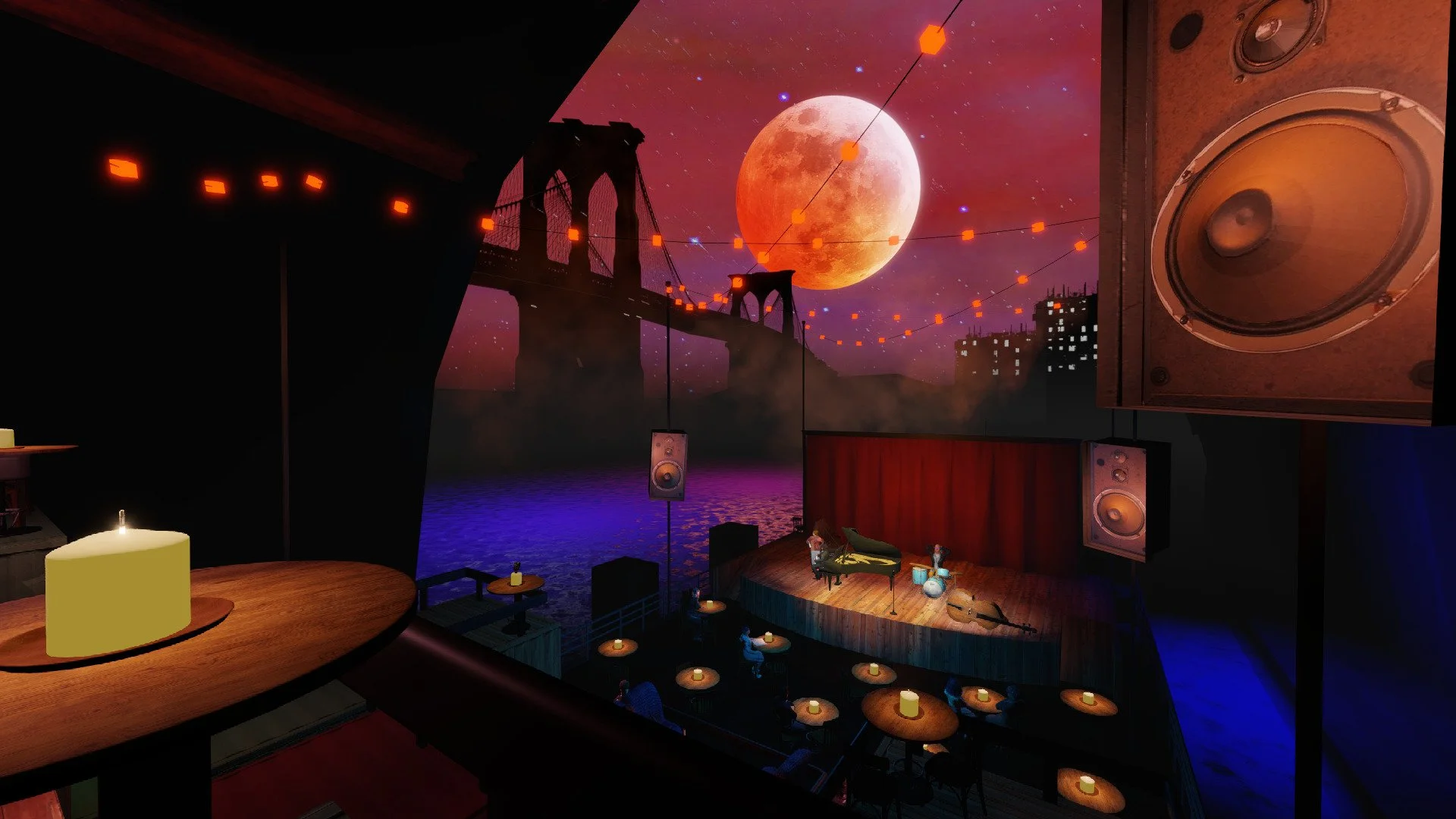
Impressions | Moves of the Diamond Hand - Alea Iacta Est
An Off-Peak woman goes to the doctor. Says she’s been depressed. Says life seems surreal and odd. Says she feels alone in a world of clones and overcrowded buildings. The doctor says: “Treatment is simple. Circus X is in town, go see one of their shows. That should cheer you right up.” The woman bursts into tears. “But Doctor, I’m trying to join Circus X!”
This is the premise of Cosmo D’s latest psychedelic oddity, Moves of the Diamond Hand, sans the Pagliacci setup: the legendary Circus X has arrived in Off-Peak City, the same setting as the developer’s previous games, and you want to join its ranks. Whether you achieve said goal will heavily rely on the rolls of your dice. In fact, dice decide everything in this town, even your fate. I often feel as if luck dictates my destiny outside of the game, too — that every success and failure relies less on how I build and use my skills, and more on just what number I happen to roll in an invisible board game. What this means for me is that I often fall into bouts of melancholy, and convince myself I have no skill or talent, just good or rotten luck.
The playable character of Moves of the Diamond Hand, on the other hand, overflows with ambition. Circus X is the crème de la crème of the performing arts. So to join its ranks you must be the best: you must make the World’s Best Sandwich, or become a Master of Disguise, or form the Best Musical Band that ever graced the soundwaves.
While luck does rule everything, Moves of the Diamond Hand presents players with so much choice it reinforces their agency at every turn. I cannot believe I needed a Cosmo D game to snap me back to reality, considering the developer’s oeuvre is known for its surrealism. While luck does dictate fate, we still possess the ability to determine our futures, even if it's to just move the scales of odds in our favour.
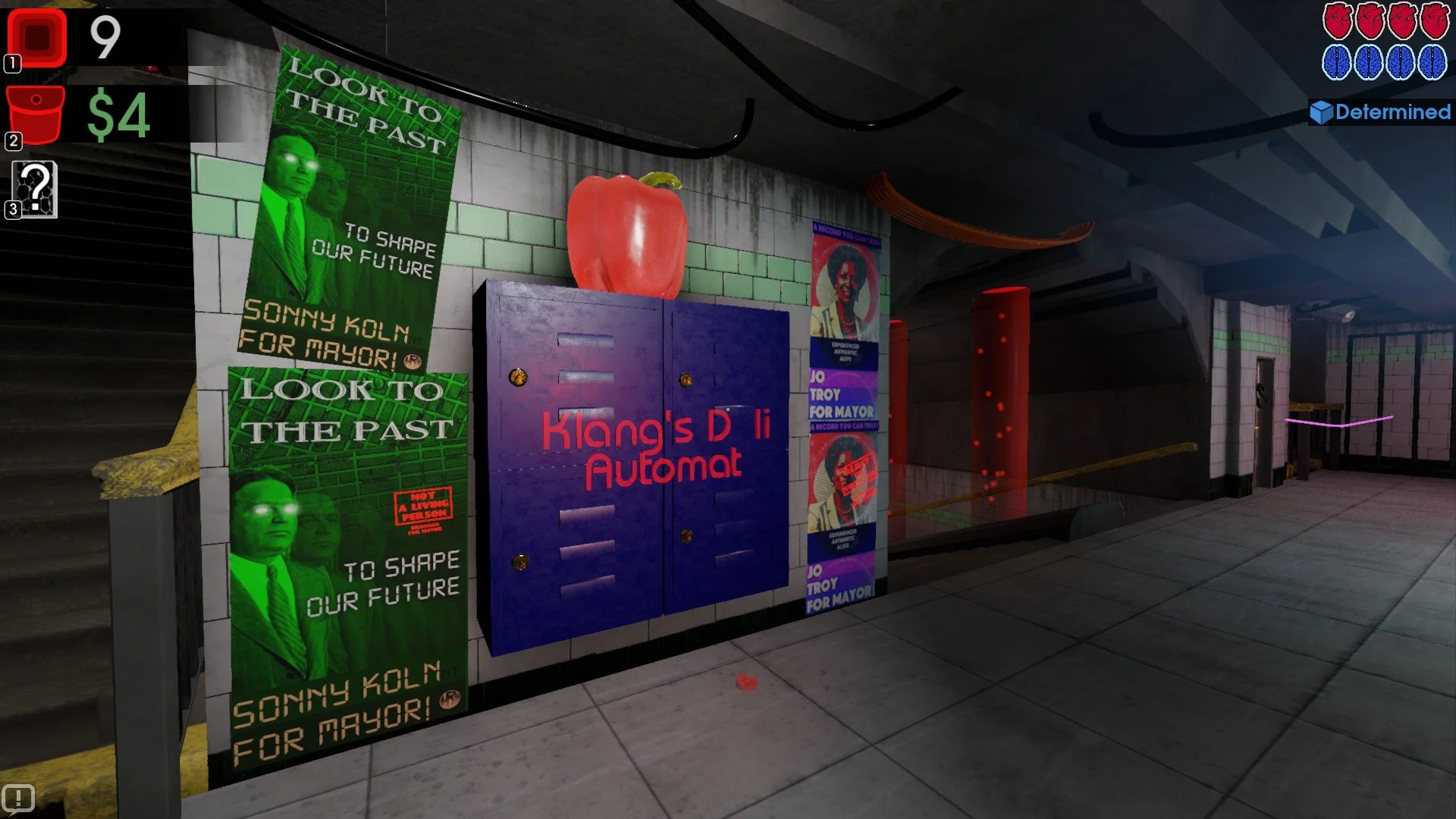
Just released in early access, the first two (of five) chapters of Moves of the Diamond Hand already do a great job at solidifying the game’s mechanics and narrative. The Station, the setting of the first chapter, plays almost like a vertical slice. It traps the player in a closed environment so that they can experiment with the various skills at their disposal, and find multiple solutions to the problems presented.
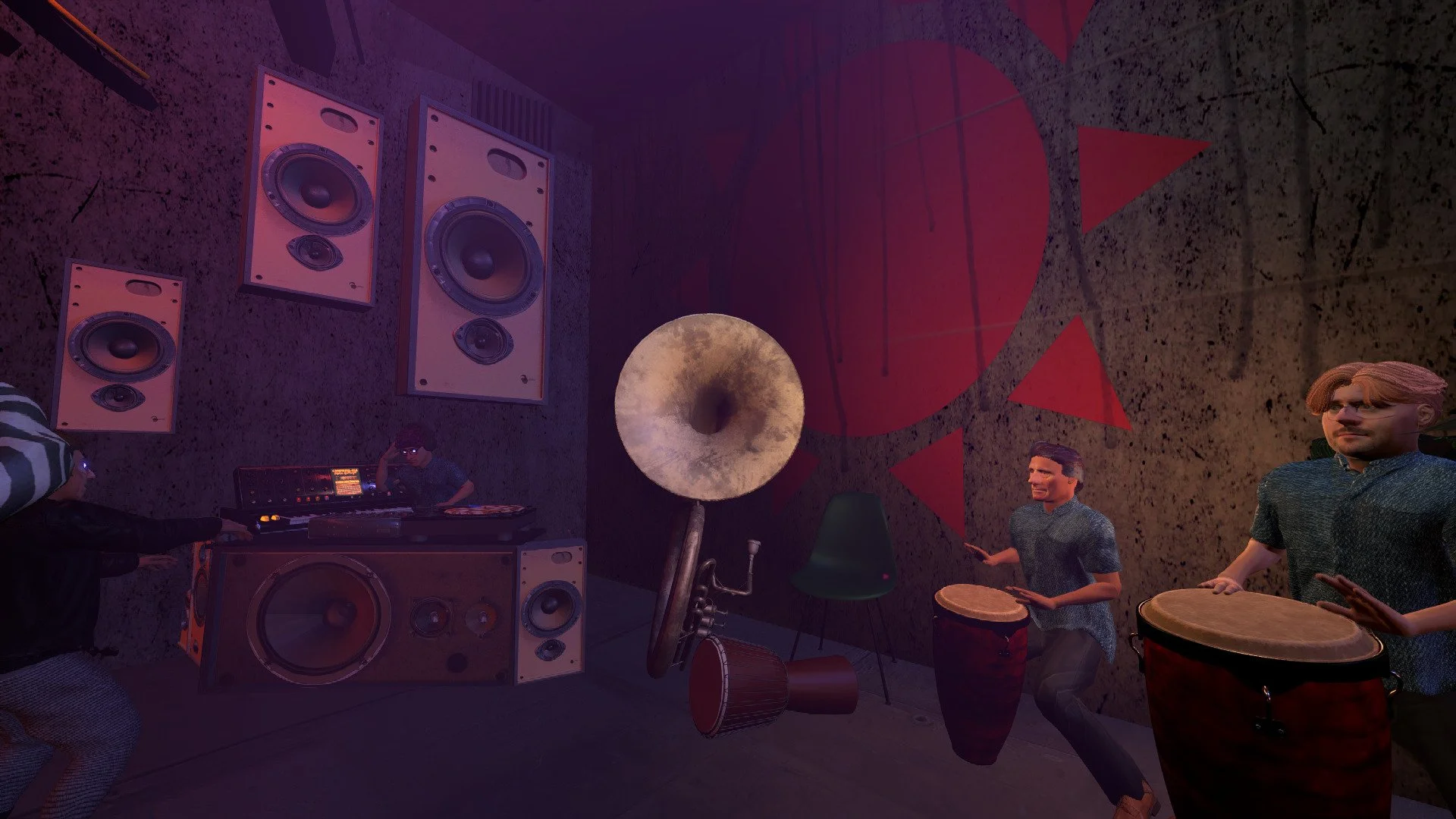
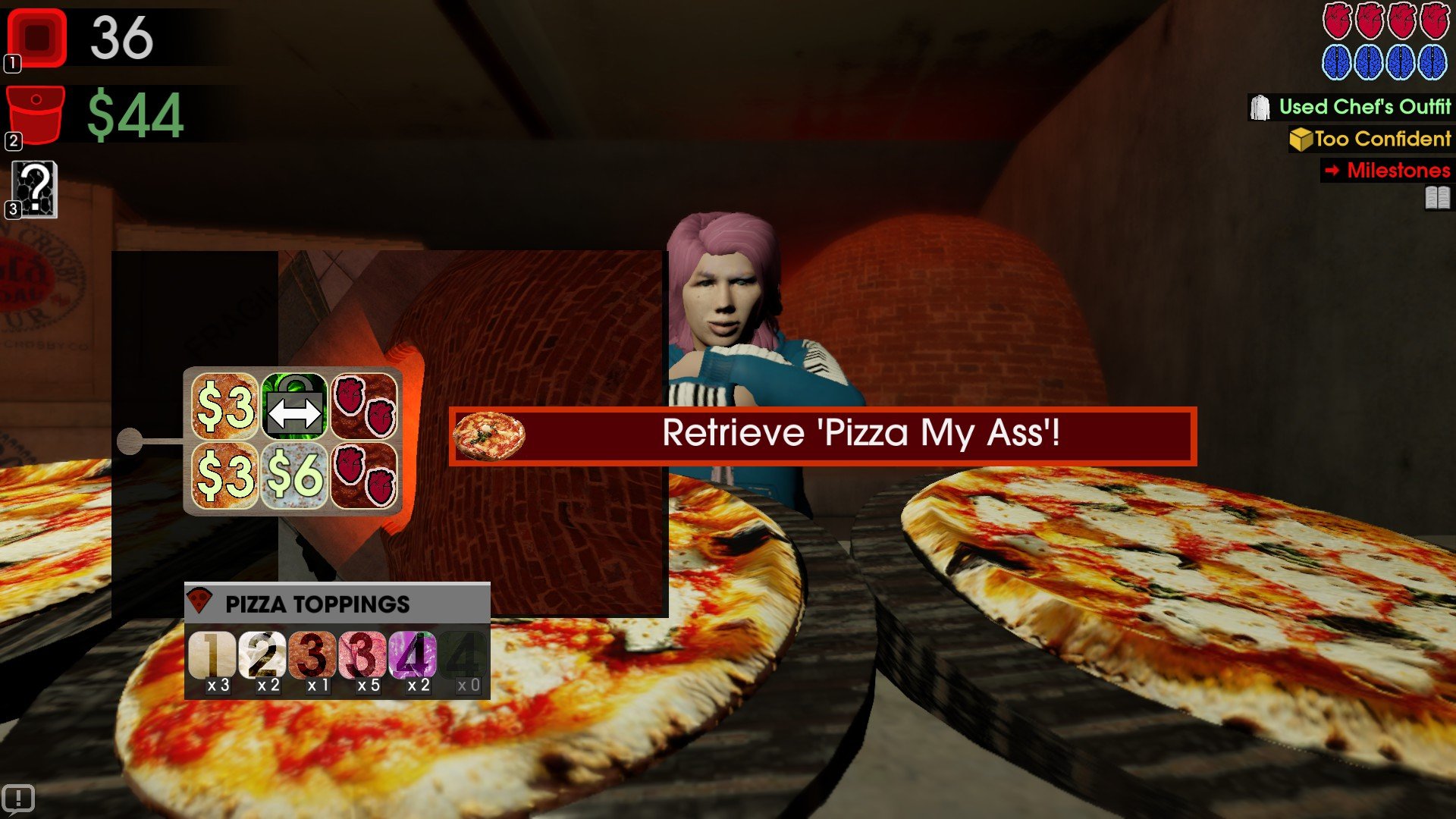
Each challenge — whether it be surviving a slip on a puddle of boba tea, threatening a canvasser for information, tiptoeing across broken glass, busking, baking a pizza pie, or understanding the subliminal message of a song blaring through loudspeakers — is presented as an oddball round of make-believe Yahtzee. To win, roll the same or a higher number than your opponents; you can re-roll your dice up to two more times should you be unsatisfied with your results. Eschewing traditional ways of leveling up skills, you can picture each of your stats as a single die: when you pump experience points into your skills, you increase the value of one face of the six-sided-die that corresponds to said skill. This simplicity of gameplay belies the complications that come with temporary extra dice you gather from milestone bonuses, conditions, consumables, and your chosen attire — just know that even in the beginning of the game you will be balancing clothing, status effects, and items to buff up your rolls before a difficult challenge.
Clothes and consumables make the man; they bolster your rolls with special dice that provide all sorts of advantages (or disadvantages). They could add a base plus one or two to your total roll, heal your Health and Nerve, allow you to re-roll your opponent’s dice, or, in my favourite case, obliterate your enemy’s extra die with the explosion caused by a pimento cheese sandwich. In the worst cases, these dice could lock-up, making them unable to be rerolled, subtract value from your total score, or even force you to lose a point of Health and Nerve.
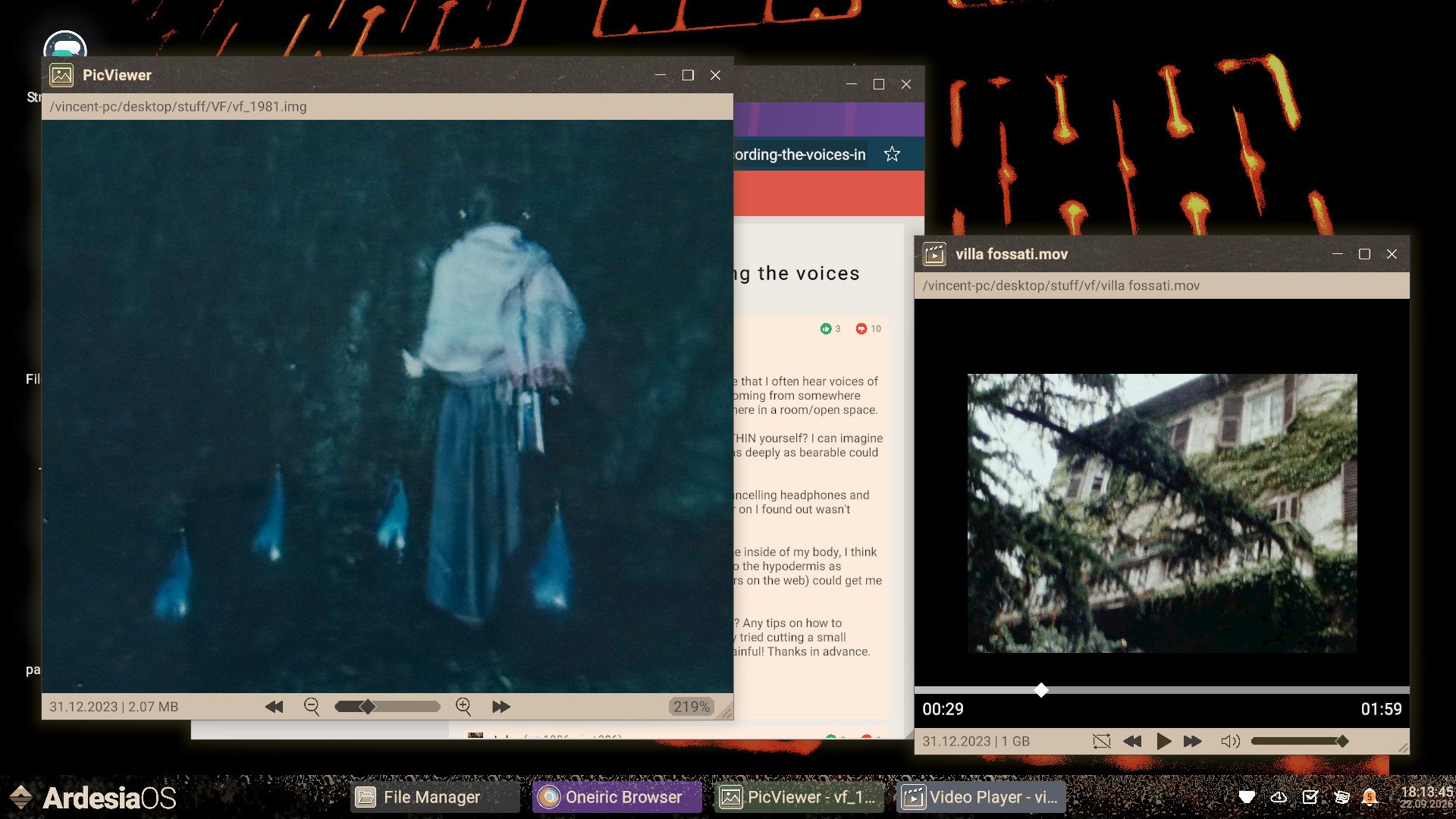
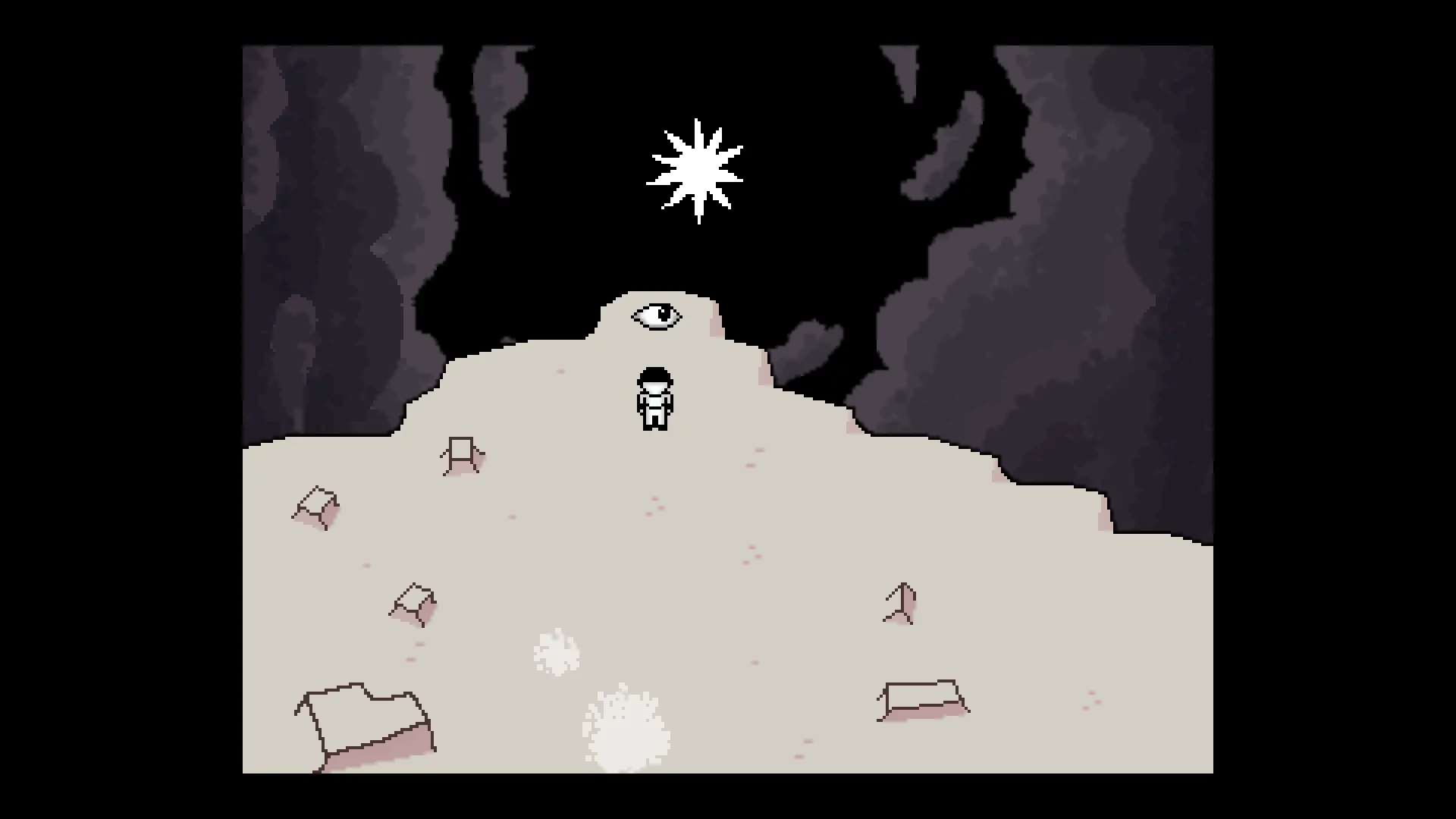
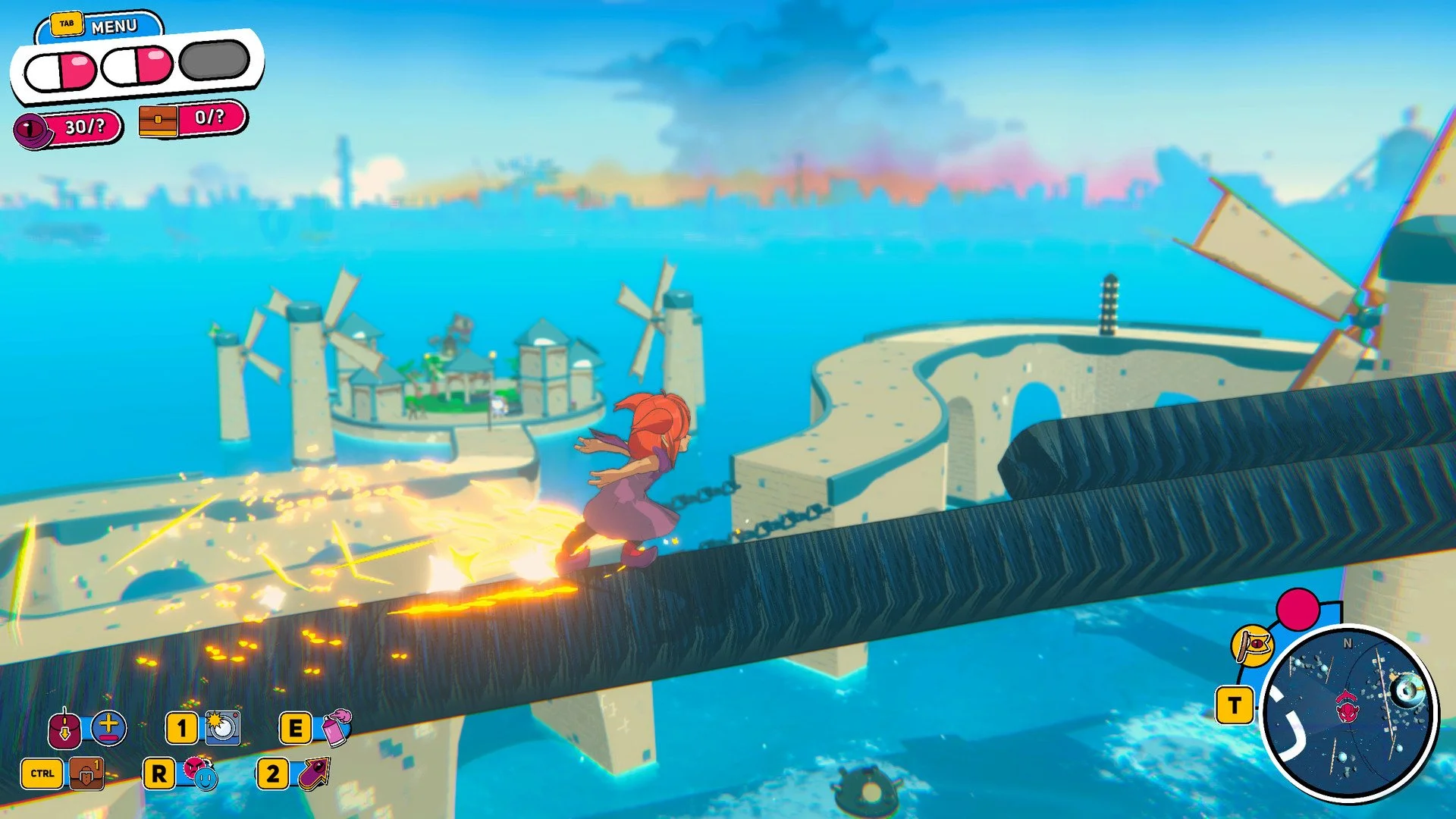
I had the great pleasure of interviewing Cosmo D a few years ago for Superjump, and while I am not going to presume I know everything about him, I can at least attest to some familiarity with his creative process. The Cosmo D-verse is a pastiche of disparate styles built on top of one another, a society of Play-Doh humans, low-quality .jpgs, and buildings constructed with Blender and magic.The bric-a-brac nature of Off-Peak City is inspired by Cosmo’s very own New York, a city in a state of constant change, with buildings coming up then being torn down, businesses closing and new ones opening, whole neighbourhoods changing demographics as the years pass. The surreal aesthetic and vibe of Moves of the Diamond Hand speaks to this elasticity: we are living in a weird historical time, one of architectural incongruity (where the Old World collides with the New, oftentimes side by side), in which the psychogeography of these fluctuating urban spaces contributes to our collective alienation.
This is something I’ve stated for a long time in regards to Cosmo D’s games: that, despite their wackiness, they carry nuggets of truth, honest reflections of our real world. You can smell it in Moves of the Diamond Hand once you get a whiff of the political backdrop. Your own quest for performance art greatness intersects with a mayoral race for the ages and a daring power-play set by the mysterious Diamond Hand, a secretive figure who has his hands in many pockets (we are all pawns in the Big Board Game he is playing). There’s no absence of political scandals, poverty, and desolation in Off-Peak City. Art professors have to quit their jobs and become train engineers in order to scrape a living together; musicians busk in underground train stations to secure enough tips for their next meal. For their part, police officers use their authority to prevent exit from the Station, harassing the denizens until one of them coughs up a stolen Jade Sax.
I often attribute my lack or abundance of luck to systems as well: how my identity intersects with the politics of gender, class, race, and immigration. Privilege oftentimes feels like rolling with higher values, my trans identity is playing Yahtzee with a blank die. I go into work, am disenfranchised from the fruits of my labour for nine hours, make very little money in correspondence to my duties and responsibilities, then I clock out, and I go home. But it’s without the reprieve of Cosmo D’s surreal visuals — no giant faces with gaping mouths adorning the façade of an apartment complex, no animal-head-shaped towers or people, no pizza spots that will place me in a hallucinatory spiral.
Moves of the Diamond Hand reminded me that real life is what happens in the compartments away from responsibility and capitalist whims, that sometimes you just need to jam with your friends, bake an inedible pizza pie, talk to strangers, or whistle a bird’s song. It reinforced that it’s ok to be a little wacky. Our world, though tethered by rules and governmental systems, has enough oddity to entertain and enrich our lives.
I’ve grown so familiar with Cosmo D’s games I almost feel as if I am a citizen of his world. Walking through Off-Peak City gives me a sense of jamais vu, the same sensation when I walk through a familiar street and fail to recognise it. When I left the Station, and my feet hit the Streets, I could already envision my fate: music performances at the jazz club, more odd strangers to gossip and plot with, destiny-defining games played behind a Deli.
After finally seeing Off-Peak City again, I could only utter: “I am home. Now let the dice be cast, and fall where they will.”
Moves of the Diamond Hand was played on PC with a code provided by the publisher.