Review | Swan Song - A Basic Gander at Grief
I spent a significant portion of the Swan Song review process curled up on the couch of my mother’s hospital room. Though I’ve played countless games where parents have taken ill, the moment this game revealed its themes of terminal illness, families in hospitals, and that familiar territory of grief, it felt too surreal. My emotions opened up. I was ready to cry, empathise, basically feel anything the game was ready to throw at me. So I kept playing, and I kept playing, and well — I finished Swan Song, and my mother was eventually discharged from the hospital. That cathartic moment I expected never came. The puzzles were enjoyable and the vibe kept even the toughest moments stress-free, but despite the narrative puzzle game approach, Swan Song doesn't have much to say. The most emotion it elicited from me was a big old “huh.”
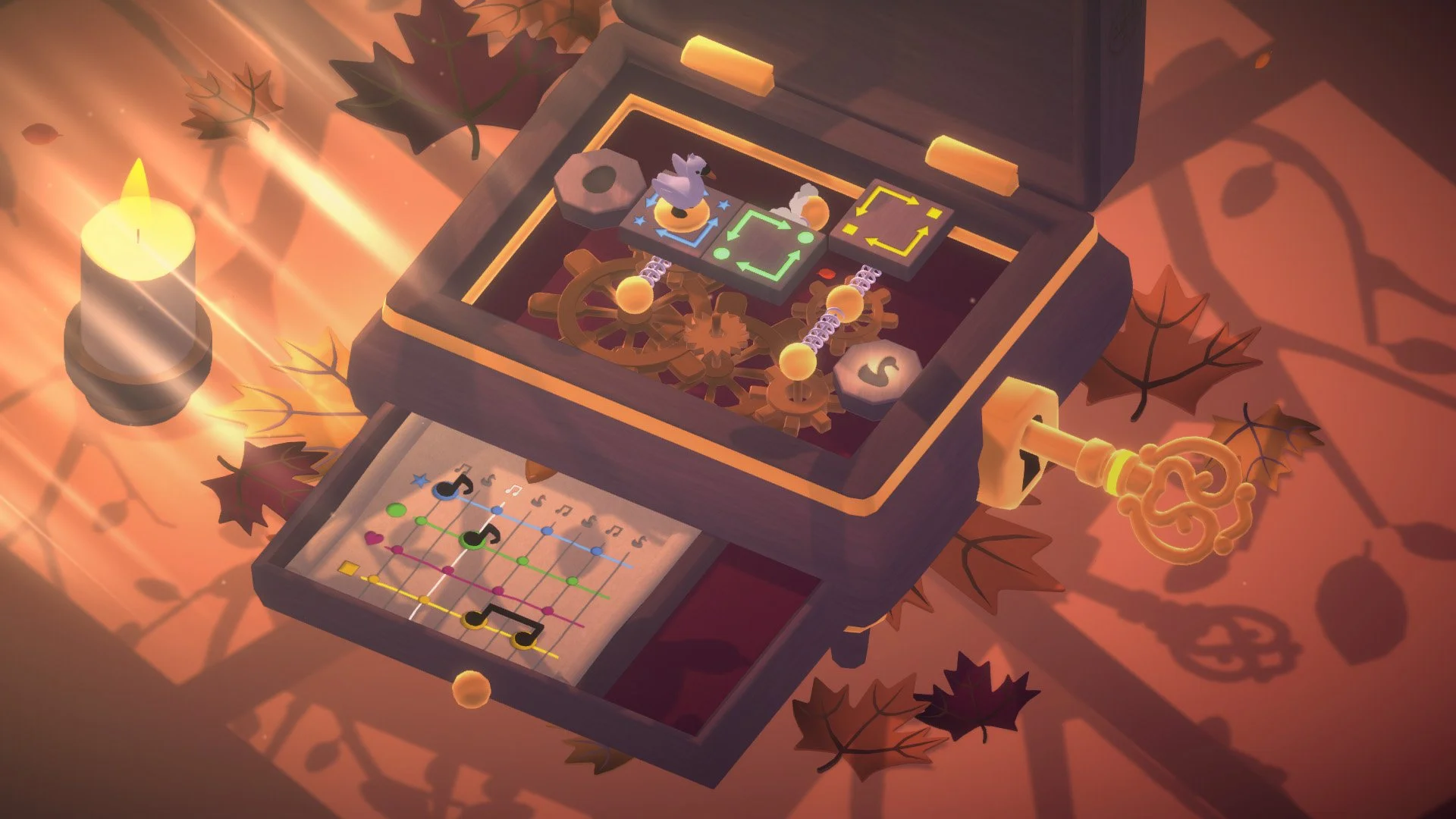
Swan Song’s puzzles are contained in a magic music box displayed amidst a series of changing backgrounds and environments to keep the proceedings visually interesting. They feel reminiscent of a Professor Layton–style brain teaser, but expanded and iterated on in sensible ways. There is a swan on a platform, a series of other platforms and obstacles, and an endpoint. Using simplified music notation contained in a drawer of the music box, players place loose notes on different lines demarcated with various colours and symbols that, when triggered, tell the corresponding obstacles when and how to move as the swan tries to traverse the pathway to the end.
Combined with an atmosphere designed to earn cozy points, Swan Song remains consistently enjoyable from the jump. Played on a Steam Deck, the touchscreen controls are easy and intuitive, and each new wrinkle folds in at a good pace. [Editor’s Note: Developer Business Goose Studios has promised “controller support and better Steam Deck support” in a future update.] There is no UI to speak of, no hint of a time limit, nor a penalty if you get something wrong. Though the game centres around the music box and placing notes, it’s also pretty clear there’s no expectation for the player to know notation or music theory either. All of these features keep the barrier of entry approachably low.
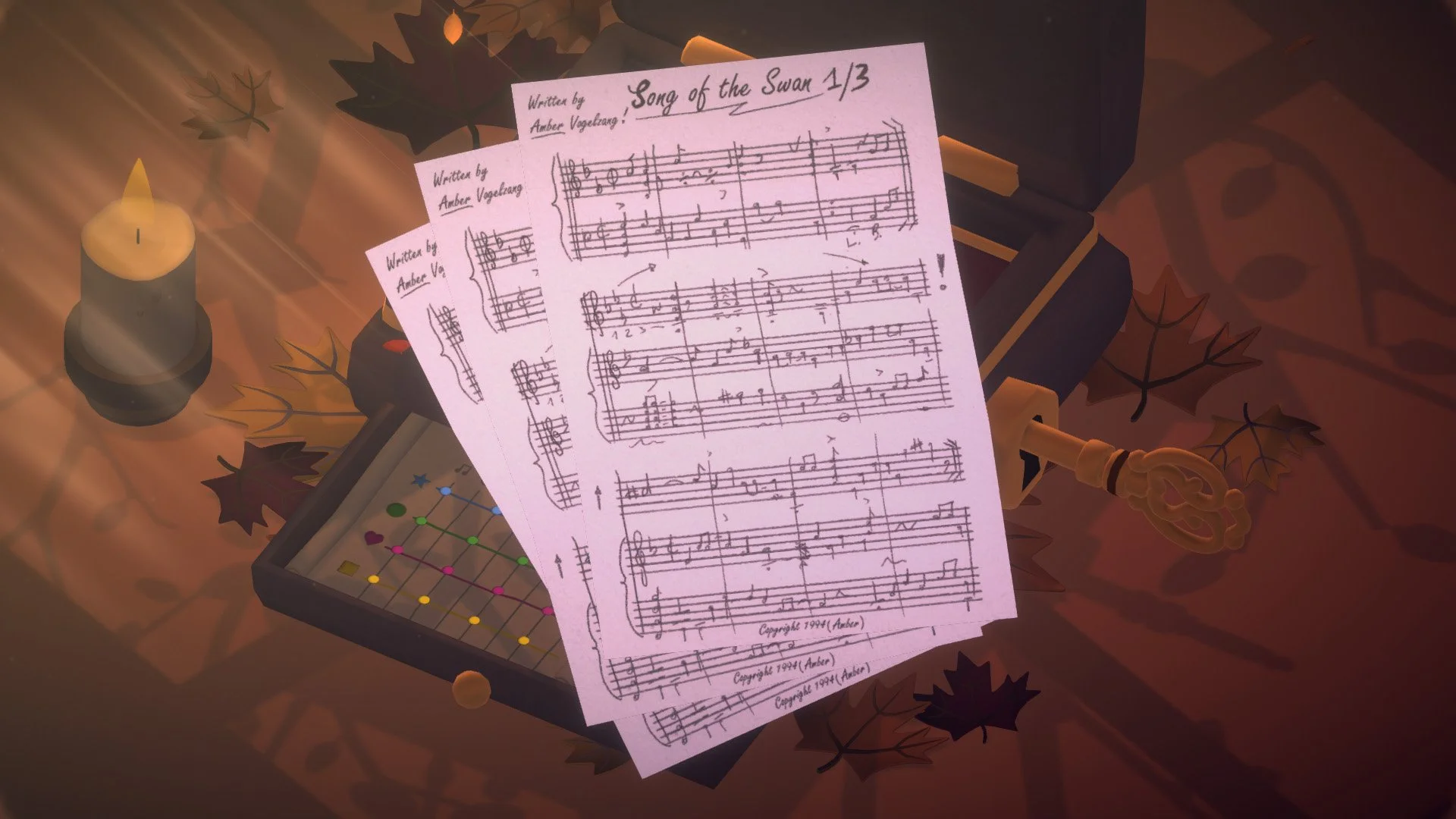
However, this is also where we start to run into issues. A large part of the game’s narrative is music: the characters are musicians, they use their art to express their grief, and the creation of the music box is part of that, too. The central mechanic of the game is to place notes and wind a music box so those notes tell a swan how to get from Point A to Point B. So much involves music, yet it’s clearly not a rhythm game or even interested in music on a practical level. Barring one or two moments, the vast majority of the soundtrack is calming, light, and fades into the background to focus on the puzzles. This choice fits the aesthetic of the game, but makes less sense in the context of the story.
In fact, when I say Swan Song’s story feels like it fell out of a walking sim, I hope you understand what I mean. There are ten levels, and bookending each one is an audio log and a letter that reveal more of the story, with a few extra doodads and in-game documents rewarding players between puzzles. If you took out the puzzle gameplay and made it, say, a first-person game set in an abandoned house, I would argue the storytelling experience would largely remain the same. Nothing about the narrative relies on the puzzles to exist, just like the puzzles themselves don’t need the music motif to make sense. Replace the notes with red buttons and the music box with a Rube Goldberg machine and it would be just as interesting.
Swan Song opens with a disclaimer that it’s based on a true story, so part of me is hesitant to rip too deeply into it. Yet, the biggest problem this game has is that, for being a narrative-based puzzle game and dealing with heavier themes, it doesn’t have much to say on grief that’s new or interesting. Other indie games have covered this ground in more original ways. There’s a really interesting contradiction here because part of what is discussed is the way some people isolate themselves in their grief and go head-down into their work to numb the pain or work through it. However, because players are constantly shown that perspective during the story, the isolation also makes it harder to empathise with the characters, even if you were in ideal conditions for your experience to dovetail with the narrative like me.
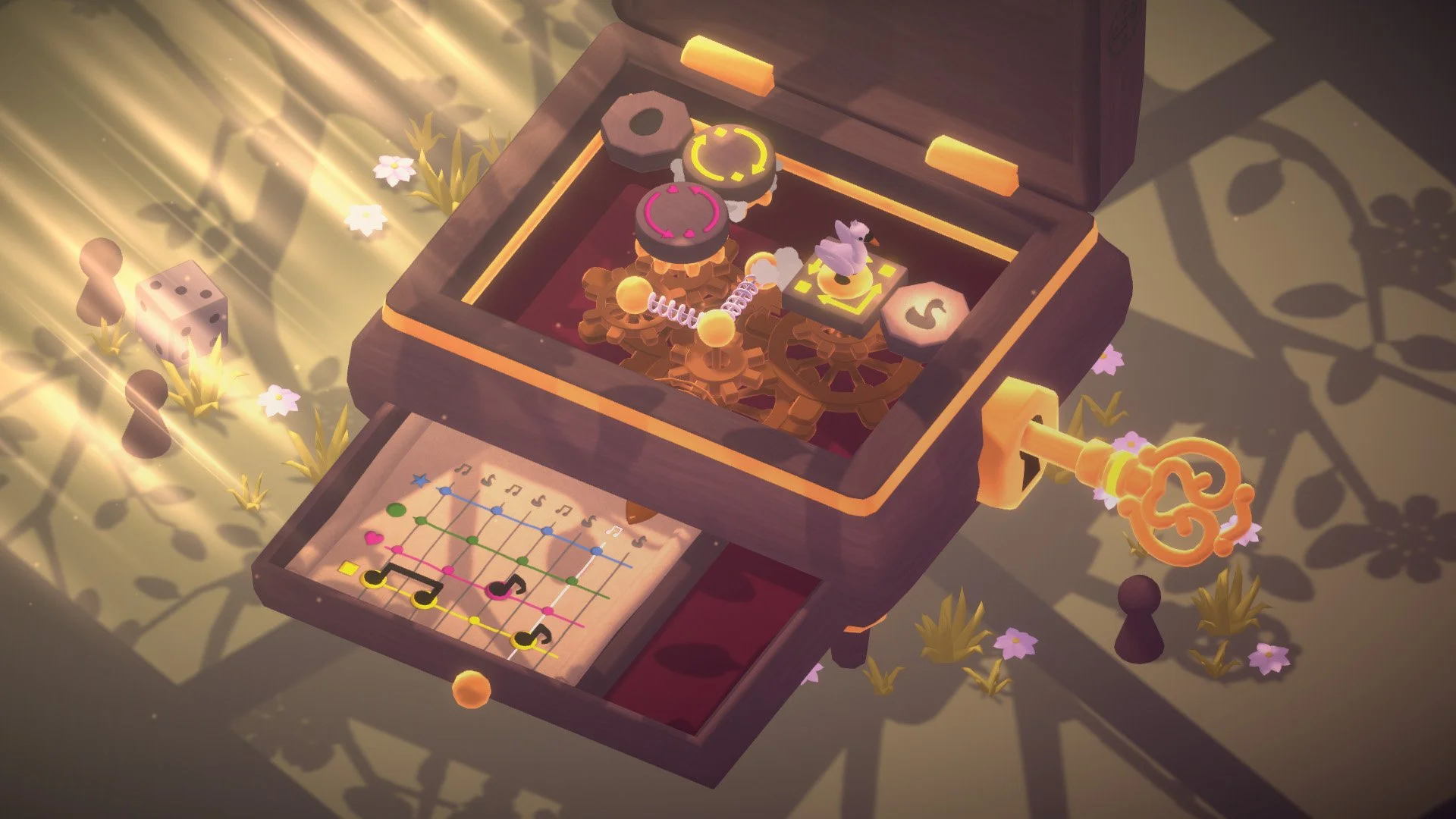
When I remember Swan Song in the future, it will be for how conflicted I feel about it. There’s no denying that the nuts and bolts of the puzzle gameplay are solid. I finished in about three hours, but I never felt that there could have been another added mechanic or gameplay tool to extend it further. There were a couple times I had to quit and reload to reset the game’s physics, and thus repeat a few puzzles, but the bugs were never severe enough to cause me much stress.
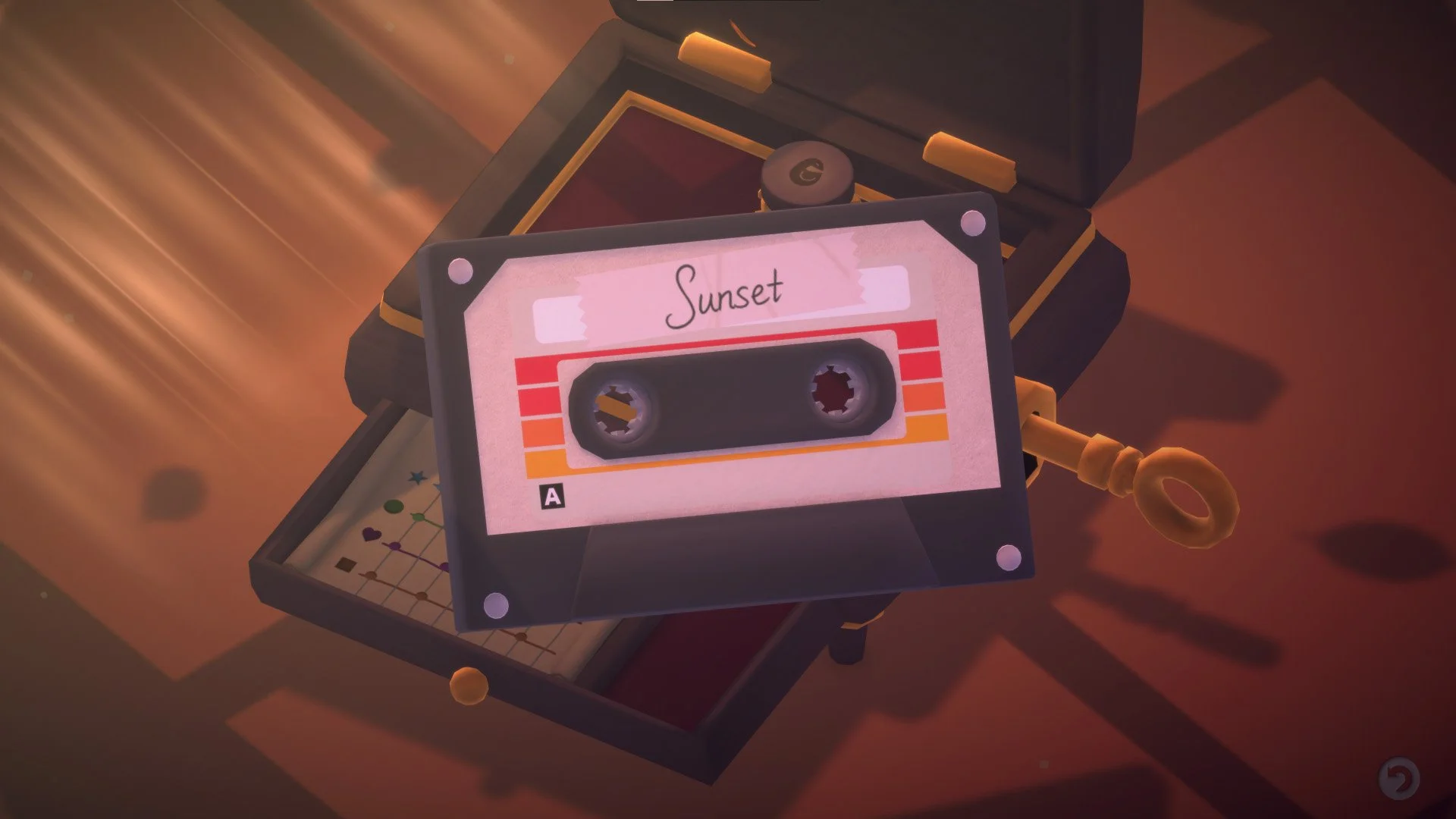
Instead, I find myself left with questions. For example, why are the audio logs styled like they’re a character’s demo recordings, when they’re mostly just conversations between her and her family? Why does music in general feel simultaneously so important to the story, yet so unimportant to the game overall?
My experience with Swan Song reminds me that just because a piece of media seems like it should resonate with me, doesn’t mean it actually will. This is not the game’s fault, but it does highlight the inability for the story to say much that’s new, and that some of its themes are inconsistent with the narrative it tries to tell. I can recommend this game if all you’re interested in is the gameplay, but that’s not all this package is. Swan Song tries to tell a story of familial grief but comes off as confused, like something that was meant to tie everything together fell through, and no amount of good puzzles can fix that.
Swan Song was played on a Steam Deck using a code provided by the publisher.