SGF Preview | Stranger Than Heaven's Combat Is Strange And Refreshing, But Is Overshadowed By Questionable Casting
I found myself in a hidden jazz club in 1920s Tokyo, paired with dim lights, ambient bar noises of clanking glasses and chatter, and jazz that could have soundtracked the Roaring Twenties. SEGA and Ryu Ga Gotoku Studios wanted to set the scene when they brought us into this makeshift jazz club somewhere in downtown LA.
During SGF this year, I attended a preview of Stranger Than Heaven, the latest from the makers of the Like A Dragon franchise. The game stars Makoto Daito, a Japanese-American who is just about scrapping by and must begin a new life in Japan.
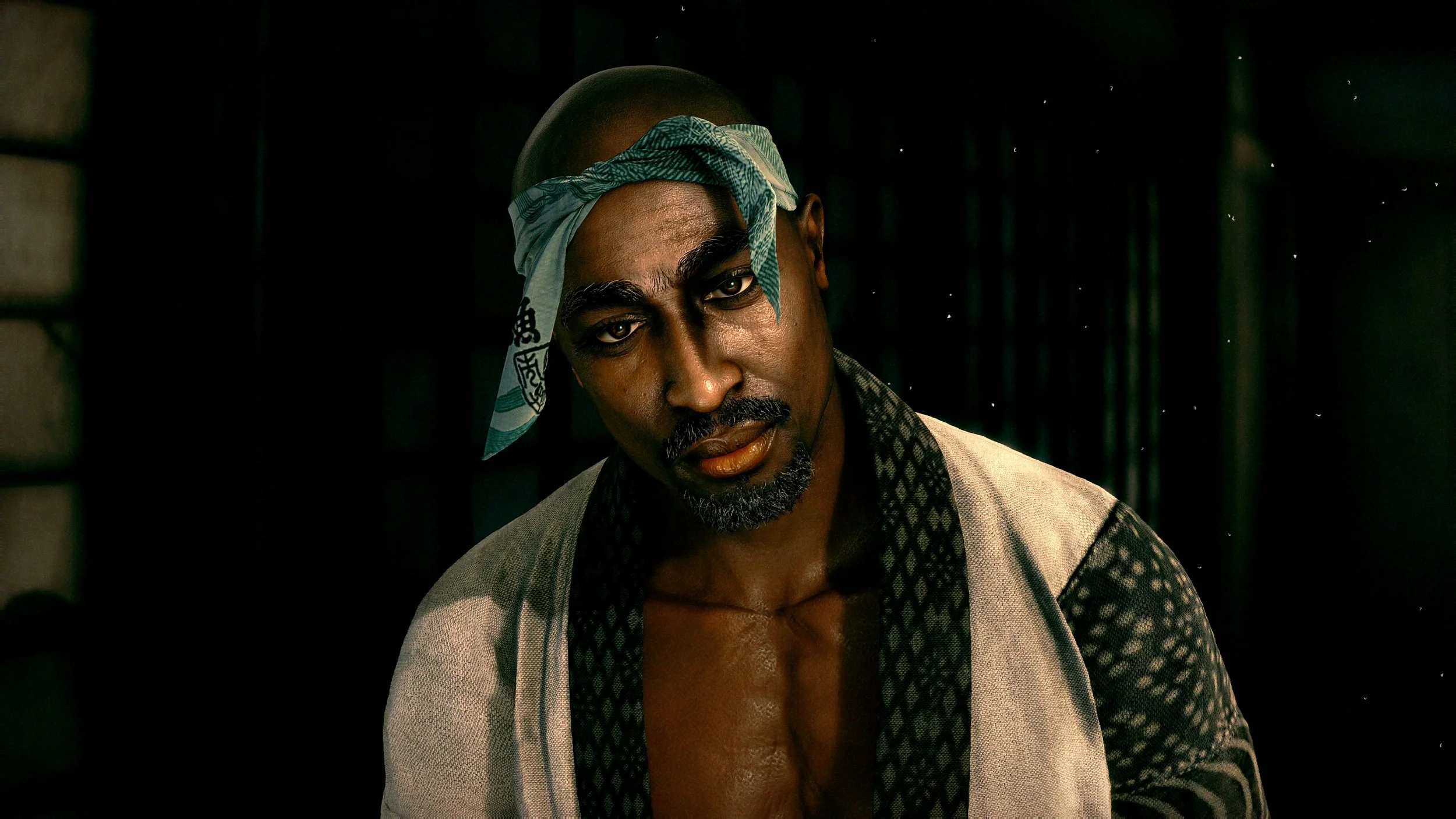
The preview started off with a short video briefly explaining the scope of what we’ll experience in the game. The player will explore five different cities throughout five different eras, each filled with inhabitants and environments distinct to that generation that bring the world to life. Unfortunately, not too many details regarding the plot or narrative were shared during this presentation, nor did any of the press attending receive any new info about our now anachronistic and infamous inclusion of rapper Tupac, who is making an ill-advised posthumous appearance in this game. After the video finished, I played the combat preview for the remainder of the time.
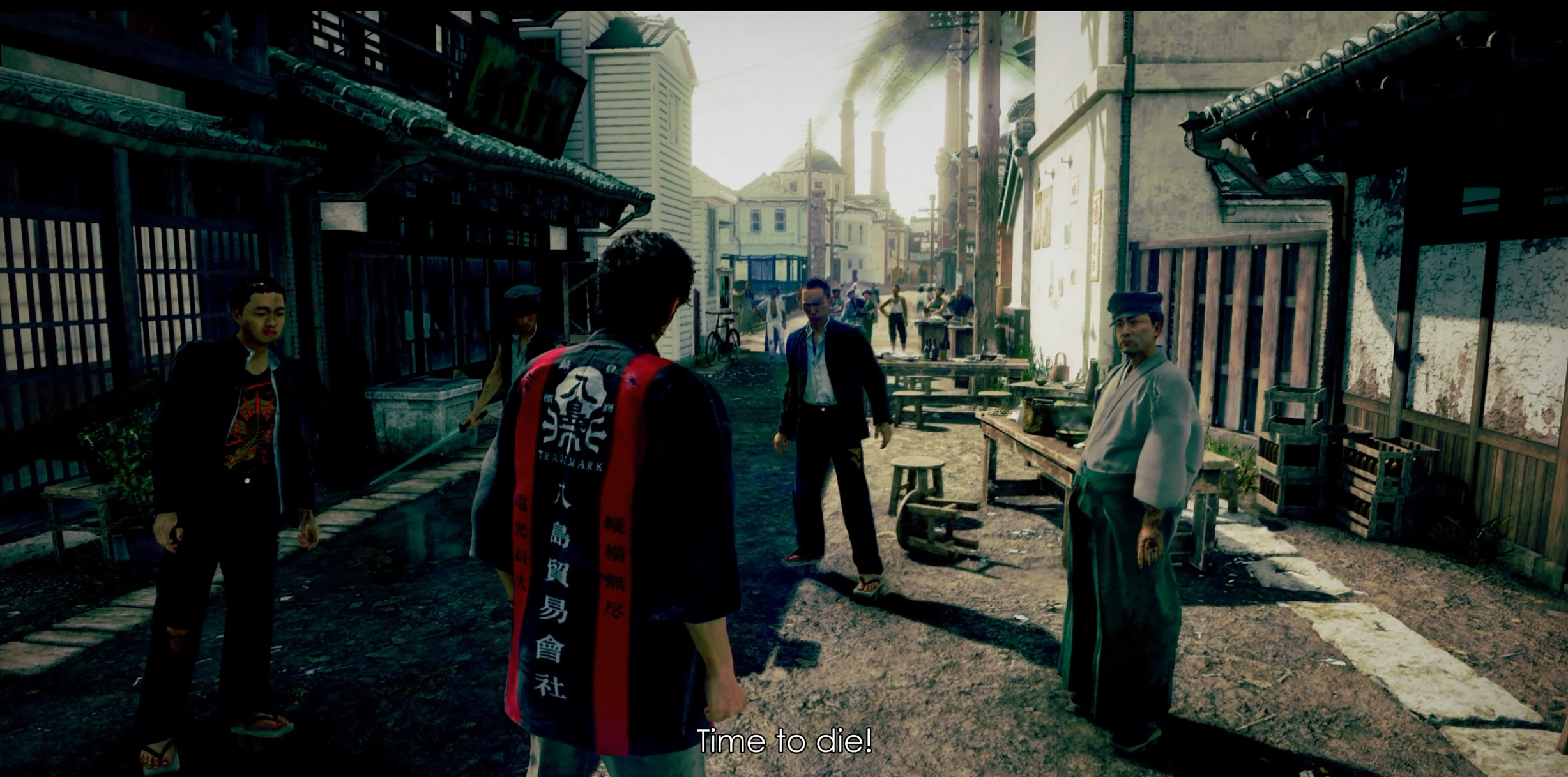
Stranger Than Heaven features an in-depth combat system that will need to be mastered in order to survive. Diverting from the combat controls in previous entries of the Yakuza franchise, Stranger Than Heaven will allow players to control each side of the body independently — similar to a fighting game.
You have your left-side heavy attack mapped to the left trigger and a left-side light attack mapped to the left bumper, mirrored to the right trigger and bumper for the right-side attacks. I use the term “attack” instead of punch/kick because the game will choose whether to use fists or legs depending on the situation. Each of these moves can be held down to power them up, but doing so leaves you open and vulnerable to additional attacks. Utilizing differing combinations of each attack can create powerful punches, kicks, and other combos. The developers emphasised creative exploration with these new controls and wanted to be sure to give the players agency during combat. It is a very Virtua Fighter “every button controls a limb” style system, redesigned for the modern era of action games that deemphasises face buttons.
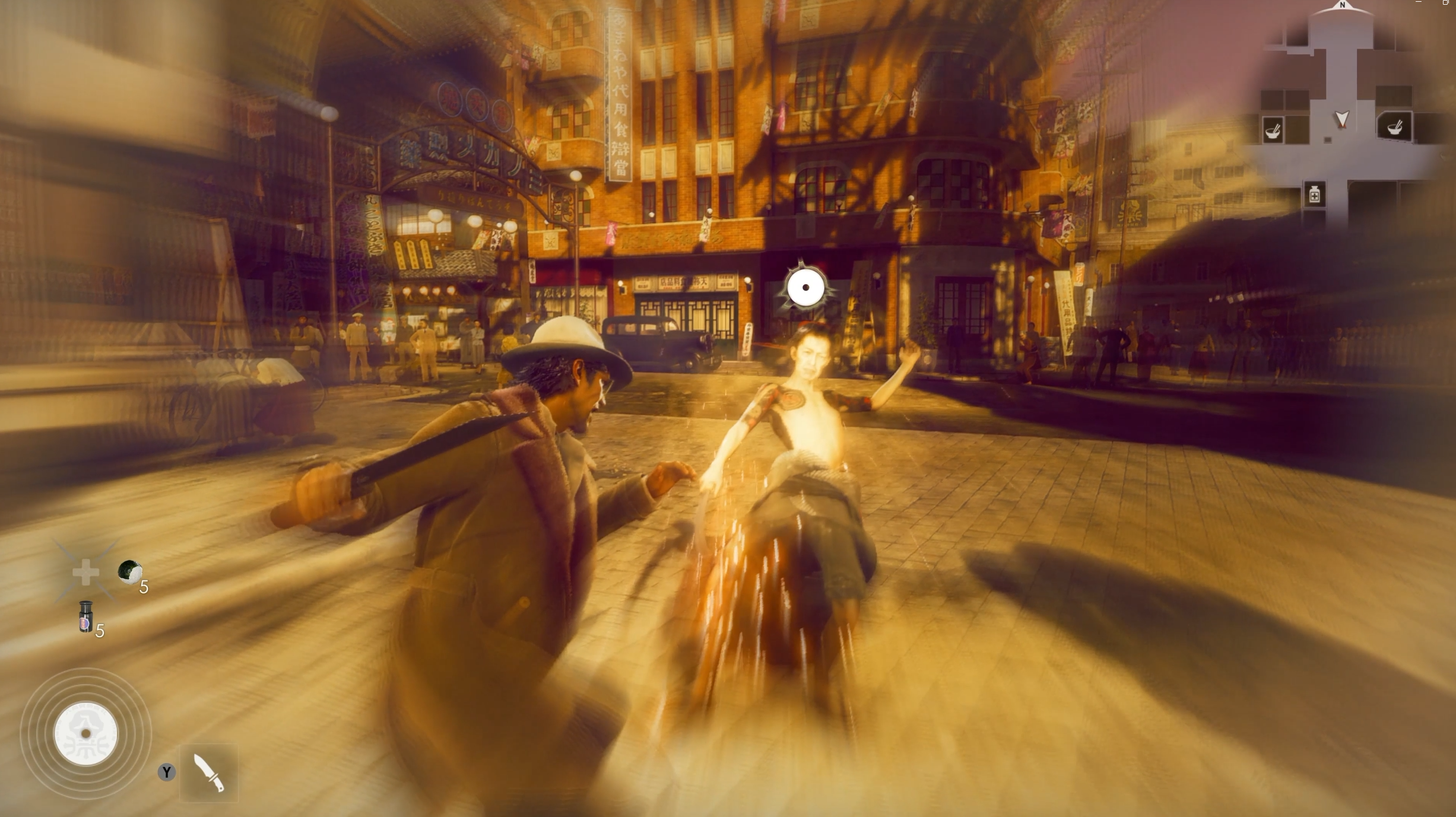
Blocking is vital to overcoming the odds during these combat encounters. Much like the differing side-attacks, blocking can be specific to the left or right side. Holding B (or Circle on PlayStation) will raise Makoto’s arms up in a general guard, but pressing the left or right bumper will raise an arm up to guard that particular side. This becomes useful — and is the method required to parry — any attack that is slashing down from a specific angle at your body. Perfectly timing the B plus left or right bumper block will parry the attack, temporarily slowing down time and allowing you to get in a few extra hits.
There are also weapons in the game that can be developed and upgraded. I heavily relied upon these weapons to get through the combat during the preview.
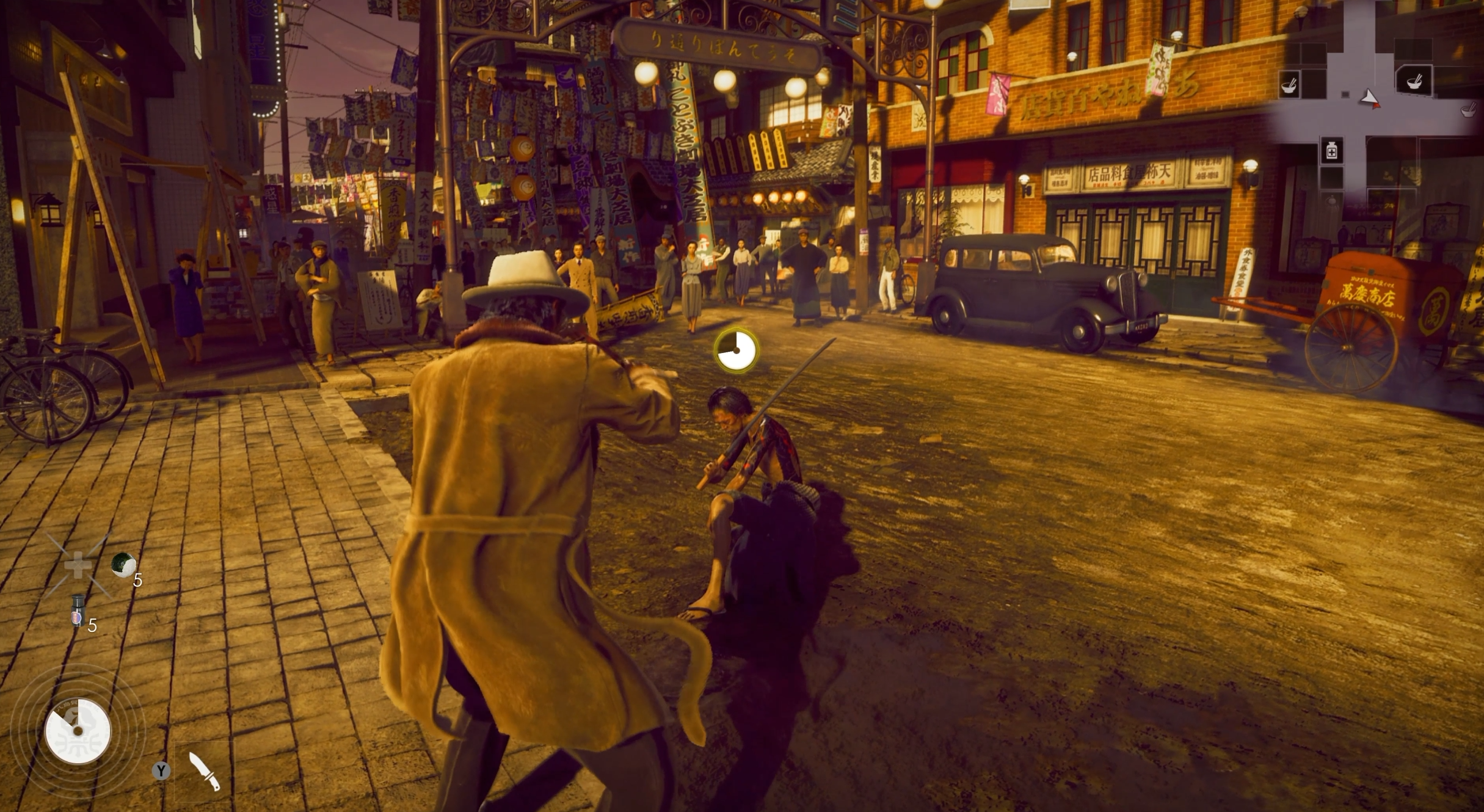
This combat-only preview starts you off with a choice from several different eras of increasing difficulty. You can start off in 1915 Kokura (as a beginner), 1929 Kure (intermediate), or 1943 Osaka (advanced). I started off with Kokura to get the hang of things.
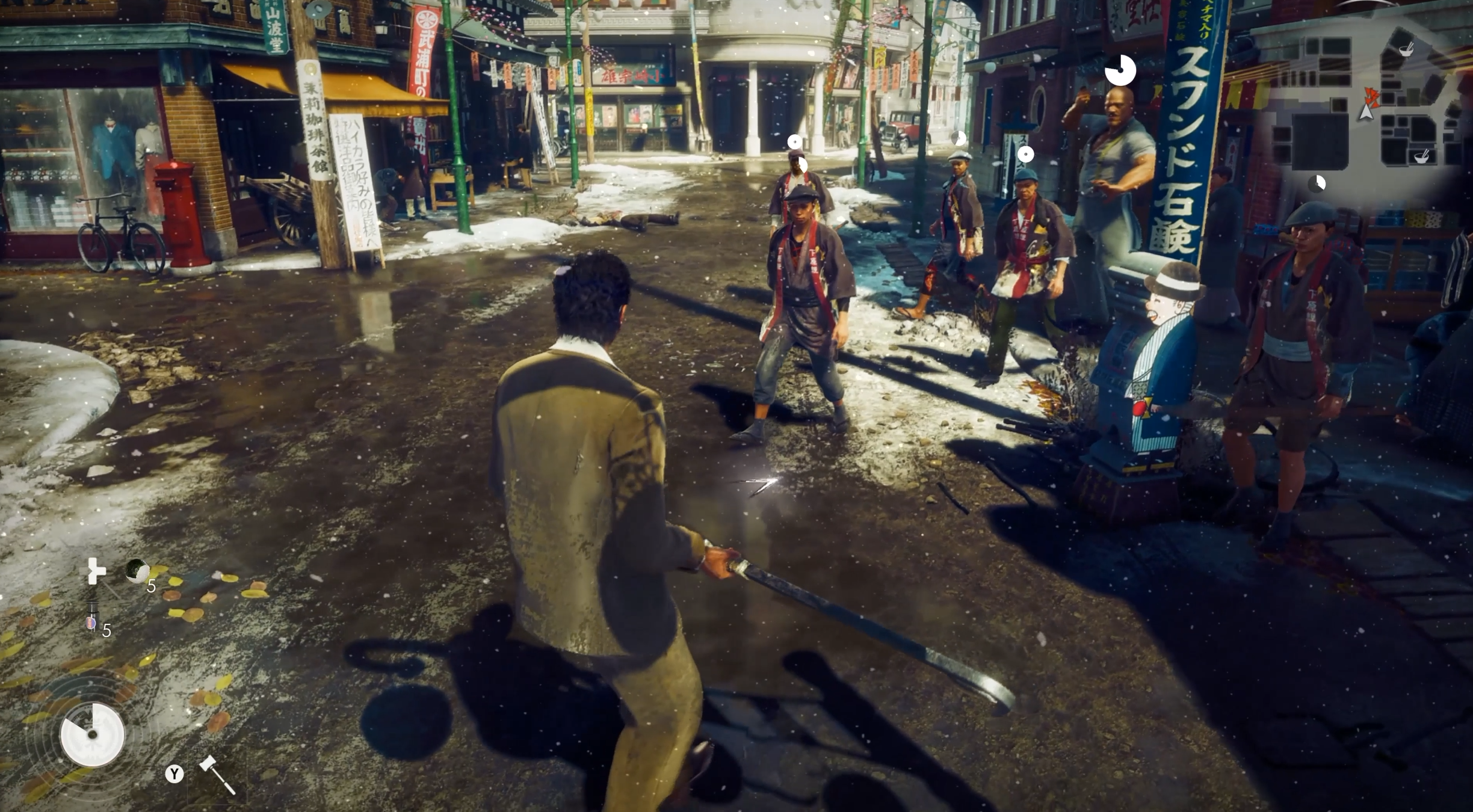
The fight — consisting of Makoto versus five different enemies (one of which was armed with a sword) who blocked you in a narrow street — quickly became overwhelming. In a pinch, I defaulted to spamming the buttons, which, in return, Stranger Than Heaven punished me with a swift Game Over screen. Moving, Makoto feels slow and heavy, with each attack putting so much weight behind the move. The pacing of the fights was not something I was accustomed to compared to RGG’s usual brawler style. Instead, slow and steady became the new tempo I needed to set for myself in order to survive.
During my second attempt, I pulled out a knife (one of the two equipable weapons) and was able to better control my reactions. Instead of spamming my attack (which felt extra punishing because of a lengthy window in which the game accepted inputs, sometimes resulting in consecutive punches to the air), I blocked and shuffled around, trying to get a feel for the pace of the combat. My strategy quickly became to block and attack once the enemy finished their animations. Occasionally, you will knock down the opponent and have the opportunity to deal a powerful blow to them by pressing both the left and right triggers. This allows Makoto to jump on the enemy and wail on them with your fists or a weapon (if you have one equipped). After five or so minutes of doing this dance, I knocked out the final henchman and was able to move on to the next difficulty.
The intermediate level was similar to beginner, insofar as it contained a group of angry men — one of whom was much taller and bulkier than the others — who all ganged up on Makoto. Because this fight was so similar to the previous one, I was able to get through this encounter with ease, following a similar approach to the combat.
During the hard mode fight in Osaka, I encountered a drunken swordmaster at the other end of a bridge connecting two parts of a busy street. This was a taste of the formidable boss-like fights present in Stranger Than Heaven. My first attempt resulted in a quick death as I was still learning his moveset. Differing from the group brawls seen before, this fight demanded even more of my attention and patience. While his attacks were still able to be blocked, they drained more stamina, often staggering Makoto if you attempt to block the whole combo. The swordsman also had an unblockable strike in which he charged up from a distance, then lunged forward, closing any distance between you two in a flash. Getting hit by this attack resulted in losing nearly all of my health. After sweaty palms and a much longer time than I’d like to admit, I was able to defeat the swordsman.
Overall, I had a fun time learning the combat in Stranger Than Heaven. Action brawlers are not my usual forte, so I was a bit unsure and frustrated with this system that wouldn’t allow me to easily button-mash to win. But once I slowed myself down and took the time to learn the mechanics, I found the combat to be quite satisfying.
I’m hoping there’s more to love with this game than the combat, because the playfully serious stories often centered around the power of friendship have been a selling point of the franchises that RGG have guided for so many years. And those goofy yet lovable characters will have to do a whole lot of work to be able to justify the atrocity that is the virtual recreation of Tupac.
I’m an LA native, and even I’m appalled by this decision. Even if we were to remove the moral and racist quandaries of the use of a dead rapper as a marketing gimmick, why do we need a celebrity with a gangster persona to begin with? This decision does a disservice to the game by thinking it needs something like a celebrity to get people excited for its release, a disservice to the writers for thinking their characters are not interesting enough to stand on their own merit, and burns the fleeting remaining goodwill that RGG still has after a series of high-profile mistakes in recent years. I was annoyed to see Snoop in the game, and after this latest announcement, I’m disappointed.
I’d be remiss if I didn’t mention my dampened excitement for this game after this reveal. I was looking forward to playing Stranger Than Heaven, but now I’m honestly not sure if anything could be done to remedy this failure at this point. Despite it all, I’ll still be holding out hope that something eventually improves.
Stranger Than Heaven is published by SEGA and launches on January 14, 2027 on Steam, PlayStation, and Xbox.