Review | Star Wars: Galactic Racer – Rev Up Your Ramjets
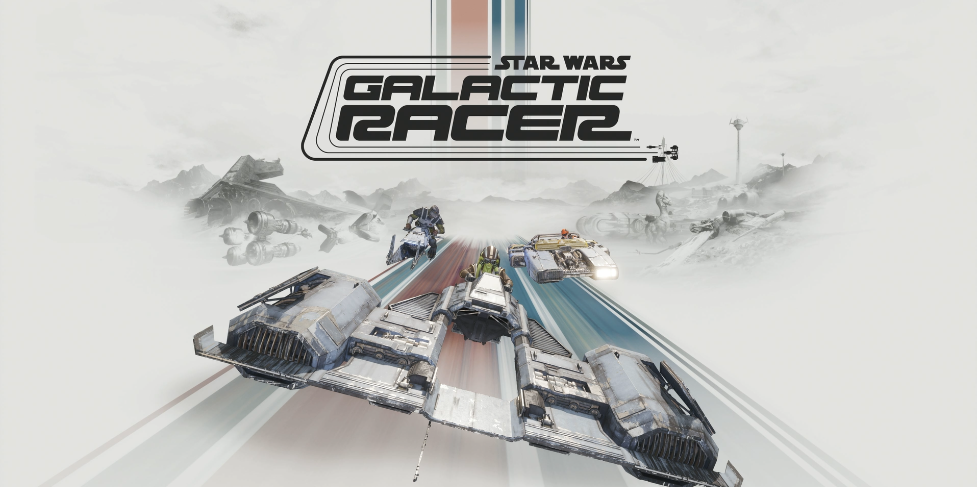
Like most kids who grew up in the 2000s, the Star Wars prequel trilogy was a critical part of my childhood. I have crystal-clear memories of my mom sitting me in front of the family's Sanyo fatback CRT and watching The Phantom Menace on repeat, absorbed in Qui-Gon Jinn's sagely wisdom, the lush greens and regal architecture of Naboo, and the high-octane spectacle of podracing. As such, when Star Wars: Galactic Racer was revealed during last year's Game Awards, I immediately took note of it. Today, I'm here to say that Galactic Racer is so much more than a racing game with a Star Wars coat of paint, proving itself to be a bold evolution of the arcade racing genre.
In Galactic Racer, you play as Shade, a helmet-clad human delivery driver who's been convinced to join the Galactic League by Darius Pax, a Besalisk (remember Obi-Wan's friend from Attack of the Clones, Dexter Jettster, that tipped him off about the Clone army on Kamino? He's one of those guys) who wants to bring back racing now that the Empire has fallen and can’t keep racing outlawed. The game is split into a handful of modes, with a wide variety of single-player content to sink your teeth into before even setting foot online, including time trials, races, and a few character-specific tours.
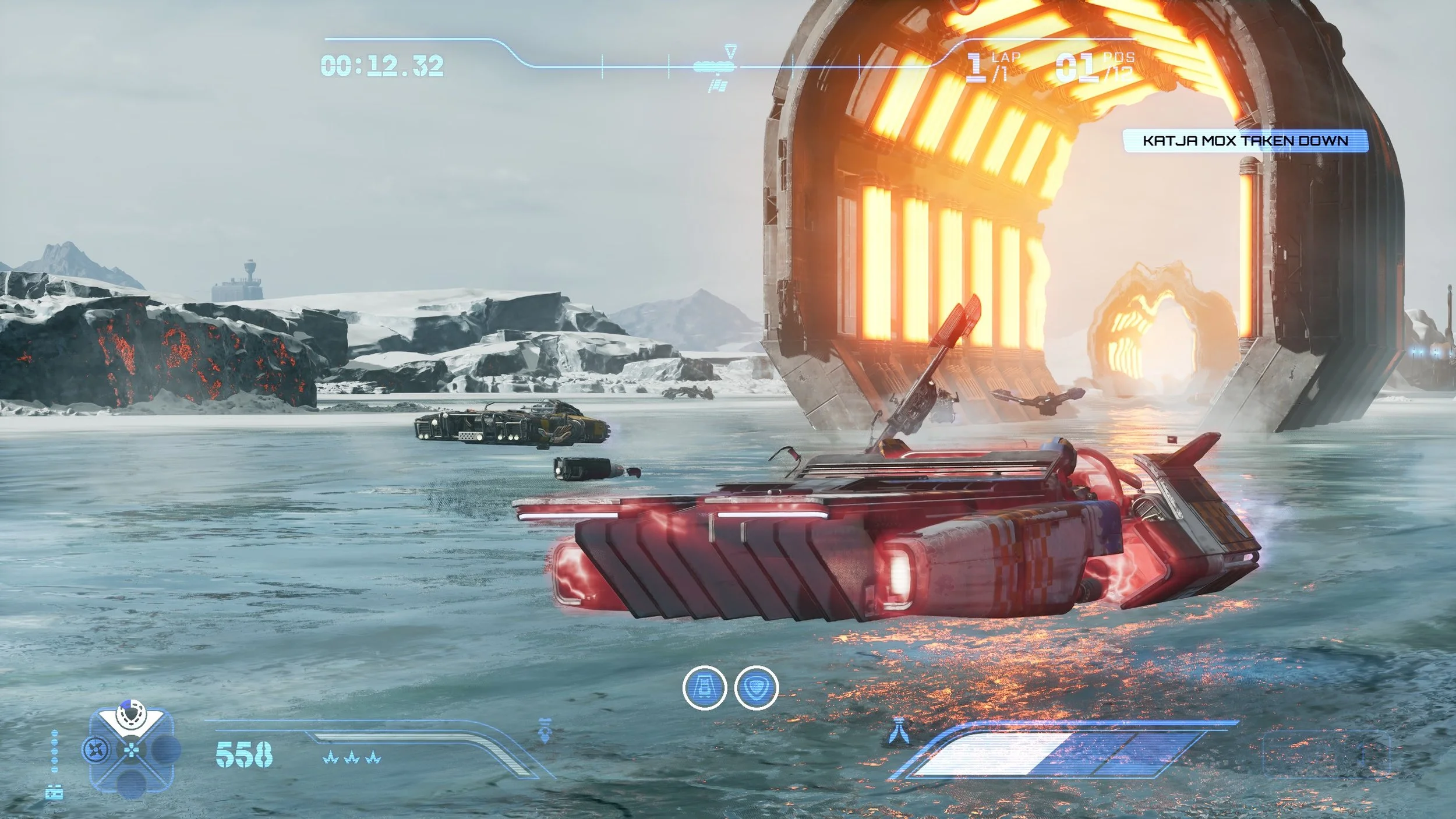
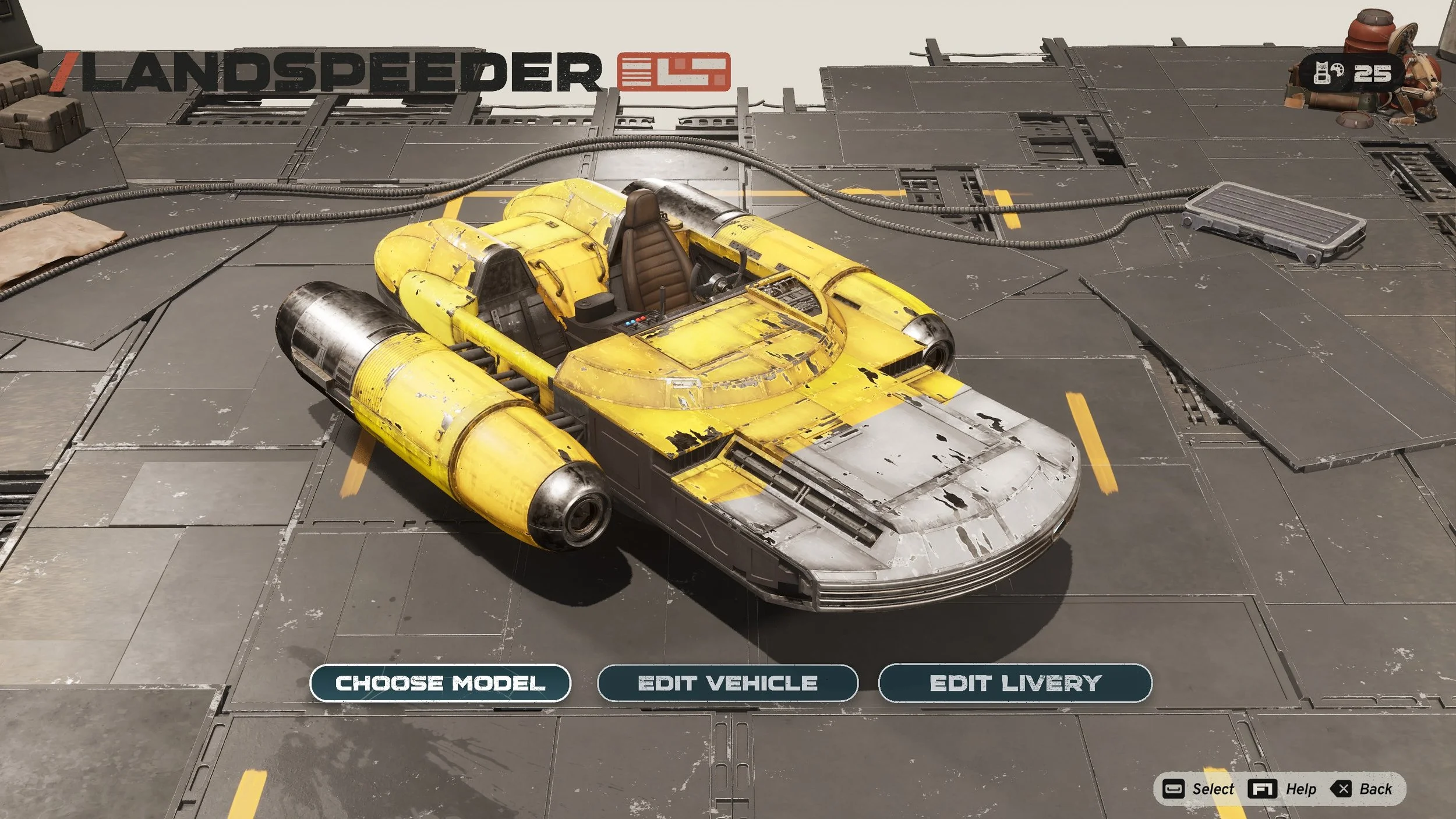
Galactic Racer's campaign is a robust roguelite that follows Shade through various tours in the Galactic League. These tours span multiple planets, each with an array of beautiful tracks and architecture to speed through. Each planet is split into paths that have four or five different challenges, including things like your typical races, a mode similar to Mario Kart World's Knockout tour that eliminates the lowest-placing racer over a short period of time, and Mystery Events where you can earn new parts, or ensure that the competition only breaks one of your parts. The game offers three different vehicle choices initially, with podracing showing up later on as a separate game mode and being readily available for online play. Landspeeders offer a more aggressive and balanced approach to racing, Skimmers make sharp turns easy to clear by being able to turn a full 90 degrees, and Speederbikes gain a short speed boost after drifting. Each one offers a plethora of customisation options to continually tweak your ride and personalise your racer.
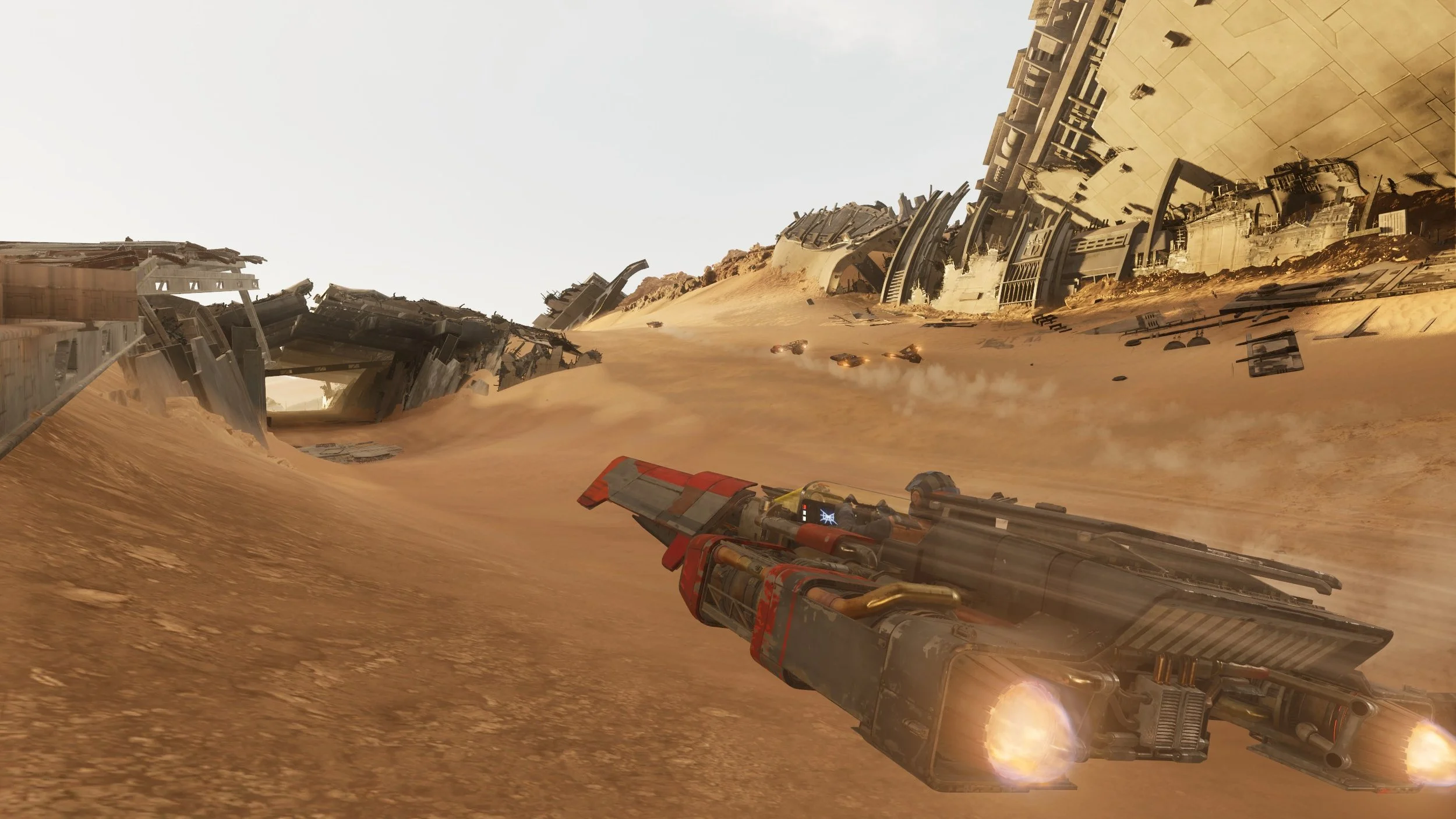
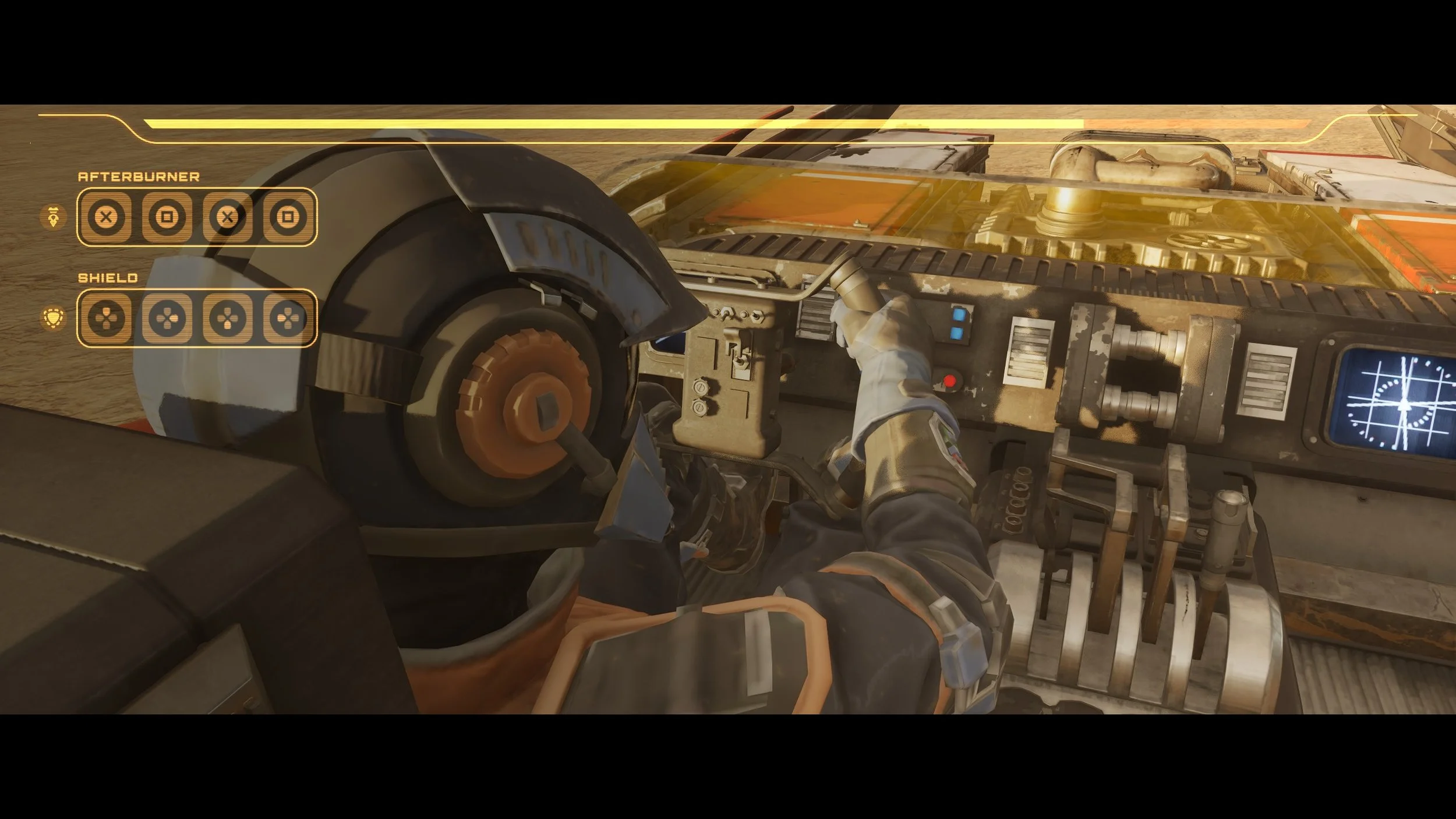
Look, I get that saying that a game "really makes you feel like X" is a pretty shallow statement because the whole point of a video game is to make you feel like whatever/whoever you're controlling. That said, Galactic Racer truly goes the extra mile to put you in the driver's seat. Everything, from pre-race checks that have the player completing a few QTEs to get early access to abilities, to takedowns and crashes being these brief cinematics that show the driver spiraling out off the track, lends itself to creating a very tactile experience. The sound design hits all the right notes: the wub-wub-wubs coming out of my speeder’s engines, debris hitting the windshield while I choke through Crait's salt-covered surface, the soft hover of hitting a perfect landing after jumping off of a ramp and catching some major air. There are also a handful of meters to manage that make it so you have to not only watch your cooldowns, but also like you never really take your foot off of the gas. Even the upgrades you can earn for your vehicle are immediately noticeable, affecting stats like cornering and ramjet speed to permanently alter how your vehicle rides throughout the campaign. All of it works together to create an incredible sensory experience that keeps me wanting to race again and again.
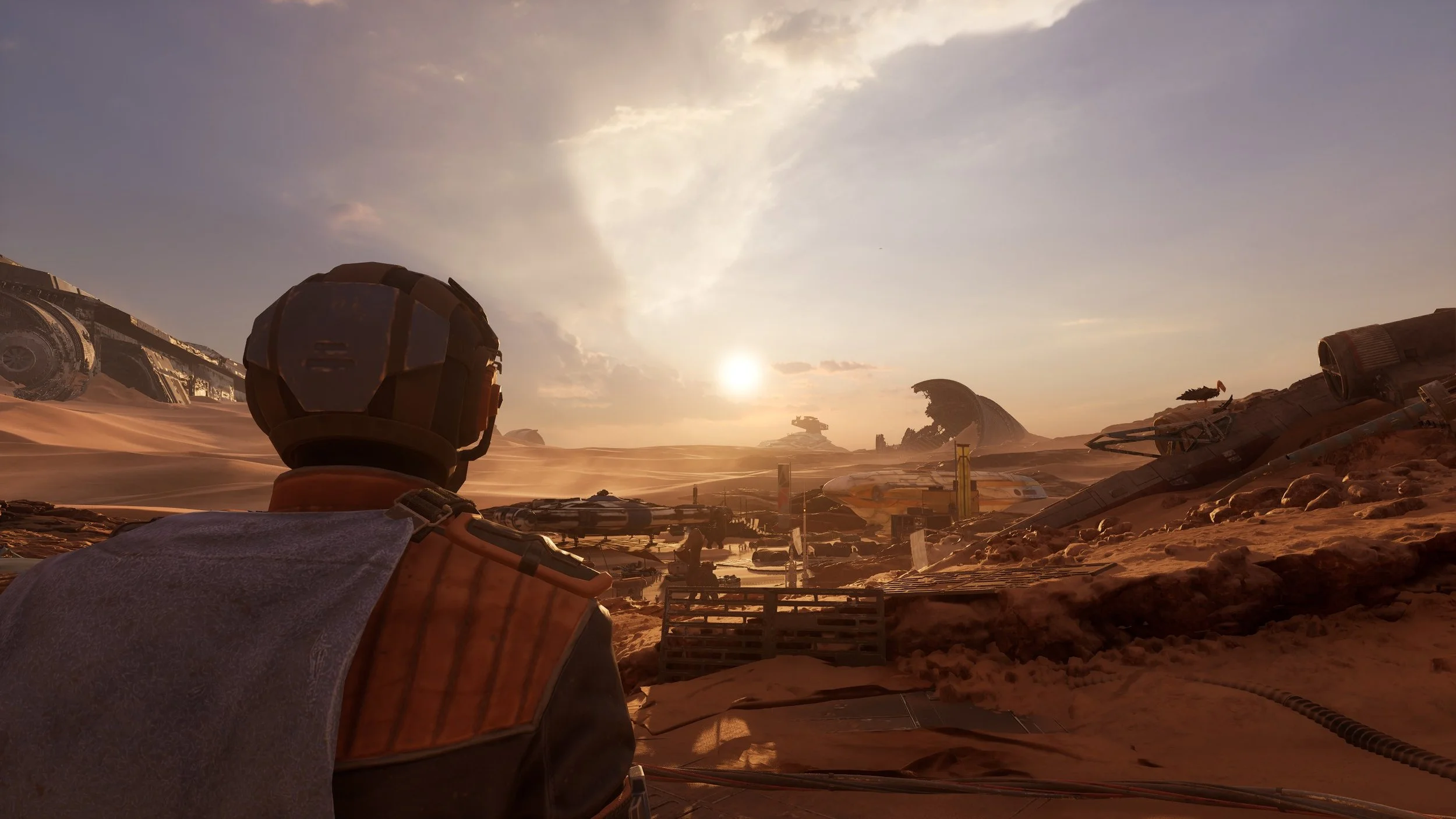
The core gameplay loop sees the player picking their ride and going through multiple tours to eventually qualify for a big final race on Derven Acos, a barren planet with a large racetrack built right on top of it. Both the constantly touring nature of the league and recurring cast of racers feel specifically designed to mirror the structure of modern F1 viewing, in a way that works shockingly well in the Star Wars universe. From here, the game introduces Parts (temporary add-ons that trigger under specific conditions), Upgrades (permanent buffs to vehicle stats), and Abilities (active buttons that do things like give you a temporary shield). Parts can develop faults after taking enough damage, but they can also be repaired for a fairly hefty price if you haven't been making it to the podium in your races. You can make side bets with other racers if you've got the funds, and all of this works together – with the stable of racers constantly bantering and arguing – to make the world feel more alive. After finishing the first act, the game really opens up by adding Backers into the mix, sponsors that will support Shade's racing journey so long as they place well and complete some smaller side objectives throughout the tour.
When I booted up the campaign, I decided to play on Ace, the hard difficulty, purely because I felt that if I was going to hop online at some point, I wanted to be able to keep up with the competition. My first complete run through Act One's four planets took me about 40 minutes, and that was after a few hours of trying over and over again. Would I have had an easier time progressing through the campaign if I and my minimal racing game experience had just played through on Normal? Absolutely. Did it feel so much better knocking Griff Halloran, the ex-Imperial Pilot, into Jakku's rocky edges when I knew I had something to prove? Of course! And speaking of Griff, who can forget Ary Quill? Or Nik Skandaro? Or everyone's favorite shortstack, Biddy Blas, and his iconic catchphrase "You just got Biddy Blasted!"?
Lex said it best: this game really is full of Glup Shittos and Elan Sleazebagganos, and they all add some texture to the campaign. Racing is seen as a form of liberation for everyone involved, no matter their previous involvement with whichever side during the war, and everyone's got some conviction to aim for the top of the Galactic League. In classic roguelite/like fashion, the brief reprieve between tours lets you talk to one (or occasionally two) NPC(s), and overhear another pair of NPCs talking to each other. It's through this that you're able to learn about the relationships between your competitors, what they all think of Shade, and how they've been affected by the Empire's collapse without leaning too hard into referencing events directly. Even Sebulba's appearance managed to be a meaningful addition rather than feeling like it was just dangling keys in the player's face and asking if they remember the Boonta Eve Classic.
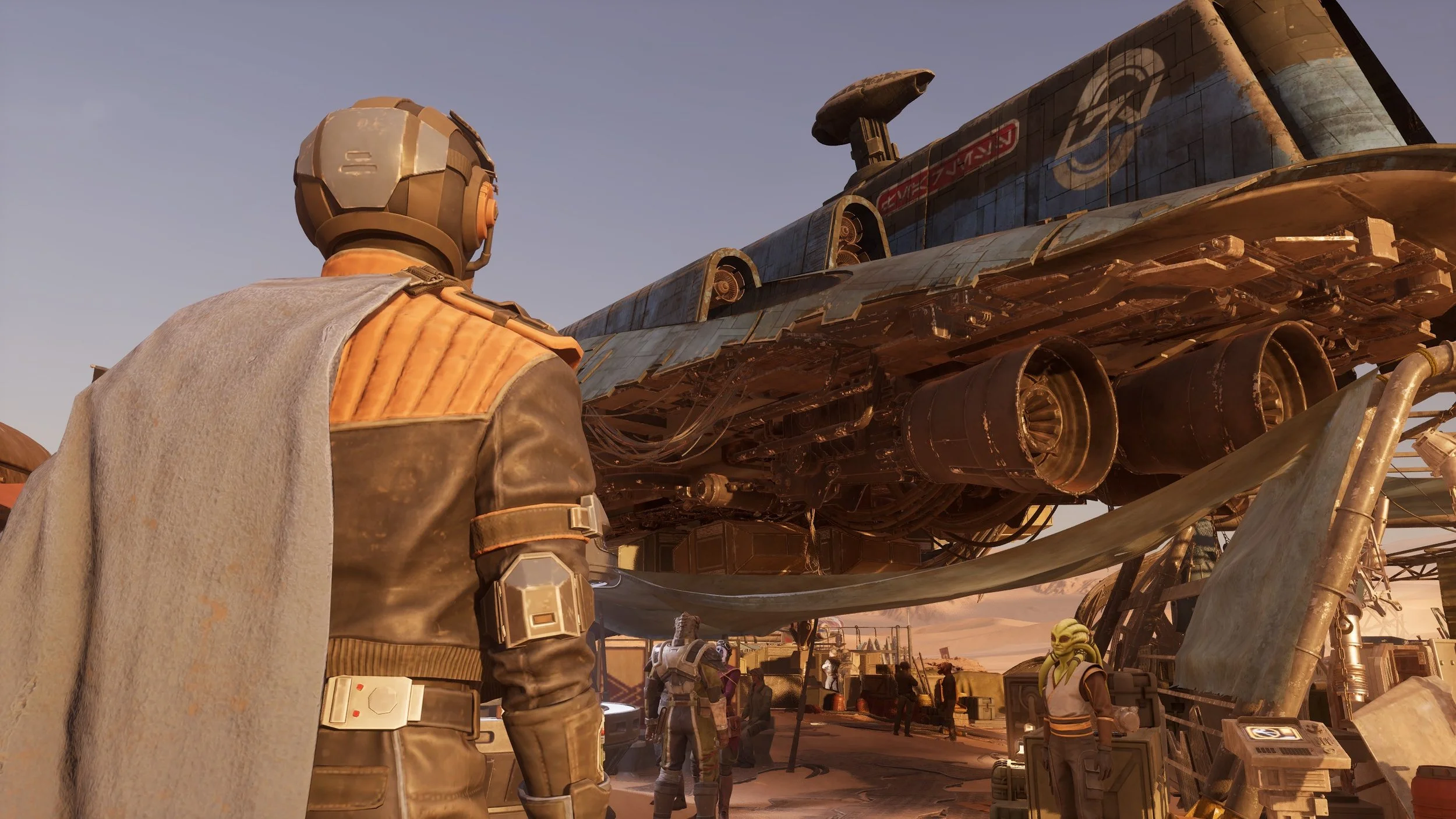
A criticism that I see (and share) about the current Star Wars media is that it needs to spend more time zooming in on the various goings-on of the galaxy to tell more isolated stories that highlight the ripple effect of the wars spanning each trilogy. Galactic Racer is placed between Return of the Jedi and The Force Awakens, with some NPC dialogue hinting that the First Order doesn't exist yet during the events of the game. In a way that doesn't feel forced, Galactic Racer shows this off in some pretty interesting ways. Old Rebel Alliance ships have been purchased and repurposed to transport parts between the racetracks, the very first races take place on Jakku, and there's plenty of references to the fall of the Empire. Galactic Racer may not be trying to tell the next great Star Wars space opera, but it is telling a damn good story in the background.
While I love the single-player content available in Galactic Racer, I find that the online races feel like a shallower version of the campaign. Customisation is still linked to vehicles, and starting abilities are chosen in a class style rollout that lets players control the NPC racers present in the game, but I would’ve much rather have been able to completely customize my kit from top to bottom, including dressing Shade or any other pilot up a bit more. Podracing is also very limited, with the same class system for picking your racer, but also being limited to the character’s specific vehicles with no room to customize parts or change designs. At the time of writing, the lobby system in multiplayer seems a bit uneven even though crossplay is available – of my first five tours, four of them put me into lobbies that were already partially complete.
Overall, my experience with Star Wars: Galactic Racer has been immensely positive. This game breathes life back into a genre that feels as though it’s been relegated to simulation setups with steering wheel peripherals back into the light with a new look. Looking forward, I truly hope that online modes get expanded to include things like Elimination, custom lobbies, and global leaderboards. Podracer customisation would go a long way toward making it feel like an actual alternate game mode rather than just more racing with vehicles that are too fast for the base roster of landspeeders, skimmers, and speederbikes. As it stands, Galactic Racer truly works hard to keep you wanting to race over and over again by creating a robust sensory experience that still leaves some room to be expanded potentially in the future.