Review | Danchi Days - Sense Wonder When In a Bind
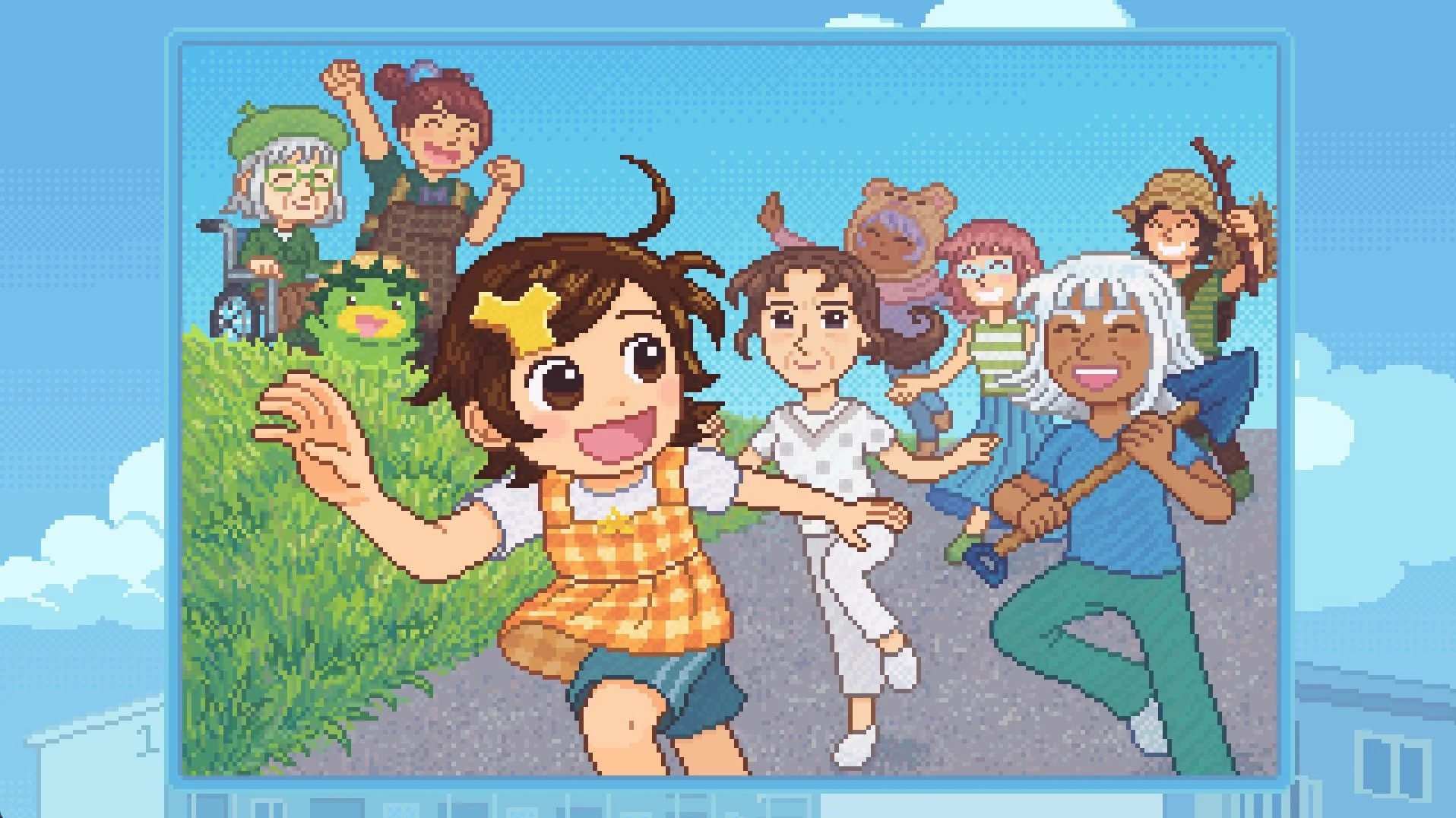
As the world has become harder and colder, we turn towards our fantasies for relief. Danchi Days is one such fantasy. An adventure game set in Japan, it stars a 12-year-old girl named Hoshino. Several years ago she lived in the Another Danchi apartment complex with her father and grandmother. Now she’s back, but times have changed, and her grandmother is no longer well. There’s only one thing to do — throw a summer festival, just like the one Hoshino’s grandmother used to run back in the old days.
Each day Hoshino ventures out into the danchi with her spirit buddy, Moro-Q, to invite her neighbours to the summer festival. Her three tools to achieve this goal are “talking”, “giving”, and “sensing”. The last is particularly important; by absorbing sensory particles, Hoshino unlocks a minigame that lets her smell, touch, and taste things. Eggs cooking on a metal slide. Rain falling on the roof of a bike shack. A rambunctious dance. Even past memories outside Hoshino’s own experience. By learning to “sense wonder”, as her grandmother once taught her, Hoshino becomes a part of the world, and her neighbourhood.
Technically the game gives you a nine-day time limit to achieve all this. In reality, there’s no rush. Simply playing through the game nets you what you need. Of course, if you choose to explore, there are all kinds of funny neighbours and stories out there for you to track down. Like Krysta Rippley, a woman obsessed with digging holes and filling them with water to make puddles. Or Daley Prepper, who is terrified of “That Day”. Many of the characters have their own websites Hoshino can visit, too, with charming little grace notes: diaries, ghost stories, quizzes.
Then there’s Another Danchi itself, a place laid out like an exuberant childhood memory. Sleeping cats obstruct places of interest. Water fountains act as convenient fast travel points — but only to fountains with matching colours. An enormous tree backlit by sunlight connects two areas, yet itself encompasses just one screen. There’s even a ghost or two to liven things up, although the magic in Danchi Days tends towards metaphors rather than the supernatural.
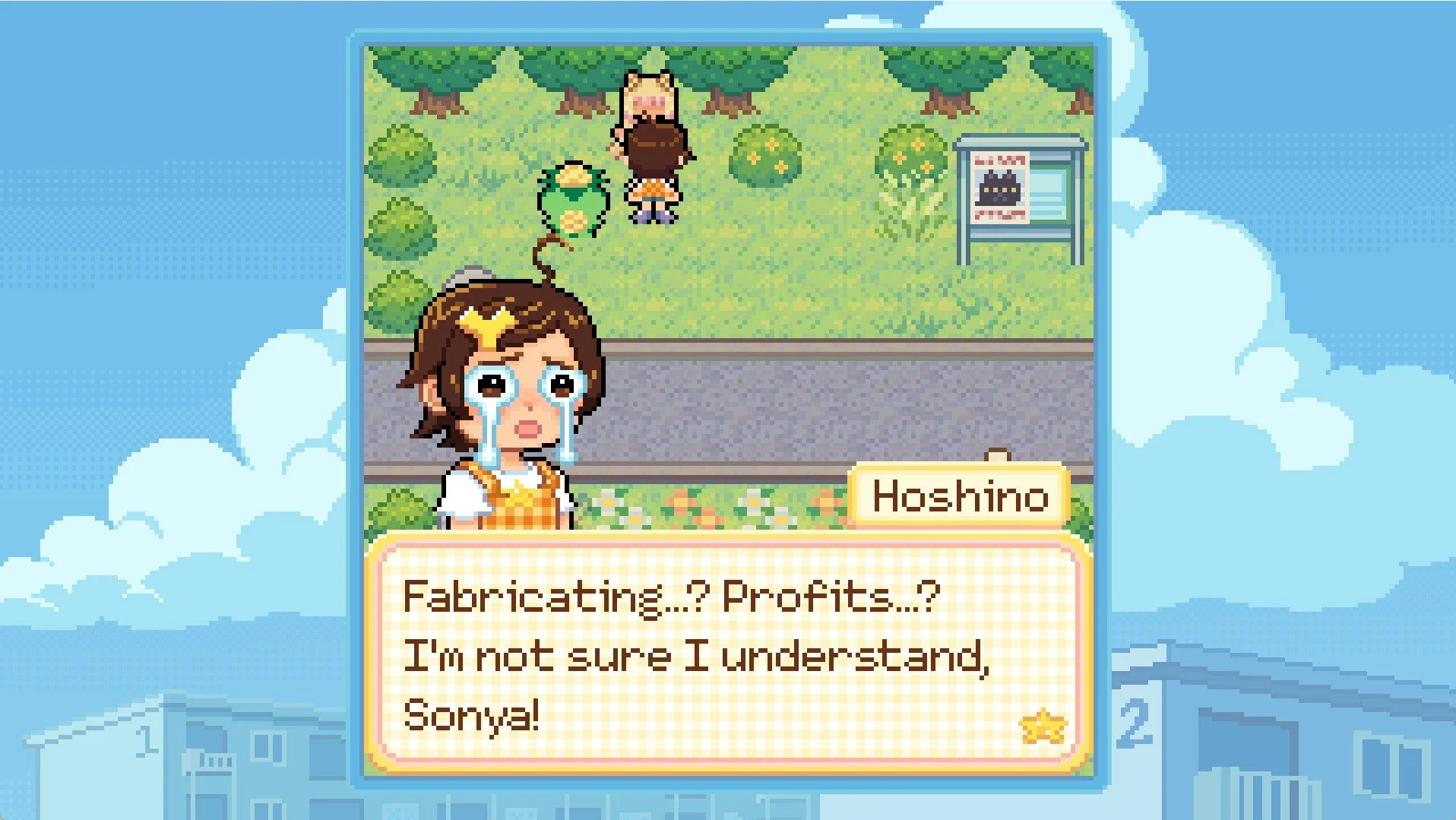
Playing Danchi Days is like reliving a childhood you never had. For many this would be enough. What takes the game to another level for me, though, is that Danchi Days is not just about the past but the future, too. Another Danchi is by no means a paradise. Its oldest housing complex will soon be bulldozed, and the local kindergarten has long since been converted into a senior center. Walls abound with weeds and cracks. The inhabitants are growing older.
We know from the start of the game, even if Hoshino doesn’t, that her grandmother will not heal even if Hoshino does revive the summer festival. This fact hangs over the narrative like a scorpion’s tail, dripping poison even on the most heartfelt scenes. Yet, while Danchi Days isn’t above making its audience cry, it also wants them to think. I knew this game was up to something when one of the first neighbours Hoshino meets, weather-obsessed Raymond Werther, reminds us that “wartime Japan” once “made the weather into a military secret”. If even the sun and the clouds once had their own secrets, what about Hoshino’s neighbours?
Danchi Days wants you to hold contradictory ideas together in your head and come to your own conclusions. Is it okay to lie so long as it brings your community together? Is it so bad to grow old? Could the grumpiest critic of danchi life be acting from a place of love, rather than disdain? Everybody has their blind spots, and there are rarely easy answers. This is not a game content to give the player simple, moralising answers to difficult questions. Even its guiding ethos — that it’s better to slow down and appreciate life than to chase the unattainable in the capitalist rat race — cannot rewind time or bring back the dead.
The game’s skepticism of childhood “purity” mirrors my own. The older I become, the more convinced I am that we selectively edit our pasts. Time flies because we forget the connective tissue: daily tasks, tedium, inconvenience. I long for lake houses I can no longer return to and technology I can no longer access, not despite but because I only remember their outlines. Would I really be happy to return to a time when you couldn’t access the internet without taking your landline out of commission?

That’s why I’m happy that Danchi Days shows us that change, and the passage of time, isn’t necessarily a bad thing. A senior center can help the community as much as a kindergarten once did. If melon bread is no longer available, veggie meat buns will do. The internet gives ordinary people space to share their hyperfixations with others in their neighbourhood. Hoshino’s world has its own unique joys, just as there are things her grandmother once experienced that she can never have. That is the nature of life.
I suspect that there will be a lot of adults, like me, who will play Danchi Days, hoping to relive the same wonder Hoshino feels. The highest compliment I can give is that I suspect there’s a lot in this game for kids, too. Danchi Days refuses to shy away from difficult topics, like losing a parent. It scatters breadcrumbs to reading material outside the game, like Yoshiko Amino’s Rethinking Japanese History, for enterprising teens to check out. Amid the flights of fancy, the developers have hidden survival tips: be curious, stay in touch with your friends, never take the world for granted.
As anime director Hideaki Anno once said, “we must put a bit of poison inside our works…particularly for children.” Danchi Days is another work in that great tradition. It’s a place that’s lovely to visit, a place that will die one day. A cherished memory I know that I will one day forget. I hope that the people who need it, find it.
Danchi Days was played on PC using a code provided by the publisher.