Review | Stupid Never Dies – Style Eating More Than It Can Chew
When I was a teenager, there was a very brief phase where I was what I'd consider a Hot Topic kid. Not in an alternative, emo, Pete Wentz and “The Black Parade” kind of way, but in the graphic tees, colorful buttons, and snapbacks that rested awkwardly on my head until a teacher told me to take it off kind of way. Stupid Never Dies lives and breathes (as much as a zombie can) this aesthetic, from placing its hub world in the middle of an abandoned mall, to dressing the entire UI in colorful buttons with crude drawings, and words on jackets that don't really mean anything but sound cool to read and look cool because they take up space. That said, Stupid Never Dies tends to fall into its own traps due to a gameplay loop that feels like it bit off more than it could chew.
Stupid Never Dies follows Davy, a loser Zombie who ran away from the war that monsters waged on humanity in an act of revenge so they could take over the world. Zombies are the weakest monsters around, and it's only after Davy eats a Phoenix's Egg in the possession of Dr. Frank Steiner, a scientist trying to learn how to defeat the monsters and reclaim the “intelligence of humanity,” that he gets the ability to Style Eat, consuming the cores of other monsters to temporarily use their powers. Now he's diving through the layers of the underworld to go kick KOM's (the leader of the monsters) ass in order to revive Julia, a girl he knows absolutely nothing about that hid inside the mall freezer when she thought she was going to die, and sits there, frozen in place.
The beginning of Stupid Never Dies is honestly quite frustrating in how it starts and stops the player. Recent roguelikes with a heavy focus on narrative usually let the player finish a run, win or lose, and then encounter all the new story developments or dialogue bits that follow between runs. This creates a broad wave where the momentum peaks are reserved for action-heavy gameplay, and the troughs are for those narrative developments and allow the player a brief reprieve before diving back in. When this pattern is consistent, those breaks function to make it feel as though the pacing is steady and purposeful, as the player knows when the ride will slow down and when it'll pick up speed again. That isn't the case with Stupid Never Dies, as its early game will stop players repeatedly to introduce them to new mechanics and story bits in a way that feels more frustrating and random than it does considered. Sometimes the run is too short, sometimes it's long enough to feel like a real run only to end with another pause once you feel like you have some momentum. This does remedy itself after clearing the first couple of introductory bosses, but the gameplay loop is there to stay; Stupid Never Dies treats your runs like worlds in any other video game, as major progress markers that you'll need to complete to get to the next one.
Initially, this loop of runs as worlds can be pretty invigorating. With each run essentially being a balancing act of trying to make it to the bottom layer of the dungeon before time runs out, and trying to level up enough to stand a chance against your enemies, it's easy to get caught in the trap that action roguelikes set of wanting to go again and again. Early successes are a bit of a rarity, as the bosses have patterns to learn, accompanied by some fun arenas to duke it out in. Beyond that, you're always getting rewarded for your actions because of the game's core idea — consumption.
How does Davy get the ability to Style Eat his enemies and take on their forms and powers? He eats the Phoenix egg. How does he heal during battle? He eats other monsters. How does he get new perks to equip after leveling up, or new permanent stat buffs, or progress the story and gameplay in any way at all? He eats. Hell, the hub world is in the middle of a mall food court with a gift shop and a couple of restaurants. Consumption is paramount to driving the action of the game, and you're encouraged to do it over and over again. Upon leveling up, you earn your platter of new buffs to choose from (in the words of Northernlion, it's a "choose three" game) in the form of Receipts, offering things like damage increases, improved status ailment buildup, recovering health after landing an attack, and so on. Receipts also come in various rarities, and most of them can be improved after collecting enough resources to make them more potent. You also learn more about the monsters as you eat them and use their powers for the game’s bestiary, and progression for each core relies purely on how much you use the specific transformations and abilities.
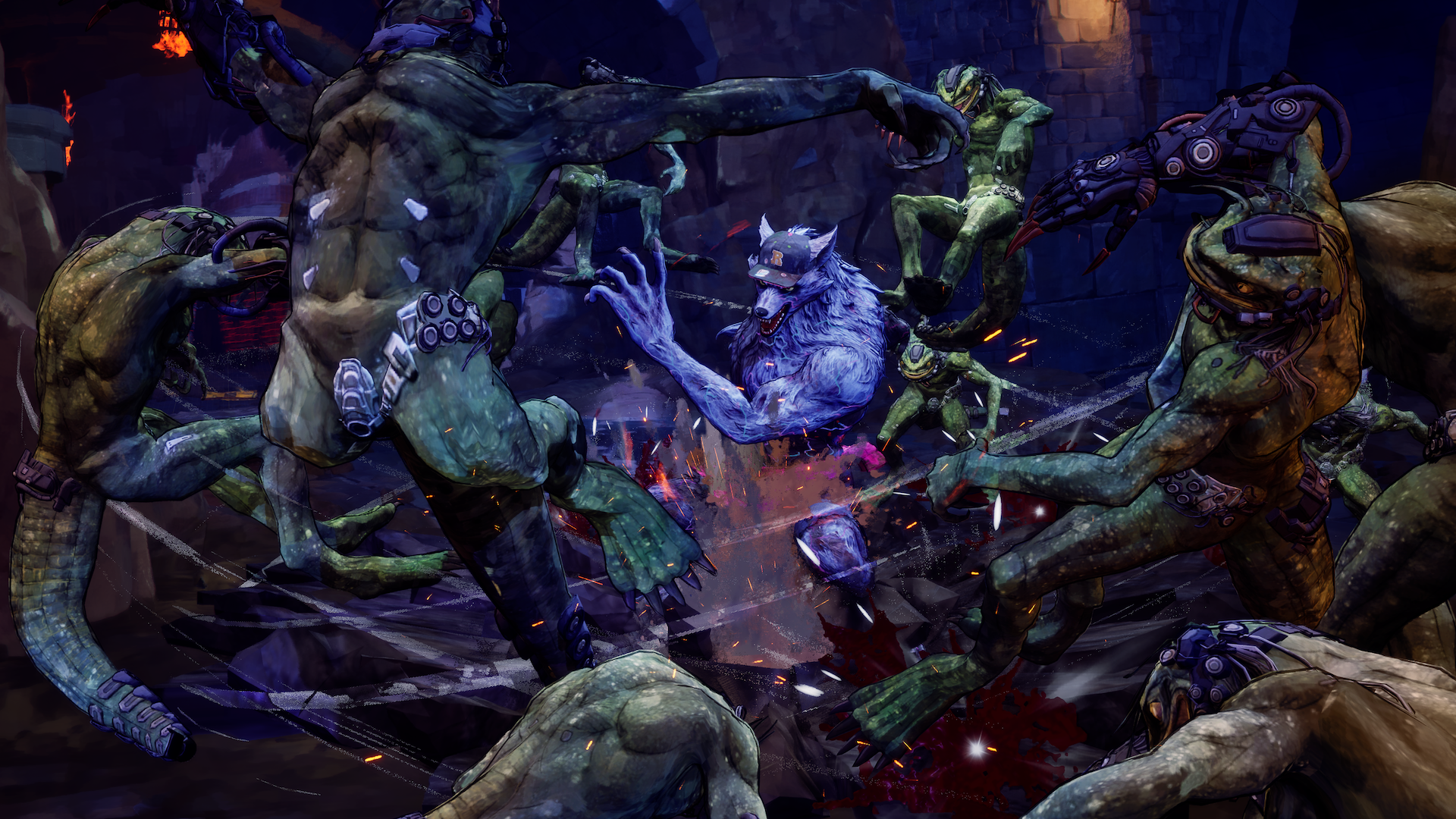
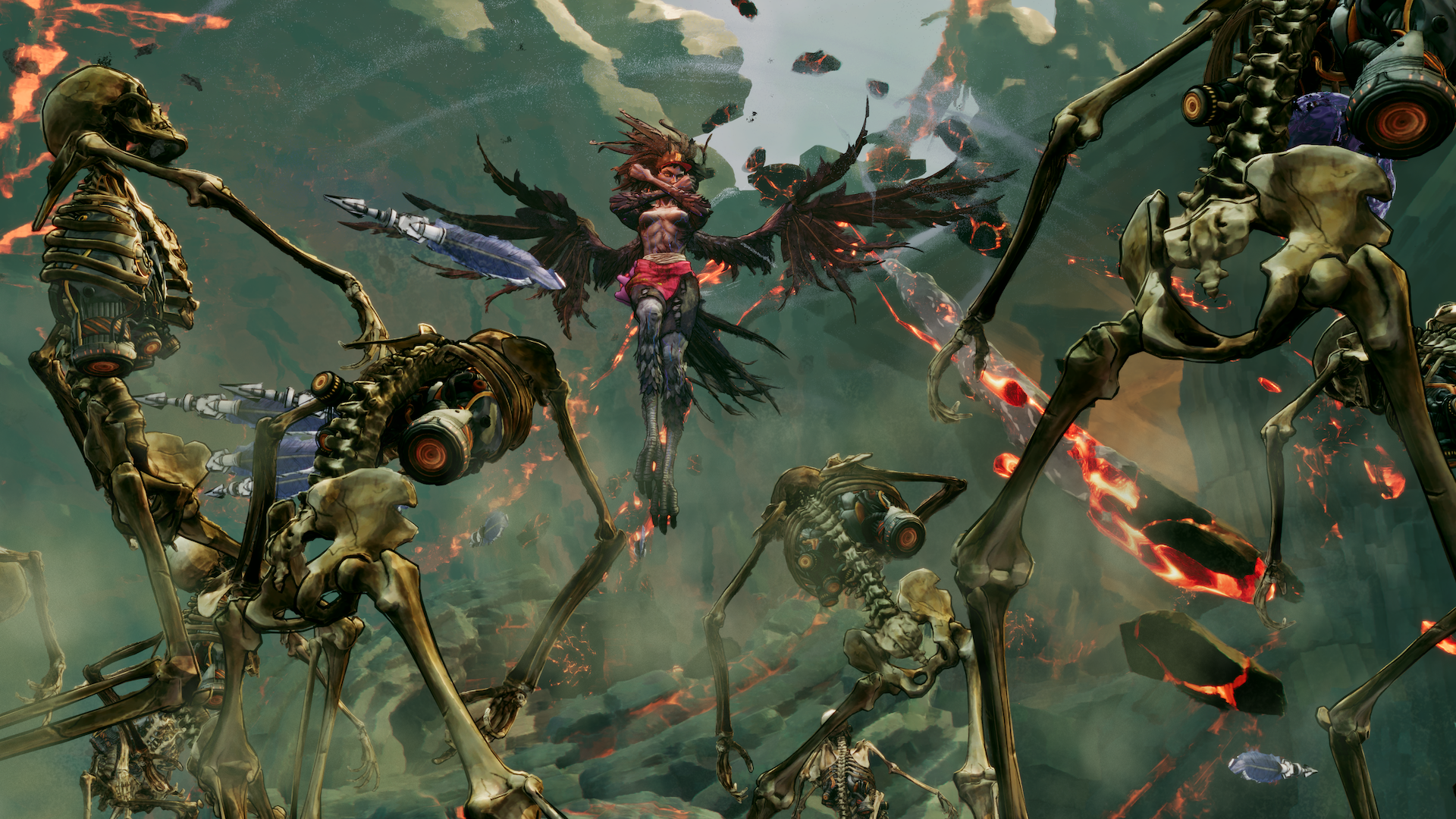
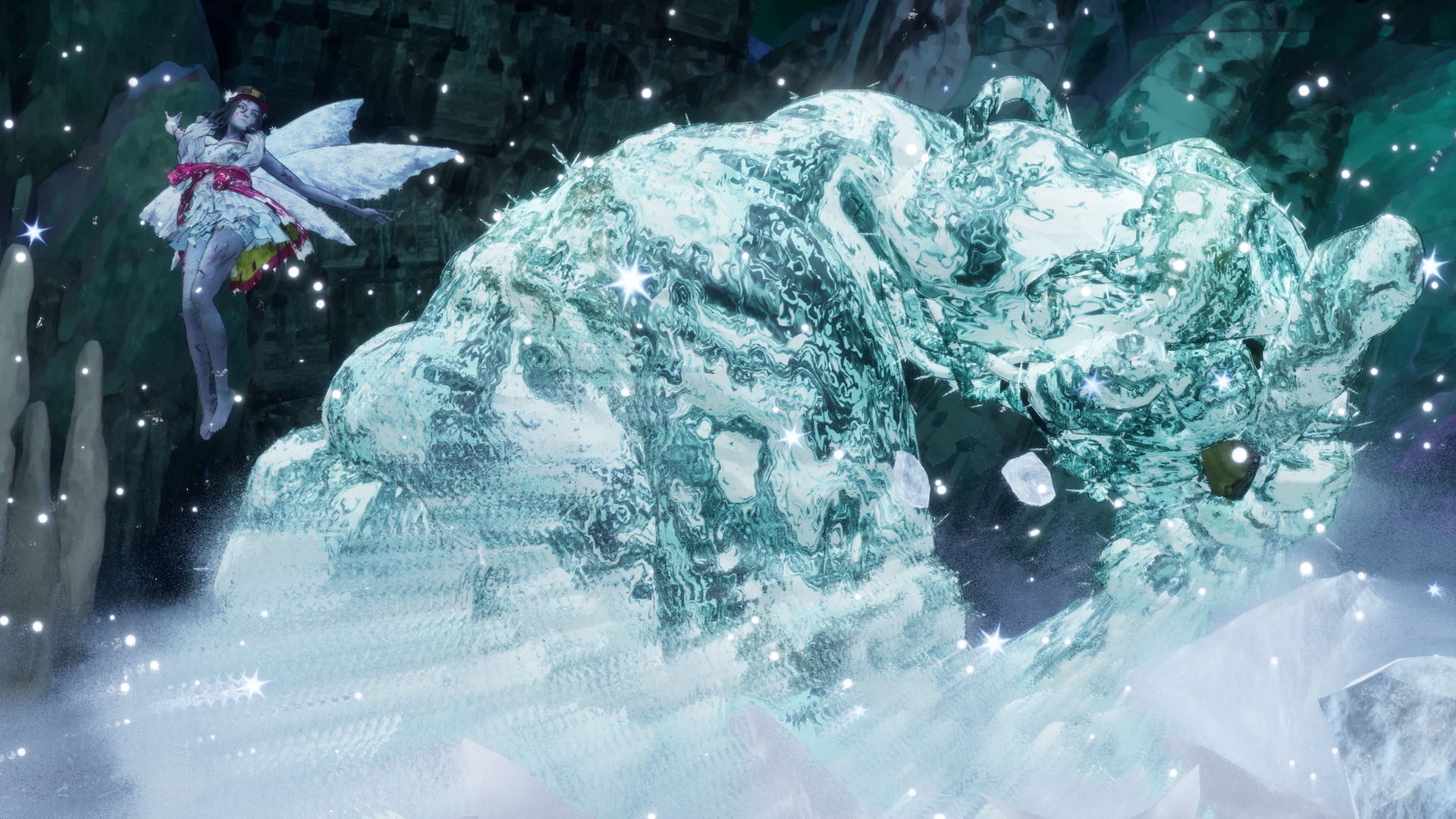
The combat in Stupid Never Dies is the clear highlight of the whole experience. The cores that Davy eats out of elite enemies all feel pretty different from each other, alongside being able to shift from one to another on the fly. Davy can transform into a handful of monsters, including werewolves, merfolk, harpies, and golems, just to name a few. What's more is that his default zombie form is also just a full kit to play with, being layered enough as the rest of the classes to function on its own. I found myself attempting a few runs without transforming purely to see how the experience would go, and honestly? They weren't that bad. On top of the cores, Davy can equip Over Technology to modify his head, arms, and legs, adding another layer to the customisation and build potential that's abundant in the game, and both the cores and Over Tech range in rarity from Common to Legendary, with the latter boasting better stats for both. Stupid Never Dies wants you to reshape your approach to combat, as you're always unlocking new things as you progress through the game, while also allowing a wide build variety for players to find their most comfortable playstyle before unlocking a higher rarity gear and starting the build process over again.
Additionally, this game is full of aesthetic charm. Each Receipt comes with its own fun sticker that gets slapped onto the top right corner of the UI without creating any visual clutter, turning the screen into a sort of sticker page to highlight how much stronger you’ve gotten. Davy can collect TickTock Teddies, little bears that keep track of how much longer you have in the dungeon, and the game is full of sketchbook drawings that make fun of enemies and bosses as you encounter them for the first time, or pull of a Davy Burst, a temporary power up that builds up as you take down more enemies.
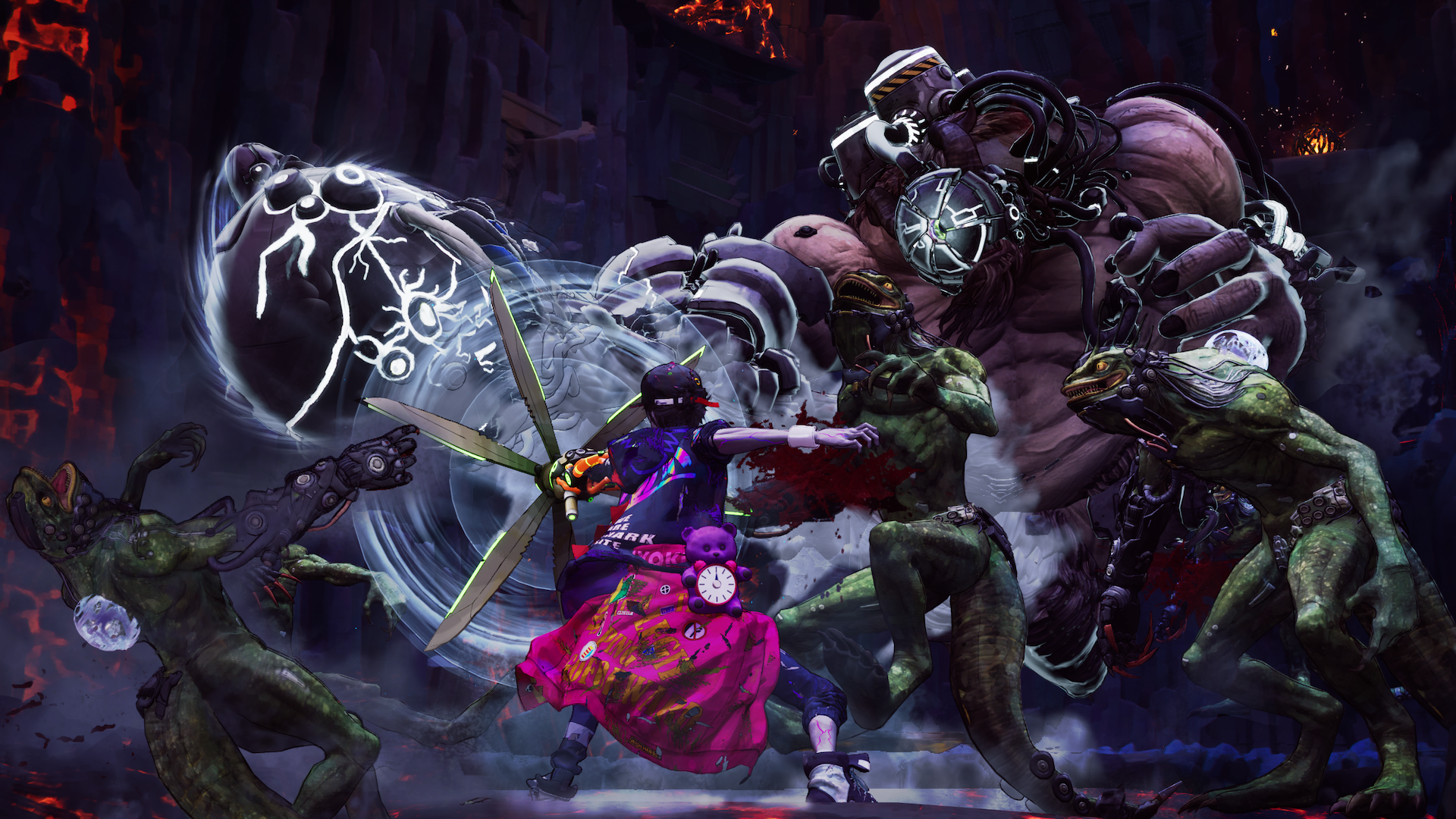
Despite these praises, the game's core loop started to wear on me after the first ten hours or so. Earlier, I mentioned how the game treats runs the same way other games treat worlds, and as fun as that loop can feel given the combat capabilities and abundance of items to affect your next charge through the dungeon, variety came to a standstill well before the halfway point of my 30-hour playtime. By this point, I had built a kit I was comfortable with and had figured out my game plan to help me more smoothly progress to the bottom of the dungeon. Beyond this ability to min-max runs so easily, there are plenty of systems that, while potentially beneficial, don't necessarily require your attention to succeed. Each monster and its cores have strengths and resistances to different elemental types and status conditions. These didn't really matter for the majority of the run because you can just hit them hard over and over again. I often found the best approach to be tacking on as many multihit skills as possible to just keep the damage going and overwhelm bosses. If anything, these resistances and weaknesses matter mostly for boss fights, but even then you aren't always guaranteed the core that has access to the element you might need, so you can just turn back and go with plan A - hitting the boss a lot until it dies. Without spoiling anything, I was maybe one or two levels above the final boss and had equipped the right array of Over Tech to essentially let me never have to take my foot off the gas, and what was supposed to be a bombastic final battle turned into a pretty swift drubbing.
On top of this, the game’s pacing, while consistent, drags on. After every run, you earn a pretty large percentage boost in terms of how much more experience gain you’ll get on the next run. This means that the early layers see you shooting up from Level 1 to 19 after taking out just one enemy, but this slowly decelerates the further you go. Combine this with runs lasting around 15-20 minutes once I hit the dungeon’s bottom layer, as well as having already optimised my route to get there, each dive began to feel like more and more of a chore. Initially, the experience boost at the start feels like a way to kickstart your dives by letting you get to deeper layers of the dungeon sooner, but in reality it plateaus once you’re used to everything. Once it hunkers down on how long runs are typically going to last, it really does feel like a drag, especially when these 20-minute segments are how you progress through the game.
I notice now that I haven't really written anything about the narrative trappings of this game, and that's because I feel this is the area where Stupid Never Dies struggles the most. Davy's primary motivation to defeat KOM is reviving Julia. Davy's adoration for Julia is purely parasocial and one-sided given that Julia is literally frozen and unconscious. It sort of feels like the writers over at GPTRACK50 wanted to call back to that feeling of being a teenage boy and having a crush on a girl who is impossibly out of your league built on a shallow, puberty-fueled attraction before actually getting to know her. And hey, it kind of works in that regard, but things start to get really weird when Davy can sift through Julia's old social media and bolster his motivation to go save "his girl." One of the ways to unlock permanent buffs is to give Julia various presents found on the layers, filling up a heart-shaped bottle and spending accumulated hearts on buffs.
Could this be a fun jab at vapid and transactional online dating culture and how we try to surmise so much about people through the curated lens of social media and lists of likes and dislikes? Sure. Does it get delivered in a really weird, Boys will be boys kind of way? 100%. The worst part is, Davy's actually a pretty interesting zero-to-hero when he isn't talking about or to Julia. The premise of a zombie that defected from a war against humanity and is now trying to defeat the ruler of all monsterkind is pretty interesting. Stumbling into that role out of pure ignorance is a pretty fun way to set up a reluctant hero. Making him do it to save the life of a loved one is a good motivation. Having that loved one be a strange case of infatuation and social media stalking is a weird way to go about it. Eventually, Davy does thaw out Julia, with the help of the other characters in the game – Dr. Steiner, a scientist who sent Davy on his mission after he ate the egg, Acelino, a Chihuahua man and Over Tech specialist, and Bessie, a zombie with a motorcycle who runs the burger shop where you can upgrade Receipts – and once she’s unfrozen, she doesn’t do much except continue to exist purely for Davy’s motivation. She and Davy hardly talk unless it's in a cutscene to move the plot forward, and it’s a large part of what made continuing through the game a bit of a pain. Julia barely even feels like a force driving Davy forward; she really does feel like a reward dangled in front of you, with both people having little impact on each other's characterisations. Even though she does have her own backstory about who she was before and during the war, she doesn’t truly feel fleshed out, and she certainly doesn’t feel like anything more than an object to chase.
I’d like to talk about the rest of the cast briefly, and note that while they all exist as different vendors and menu accessors to the player, they are pretty interesting. Dr. Steiner and Acelino have the strongest connection to the story, both being directly affected by KOM’s actions before the game’s story starts, and this works very well to add some depth to the world. The VA performances really knock it out of the park with how weird this game is, and aesthetically they set the tone for Stupid Never Dies quite well. On top of this, the soundtrack is phenomenal, with a wide variety of songs that play throughout the layers and even a little DJ booth to idly listen to some of the tracks unlocked over the course of the game.
One of the things Stupid Never Dies incidentally showed me was just how much harder it is to stay up to date technologically when it comes to PC gaming. I got my PC in 2023, a pre-built from eSports Arena as the company was selling off all the hardware it had to recuperate some money as it filed for bankruptcy. All that said, my PC's gotten the job done until recently with more games shifting to Windows 11 as their default OS and me playing on outdated hardware. For this review, I played Stupid Never Dies on my Steam Deck, but that green Deck Verified stamp doesn't seem to really mean much other than being able to run the game. I played Stupid Never Dies from beginning to end in a subpar picture quality given what the Steam Deck is capable of, and the game itself doesn't have anything to adjust resolution or visuals really at all. It's a strange feeling to write a review for a game and have your thoughts interspersed with figuring out how much cash you want to shell out for a few new parts. That said I am glad that I only had one issue of the game freezing across my 30 hour playtime, so while the game does scale elegantly to lower end hardware, it rarely buckles completely under the weight of Unreal Engine 5.
Stupid Never Dies feels like watching teenagers first discovering what it means to be punk. This is GPTRACK50's first major release, with Capcom alum Hiroyuki Kobayashi leading the charge, and just like those faux-edgy teens it feels like they still have a bit to learn beyond cool jackets and anti-conformist buttons on backpacks. Stupid Never Dies leaves a bit to be desired as an action game under the helm of the same guy who had a hand in Devil May Cry and Dragon's Dogma, with interesting gameplay bogged down by a runtime that demands more than the player might want to give.
Game code provided by the Publisher and reviewed on PC.