Michael Beckwith Unpacks The Hundred Line's Most Challenging Question: How Far Would You Go To Save the Human Race? | Winter Spectacular 2025
WARNING: The following article contains MAJOR story spoilers for The Hundred Line: Last Defense Academy
Thanks to its myriad branching story routes, The Hundred Line: Last Defense Academy is about a lot of things. The bonds we forge with others, fighting against fate, reckoning with and accepting the consequences of our choices. But if there’s one thing to take away from The Hundred Line, it’s its staunch anti-war messaging.
“War is bad” is a pretty common message in all manner of stories, including video games. That’s ground well-trodden by the likes of Spec Ops: The Line and This War of Mine. But Kazutaka Kodaka, co-director and writer of the main Last Defense Academy scenario (among others), has never been one to do things by halves. Anyone who’s played the Danganronpa games knows he likes to push his stories to their most extreme and really force his characters into the worst kind of no-win situations.
So, for as ridiculous as The Hundred Line can get, with its larger than life, borderline cartoonish characters and bizarre sense of humour, the war it depicts is not only harrowing, but also forces us to reckon with some equally harrowing questions: How far should the human race go to keep itself alive? And would going to those lengths really be worth it?
If you’ve not played The Hundred Line, you should — it’s a genuine Game of the Year contender. In the meantime, here’s the basic gist: its main premise sees a band of high schoolers enlisted by a weird robot called Sirei to form the Special Defense Unit and protect the titular Last Defense Academy from invading monsters. Said monsters are said to be born from the Earth itself and seek to wipe out humanity, so the school must be defended for 100 days so a super weapon can be charged up and destroy the invaders, thus allowing humanity to leave the underground bunkers and reclaim the planet.
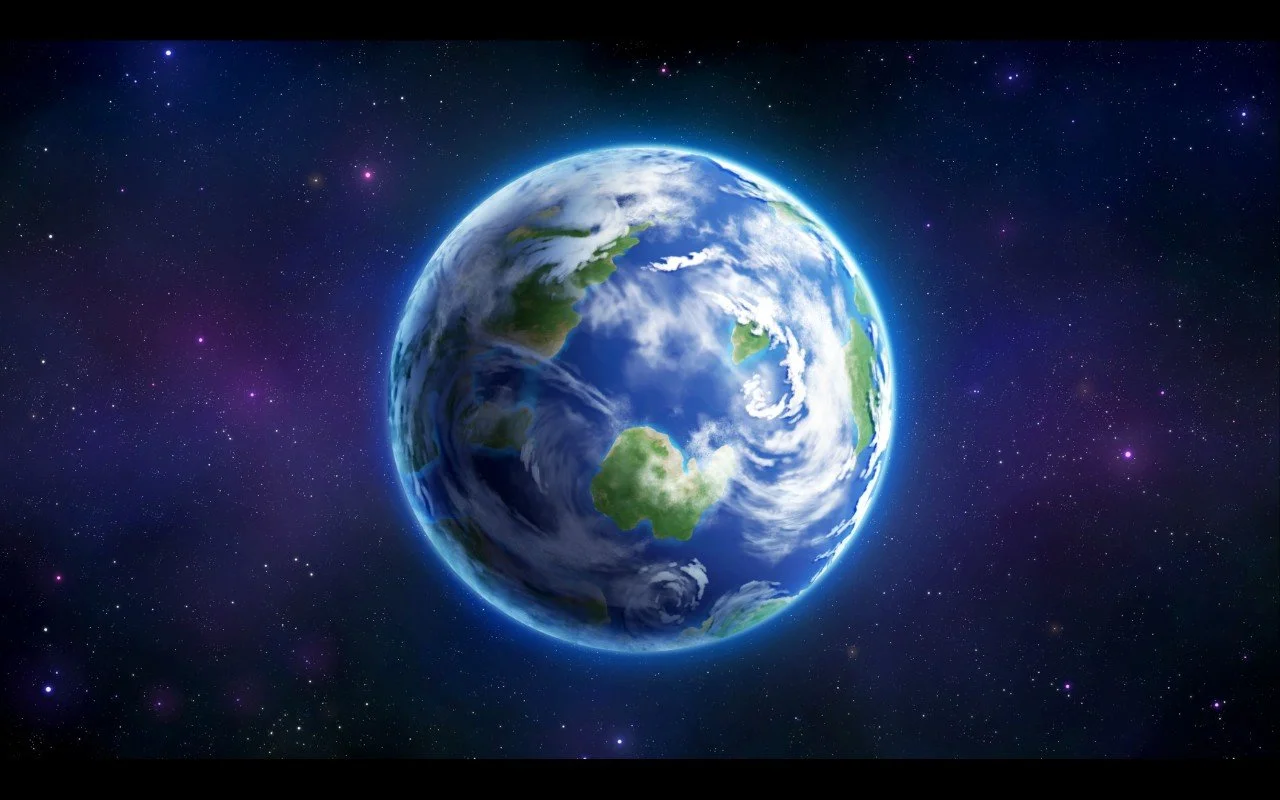
Unsurprisingly, the situation isn’t so simple, and our heroes soon reckon with a despairing truth. They are not on Earth at all. Humanity was already forced to flee the planet on an Artificial Satellite and has, miraculously, found another inhabitable planet called Futurum, home of a human-like race called the Futurans.
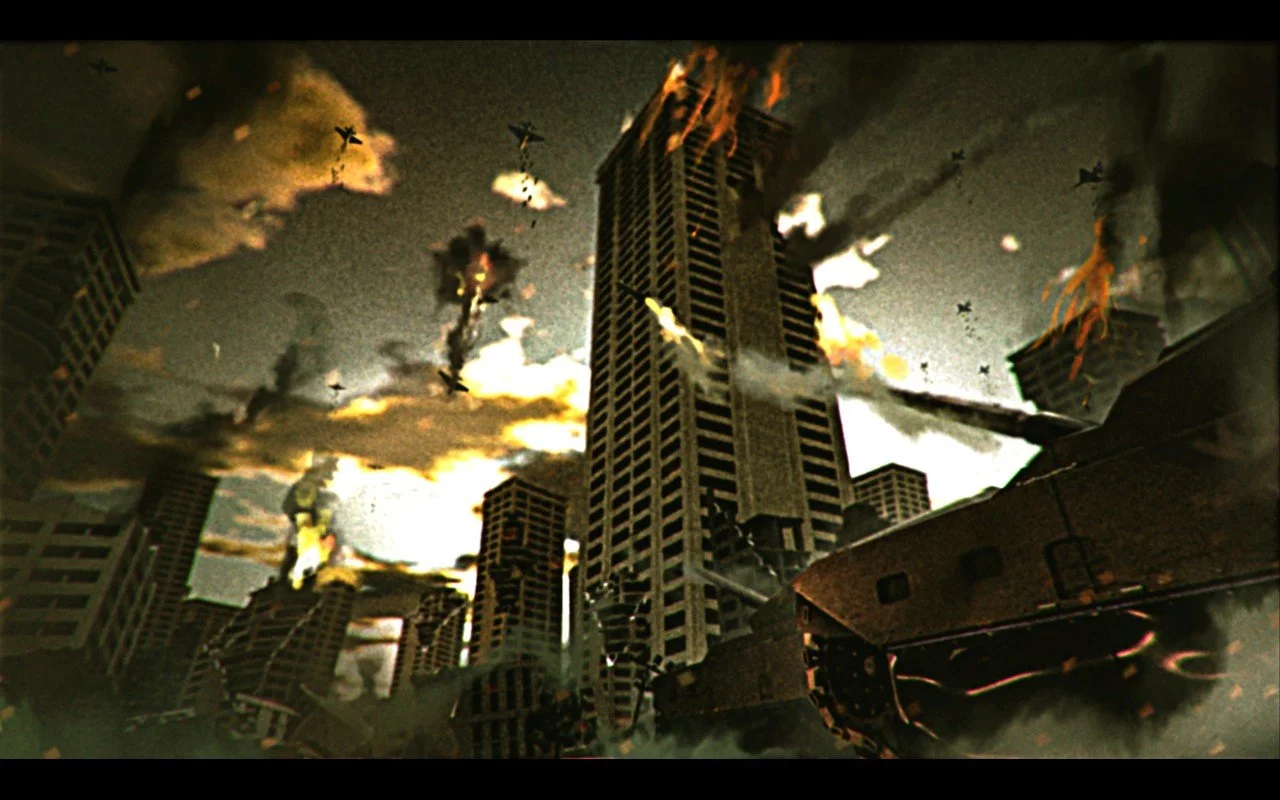
In an Inverse interview, Kodaka said there’s “no particular message” behind The Hundred Line but, intentional or not, he paints a very bleak depiction of humanity in this storyline. Kodaka could’ve easily had humanity try to make peace with the Futurans, only for the language barrier or an accident or a singular villain to cause a communication breakdown and kickstart this tragedy. But no, humanity is unambiguously the aggressor and the villain of this story, something Sirei fully and at least shamefully admits to. Humanity fired the first shot. It has no intention of sharing its potential new home and wants the Futurans gone.
It's not as if the Futurans are an inherently aggressive race either. A couple of the army commanders are dirtbags who enjoy their job a bit too much but considering the Futurans’ main fighting force are innocent people forcefully mutilated into monsters, it’s evident that most of them don’t want this war. In fact, their tyrannical leader V’exhness — who goes on to cannibalise her subordinates in a bid to both destroy humanity and ascend to godhood — arguably only became that way because of the invasion.
And that’s not even getting into the other heinous shit humanity does — namely capturing, torturing, and brainwashing Futuran commander Eva into joining the SDU; kidnapping an especially powerful Futuran baby and turning it into a power source for the extinction causing superweapon; and creating clones implanted with fake memories to fight this horrid war for humanity… those clones, of course, being most of the SDU.
Life is inherently precious so it’s typically uplifting when we get stories of humanity facing extinction and being saved thanks to the actions of a heroic protagonist. But here? To save humanity is to doom another innocent species, one that literally did nothing wrong and was forced into war.
It can be argued that it’s really the fault of a select few — the people in charge of the war effort — but Sirei makes a point to say he is programmed with “the will of humanity,” which, to quote the game itself, “simulates the thought patterns of all mankind.” Every choice Sirei makes is based on the collective, not specific individuals, meaning that if given the choice, humanity would choose to wipe out another species if it meant its own survival.
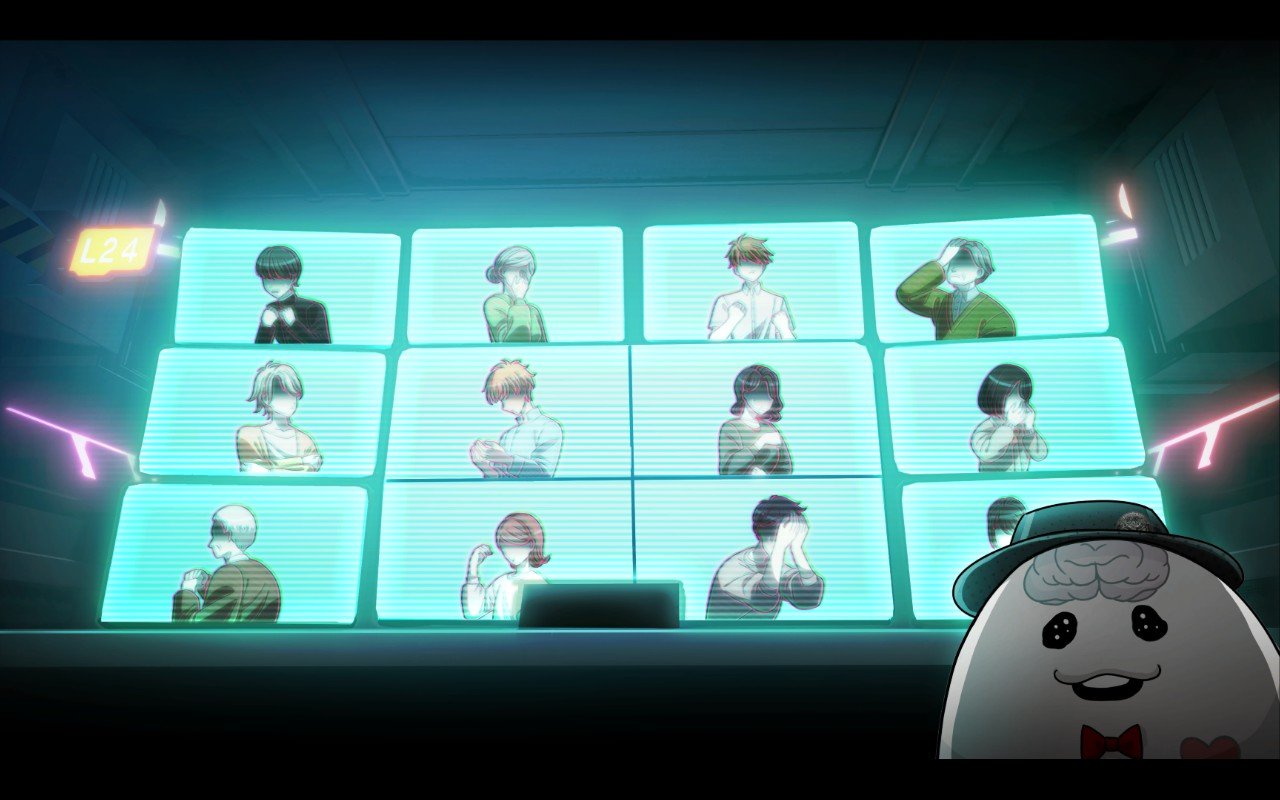
Humanity isn’t depicted as inherently villainous, though. Assuming this isn’t another lie by Sirei (I don’t think the game suggests it could be anything but the truth), the regular citizens living on the Artificial Satellite are oblivious to the SDU’s circumstances and are rightfully horrified that they are relying on children to save them from extinction. Yet, for as apologetic as they are, they understandably send messages begging the SDU to keep fighting, because of course they don’t want to die.
I had intended to get every ending in the game regardless, so whenever a choice needed to be made, I rarely lingered, partially because I typically had an immediate gut instinct as to what to pick. But when the moment came to decide whether to save or abandon humanity, I really had to think about what the “right” choice would be. And after finishing not just this story route but several others, I think an important and certainly radical message we can take from The Hundred Line, whether it was Kodaka’s intent or not, is this:
If the continued existence of a species necessitates the genocide of another, then perhaps that species shouldn’t survive.
The game itself certainly doesn’t rule that out. Among the messages from humanity, one old man outright states, “Did we really have to go this far? Maybe it would have been better to let us die out.” And though they’re never mentioned in this scenario, another story route reveals there is a faction of humanity that’s accepted its inevitable extinction and is trying to sabotage the war effort (though it can safely be assumed they are in the minority on the issue).
I think what’s particularly telling is Nozomi’s reaction to all this. Nozomi is the one member of the SDU who is an actual human being and not some alien clone, though she was (partially) as in the dark about the truth of the war as everyone else. Throughout the whole game, she’s also the most dedicated to the cause, expressing repeated eagerness to save humanity. But upon learning the full scope of the war, she pivots hard. Ironically, when faced with humanity’s pleas for the SDU to keep fighting for them, Nozomi is the most incensed by this, and is 100% willing to side with her newfound friends over her own species should the rest of the SDU choose to desert.
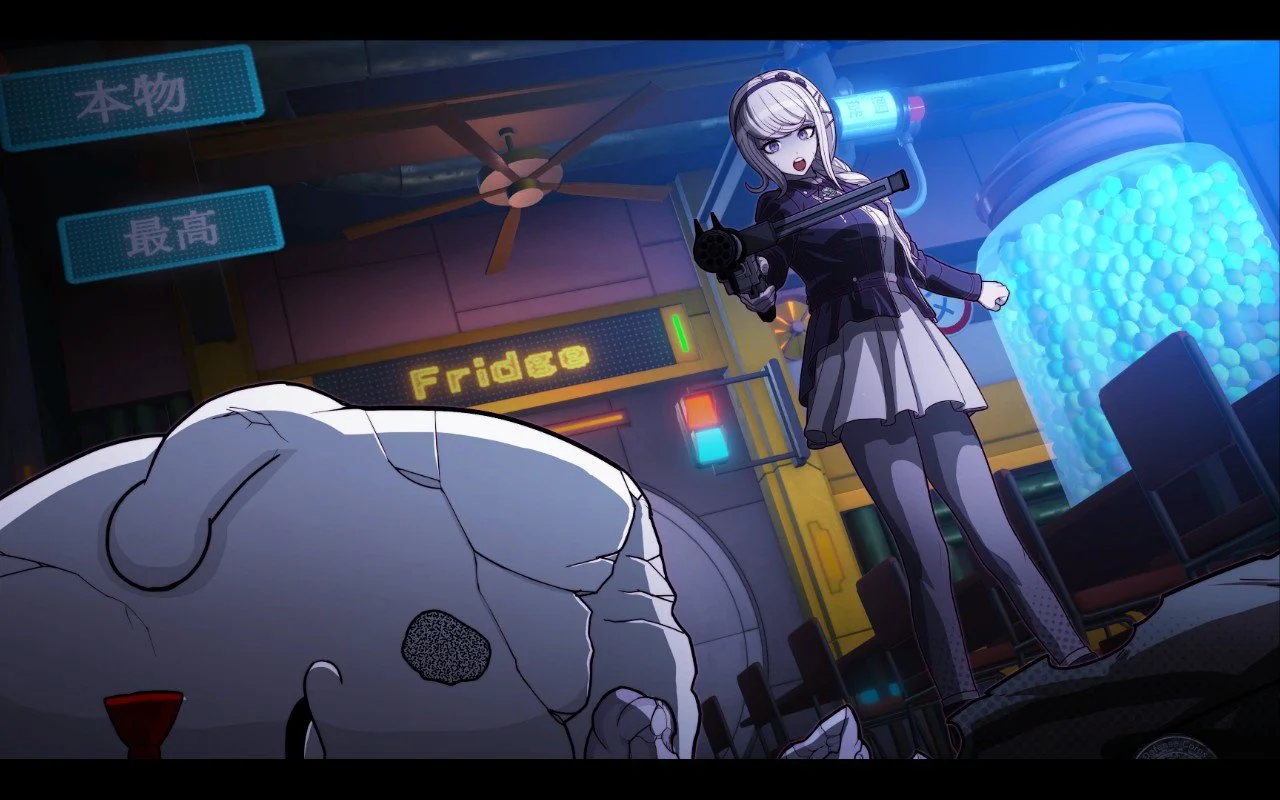
Humanity even arguably receives karmic retribution for its crimes. Should the SDU agree to keep fighting for humanity, the storyline eventually sees V’ehxness create her own superweapon that successfully destroys the Artificial Satellite. Really comes across as the game saying, “Try to commit a genocide? You get genocided back.”
It's impossible to experience this story and not draw parallels with the ongoing events in Gaza, something the wider games industry is keen to not acknowledge or comment on. There’s already a depressingly still-relevant piece on startmenu from 2024 about the games industry’s role in this horrific moment in history but, while Kodaka would likely deny any explicit influence, there’s perhaps some solace to be found in a video game that highlights how indefensible and evil the act of genocide is.
It shouldn’t be a controversial stance, and you really shouldn’t need a video game to tell you this. And yet we live in a time where protest group Palestine Action has been officially labelled by the Labour government as a terrorist organisation for the crime of opposing the mass murder of innocent people. Where industry members who are willing to speak out about it risk jeopardising working relationships or being blacklisted. Where some people conflate support for Palestine with antisemitism and a desire for Israel to be wiped out instead.
The Hundred Line emphatically states that anyone who would support and/or participate in a genocide is at worst a villainous monster and at best still deserving of condemnation. You are not right, you are not justified, and honestly, you’re stupid. As hard as it is to believe given everything humanity does in this game, the story does indicate that peace was always an option.
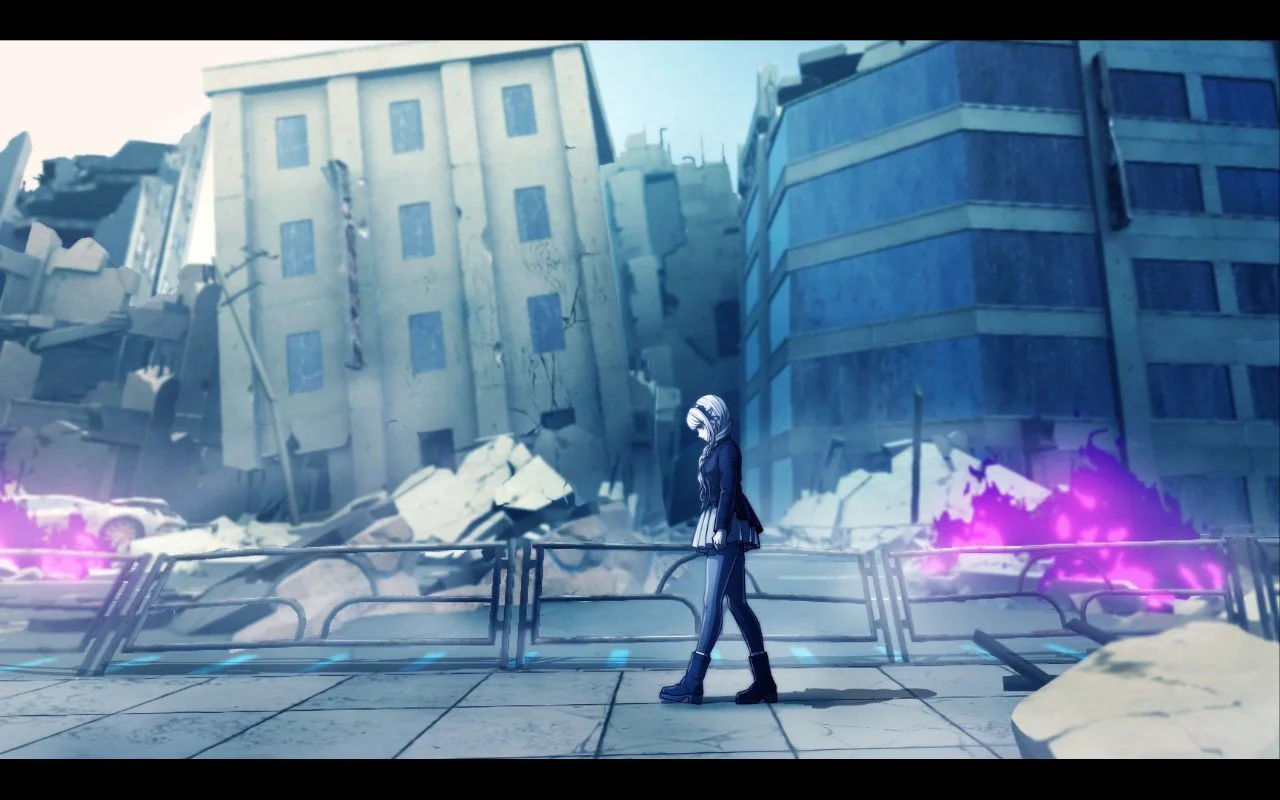
The ending to The Hundred Line’s second scenario (dubbed the true ending because it reveals the truth of the war) is easily the bleakest Kodaka has ever written. Humanity is gone and, in a bid to stop Last Defense Academy’s superweapon going off anyway, the remaining members of the SDU give up their lives to stop it, dying to save a race of people that saw them as monstrous invaders and will likely never know their sacrifice.
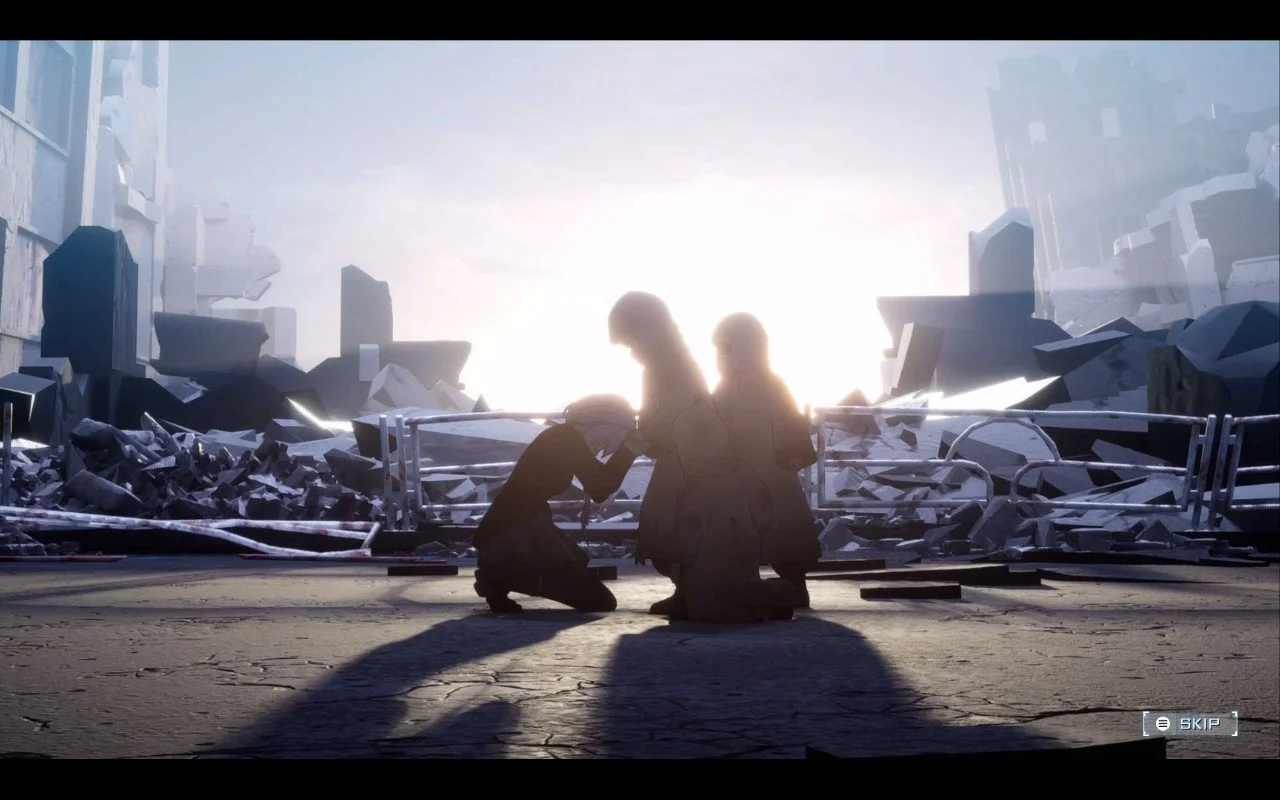
Nozomi is the only survivor, having lost both her species and her closest friends, people she came to see as family. As she exhaustedly wanders the ruined city alone, she comes across a group of presumably homeless Futurans, ones who immediately recognise her as one of the alien invaders that helped decimate their planet. One of them grabs a nearby pipe in fear. But Nozomi remembers protagonist Takumi’s final words to her:
“Nobody wants to fight — they just want to live in peace. That’s all we ever wanted too. The people of this planet will understand how we feel… That’s what I believe.”
With Takumi’s hope in her heart, Nozomi, with her head bowed, silently extends a hand… and the Futurans take it as a new dawn breaks.
It’s not just this route either. There are very few examples, but some endings do see the SDU successfully broker peace between humanity and the Futurans. My personal favourite is the Rebellion route (written by Ukyō Kodachi and Kyohei Oyama), which kicks off with the SDU rejecting humanity’s pleas to keep fighting the war and leads to them being contacted by Futuran rebels looking to overthrow V’exhness. They not only see the SDU as potential allies, but their leader — Kamyuhn — is willing to put aside the SDU’s torture and murder of her mother, Eva, if it means forging a truce and ending the war. And though said peace sadly comes at the cost of Nozomi’s life (who Takumi literally travelled through time to save), Takumi and Kamyuhn do pull it off after 15 years of hard work, allowing humanity and the Futurans to coexist. It's honestly frustrating that all the pain and bloodshed might have been completely or at least mostly avoided had humanity not succumbed to desperation and/or plain old xenophobia.
The act of genocide is never an inevitability. It is a choice and no matter what excuse or justification some may concoct, even if it’s to stave off one’s own extinction, it is always the wrong one.