Impressions | Crimson Desert – Like Drowning In Quick Sand
Have you ever been a few hours into a game and thought to yourself that there is absolutely no way you will ever see credits on it? Not because the game is bad, but because the game is so massive, so dense, that you’ll just end up drifting off to another game? Crimson Desert is essentially the epitome of all of those games. It’s every open-world game you’ve ever played, smashed together into a package that is equal parts fun and irritating.
Ten hours into Crimson Desert, I get the mixed reviews. I totally understand why some critics completely bounced off the game, why some adore it, and why some absolutely hate it. It is a game designed to be content, a game designed for 2026. There are more mechanics than anybody can be expected to keep up with. There are more things to do than anybody can ever be reasonably expected to do. The game is longer than playing through Persona 5 Royal. But despite all of this, I do feel a certain affinity towards Crimson Desert, a pull that keeps me wanting to put an hour in here and there, just to unwind.
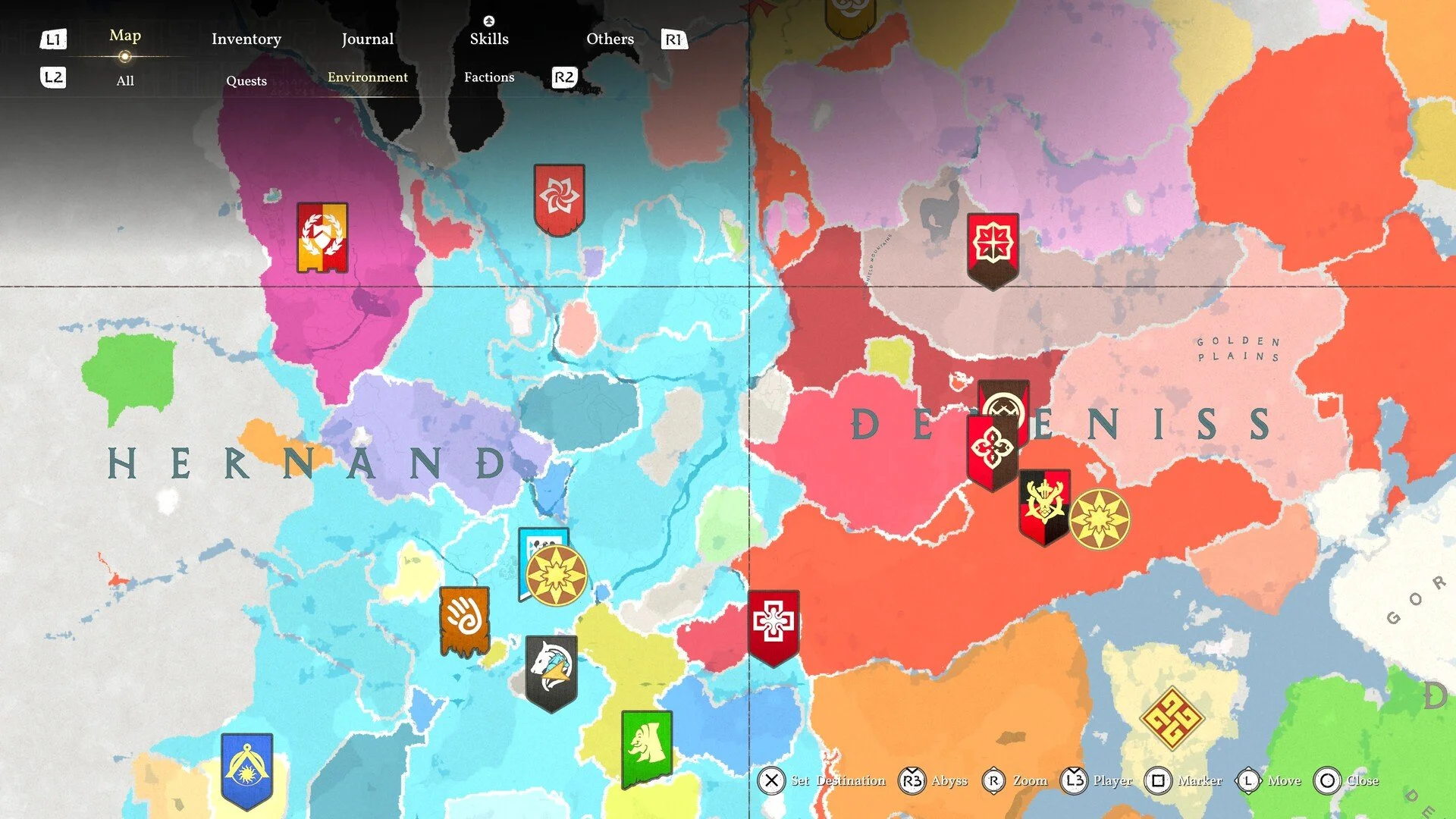
The story of Crimson Desert may as well be nonexistent. The entire thing is something of a revenge fantasy, but it is only ever really used as a way to prop up the sixteen thousand gameplay mechanics without just throwing them at you sans any context. Characters will show up and then vanish so fast that you’ll just forget their names. Events will happen, and you’ll be struggling to bring yourself to care at all. There’s also no way to skip cutscenes, only fast-forward them (in a weirdly stunted fashion, the fast-forward isn’t actually that fast at all), so I found myself scrolling on my phone fairly often. But after those cutscenes are over, and you’re put back in charge of Kliff (what a wonderfully generic name, by the way), you can go do whatever you want, and it’s when the game lets you loose that the game actually allows itself to be something entertaining.
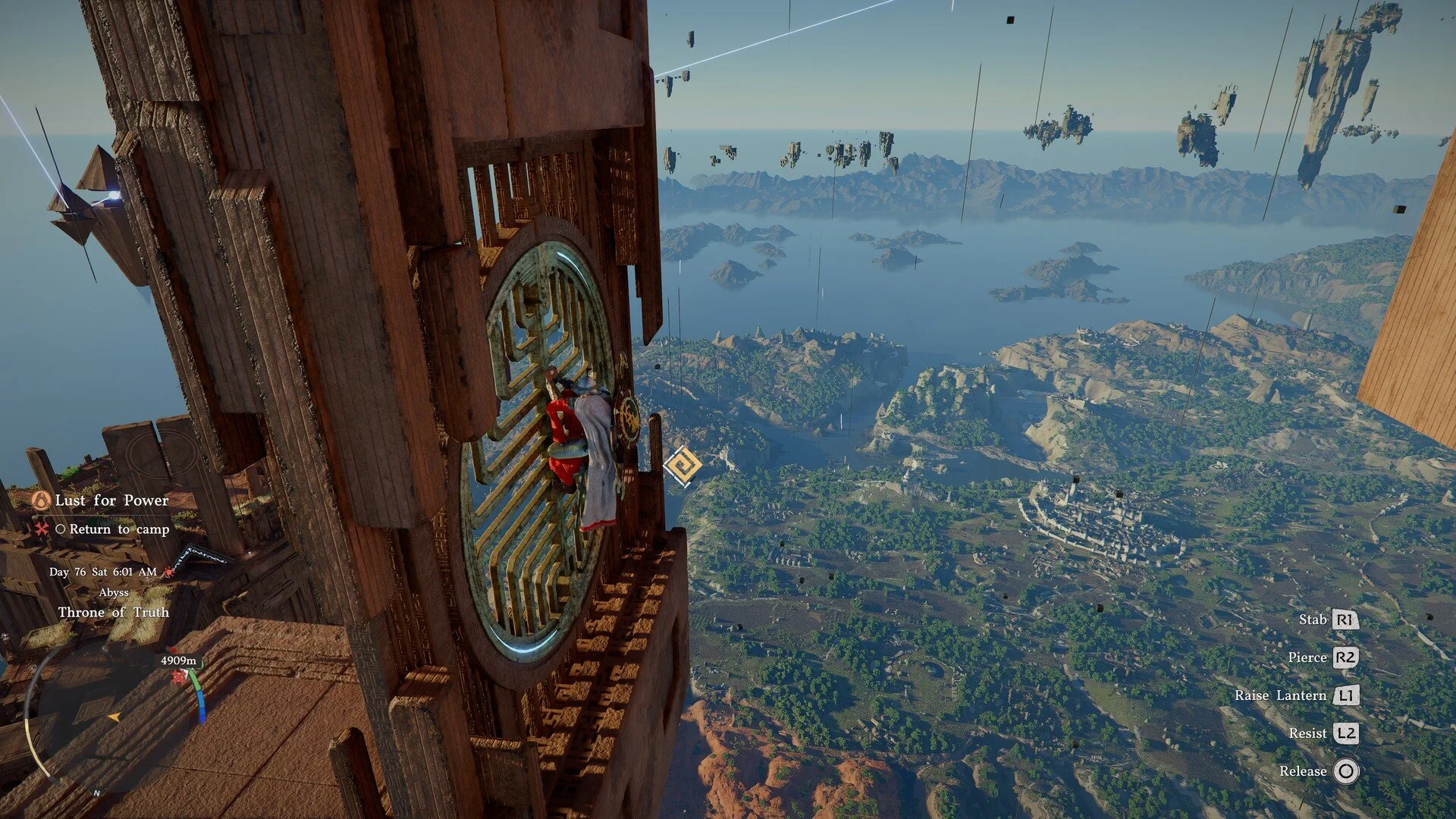
Exploration in this game is extremely satisfying. Hills in the distance conceal ruins and puzzles. Villages have side quests that will give you access to even more mechanics, like a QTE mini-game for arm wrestling. You’ll also often find yourself coming across bandit camps that allow you to really let loose, unleashing your weapons on enemies, and also unleashing several other things, such as wrestling moves (the game allows you to unlock Lariats and RKO’s, just in case you thought stabbing people wasn’t insulting enough).
Speaking of combat, it’s a weird mix of being both incredibly responsive and incredibly annoying. When blows connect, they feel great, but blocking feels a second too slow, and doesn’t feel in sync with the rest of the game, especially the souls-like boss design. A lot has been made of how convoluted the control scheme is, but for all the online chatter, it somehow feels like it was undersold. Every button combination does something different, and you’ll often find that replicating a move is next to impossible without some dark magic. Using ranged attacks feels pointless, since you’ll rarely be able to do an encounter using stealth, and you’ll also rarely actually kill an enemy using your bow-and-arrow, even with access to different types of arrows such as poison arrows. But the moment-to-moment up-close combat, the actual steel-on-steel, that’s really good, and working your way through swathes of enemies is something that is extremely satisfying.
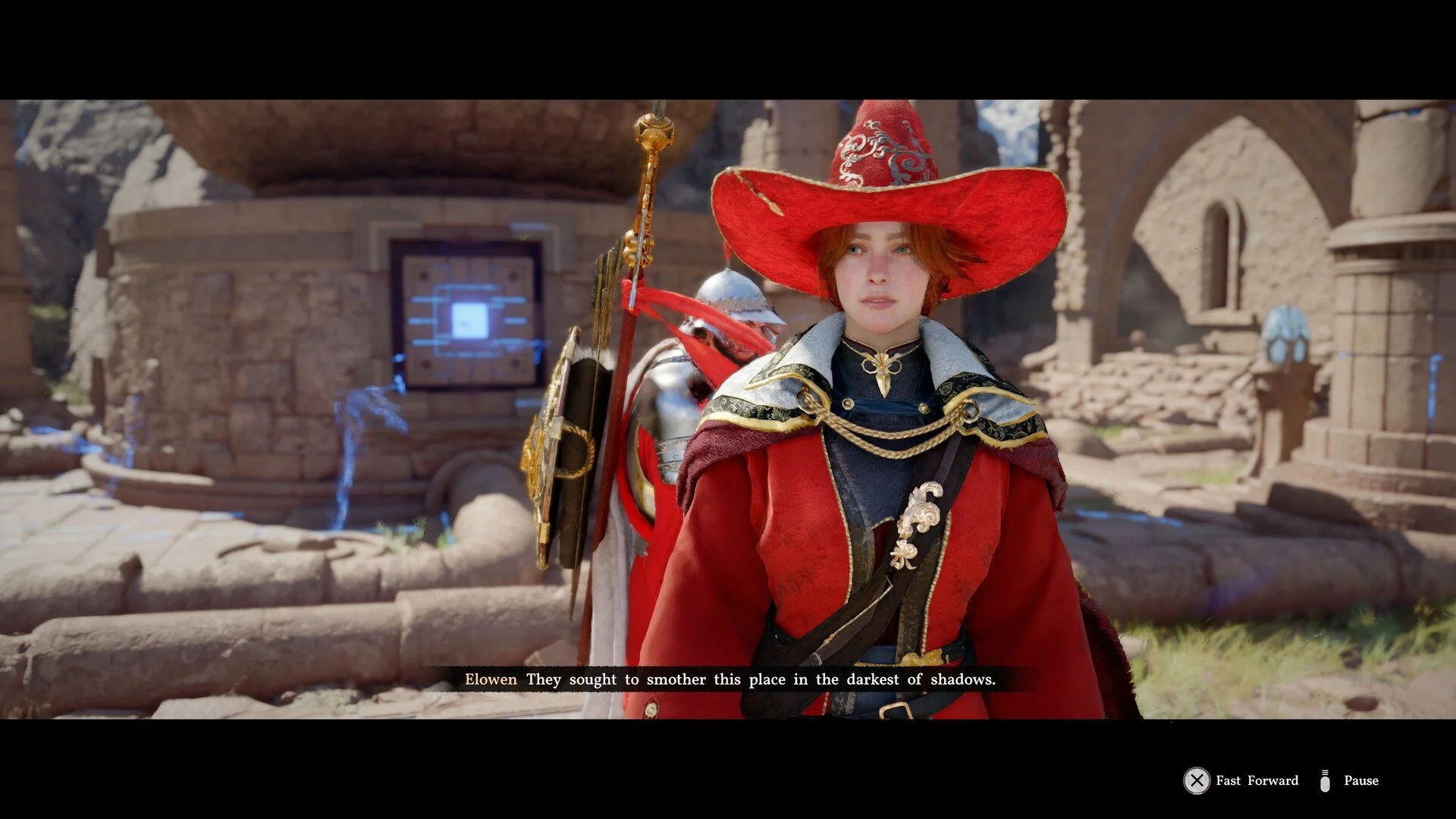
Not every mechanic is interesting, of course. I don’t really understand why there’s so much focus on fishing, mining, hunting, and cooking when none of that stuff really feels impactful in a real way. The only real reason seems to be that they are activities you’d do in a 10-year-old MMO and this game comes from the studio that brought us Black Desert Online. You can get through most fights using items that you just pick up in the world to heal. There are two other playable characters in the game, but there’s absolutely zero reason to ever switch – your upgrade points don’t carry over. If you spend time upgrading Kliff, as I did, why would you want to spend a substantial amount of time with these other two characters – especially since those characters can’t progress story missions for the most part?
I’m also not fully enamoured with the upgrade tree – there are so many different abilities and tricks that you can do which you will never use, and at that point, you are just unlocking them for the sake of a progression bar going up. Stamina is such an extreme restriction that I unlocked several different abilities throughout the course of my first ten hours of the game that I still have not used, and that are just waiting for me to have the stamina to use them. It feels like a lot of cooks were in the kitchen throughout development, and each of them had a separate idea about what to put into the game, with nobody actually saying “No”, which sometimes is just necessary. When people aren’t told “No”, then they’ll just keep going with things that just don’t work or contribute to the actual game, and it’ll create a lesser experience.
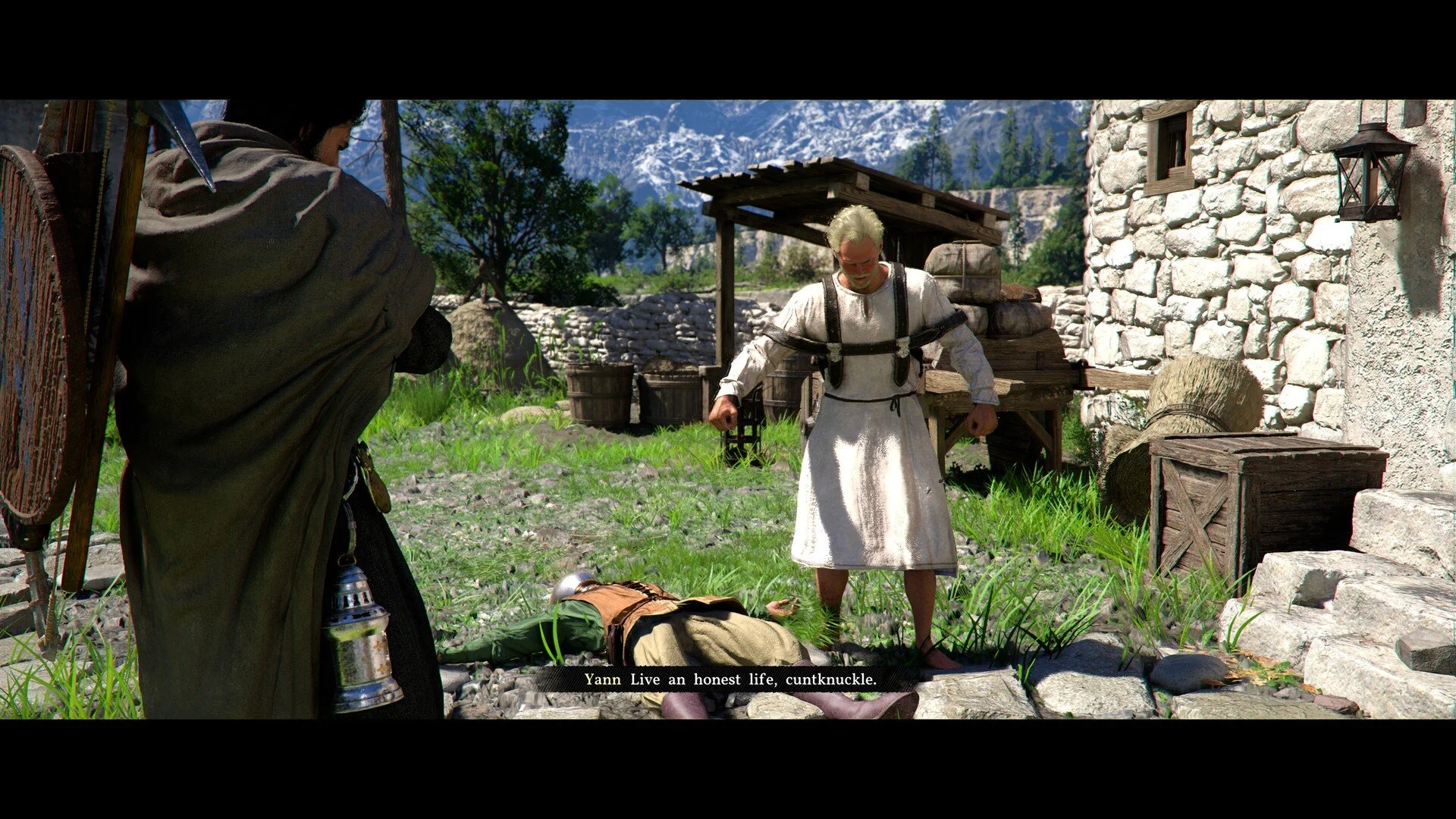
I think Crimson Desert is a game that I will come back to over time. It’s not a game that I ever see myself really putting substantial investment into in terms of actual consistent playtime, thanks to how utterly trite the story is and the fact that I do not care about any of these characters. However, the fun parts of the game are entertaining enough that I can lose myself in them, the exploration often leads to breathtaking vistas, and the combat is satisfying enough that I actively find myself seeking it out. It’s essentially the perfect modern open-world, then, one that you can hop into whenever you want and leave without feeling you’re missing much.
![[PATREON UNLOCK] Update Patch - March 2026](https://images.squarespace-cdn.com/content/v1/5caf2dea93a63238c9069ba4/1775665197694-PKJRY1SS88DU5LJICU0G/Update+Patch+Week+0.jpg)